
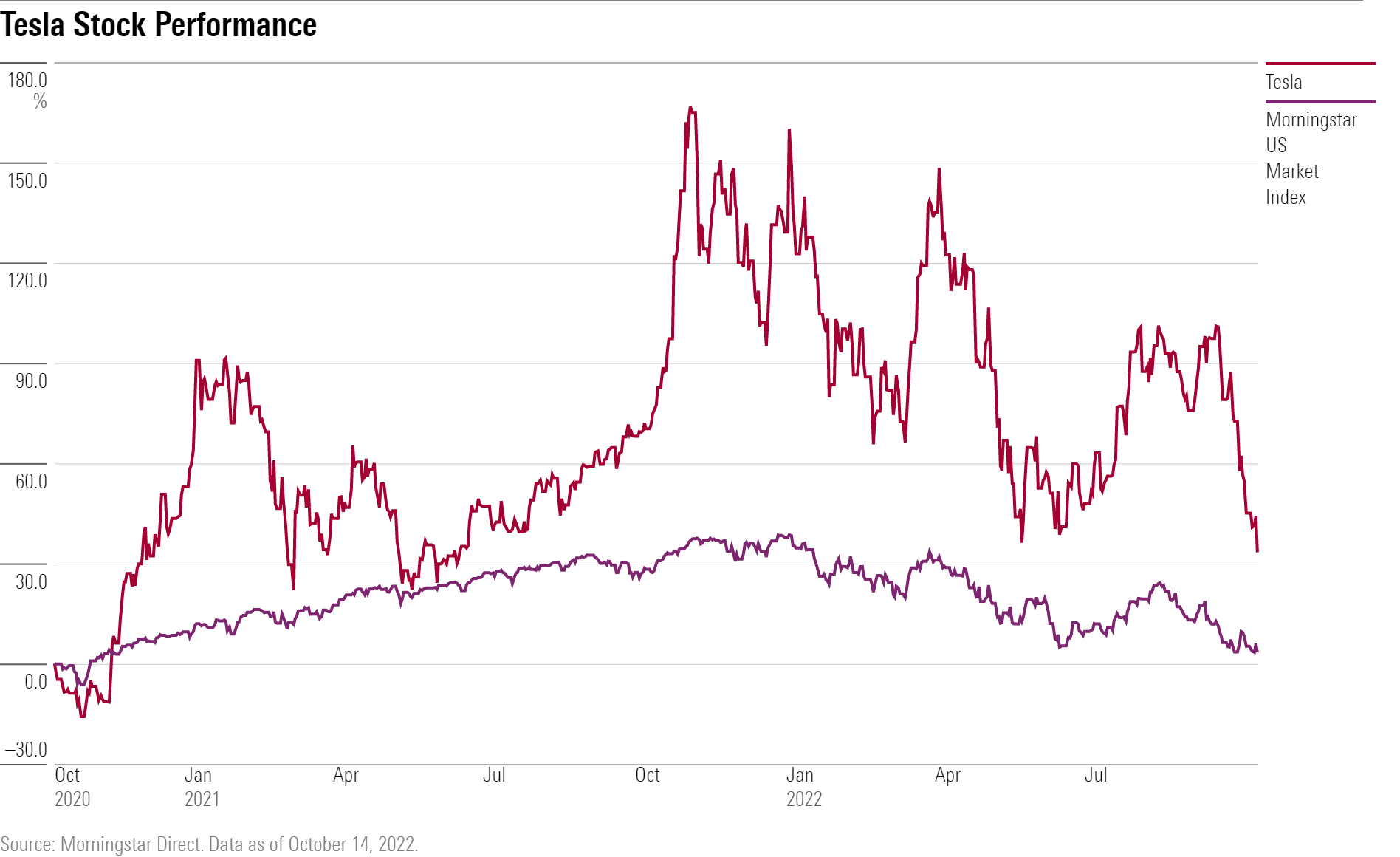
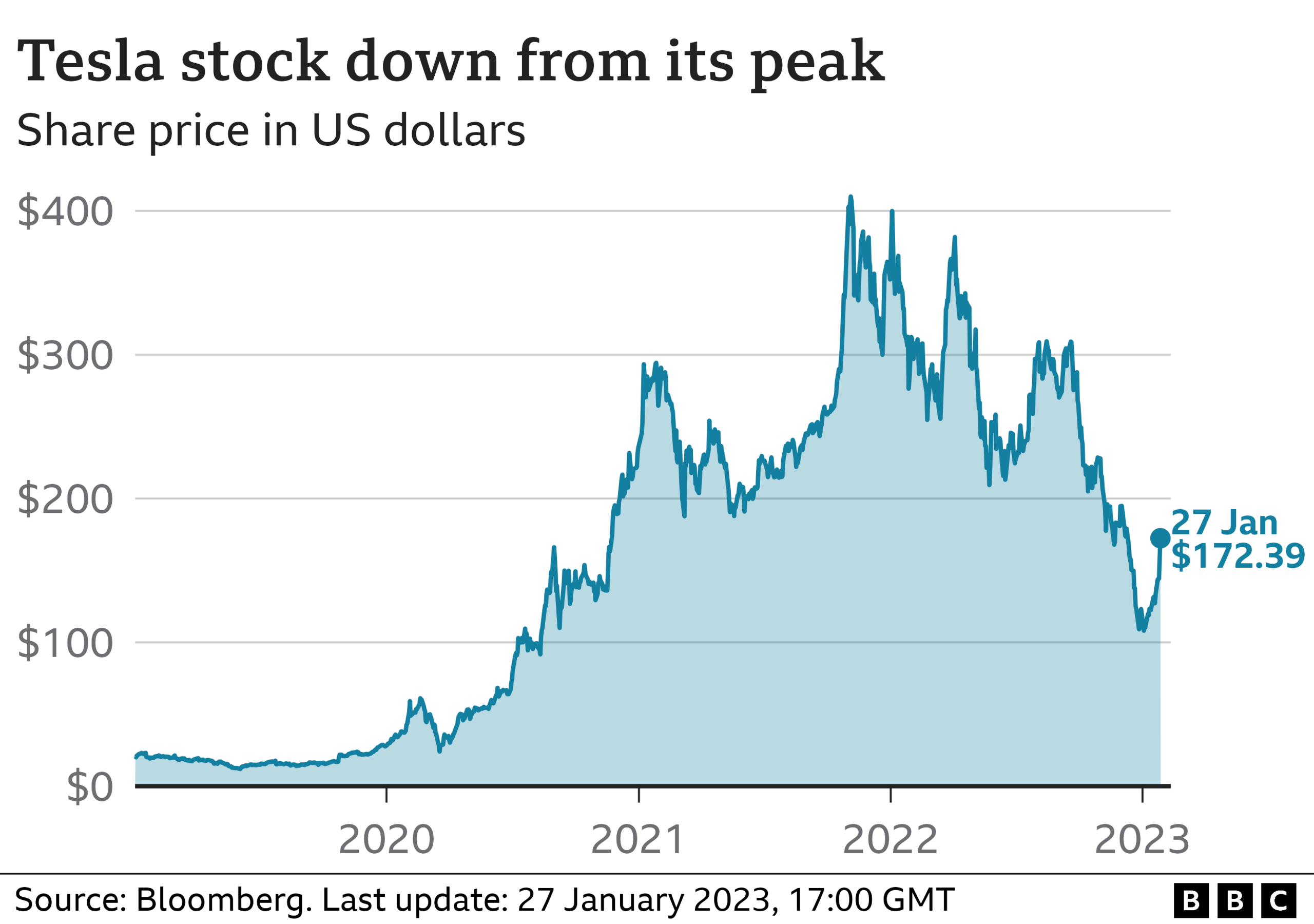
For nearly a decade, Tesla (TSLA) was the undisputed darling of the stock market, defying traditional valuation metrics and rewriting the rules of the automotive industry. However, recent quarters have seen a significant cooling of investor enthusiasm. As the pioneer of the electric vehicle (EV) revolution faces a more complex economic landscape, shareholders and prospective investors are asking a critical question: Why is Tesla stock down?
Understanding this decline requires a deep dive into the intersection of macroeconomic shifts, industry-specific headwinds, and internal financial metrics. In the world of high-stakes investing, Tesla is no longer being judged solely on its potential to “change the world”; it is now being scrutinized on its ability to maintain margins and deliver consistent earnings growth in a saturated market.
The Macroeconomic Environment: Interest Rates and Consumer Demand
The most immediate pressure on Tesla’s stock price originates from the broader economic climate. As a capital-intensive business that relies heavily on consumer financing, Tesla is uniquely sensitive to the maneuvers of central banks.
High Interest Rates and the Cost of Borrowing
The Federal Reserve’s aggressive interest rate hikes over the past two years have fundamentally altered the affordability of Tesla’s products. Most consumers do not buy a car in cash; they finance it. When interest rates rise, the monthly payment for a Model 3 or Model Y increases significantly, even if the “sticker price” remains the same. This creates a dual problem for Tesla: it either loses potential customers to cheaper internal combustion engine (ICE) alternatives or it must lower its prices to offset the increased borrowing costs for the consumer. From an investment perspective, this signifies a cooling of the hyper-growth narrative that previously supported Tesla’s high Price-to-Earnings (P/E) ratio.
Shifting Sentiment in the EV Sector
There is also a growing “EV fatigue” among certain consumer segments. The “early adopters”—those willing to pay a premium for new technology—have largely already entered the market. The next wave of buyers is more price-sensitive and pragmatic. These consumers are weighing the lack of charging infrastructure and the higher upfront costs of EVs more heavily. This shift in sentiment has led to a deceleration in the overall growth rate of the EV market, forcing investors to re-calibrate their expectations for Tesla’s delivery volumes.
Competitive Headwinds and Margin Compression
For years, Tesla enjoyed a functional monopoly on the premium EV market. That era has come to an end. Today, Tesla is fighting a multi-front war against legacy automakers and nimble new entrants, particularly from China.
The Rise of Chinese Manufacturers and BYD
The most formidable threat to Tesla’s dominance is no longer Ford or GM, but BYD and other Chinese manufacturers like Xiaomi and Li Auto. In recent quarters, BYD has challenged Tesla for the title of the world’s top EV seller. These companies benefit from a vertically integrated supply chain, lower labor costs, and significant government subsidies. In the crucial Chinese market—one of Tesla’s primary growth engines—domestic brands are offering feature-rich vehicles at price points that Tesla struggles to match. This regional competition has global implications, as these brands begin to export aggressively to Europe and Southeast Asia.
The Price War Strategy and Operating Margins
In response to rising competition and inventory build-up, Tesla initiated a series of aggressive price cuts across its lineup. While this strategy successfully boosted delivery volumes in the short term, it has had a deleterious effect on the company’s financial health. Historically, Tesla’s industry-leading operating margins were a key reason for its premium valuation. As those margins compress—falling from over 16% to the high single digits—the stock has been repriced to reflect a company that looks more like a traditional automaker and less like a high-margin software firm. Investors fear that these price cuts are not a temporary measure but a permanent response to a commoditizing market.
Delivery Misses and Growth Stagnation
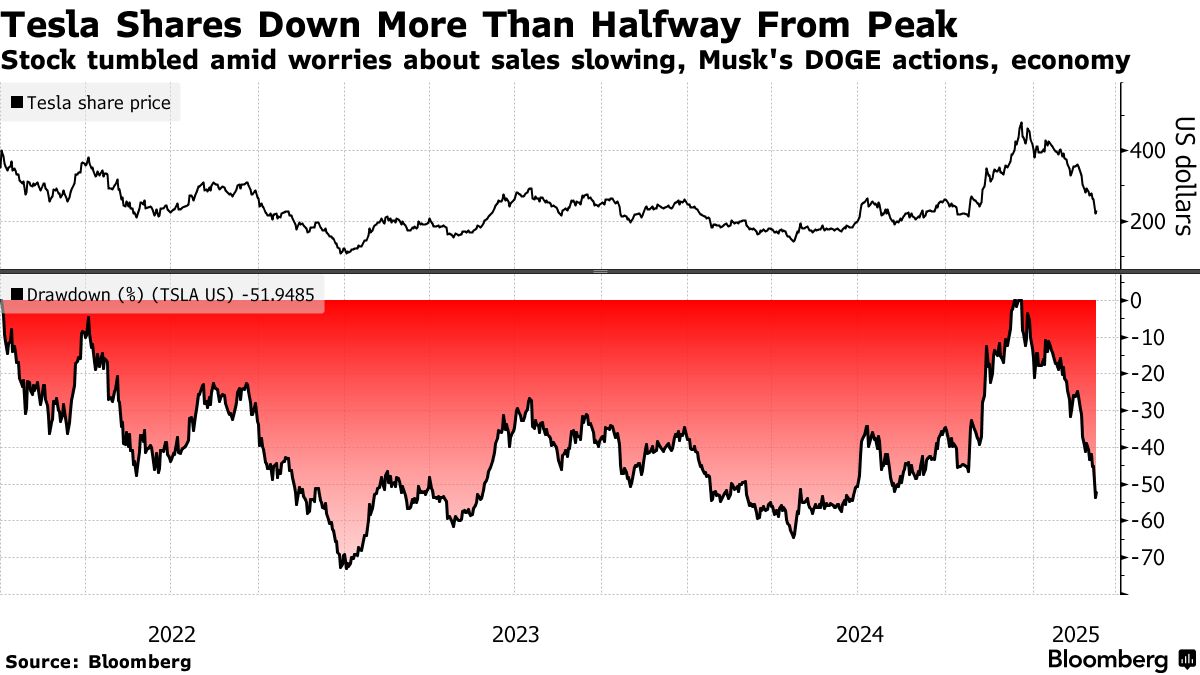
In the world of growth stocks, “missing” on delivery targets is often a catalyst for a sell-off. Tesla’s valuation is predicated on the assumption of 50% compound annual growth in deliveries—a goal that has become increasingly difficult to sustain.
Supply Chain Bottlenecks and Logistic Hurdles
While Tesla’s production capabilities are world-class, they are not immune to global disruptions. From tensions in the Red Sea affecting shipping routes to arson attacks at Giga Berlin, external factors have hampered Tesla’s ability to move vehicles efficiently. Furthermore, as the company scales, the logistical “last mile” becomes exponentially more complex. Investors are concerned that the era of “easy growth” is over, and that future expansion will require significantly more capital expenditure for diminishing marginal returns.
Reevaluating Growth Targets for 2024 and Beyond
Management’s recent guidance has been more cautious than in previous years. In earnings calls, Tesla has warned that they are “between two major growth waves.” The first wave was the global expansion of the Model 3/Y platform; the second wave is expected to be the next-generation, low-cost vehicle platform. However, the timeline for this new platform remains uncertain. In the interim, Tesla faces a “product gap” where its existing lineup is aging, and new models like the Cybertruck are still in the low-margin, early-ramp phase. This period of stagnation makes it difficult for institutional investors to justify a high-growth valuation.
Investor Sentiment and Governance Concerns
Beyond the balance sheet, the stock price is heavily influenced by the perception of the company’s leadership and its long-term strategic focus.
The “Musk Premium” vs. The “Musk Risk”
Elon Musk has historically been a primary driver of Tesla’s stock price—the “Musk Premium.” However, his involvement in other high-profile ventures, most notably X (formerly Twitter), has introduced what many analysts call “Musk Risk.” Investors are concerned about “key man dependency” and the potential for distractions to draw focus away from Tesla’s core operational challenges. Additionally, Musk’s public comments and political stances have, according to some market research, polarized the very consumer base most likely to purchase EVs, potentially damaging the brand’s equity in key demographics.
Institutional Rebalancing and Technical Support Levels
From a purely financial perspective, Tesla’s inclusion in the S&P 500 means that large institutional funds must hold the stock. However, as the fundamentals weaken, fund managers often rebalance their portfolios, moving capital out of Tesla and into other “Magnificent Seven” stocks like Nvidia or Microsoft that currently offer clearer AI-driven growth paths. When a stock breaks through key technical support levels due to institutional selling, it can trigger automated sell orders, leading to the downward momentum we have seen recently.
The Road Ahead: Potential Catalysts for Recovery
While the current outlook may seem bleak to some, the “Money” case for Tesla often looks beyond the current quarter toward long-term value drivers that have yet to be fully realized.
FSD Licensing and AI Integration
Tesla’s bulls argue that the company should not be valued as an automaker at all, but as an AI and robotics firm. The development of Full Self-Driving (FSD) software represents a potential high-margin recurring revenue stream. If Tesla can successfully move from “Level 2” to “Level 4/5” autonomy and begin licensing this software to other manufacturers, the financial impact would be transformative. This shift toward a software-as-a-service (SaaS) model is the primary thesis for those holding the stock despite the current price decline.
The Quest for the $25,000 Vehicle
The ultimate “holy grail” for Tesla’s financial recovery is the successful launch of a truly affordable, mass-market EV. By tapping into the lower-income brackets, Tesla could reignite its delivery growth and achieve the economies of scale necessary to reclaim its high margins. For investors, the success of “Project Redwood” (the rumored codename for the compact car) is the most critical milestone to watch. If Tesla can produce a $25,000 car profitably, it will likely silence the critics who claim the company has hit a growth ceiling.
In conclusion, Tesla stock is down because of a “perfect storm” of high interest rates, intensifying global competition, and a transition period between product cycles. The company is currently undergoing a painful metamorphosis from a high-growth disruptor to a mature industrial giant. For the savvy investor, the current price action reflects the market’s uncertainty about which version of Tesla will emerge on the other side of this transition: a low-margin hardware manufacturer or a dominant, AI-driven tech titan.
aViewFromTheCave is a participant in the Amazon Services LLC Associates Program, an affiliate advertising program designed to provide a means for sites to earn advertising fees by advertising and linking to Amazon.com. Amazon, the Amazon logo, AmazonSupply, and the AmazonSupply logo are trademarks of Amazon.com, Inc. or its affiliates. As an Amazon Associate we earn affiliate commissions from qualifying purchases.