
In the era of the “Quantified Self,” the question of “how many calories I should eat per day” has migrated from the back of cereal boxes and general practitioner offices into the palm of our hands. What was once a static calculation based on broad demographic averages has been transformed by a sophisticated ecosystem of artificial intelligence, wearable hardware, and complex algorithmic modeling. Today, determining your daily caloric needs is less about a lucky guess and more about leveraging a high-tech stack designed to decode the human metabolism in real-time.
As technology continues to merge with biological sciences, the tools we use to track energy balance are becoming increasingly precise. This article explores the technological landscape of caloric estimation, from the software algorithms that drive mobile apps to the advanced sensors in our wearables and the data security protocols that protect our most intimate biological information.
The Evolution of Caloric Algorithms: Beyond Static Formulas
For decades, the standard for calculating caloric needs relied on the Harris-Benedict formula or the Mifflin-St Jeor equation. These were essentially analog algorithms that factored in age, weight, height, and gender. However, in the modern tech landscape, these formulas serve as mere baseline code for much more sophisticated dynamic models.
From Static Formulas to Dynamic AI Models
Traditional caloric estimation suffered from “input lag”—it didn’t account for the daily fluctuations in a user’s metabolic rate. Modern nutrition software now utilizes machine learning (ML) to create personalized metabolic profiles. Instead of a fixed number, AI-driven platforms like Carbon Diet Coach or MacroFactor use “trend weight” algorithms and expenditure tracking. By analyzing the delta between a user’s reported intake and their weight change over time, these apps reverse-engineer the user’s actual energy expenditure. This creates a feedback loop where the software learns the user’s unique metabolic speed, adjusting daily calorie targets with a level of precision that static calculators cannot match.
The Role of Machine Learning in Predictive Energy Expenditure
Machine learning models are now being trained on massive datasets involving thousands of metabolic chamber studies. These models can identify patterns that humans might miss, such as how specific macronutrient ratios affect the thermic effect of food (TEF) or how sleep deprivation (tracked via software) might downregulate a user’s non-exercise activity thermogenesis (NEAT). By integrating these variables, the software provides a predictive calorie goal that evolves as the user’s body composition changes, effectively solving the “metabolic adaptation” problem through iterative data processing.
Wearable Technology and Real-Time Metabolic Tracking
While software handles the logic, wearable hardware provides the raw data. The hardware revolution has allowed us to move beyond “estimated activity levels” (e.g., choosing “moderately active” in a dropdown menu) to objective, real-time data harvesting.
Photoplethysmography (PPG) and Heart Rate Variability (HRV)
Most modern fitness trackers, such as the Apple Watch, Garmin, and Whoop, utilize Photoplethysmography (PPG)—the green light sensors on the underside of the device. These sensors measure heart rate and, more importantly, Heart Rate Variability (HRV). Tech companies use this data to estimate the intensity of physical activity. Higher heart rates correlate with higher oxygen consumption, which the device’s firmware then converts into caloric burn using proprietary algorithms. This allows the device to adjust your “calories remaining” for the day based on actual movement rather than a pre-set schedule.
Integrating Smart Scales and Bioelectrical Impedance Analysis (BIA)
The calorie equation is heavily dependent on body composition—muscle burns more calories at rest than fat. Smart scales from companies like Withings use Bioelectrical Impedance Analysis (BIA), sending a small, painless electrical current through the body to measure resistance. This data is synced via Wi-Fi to a central health ecosystem (like Apple Health or Google Fit), providing the calorie-counting software with the user’s latest body fat percentage. This integration ensures that the “calories per day” recommendation is based on the most current biological hardware profile of the user.
The Ecosystem of Nutrition Software and Calorie-Counting Apps
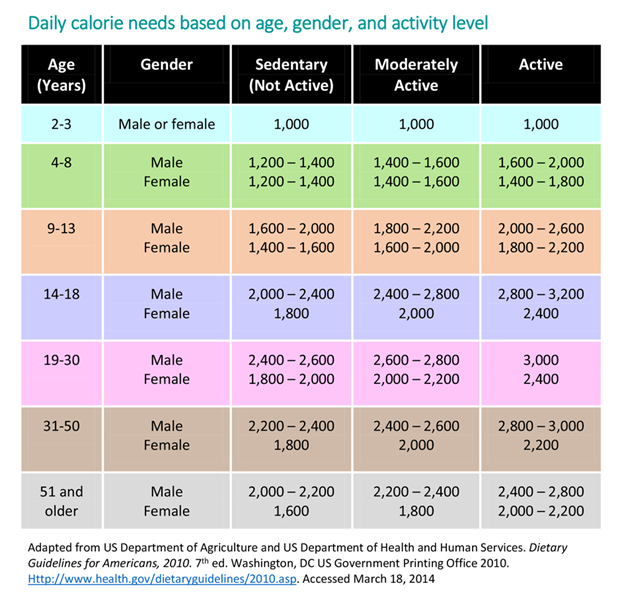
The “interface” of our caloric journey is the mobile application. These apps act as the command center, synthesizing data from various inputs to provide a user-friendly answer to the daily calorie question.
Database Accuracy and Computer Vision for Food Recognition
The biggest hurdle in calorie tracking has always been the manual entry of data. To solve this, tech leaders are leaning into Computer Vision (CV). Apps like SnapCalorie or the latest iterations of MyFitnessPal allow users to take a photo of their plate. Using deep learning models trained on millions of images, the software identifies the food items, estimates the volume through spatial reasoning, and cross-references it with a massive verified database of nutritional information. This reduces human error—the “garbage in, garbage out” problem—ensuring the “calories eaten” side of the equation is as accurate as the “calories burned” side.
The API Economy: Syncing HealthData Across Platforms
No app is an island. The modern health-tech stack relies on APIs (Application Programming Interfaces) to share data. A user might track their weight on a smart scale, their steps on a Garmin watch, and their meals on a dedicated nutrition app. Through centralized hubs like HealthKit or Fit API, these disparate tools communicate. When your watch detects a high-intensity workout, it pushes that data to your nutrition app, which instantly recalibrates your “daily budget.” This seamless synchronization is what allows for a truly responsive answer to how many calories one should consume on any given day.
Data Security and Privacy in the Bio-Tracking Era
As we provide apps with our height, weight, activity levels, heart rate, and even photos of our meals, we are creating a digital “biological twin.” This raises significant questions regarding digital security and the ethics of health data.
Protecting Sensitive Health and Biometric Data
The data required to calculate daily calories is incredibly sensitive. In the wrong hands, biometric data could be used by insurance companies to adjust premiums or by advertisers for predatory targeting. Leading tech firms are now implementing end-to-end encryption for health data. For instance, Apple’s Health data is encrypted on-device and is only accessible via a passcode, Touch ID, or Face ID. Furthermore, developers are increasingly moving toward “On-Device Processing,” where the AI models calculate your caloric needs locally on your smartphone rather than sending your private health metrics to a cloud server.
The Future of Decentralized Health Records
Looking ahead, the tech industry is exploring blockchain and decentralized identifiers (DIDs) to give users total ownership over their metabolic data. Instead of your calorie history living on a corporate server, it could exist in a decentralized ledger. This would allow you to grant temporary access to a nutritionist or a new app without relinquishing permanent ownership of your data, ensuring that your journey toward health doesn’t come at the cost of your digital privacy.
The Future of Personalized Nutrition: AI Coaches and Nutrigenomics
We are moving away from general “calculators” and toward “autonomous health assistants.” The next frontier in determining daily caloric needs involves looking inside the body at a molecular level.
Generative AI as Your 24/7 Nutrition Consultant
With the rise of Large Language Models (LLMs), the next generation of calorie trackers will act as proactive coaches. Instead of just showing a number, an AI agent will analyze your data and provide context: “You’ve slept poorly for three nights, which usually increases your hunger hormones; I’ve adjusted your calorie target by 10% today to help you stay on track.” This shift from descriptive analytics (what happened) to prescriptive analytics (what you should do) represents the pinnacle of nutrition technology.
The Integration of Continuous Glucose Monitors (CGMs)
While traditional calorie counting treats all calories as equal, tech companies like Levels and Nutrisense are using Continuous Glucose Monitors—sensors that sit under the skin—to track real-time blood sugar responses. By integrating CGM data into calorie-tracking software, users can see how specific foods affect their metabolic stability. If a certain “calorie-appropriate” meal causes a massive insulin spike and subsequent crash, the software might suggest a different caloric distribution or timing. This is “Precision Nutrition”—a world where your daily calorie count is optimized not just for weight, but for metabolic longevity and hormonal health.
In conclusion, the question “how many calories should I eat per day” is no longer a simple math problem. It is a data science problem. By leveraging the latest in AI, wearable sensors, and secure data ecosystems, we can move past the era of “one size fits all” nutrition and into a future where our technology understands our bodies as well as—if not better than—we do ourselves.
aViewFromTheCave is a participant in the Amazon Services LLC Associates Program, an affiliate advertising program designed to provide a means for sites to earn advertising fees by advertising and linking to Amazon.com. Amazon, the Amazon logo, AmazonSupply, and the AmazonSupply logo are trademarks of Amazon.com, Inc. or its affiliates. As an Amazon Associate we earn affiliate commissions from qualifying purchases.