
NVIDIA, a name synonymous with innovation in graphics processing, artificial intelligence, and high-performance computing, has long been a darling of the stock market. Its meteoric rise, fueled by successive technological breakthroughs and an insatiable demand for its GPUs across diverse industries, transformed it into one of the world’s most valuable companies. However, even the mightiest titans can experience periods of turbulence. When an industry leader like NVIDIA shows signs of “falling” – a term often used to describe a significant decline in its stock price – it sends ripples across the financial markets, prompting investors, analysts, and market watchers alike to ask: what exactly is happening?
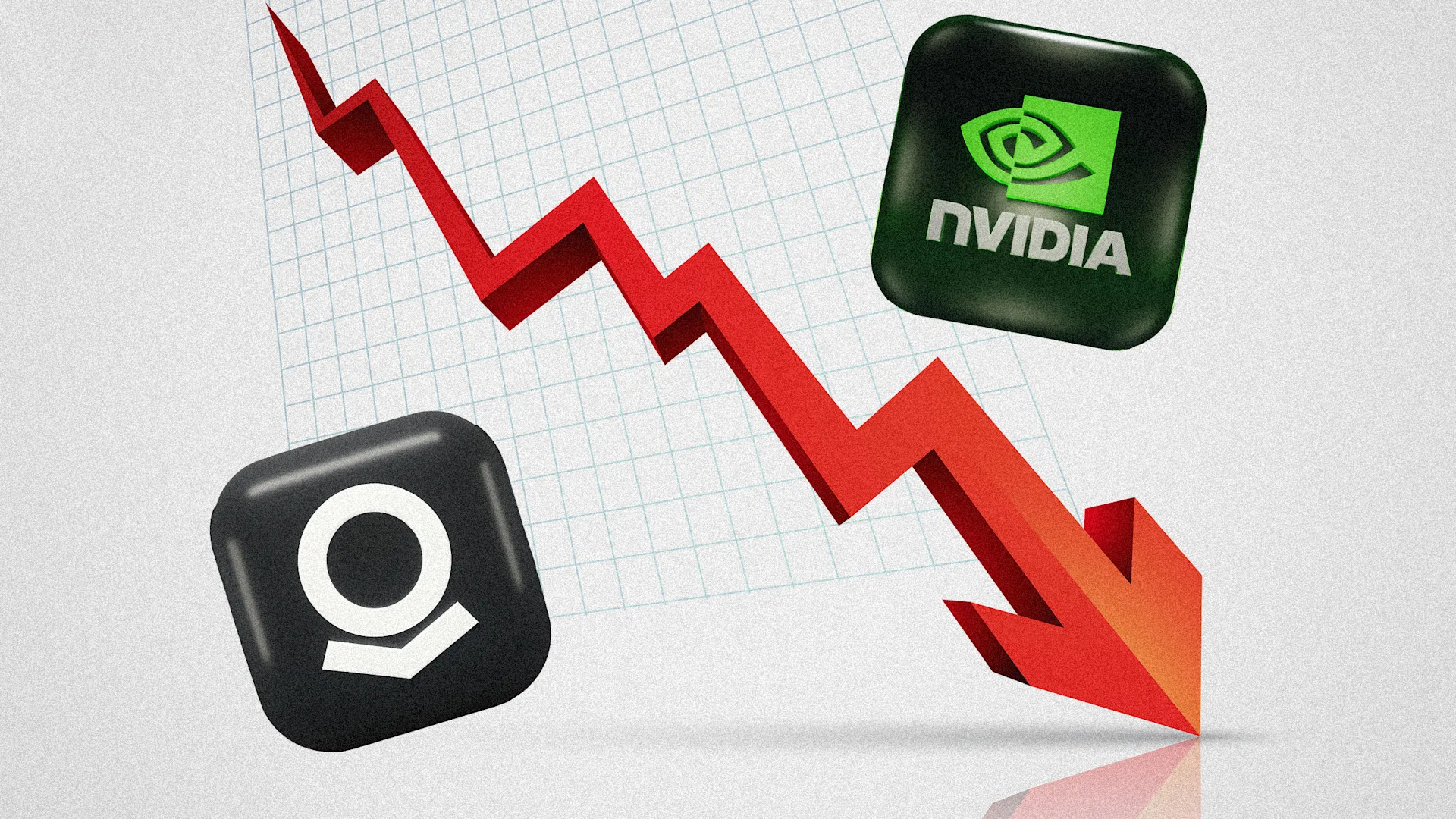
The apparent “fall” of NVIDIA is rarely attributable to a single factor. Instead, it typically emerges from a complex interplay of macroeconomic forces, sector-specific shifts, company-specific developments, and the ever-present dynamics of investor sentiment and valuation. Understanding these contributing elements is crucial for anyone looking to navigate the volatile landscape of modern investing and make informed decisions about companies at the forefront of technological change. This article will delve into the multifaceted reasons behind potential dips in NVIDIA’s market performance, analyzing the forces that can cause even the most robust growth stocks to experience a gravitational pull. We’ll explore how broader economic conditions intertwine with industry trends and corporate performance to shape investor perception and, ultimately, stock prices.
Macroeconomic Headwinds and Broader Market Dynamics
The health of the global economy acts as a pervasive backdrop against which all companies, including NVIDIA, operate. Economic cycles, monetary policy shifts, and geopolitical stability can exert significant pressure on even the most fundamentally strong businesses, influencing investor appetite for risk and the overall valuation of growth stocks.
Rising Interest Rates and Valuation Concerns
One of the most potent macroeconomic forces impacting growth stocks like NVIDIA is the trajectory of interest rates. When central banks, particularly the U.S. Federal Reserve, embark on a path of aggressive rate hikes to combat inflation, it fundamentally alters the calculus for valuing future earnings. Higher interest rates increase the discount rate used in financial models, effectively reducing the present value of a company’s projected future profits. For companies like NVIDIA, whose valuations are often heavily predicated on strong future growth rather than current earnings, this effect is amplified. Investors become more discerning, demanding higher returns for holding riskier assets, and capital flows tend to shift towards safer, fixed-income investments offering improved yields. This “flight to safety” can cause a significant re-rating of high-growth technology stocks, leading to substantial pullbacks even if their operational performance remains robust.
Broader Market Corrections and Risk Aversion
NVIDIA rarely operates in a vacuum. Its stock performance is often correlated with the broader market, particularly the tech-heavy Nasdaq Composite index. During periods of general market correction or outright bear markets, even companies with strong fundamentals can experience significant declines. These corrections can be triggered by a myriad of factors, including geopolitical events, unforeseen economic shocks, or a collective shift in investor sentiment from “risk-on” to “risk-off.” When fear dominates the market, investors tend to liquidate their positions in higher-beta, higher-growth stocks first, as these are often perceived as the most vulnerable to economic downturns or changes in market psychology. This broad-based de-risking can see NVIDIA’s stock fall in tandem with its peers, irrespective of any specific company-related news.
Inflationary Pressures and Consumer Spending
Persistent inflation poses another significant macroeconomic challenge. Rising costs for raw materials, energy, and labor can compress profit margins for companies, even those with strong pricing power. While NVIDIA’s products are largely B2B and high-end consumer-focused, the impact of inflation trickles down. Higher inflation can erode consumer purchasing power, potentially dampening demand for premium gaming GPUs and other consumer electronics. In the enterprise sector, businesses facing increased operational costs might delay capital expenditures, including investments in new data center infrastructure or AI development, thus impacting NVIDIA’s crucial data center segment. Furthermore, the measures taken by central banks to curb inflation (like interest rate hikes) create a feedback loop that further complicates the valuation landscape for growth companies.
Sector-Specific Shifts and Competitive Landscape
Beyond macroeconomics, the highly dynamic technology sector itself presents a unique set of challenges and opportunities for NVIDIA. Shifts in demand patterns, the maturation of certain markets, and the relentless march of competition can all contribute to periods of price decline.
The Evolving AI Narrative and Demand Fluctuations
NVIDIA has positioned itself as the undisputed leader in AI hardware, with its GPUs powering the vast majority of machine learning models and data centers globally. However, the AI market, while booming, is also incredibly dynamic. Expectations for AI adoption and revenue growth can sometimes outpace reality, leading to periods of “digestion” where demand temporarily cools or shifts. For instance, hyperscale cloud providers, major customers for NVIDIA’s data center GPUs, might adjust their purchasing cycles based on their own infrastructure build-out timelines or budget constraints. Furthermore, the rapid evolution of AI models and hardware architectures means that product cycles can be shorter, and any perceived slowdown in innovation or shift in preferred hardware types (e.g., towards custom ASICs by large tech companies) could impact NVIDIA’s dominance and, consequently, its stock price.
Gaming Market Softness and Inventory Adjustments
Historically, NVIDIA’s gaming division has been a cornerstone of its revenue. While the gaming market remains robust, it is also cyclical and susceptible to economic downturns. During periods of economic uncertainty or post-pandemic boom fatigue, discretionary spending on high-end gaming GPUs can decline. Additionally, inventory management is a perennial challenge in the semiconductor industry. If NVIDIA or its channel partners misjudge demand, leading to an oversupply of GPUs in the market, it can force price reductions, impact profit margins, and necessitate significant inventory write-downs. Such events have historically caused dips in NVIDIA’s stock, as investors react to softer revenue guidance or actual earnings misses from this crucial segment. The transition to new product generations can also create temporary lulls as consumers wait for the latest models, leaving current-gen inventory to be cleared.
Intensifying Competition in AI and Data Center

While NVIDIA holds a commanding lead in AI GPUs, the competitive landscape is far from static. Key rivals like AMD are continuously developing their own high-performance computing and AI accelerators, vying for market share. More significantly, major cloud service providers and tech giants (e.g., Google with its TPUs, Amazon with its Inferentia and Trainium chips, Microsoft with its custom AI chips) are increasingly designing their own custom silicon to power their AI workloads. This “in-housing” of chip design, while not an immediate threat to NVIDIA’s broad market, represents a long-term strategic shift that could eventually chip away at its market share, particularly for certain specialized AI tasks. Any indication that NVIDIA’s competitive moat is eroding or that its technological lead is being challenged could lead to investor concern and a subsequent decline in stock value.
Company-Specific Catalysts and Investor Sentiment
Beyond the macro and sector-wide forces, specific company-level events and the often-irrational ebb and flow of investor sentiment can act as direct catalysts for NVIDIA’s stock movements.
Earnings Expectations and Guidance Adjustments
Quarterly earnings reports are critical junctures for any publicly traded company. For a high-growth stock like NVIDIA, missing analyst expectations on revenue, earnings per share, or, most critically, future guidance, can lead to immediate and sharp stock declines. Investors often price in a trajectory of aggressive growth; therefore, any hint of a slowdown – whether due to supply chain issues, weaker demand, or increased operational costs – can trigger a significant sell-off. Adjustments in forward-looking guidance, even if seemingly minor, are often scrutinized intensely and can be interpreted as a sign of future weakness, leading to a swift re-evaluation of the company’s prospects by the market. Analyst downgrades following such reports can further exacerbate the selling pressure.
Geopolitical Tensions and Supply Chain Vulnerabilities
NVIDIA, like many global technology companies, operates within a complex international supply chain. Geopolitical tensions, particularly those involving critical manufacturing hubs like Taiwan (where TSMC, a key NVIDIA chip manufacturer, is based) or trade disputes between major economic blocs (e.g., U.S.-China relations), can introduce significant uncertainty. Restrictions on technology exports, tariffs, or the threat of conflict can disrupt production, increase costs, and limit market access. Such vulnerabilities, when highlighted by geopolitical events, can weigh heavily on investor sentiment, leading to concerns about NVIDIA’s ability to maintain production, deliver products, and access crucial markets, thereby impacting its stock price.
Product Cycle Impact and Innovation Pace
NVIDIA’s success is built on a continuous cycle of innovation, releasing new generations of GPUs that offer substantial performance improvements. Lulls between major product releases, or a perception that a new product generation is not as transformative as expected, can temporarily dampen investor enthusiasm. Moreover, significant delays in product launches or issues with new product performance can directly impact revenue forecasts and market share. While NVIDIA has a strong track record of innovation, the market constantly demands “what’s next.” Any faltering in its innovation pace or a perception that competitors are catching up could lead investors to question its long-term growth trajectory and valuation.
The Role of Valuation: From Growth Stock to Value Proposition?
Perhaps one of the most fundamental reasons for NVIDIA’s “fall” during certain periods relates directly to its valuation. After periods of exponential growth, when a stock trades at very high multiples, it becomes highly susceptible to market shifts.
Price-to-Earnings (P/E) Ratios and Future Growth Prospects
NVIDIA has often traded at premium valuations, with high Price-to-Earnings (P/E) ratios reflecting aggressive growth expectations. While justified during periods of hyper-growth and market expansion, these elevated multiples leave little room for error. When growth slows, even marginally, or when interest rates rise, making future earnings less valuable, these high P/E ratios become unsustainable. Investors begin to question whether the current valuation adequately accounts for potential risks or slower growth rates in the future. A “fall” in NVIDIA’s stock can often be a painful but necessary recalibration of its P/E multiple to a level that better reflects current market conditions, interest rate environments, and revised growth expectations.
Free Cash Flow and Sustainable Profitability
While growth is critical, a company’s ability to generate robust free cash flow and demonstrate sustainable profitability is paramount for long-term value creation. During periods of market caution, investors scrutinize these metrics more closely. Any signs of declining margins, increasing capital expenditures that don’t translate into proportional revenue growth, or a slowdown in free cash flow generation can signal underlying operational challenges. For a company valued for its future potential, consistent free cash flow generation validates its business model and provides a buffer against economic headwinds. A perceived weakening in these areas can trigger investor apprehension and contribute to a stock price decline.

Investor Psychology and Market Overreactions
Finally, the irrational exuberance and subsequent panic that characterize financial markets play a significant role. NVIDIA’s stock can be particularly prone to these swings due to its high profile and retail investor interest. Positive news can lead to overbuying, pushing the stock beyond reasonable valuations, creating an “AI bubble” or “tech bubble” scenario. Conversely, negative news, even if minor, or a general shift in market sentiment, can trigger outsized selling pressure. Algorithmic trading, social media chatter, and the fear of missing out (FOMO) on the way up, replaced by the fear of being left holding the bag (FOBH) on the way down, can amplify these movements. Often, the market “falls” not just because of fundamental shifts, but because of a collective emotional response that leads to temporary overreactions, creating both risk and, for astute long-term investors, potential opportunities.
In conclusion, the question “Why is NVIDIA falling?” has no simple answer. It is a nuanced inquiry that requires a comprehensive understanding of global economics, semiconductor industry trends, NVIDIA’s specific business performance, and the psychological currents that drive investor behavior. For investors, differentiating between a temporary dip caused by cyclical or macroeconomic factors and a more fundamental shift in the company’s competitive standing or growth trajectory is key to navigating the complex landscape of technology investments. While periods of decline can be unsettling, they also offer opportunities for re-evaluation and, potentially, for long-term investors to acquire shares of a leading innovator at a more attractive price.
aViewFromTheCave is a participant in the Amazon Services LLC Associates Program, an affiliate advertising program designed to provide a means for sites to earn advertising fees by advertising and linking to Amazon.com. Amazon, the Amazon logo, AmazonSupply, and the AmazonSupply logo are trademarks of Amazon.com, Inc. or its affiliates. As an Amazon Associate we earn affiliate commissions from qualifying purchases.