
NVIDIA (NVDA) has been a darling of the stock market for years, synonymous with innovation in high-performance computing, artificial intelligence, and gaming. Its meteoric rise has made it one of the most valuable semiconductor companies globally, often leaving investors to wonder if its upward trajectory is limitless. However, even titans experience periods of decline. When NVDA stock takes a hit, it sends ripples through the market and prompts a critical question from investors: why is NVDA stock down? Understanding these dips requires a multifaceted look at market dynamics, valuation metrics, competitive pressures, and company-specific news, all viewed through the lens of astute financial analysis.
Market Volatility and Sector-Wide Corrections
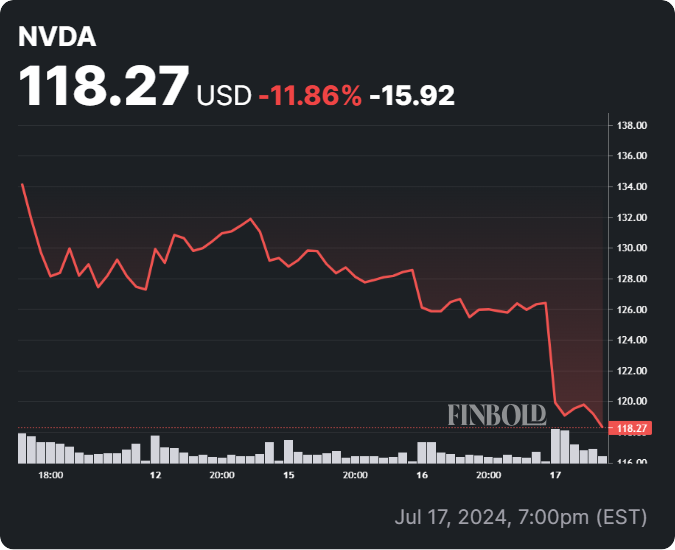
The performance of an individual stock like NVIDIA is rarely isolated from the broader market or its specific sector. Periods of significant NVDA stock depreciation often coincide with wider market trends, reflecting shifts in investor sentiment and macroeconomic conditions.
Broader Market Sentiment and Macroeconomic Headwinds
One of the primary drivers behind a downturn in a stock as prominent as NVIDIA can be a general shift in the broader market sentiment. When investors become risk-averse due to macroeconomic concerns such as rising inflation, interest rate hikes by central banks, geopolitical tensions, or fears of an impending recession, capital tends to flow out of riskier growth stocks and into safer assets. Growth stocks, particularly those in the technology sector known for their high valuations, are often the first to feel the squeeze during such periods. NVIDIA, despite its robust fundamentals, is not immune to these systemic pressures. A hawkish stance from the Federal Reserve, for instance, can lead to a broad-based sell-off in the tech sector, impacting NVDA’s share price regardless of its individual performance. Furthermore, global economic slowdowns can reduce demand for discretionary consumer products (like high-end gaming GPUs) and impact enterprise spending on data centers, directly affecting NVIDIA’s revenue streams. These macro factors create a challenging environment for even the strongest companies, leading to downward revisions in earnings expectations across the board and subsequently, lower stock prices.
Tech Sector Rotation and Profit-Taking
Another common reason for NVDA stock to decline is sector rotation. Investors frequently rebalance their portfolios, moving capital from sectors that have performed well into those that are perceived as undervalued or poised for future growth. Given NVIDIA’s substantial gains over recent years, some investors may choose to take profits, selling off portions of their NVDA holdings to lock in returns. This profit-taking can exert significant downward pressure on the stock, especially after a prolonged period of upward momentum. Moreover, a shift in market favor from growth stocks to value stocks or defensive sectors can prompt institutional investors to reallocate funds away from high-flying tech companies like NVIDIA. This rotation doesn’t necessarily reflect a fundamental problem with NVIDIA’s business but rather a change in investment strategy driven by evolving market conditions and a desire to diversify risk or capitalize on different market segments. When a large number of institutional investors engage in such rotation simultaneously, the impact on a stock’s price can be substantial, creating the impression of a company-specific issue when it is, in fact, a market-wide phenomenon.
Valuation Concerns and Growth Expectations
NVIDIA’s innovative prowess and leadership in critical technological domains have consistently commanded a premium valuation. However, this premium also makes the stock particularly susceptible to corrections if growth expectations aren’t met or if the market perceives it as overvalued relative to its future earnings potential.
The Premium Price Tag: Is NVDA Overvalued?
One of the most persistent concerns for NVIDIA investors, particularly during market downturns, revolves around its valuation. NVIDIA typically trades at a high price-to-earnings (P/E) ratio and other valuation multiples compared to the broader market and even some of its peers. This premium is justified by its exceptional growth rates, market leadership, and the immense total addressable market (TAM) for its technologies in AI, data centers, and the metaverse. However, such high valuations inherently bake in substantial future growth expectations. If these expectations are not only met but consistently exceeded, the stock continues its upward trajectory. Conversely, even a slight miss on earnings forecasts, a slowdown in projected growth, or a broader market reassessment of what constitutes a “fair” valuation for growth stocks can trigger a sharp sell-off. Investors scrutinize metrics like forward P/E, PEG ratio (P/E to Growth), and enterprise value to sales to determine if the current stock price accurately reflects NVIDIA’s intrinsic value and future prospects. A re-evaluation of these metrics by analysts or large investment firms can lead to a downward revision of price targets, instigating a stock decline as investors adjust their positions.
Future Growth Drivers vs. Current Market Expectations
NVIDIA’s stock performance is intricately linked to its ability to continuously innovate and capitalize on emerging technological trends. Historically, the company has excelled at identifying and dominating new markets, from gaming GPUs to data center AI accelerators. The market’s high expectations for NVIDIA are based on its continued leadership in these areas, as well as its ventures into new frontiers like autonomous driving, professional visualization, and the metaverse. However, the sheer scale of NVIDIA’s current market capitalization means that each new growth driver needs to be substantial to significantly move the needle. If investors perceive that the potential of new markets is already fully priced into the stock, or if there’s uncertainty about the speed and magnitude of NVIDIA’s penetration into these areas, it can temper enthusiasm. For instance, slower-than-expected adoption rates for new products, increased competition in a promising segment, or even a perceived lack of significant new catalysts can lead to a reassessment of future growth rates. When the reality of growth potential, even if robust, falls short of the extremely ambitious expectations embedded in its premium valuation, the stock can experience a downward adjustment as investors recalibrate their outlook.
Competitive Landscape and Industry Dynamics
Even a market leader like NVIDIA operates within a dynamic and fiercely competitive industry. Threats from rivals, changes in supply chain stability, and geopolitical factors can all impact its financial performance and, consequently, its stock price.
Emerging Threats and Intensifying Rivalry
The semiconductor industry is characterized by intense competition and rapid technological evolution. While NVIDIA maintains a strong lead in several key areas, it faces formidable rivals across its diverse business segments. In the CPU market, Intel and AMD are persistent competitors, with AMD notably strengthening its GPU offerings to challenge NVIDIA’s dominance in both consumer and data center segments. Cloud providers like Amazon (AWS) and Google (TPU) are also developing their own in-house AI chips, potentially reducing their reliance on NVIDIA hardware in the long term. Even startups are emerging with innovative architectures designed to optimize AI workloads, threatening to carve out niches. Increased competition can lead to pricing pressures, reduced market share, or necessitate higher research and development (R&D) spending, all of which can compress profit margins and dampen investor confidence. Any news suggesting a competitor is gaining significant ground, or that NVIDIA’s competitive moat is eroding, can trigger a negative reaction in the stock price as investors factor in the potential for reduced future profitability and growth.
Supply Chain Disruptions and Geopolitical Risks
The global semiconductor supply chain is incredibly complex and susceptible to various disruptions. NVIDIA relies heavily on third-party foundries, predominantly TSMC, for manufacturing its advanced chips. Issues such as factory closures due natural disasters, power outages, labor shortages, or general capacity constraints can severely impact NVIDIA’s ability to meet demand. During periods of tight supply, customers might delay purchases or even seek alternative solutions, directly affecting NVIDIA’s revenue and market share. Beyond manufacturing, the geopolitical landscape plays an increasingly critical role. Trade tensions, export restrictions, and regional conflicts can disrupt the flow of raw materials, components, or finished products across borders. For example, U.S. export controls aimed at restricting the sale of advanced AI chips to certain countries can directly impact NVIDIA’s significant revenue streams from those regions. Such restrictions, while potentially serving broader national interests, can significantly reduce a company’s total addressable market and create uncertainty about future sales, leading to investor apprehension and a decline in stock value. Managing these supply chain and geopolitical risks is a continuous challenge for a global company like NVIDIA, and any perceived vulnerability can weigh heavily on its stock.
Specific Company News and Analyst Sentiment
While macro factors are important, company-specific events and how they are interpreted by financial analysts and the market are often the most direct triggers for short-term stock movements.
Quarterly Earnings Reports and Guidance
NVIDIA’s quarterly earnings reports are critical inflection points for its stock. Investors eagerly await these reports to assess the company’s financial health, growth trajectory, and future outlook. Even if NVIDIA reports strong earnings, a decline in stock price can occur if the results, particularly revenue or earnings per share (EPS), fall short of analysts’ consensus estimates. The market often penalizes companies that fail to meet these high expectations, even if the absolute numbers are robust. More importantly, future guidance is a massive determinant of stock movement. If NVIDIA’s management provides a conservative outlook for the upcoming quarter or year, signaling slower growth or margin compression due to market headwinds, increased competition, or R&D investments, the stock can plummet. This is because investors price in future earnings, and a lowered forecast directly impacts their valuation models. Furthermore, changes in segment-specific performance, such as a slowdown in gaming GPU sales or data center growth, can alarm investors who look for balanced growth across all business units. Unexpected inventory buildups or declines in average selling prices (ASPs) for key products also send negative signals to the market.
Analyst Downgrades and Institutional Shifts
Financial analysts play a significant role in shaping market sentiment. Their ratings (buy, hold, sell) and price targets influence both institutional and retail investors. When a prominent analyst or a major investment bank downgrades NVIDIA’s stock, it can trigger a wave of selling. A downgrade might be based on a revised assessment of valuation, competitive threats, macroeconomic headwinds, or concerns about future growth prospects. These downgrades often come with reduced price targets, signaling to investors that the stock’s current price might be unsustainable or that its upside potential is limited. Similarly, shifts in institutional ownership can impact NVDA’s price. Large institutional investors like mutual funds, hedge funds, and pension funds hold significant stakes in NVIDIA. If these institutions decide to reduce their positions, either due to portfolio rebalancing, risk management, or a change in their investment thesis regarding NVIDIA, the sheer volume of shares being sold can exert substantial downward pressure. Tracking institutional ownership changes can often provide insights into potential future stock movements. A series of negative analyst reports or a trend of institutional selling can create a bearish momentum that is difficult for the stock to overcome in the short term.
The Long-Term Outlook for NVIDIA Investors
While short-term fluctuations are an inherent part of investing, NVIDIA’s long-term trajectory is underpinned by fundamental strengths and its strategic position in critical growth markets. Investors looking beyond immediate price dips should consider these enduring aspects.
Diversification and Innovation as Core Strengths
NVIDIA’s resilience is built upon its continuous innovation and strategic diversification. The company has successfully evolved from a pure-play gaming GPU provider into a multifaceted technology powerhouse. Its dominance in data center AI, professional visualization, and its growing presence in automotive (autonomous driving platforms) significantly de-risks its business model. This diversification means that a slowdown in one segment, such as gaming, can be partially offset by strength in others, like data centers. NVIDIA’s relentless investment in R&D, its CUDA platform ecosystem, and its consistent introduction of groundbreaking products (like Hopper and Blackwell architectures for AI) solidify its competitive advantage. For long-term investors, these core strengths suggest that while the stock may experience periods of decline, the underlying business has robust drivers for sustained growth. The ability to adapt and lead in emerging technological frontiers positions NVIDIA favorably to capture future market opportunities, making temporary dips potential entry points for those with a long-term horizon.

Strategic Considerations for Prudent Investors
For investors contemplating “why is NVDA stock down,” it’s crucial to differentiate between temporary market noise and fundamental shifts in the company’s prospects. Prudent investing in a high-growth, high-volatility stock like NVIDIA often involves a strategic approach. This includes understanding your own risk tolerance, conducting thorough due diligence beyond headline news, and considering a dollar-cost averaging strategy to mitigate the impact of market timing. While a stock decline can be unsettling, it’s an opportune moment to re-evaluate the company’s fundamentals: Is its market leadership intact? Are its long-term growth catalysts still valid? Are competitive threats manageable? For NVIDIA, the answers often point to continued strength in its underlying business. Temporary market corrections or profit-taking do not necessarily invalidate the long-term investment thesis. Instead, they can offer seasoned investors a chance to accumulate shares of a quality company at a more attractive valuation, reinforcing the adage that “time in the market” often trumps “timing the market.” Understanding the various reasons behind a stock’s decline allows investors to make informed decisions, rather than reacting emotionally to short-term price movements.
aViewFromTheCave is a participant in the Amazon Services LLC Associates Program, an affiliate advertising program designed to provide a means for sites to earn advertising fees by advertising and linking to Amazon.com. Amazon, the Amazon logo, AmazonSupply, and the AmazonSupply logo are trademarks of Amazon.com, Inc. or its affiliates. As an Amazon Associate we earn affiliate commissions from qualifying purchases.