
For millions of taxpayers across the United States, filing tax returns and making payments to the Internal Revenue Service (IRS) is an annual or quarterly obligation. While the act of sending money to the government might seem straightforward, the subsequent anxiety regarding whether that payment was actually received and properly processed is a common concern. A lost or uncredited payment can lead to a cascade of problems, including penalties, interest, and unwelcome correspondence from the IRS.
Ensuring your tax payment has successfully reached the IRS is not just about avoiding financial repercussions; it’s about maintaining peace of mind and upholding your financial responsibilities. This guide will delve into the various methods available for confirming your IRS payment, detailing official channels, what to do if confirmation is elusive, and proactive strategies to safeguard your financial standing. Understanding these procedures is a fundamental aspect of effective personal and business financial management.

The Critical Importance of Payment Confirmation
The IRS is a vast and complex organization, processing hundreds of millions of tax returns and payments annually. While highly efficient, errors can occur, and it is ultimately the taxpayer’s responsibility to ensure their obligations are met and documented. Confirming your payment isn’t merely a formality; it’s a vital step in responsible financial stewardship.
Avoiding Penalties and Interest
One of the most immediate and significant reasons to verify payment receipt is to prevent the accrual of penalties and interest. If the IRS does not record your payment by the due date, even if you believe you sent it, they may assess a failure-to-pay penalty. This penalty is typically 0.5% of the unpaid taxes for each month or part of a month that taxes remain unpaid, up to a maximum of 25% of your unpaid tax bill. Additionally, interest charges, which can fluctuate, are also applied to underpayments. These charges can quickly add up, turning a manageable tax bill into a substantial financial burden. Prompt confirmation of payment allows you to address any discrepancies before they escalate into costly penalties.
Maintaining Financial Peace of Mind
Beyond the financial implications, there’s an invaluable psychological benefit to confirming your payment. The uncertainty of whether a significant financial transaction has been successfully completed can be a source of considerable stress. Knowing definitively that your payment was received and credited provides peace of mind, allowing you to move forward without the lingering worry of potential IRS issues. This aligns with good financial hygiene, where clarity and certainty are paramount.
Understanding IRS Communication Timelines
It’s also crucial to understand that the IRS operates on its own timelines, which can sometimes be lengthy, especially during peak tax season. While electronic payments are typically processed faster, mailed checks can take weeks to clear and be officially recorded. If you don’t receive an immediate confirmation, it doesn’t necessarily mean there’s a problem. Knowing the typical processing times for different payment methods can help manage expectations and prevent unnecessary panic, informing when it’s appropriate to take further action.
Official Channels for Verifying IRS Payment Receipt
The IRS offers several official and reliable methods to confirm that your payment has been received and processed. The method you use will often depend on how you made the payment initially.
Using the IRS Direct Pay System
If you made your payment directly from your checking or savings account using IRS Direct Pay, you should have received an immediate email confirmation. This email contains a confirmation number, which is critical proof of payment. It’s advisable to save or print this email. If you didn’t receive an email, double-check your spam folder. You can also visit the IRS Direct Pay website within seven days of your payment to retrieve your confirmation number. After seven days, this option becomes unavailable, emphasizing the importance of securing that number early.
Checking Your IRS Online Account
The IRS provides an online account service where individuals can securely access their tax records, including payment history. To use this service, you’ll need to create an account and verify your identity. Once logged in, you can view the balance due, payment history, and payment activity for the current tax year and up to 10 previous tax years. This is one of the most comprehensive ways to track your tax obligations and payments. It’s a powerful tool for financial transparency and record-keeping.
Reviewing Your Bank or Credit Card Statements
For any payment made, whether electronically through IRS Direct Pay, tax software, or by credit/debit card, your bank or credit card statement serves as an initial layer of confirmation. Look for a debit from your bank account or a charge on your credit card statement corresponding to the payment amount and the payment date. While this confirms the funds left your account, it doesn’t directly confirm the IRS successfully credited it to your tax liability. However, it’s a strong indicator that the transaction initiated correctly.
The E-Pay System for Businesses (EFTPS)
For businesses and individuals who make federal tax deposits (such as estimated taxes or payroll taxes), the Electronic Federal Tax Payment System (EFTPS) is the primary method. Every payment made through EFTPS generates an immediate confirmation number. This number is your proof that the payment was scheduled. You can also view your payment history and pending payments by logging into your EFTPS account. It’s a robust system designed for regular and recurring tax payments, offering clear audit trails.
Confirmation for Payments Made Via Tax Software or Tax Professional
If you paid your taxes through commercial tax preparation software (e.g., TurboTax, H&R Block) or via a tax professional, the confirmation process might involve an additional step.
- Tax Software: Most tax software programs will provide a confirmation that your payment submission was successful. This often comes in an email or within the software’s interface. However, this confirms the software provider transmitted the payment request to the IRS, not necessarily the IRS’s receipt. Always check your bank statement for the actual debit.
- Tax Professional: If your tax preparer submitted the payment on your behalf, they should provide you with proof of submission and the confirmation number from the IRS system they used (like EFTPS or Direct Pay). They are obligated to provide you with documentation of all filings and payments made.
What to Do if You Don’t See Confirmation
Despite using official channels, there might be instances where you don’t receive or can’t locate confirmation of your payment. In such situations, it’s crucial to remain calm and follow a systematic approach.
Waiting for Processing Time
As mentioned, processing times can vary. For electronic payments, confirmation is often immediate via email or within online portals. However, it might take a few business days for the transaction to fully reflect on your bank or credit card statement. For payments made by mail, it can take several weeks for the check to clear and for the payment to be officially recorded by the IRS. Before taking drastic action, allow a reasonable amount of time for processing, typically 7-10 business days for electronic payments and up to 3-4 weeks for mailed payments.
Contacting the IRS Directly (Phone, Mail)
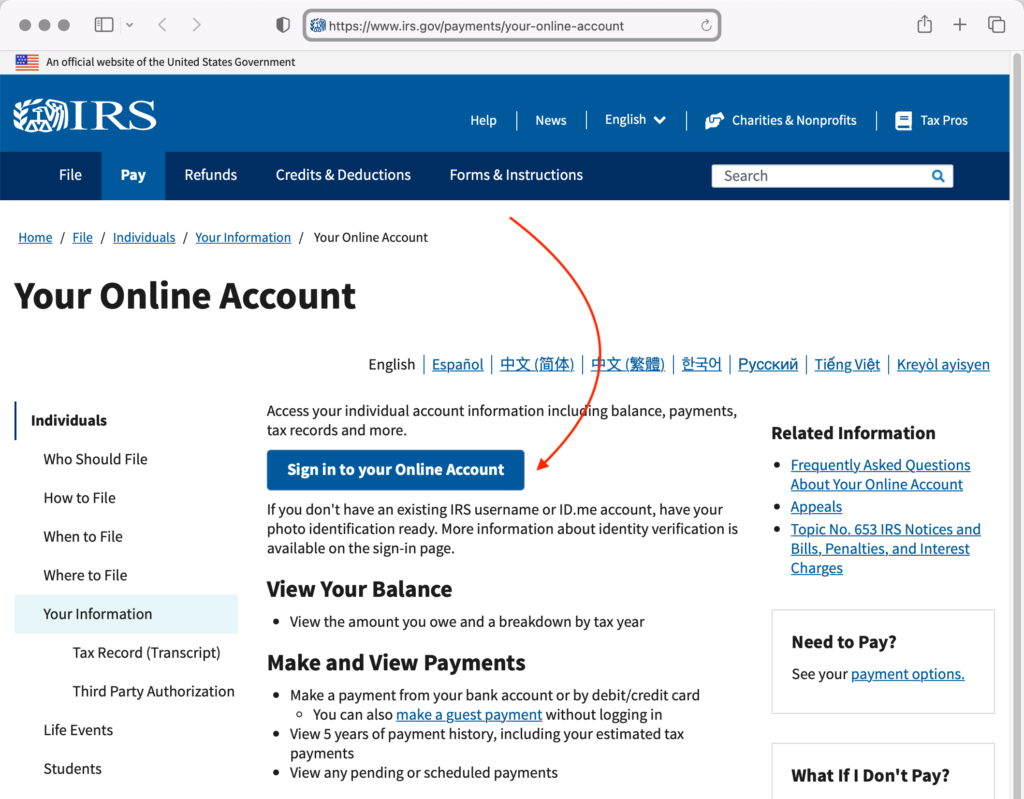
If sufficient time has passed and you still have no confirmation, or if your IRS Online Account doesn’t reflect the payment, direct contact with the IRS is the next step.
- Phone: You can call the IRS directly at 1-800-829-1040 (for individuals) or 1-800-829-4933 (for businesses). Be prepared for potentially long wait times, especially during peak tax season. Have your Social Security Number (SSN) or Employer Identification Number (EIN), tax year, payment amount, and any potential confirmation numbers handy.
- Mail: If you prefer, you can send a written inquiry to the IRS. This is a slower method but creates a paper trail. Include all relevant details about your payment and a copy of your proof of payment. Ensure you send it to the correct IRS address for your area.
Gathering Proof of Payment
Before contacting the IRS, compile all possible proof of payment. This includes:
- IRS Direct Pay confirmation number.
- EFTPS confirmation number.
- Bank statement showing the debit.
- Canceled check (front and back image, obtainable from your bank).
- Credit card statement showing the charge.
- Copies of forms filed (e.g., Form 1040-V payment voucher).
- Any communication from your tax software or tax professional.
Having this documentation readily available will significantly expedite any investigation the IRS might undertake and serve as your primary defense against penalties.
Understanding IRS Notices and How to Respond
If the IRS believes you haven’t paid, they will likely send you a notice (e.g., CP14, CP501, CP503) indicating a balance due, potentially including penalties and interest. Do not ignore these notices. They specify how much you owe and often provide instructions on how to respond if you believe the notice is incorrect. If you have proof of payment, respond to the notice as instructed, providing copies of your documentation. Always keep a copy of your response and all attachments for your records. Ignoring notices can lead to more aggressive collection actions, including liens and levies.
Proactive Strategies to Ensure Smooth Payments
Prevention is always better than cure, especially when it comes to tax payments. Adopting a few proactive strategies can significantly reduce the likelihood of payment issues.
Paying Electronically (The Safest Bet)
Electronic payments are generally the safest and most efficient way to pay your federal taxes. Options include:
- IRS Direct Pay: For payments directly from your bank account.
- EFTPS: For business and individual estimated taxes.
- Debit/Credit Card: Through approved third-party processors, often incurring a small processing fee.
- Tax Software: Integrating payment directly with your tax filing.
These methods offer immediate confirmation numbers and often process faster than mailed checks, minimizing the chance of being lost or delayed.
Keeping Meticulous Records
Establish a robust system for keeping all tax-related records. This includes copies of your filed returns, all payment confirmations, bank statements, canceled checks, and any correspondence with the IRS. Digital copies, backed up securely, are often preferred for easy access and longevity. A dedicated tax folder, either physical or digital, can be a game-changer for financial organization.
Double-Checking Payment Information Before Submission
A common reason for payment failure is incorrect information. Before submitting any payment, meticulously double-check:
- The correct tax year the payment applies to.
- Your Social Security Number (SSN) or Employer Identification Number (EIN).
- The exact payment amount.
- Bank account and routing numbers if paying electronically.
- The correct mailing address for checks.
Even a single digit error can cause a payment to be misdirected or rejected, leading to significant headaches.
Understanding Payment Deadlines and Postmarks
Be acutely aware of payment deadlines. For mailed payments, the postmark date is crucial. Ensure your payment is postmarked by the due date. For electronic payments, the transaction must be completed by the due date. Don’t wait until the last minute, especially with mailed payments, to account for potential postal delays or technical glitches with online systems. Plan to make payments several days in advance of the deadline.
Common Pitfalls and How to Avoid Them
Even with careful planning, certain common issues can arise. Knowing what these are can help you navigate them more effectively.
Incorrect Payment Amounts or Account Numbers
Submitting a payment with the wrong amount can lead to either an underpayment (resulting in penalties) or an overpayment (requiring a refund). Similarly, incorrect SSNs/EINs or bank account details can cause a payment to be applied to the wrong person, wrong tax year, or simply rejected. Always verify these details carefully before finalizing any payment.
Misdirected Mail Payments
While less common with the rise of electronic payments, checks sent via mail can get lost, stolen, or delivered to the wrong address. This is why using certified mail with a return receipt is often recommended for paper checks, as it provides undeniable proof of mailing and delivery. If your check hasn’t cleared within a reasonable timeframe, contact your bank to put a stop payment on it before issuing a new one.
Technical Glitches with Online Systems
While electronic systems are generally reliable, technical issues can occasionally occur. If you encounter an error message while attempting an online payment, do not assume the payment went through. Take a screenshot of the error, try again, or use an alternative payment method. Always verify with your bank or credit card company to ensure the transaction wasn’t duplicated if you made multiple attempts.

Scam Awareness
Be wary of tax scams, especially those demanding immediate payment via unusual methods (e.g., gift cards, wire transfers) or threatening immediate arrest. The IRS will almost always initiate contact via mail, not unsolicited phone calls or emails for collection purposes. If you receive suspicious communications, verify with the IRS directly using their official contact numbers, not numbers provided in the suspicious message.
In conclusion, knowing whether the IRS received your payment is a cornerstone of responsible financial management. By utilizing the official confirmation channels, maintaining diligent records, and understanding the proactive steps outlined above, you can significantly reduce anxiety and ensure your tax obligations are met accurately and on time, securing your financial peace of mind.
aViewFromTheCave is a participant in the Amazon Services LLC Associates Program, an affiliate advertising program designed to provide a means for sites to earn advertising fees by advertising and linking to Amazon.com. Amazon, the Amazon logo, AmazonSupply, and the AmazonSupply logo are trademarks of Amazon.com, Inc. or its affiliates. As an Amazon Associate we earn affiliate commissions from qualifying purchases.