
For many investors, opening a brokerage app to find a sea of red can be a jarring experience. The question “why is the market down today?” is one of the most frequently searched phrases in the financial world, reflecting the inherent anxiety that comes with seeing portfolio values fluctuate. However, market downturns are rarely the result of a single isolated event. Instead, they are usually the product of a complex interplay between macroeconomic data, geopolitical shifts, and investor psychology.
Understanding the mechanics of a down market is essential for any investor who wishes to move beyond emotional reactions and toward strategic decision-making. Whether it is a minor correction or the start of a prolonged bear market, the catalysts often fall into several predictable categories.
1. Macroeconomic Headwinds and Central Bank Policy
The most common driver behind a downward trend in the stock market is the shifting landscape of macroeconomic policy, specifically the actions taken by central banks like the Federal Reserve in the United States.
The Impact of Rising Interest Rates
Interest rates are perhaps the most powerful lever in the world of finance. When central banks raise rates, they are essentially trying to cool down an overheating economy and combat inflation. However, higher rates make borrowing more expensive for both consumers and corporations. When companies have to pay more for their debt, their profit margins shrink. Furthermore, higher interest rates make fixed-income assets, such as bonds, more attractive compared to stocks. As investors shift their capital toward the “safer” returns offered by bonds, stock prices naturally face downward pressure.
Inflationary Pressures and Purchasing Power
Inflation is a double-edged sword for the market. While a small amount of inflation suggests a growing economy, runaway inflation erodes the purchasing power of consumers. When the cost of living spikes—driven by rising prices for food, energy, and housing—discretionary spending typically takes a hit. If consumers spend less, corporate earnings fall. When investors anticipate that future earnings reports will be weak due to inflationary pressure, they often sell off shares in anticipation, leading to the market dips we see “today.”
Employment Data and Economic Growth Indicators
The market is a forward-looking mechanism. It doesn’t just care about how the economy is doing now; it cares about how it will be doing six months from today. Reports such as the Non-Farm Payrolls (NFP) or Gross Domestic Product (GDP) growth rates are scrutinized heavily. If employment is too strong, the market may fear more interest rate hikes. If it is too weak, the market fears a recession. This “Goldilocks” requirement—needing the data to be just right—often leads to volatility when reports miss expectations.
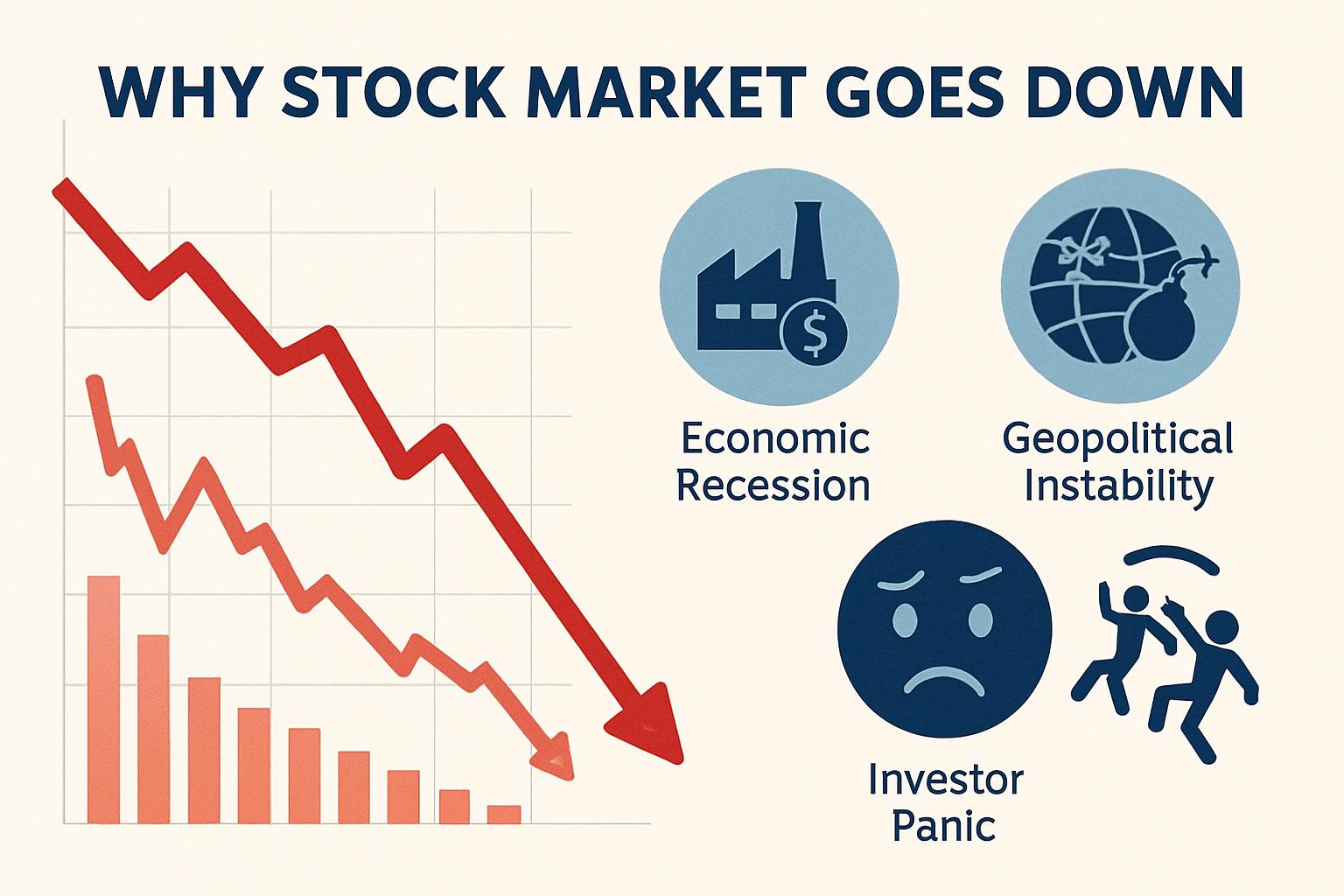
2. Geopolitical Instability and Global Interconnectedness
We live in a globalized economy where a conflict or a policy shift in one corner of the world can trigger a massive sell-off in another. Geopolitics introduces “unknown unknowns” that markets generally detest.
Energy Security and Commodity Price Spikes
Geopolitical tensions in oil-producing regions often lead to immediate spikes in energy prices. Because energy is an input cost for almost every industry—from manufacturing to transportation—a sudden increase in the price of a barrel of oil acts like a tax on the entire global economy. When energy prices rise, investors brace for higher operational costs for companies and lower disposable income for households, which frequently results in a market pullback.
Trade Relations and Supply Chain Disruptions
The modern world relies on “just-in-time” supply chains. Any friction in international trade, such as the imposition of tariffs, trade wars, or regional lockdowns, can bottleneck the production of everything from semiconductors to automobiles. When supply chains are disrupted, companies cannot fulfill orders, leading to missed revenue targets. The market reacts to these disruptions by discounting the value of the affected companies, often leading to broader sector-wide declines.
The “Flight to Quality” Phenomenon
During times of significant global uncertainty, such as military conflicts or major political upheavals, investors often undergo a “flight to quality.” This means they exit “risk-on” assets like stocks and cryptocurrencies and move their capital into “safe-haven” assets like gold or U.S. Treasury bonds. This mass exit from the equity market causes prices to drop rapidly, even if the underlying companies are performing well fundamentally.
3. Corporate Earnings and Valuation Realignment
Even in a stable economy, the market can go down if the “engine room” of the financial world—corporate earnings—starts to sputter.
The Disappointment of Guidance
Twice a year, public companies release their quarterly earnings reports. While the past quarter’s profit is important, the market is much more interested in “guidance.” Guidance is a company’s forecast for its future performance. If a major market leader (like a trillion-dollar tech giant) beats their earnings expectations but lowers their future guidance, the entire market may react negatively. Investors price stocks based on future cash flows; if the future looks dimmer than previously thought, the stock price must adjust downward to reflect that new reality.
P/E Compression and Market Overextension
Markets often move in cycles of expansion and contraction. During periods of extreme optimism, stock prices can grow much faster than actual company earnings, leading to high Price-to-Earnings (P/E) ratios. Eventually, the market reaches a point where valuations are no longer sustainable. This is known as being “overextended.” When a catalyst—no matter how small—triggers a realization that stocks are too expensive, a “valuation realignment” occurs. This is essentially the market “cooling off” and returning to more historical norms.
Sector-Specific Contagion
Sometimes the market is down today because of a specific issue in a single sector that threatens to spread. For example, a crisis in the banking sector can lead to fears about liquidity across the entire financial system. Similarly, a crash in the tech sector due to regulatory changes can lead to a general sell-off as investors liquidate positions across their entire portfolio to cover losses or reduce overall risk exposure.
4. Investor Psychology and Technical Factors
Finally, we must acknowledge that the market is not always a rational machine. It is driven by human emotions—specifically, the tug-of-war between greed and fear.
The Domino Effect of Stop-Loss Orders
In the modern era, much of the market’s daily volume is driven by algorithms and automated trading systems. Many investors set “stop-loss” orders, which automatically sell a stock if it hits a certain price to prevent further losses. If a piece of bad news causes a small dip, it can trigger a wave of stop-loss orders. This creates a feedback loop: selling leads to lower prices, which triggers more selling. This “cascading” effect can cause the market to drop significantly in a very short period, often seemingly out of nowhere.
Fear, Panic, and the “Herding” Mentality
Human beings are social creatures, and in the world of finance, this often manifests as the herding mentality. When the market starts to decline, fear can become contagious. Investors see their neighbors or the “talking heads” on financial news outlets panicking, and they decide to sell “just to be safe.” This emotional selling often disregards the long-term value of the assets being sold. While fundamental factors might start a decline, it is often human panic that accelerates a minor dip into a major sell-off.
Profit Taking and End-of-Quarter Rebalancing
Sometimes, the market is down for reasons that are entirely structural. After a long period of growth, institutional investors (like pension funds and mutual funds) may engage in “profit-taking.” They sell their winners to lock in gains. Additionally, at the end of a month or quarter, large funds often “rebalance” their portfolios to maintain a specific ratio of stocks to bonds. If stocks have performed very well, the fund must sell stocks to buy bonds, which can create temporary downward pressure on the market.
Conclusion: Perspective in a Down Market
When asking “why is the market down today?”, it is important to remember that volatility is the price of admission for long-term wealth creation. Historically, the stock market has spent more time going up than going down, but the downward moves are often sharper and more dramatic.
For the disciplined investor, a down market is not necessarily a signal to exit, but rather an opportunity to reassess. By understanding that today’s decline might be a mix of interest rate fears, geopolitical noise, or simply a technical correction, you can maintain the perspective needed to stay the course. Market pullbacks allow for the “clearing out” of excess and provide an entry point for those looking to build positions in high-quality assets at a discount. In the world of money and investing, the ability to remain calm while the market is “down today” is often what separates successful investors from the rest.
aViewFromTheCave is a participant in the Amazon Services LLC Associates Program, an affiliate advertising program designed to provide a means for sites to earn advertising fees by advertising and linking to Amazon.com. Amazon, the Amazon logo, AmazonSupply, and the AmazonSupply logo are trademarks of Amazon.com, Inc. or its affiliates. As an Amazon Associate we earn affiliate commissions from qualifying purchases.