
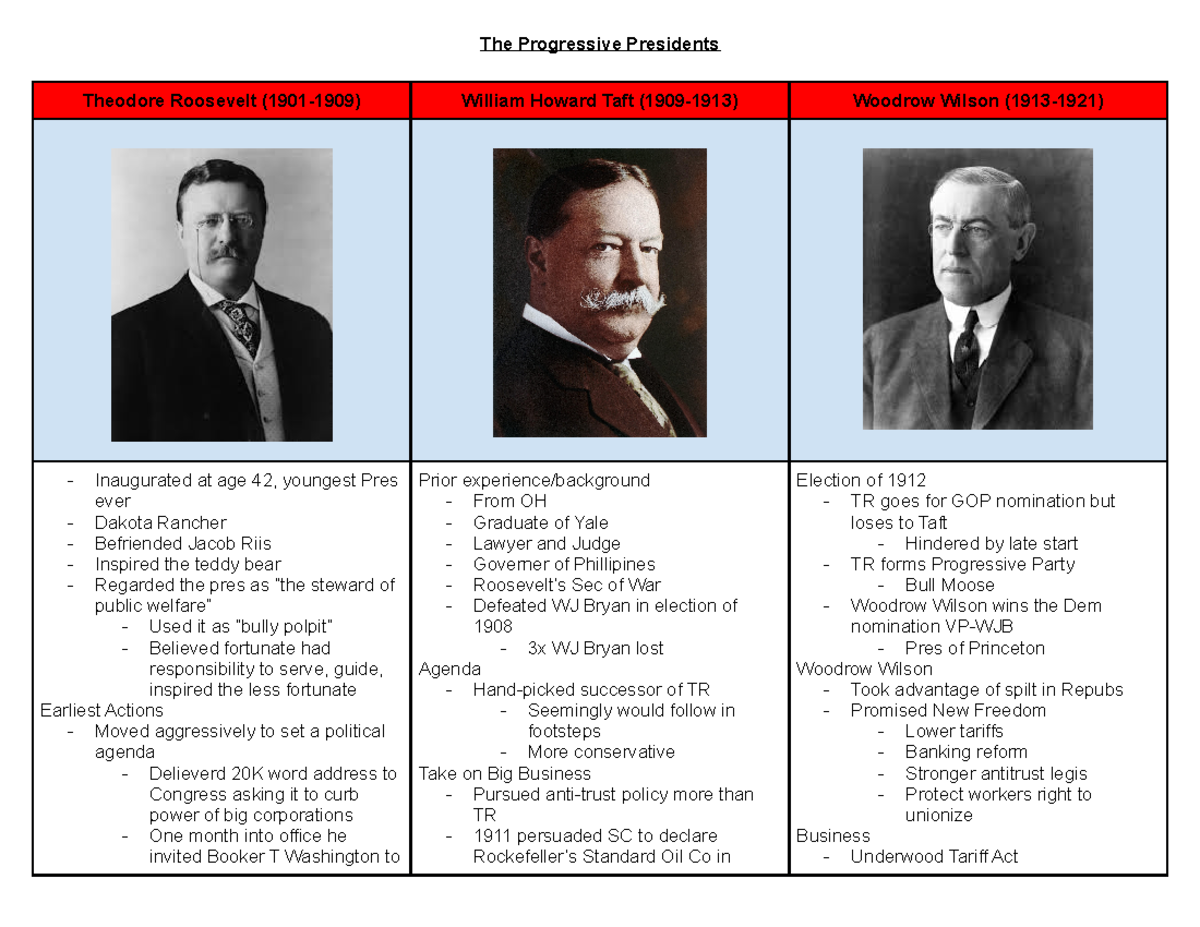
The economic landscape of the United States at the turn of the 20th century was a volatile frontier of unprecedented wealth and systemic instability. To understand the financial structures that govern modern investing, personal finance, and corporate strategy, one must look back to the tenure of the three “Progressive Presidents”: Theodore Roosevelt, William Howard Taft, and Woodrow Wilson. These leaders did not merely oversee a period of social reform; they fundamentally re-engineered the American financial engine, transitioning the nation from the unregulated “Gilded Age” into a structured, modern economy.

The Economic Shift from Gilded Age Monopolies to Regulated Markets
The era preceding the Progressive Presidents was defined by the “Robber Barons”—industrial titans who utilized horizontal and vertical integration to stifle competition and dictate market prices. For the modern investor or business owner, the environment of the late 1800s would be unrecognizable. There were no standardized accounting practices, no central bank to manage liquidity, and no federal income tax to fund public infrastructure.
Breaking the Chains of Vertical Integration
Before the Progressive Era, wealth was concentrated in the hands of a few trusts that controlled entire supply chains. This lack of competition created an inefficient market where “side hustles” or small business growth were nearly impossible because the barriers to entry were enforced by predatory pricing. The Progressive Presidents recognized that for a healthy economy to thrive, the market required a level playing field. Their shift toward “trust-busting” was essentially an early form of market democratization, ensuring that capital could flow into new ventures rather than being hoarded by stagnant monopolies.
The Genesis of Modern Business Ethics
The financial reforms of this era introduced the concept of corporate accountability. Before these administrations, a corporation’s primary “brand strategy” often involved clandestine deals and the suppression of labor. The shift toward transparency began here, setting the stage for the modern Securities and Exchange Commission (SEC) and the disclosure requirements that today’s retail investors rely on to make informed decisions.
Theodore Roosevelt and the Birth of Regulatory Oversight
Theodore Roosevelt, who took office in 1901, was the first to aggressively use the power of the federal government to intervene in the economy. His “Square Deal” was not just a political slogan; it was a fiscal philosophy designed to balance the interests of capital, labor, and the consumer.
The Square Deal: A New Fiscal Contract
Roosevelt’s approach to business finance was revolutionary. He argued that the government should have the power to distinguish between “good trusts,” which provided efficient services at low prices, and “bad trusts,” which existed solely to inflate costs through market manipulation. By initiating over 40 antitrust lawsuits, including the landmark case against the Northern Securities Company, Roosevelt signaled to the financial world that the government was the ultimate arbiter of market fairness. This introduced a new risk variable for investors: regulatory risk. Today, every hedge fund and portfolio manager must account for government intervention, a legacy that began with Roosevelt’s interventionist policies.
The Economic Impact of the Hepburn Act
One of Roosevelt’s most significant contributions to business finance was the Hepburn Act of 1906. This legislation gave the Interstate Commerce Commission (ICC) the power to set maximum railroad rates. At the time, railroads were the backbone of the American economy. By regulating their pricing, Roosevelt ensured that small businesses and farmers had predictable shipping costs, which stabilized local economies and allowed for more consistent personal financial planning among the working class. This was an early step in managing the “cost of doing business” on a national scale.
William Howard Taft: The Institutionalization of Revenue and Trust-Busting
Often overshadowed by his predecessor and successor, William Howard Taft was perhaps the most effective “Trust-Buster” of the three. His administration launched twice as many antitrust suits as Roosevelt’s, including the dissolution of Standard Oil and American Tobacco. However, his most enduring contribution to the world of personal and business finance was the groundwork he laid for federal revenue.

The 16th Amendment and the Framework of Personal Finance
It was during Taft’s presidency that the 16th Amendment was passed by Congress and sent to the states for ratification. This amendment authorized a federal income tax. From a personal finance perspective, this is the most significant legislative event in American history. It changed how individuals viewed their earnings, introduced the concept of tax planning, and created a permanent revenue stream for the federal government. This shift allowed the government to move away from its reliance on high tariffs, which had historically driven up the cost of consumer goods and hindered international trade.
Escalating the War on Monopolies
Taft’s focus on the “rule of reason” in legal challenges against corporations helped define what modern competitive behavior looks like. By breaking up Standard Oil in 1911, Taft’s administration essentially created the modern energy sector. The resulting companies—which would eventually become Exxon, Mobil, and Chevron—proved that competition could lead to higher total market valuation than a single monopoly. For the modern stock market enthusiast, Taft’s actions demonstrated that “de-mergers” and spin-offs could be a powerful tool for unlocking shareholder value.
Woodrow Wilson and the Foundations of Global Monetary Policy
Woodrow Wilson’s presidency saw the culmination of the Progressive Era’s economic ambitions. If Roosevelt and Taft were the “demolitions experts” who broke down the old trusts, Wilson was the “architect” who built the new financial infrastructure that still stands today.
The Federal Reserve Act: Creating the Ultimate Financial Tool
In 1913, Wilson signed the Federal Reserve Act, arguably the most important piece of financial legislation in the history of the United States. Before the Fed, the U.S. suffered from frequent “panics” and bank runs because there was no “lender of last resort” and the money supply was inelastic. The creation of the Federal Reserve System introduced a central banking authority that could manage inflation, stabilize the dollar, and provide liquidity to the banking system.
For today’s investor, the Federal Reserve is the single most influential entity in the global economy. Every time an investor checks interest rates on a mortgage or analyzes the impact of “quantitative easing” on their portfolio, they are engaging with a system designed by Wilson’s administration. This move toward a managed currency allowed for the expansion of credit, which fueled the 20th-century boom in homeownership and small business development.
The Clayton Antitrust Act and Modern Corporate Strategy
Wilson further refined the rules of the road for corporations with the Clayton Antitrust Act and the creation of the Federal Trade Commission (FTC). These tools moved beyond simply “breaking up” big companies to preventing anti-competitive practices before they happened. The Clayton Act specifically banned price discrimination and “interlocking directorates,” where the same individuals sat on the boards of competing companies. This enforcement of corporate boundaries forced businesses to innovate rather than collude, a cornerstone of modern brand strategy and competitive advantage.
The Financial Legacy: How Progressive Reform Dictates Modern Wealth Building
The collective actions of Roosevelt, Taft, and Wilson fundamentally changed the relationship between the individual, the corporation, and the dollar. Their reforms created the stability required for the modern middle class to build wealth through long-term investing and disciplined personal finance.
Investor Protection and Market Transparency
The shift toward federal oversight begun by the Progressive Presidents laid the psychological foundation for modern capital markets. Investors are more willing to deploy capital in a market where they believe the “game” isn’t rigged by a handful of monopolists. The transparency we take for granted today—quarterly earnings reports, audited financial statements, and fair trade regulations—can be traced back to the Progressive push for government as a neutral “referee” in the economic arena.
The Evolution of the Middle-Class Economy
By addressing the extreme wealth inequality of the Gilded Age through the income tax and labor protections, the Progressive Presidents helped foster an environment where personal finance became a concern for the many, not just the few. The creation of a more stable banking system through the Federal Reserve allowed for the rise of consumer credit, enabling the purchase of homes and automobiles, which remain the primary assets in most Americans’ net worth.
In conclusion, the Progressive Presidents were more than just social reformers; they were the designers of the modern financial world. By introducing antitrust enforcement, a centralized banking system, and a federal tax framework, they provided the tools and the stability necessary for a century of economic growth. Whether you are a business owner navigating regulatory compliance or a retail investor tracking the Fed’s interest rate hikes, your financial life is inextricably linked to the legacy of Roosevelt, Taft, and Wilson. They proved that for capitalism to be sustainable, it must be regulated, transparent, and accessible to more than just the titans of industry.
aViewFromTheCave is a participant in the Amazon Services LLC Associates Program, an affiliate advertising program designed to provide a means for sites to earn advertising fees by advertising and linking to Amazon.com. Amazon, the Amazon logo, AmazonSupply, and the AmazonSupply logo are trademarks of Amazon.com, Inc. or its affiliates. As an Amazon Associate we earn affiliate commissions from qualifying purchases.