
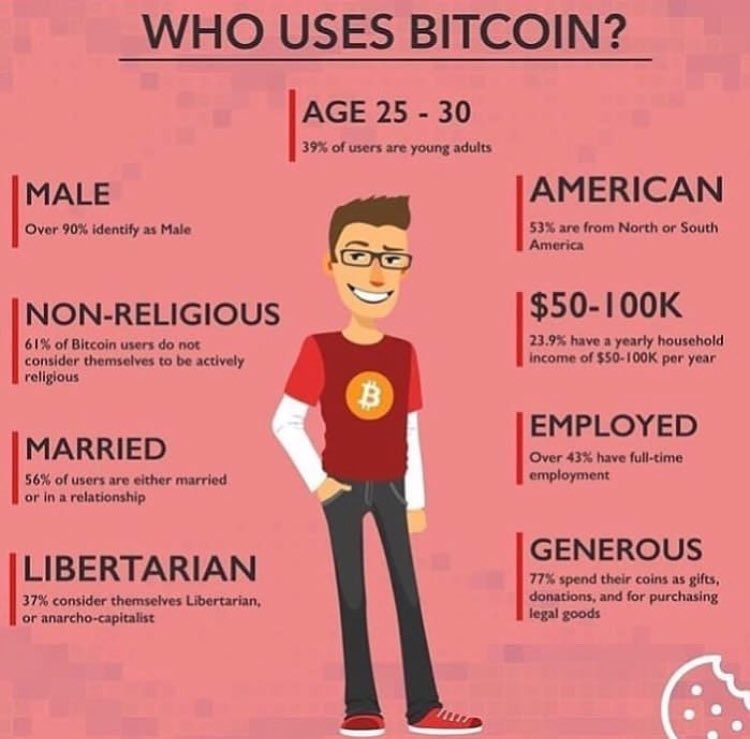
Bitcoin, since its inception in 2009, has evolved from an obscure digital curiosity into a globally recognized financial asset and a potent force challenging traditional monetary systems. Far from being a niche tool for tech-savvy early adopters, its user base has diversified remarkably, encompassing a vast spectrum of individuals, institutions, and even nation-states across the globe. Understanding “who uses Bitcoin” is not merely an exercise in demographics; it’s a deep dive into the shifting motivations, economic realities, and technological advancements that are reshaping the landscape of global finance. From retail investors seeking alternative wealth stores to corporations optimizing treasury management, and from individuals bypassing costly remittance services to entire economies exploring sovereign digital assets, Bitcoin’s utility continues to expand, driven by a complex interplay of economic necessity, speculative interest, and ideological conviction. This article will explore the multifaceted profile of Bitcoin users, delving into their demographics, motivations, geographical distribution, and the diverse financial applications that underscore its enduring relevance.

The Evolving Demographics of Bitcoin Users
The journey of Bitcoin’s adoption reflects a fascinating arc, starting from a highly specialized community and gradually permeating mainstream financial consciousness. Its user base has expanded dramatically, both in volume and diversity, over the past decade.
Early Adopters and Technophiles
In its nascent years, Bitcoin was primarily the domain of a specific cohort: cypherpunks, cryptographers, developers, and libertarian-minded individuals. These early adopters were drawn to Bitcoin’s revolutionary promise of decentralized, censorship-resistant digital cash. Their motivations were often rooted in ideological principles – a desire for financial autonomy outside the control of central banks and governments, and a belief in open-source technology. They were the first to experiment with its underlying blockchain technology, contribute to its development, and embrace the risks associated with an entirely new and unproven asset class. For them, Bitcoin was more than just money; it was a socio-political statement and a technological marvel. This phase saw minimal financial speculation, with usage focused more on proof of concept and fostering a nascent digital economy.
Retail Investors and Speculators
As Bitcoin gained visibility, particularly following its initial price surges and mainstream media coverage, its appeal broadened significantly. The narrative began shifting from purely ideological to one of lucrative investment opportunity. This ushered in the era of the retail investor, an individual not necessarily conversant with the intricate details of cryptography but keen on participating in what appeared to be a rapidly appreciating asset. Millions of individual investors, often driven by the fear of missing out (FOMO) and the allure of substantial returns, began allocating portions of their portfolios to Bitcoin. This group includes both long-term holders, often dubbed “HODLers” (a misspelling of “hold” that became a rallying cry), who believe in Bitcoin’s future value as a digital store of value, and short-term traders who seek to profit from its inherent volatility. Accessibility through user-friendly exchanges and financial apps further democratized access for this demographic.
Institutional Investors and Corporations
The most recent and perhaps most impactful wave of adoption comes from institutional players and corporations. Major financial institutions, hedge funds, asset managers, and publicly traded companies have increasingly recognized Bitcoin not just as a speculative asset but as a legitimate part of a diversified investment strategy or even a treasury reserve asset. MicroStrategy’s significant Bitcoin acquisitions, Tesla’s temporary adoption, and the launch of Bitcoin ETFs in various jurisdictions signal a clear shift towards institutional acceptance. These entities are drawn by Bitcoin’s potential as an inflation hedge, its low correlation with traditional asset classes, and the increasing regulatory clarity in some regions. Their entry brings substantial capital, greater market stability (theoretically), and further legitimizes Bitcoin in the eyes of the broader financial world. This institutional embrace marks a critical milestone, moving Bitcoin from the fringes to the mainstream of global finance.
Bitcoin’s Diverse Applications and Use Cases
Beyond investment, Bitcoin’s utility extends to a wide array of practical financial applications, catering to different needs across various demographics and geographies.
A Store of Value and Inflation Hedge
One of the most compelling narratives for Bitcoin users, particularly in recent years, is its positioning as “digital gold” – a superior store of value that can hedge against inflation and economic instability. In an era of unprecedented quantitative easing and rising concerns about the purchasing power of fiat currencies, many individuals and institutions turn to Bitcoin as a scarce, decentralized, and censorship-resistant asset. Countries experiencing hyperinflation or significant currency devaluation often see heightened Bitcoin adoption, as citizens seek to protect their wealth from crumbling national currencies. Its fixed supply cap of 21 million coins, combined with its programmatic scarcity, reinforces this narrative, appealing to those who distrust traditional central banking policies.
Global Remittances and Cross-Border Payments
For millions around the world, particularly migrant workers sending money home, traditional remittance services are notoriously slow, expensive, and opaque. Bitcoin offers a revolutionary alternative. By leveraging its global, permissionless network, users can send funds across borders with significantly lower fees and faster settlement times, often within minutes or hours, compared to days for traditional banking systems. This is a critical use case in emerging markets where a substantial portion of the population relies on remittances for survival. The ability to bypass intermediaries and transfer value directly, peer-to-peer, makes Bitcoin an attractive option for financial inclusion and efficiency in global money transfers.
Online Transactions and E-commerce
While not yet ubiquitous, Bitcoin facilitates online transactions and e-commerce for a specific segment of users. Merchants looking to avoid credit card processing fees or reduce chargeback fraud sometimes accept Bitcoin. For consumers, it offers a degree of privacy and autonomy not available with traditional payment methods. Certain niche markets, particularly those dealing with digital goods or services that benefit from fast, irreversible transactions, have also found Bitcoin to be a suitable payment rail. The development of layer-2 solutions like the Lightning Network aims to further enhance Bitcoin’s capabilities for micro-payments and daily transactions, making it a more viable option for everyday online commerce.
Financial Inclusion in Underserved Regions
Perhaps one of Bitcoin’s most profound impacts is its role in providing financial services to the unbanked and underbanked populations globally. In many parts of the world, a significant portion of the adult population lacks access to traditional banking accounts, credit, or savings instruments due to geographic isolation, lack of identification, or prohibitive fees. Bitcoin, accessible via a smartphone and an internet connection, effectively bypasses these barriers. It enables individuals to hold, send, and receive value independently, fostering a level of financial sovereignty previously unimaginable. For entrepreneurs in developing nations, it offers a way to conduct international business without needing a traditional bank account, opening up new economic opportunities.
Geographic Distribution and Regulatory Landscape’s Influence
The adoption and use of Bitcoin vary significantly across different geographies, heavily influenced by local economic conditions, technological penetration, and the prevailing regulatory environment.
Developed Nations: Investment and Innovation Hubs

In North America, Europe, and parts of East Asia, Bitcoin’s primary use case tends to revolve around investment, speculation, and institutional adoption. These regions boast robust financial markets, high levels of technological literacy, and relatively stable economies. Here, Bitcoin is often seen as an alternative asset class for portfolio diversification, a hedge against inflation, or a speculative play for high returns. Regulatory developments, such as the approval of spot Bitcoin ETFs, often emanate from these regions, significantly impacting global adoption. Innovation in Bitcoin-related services, such as sophisticated trading platforms, custodial solutions, and financial products, is also concentrated in these developed economies.
Emerging Markets: Utility and Necessity
In contrast, emerging markets in Latin America, Africa, and parts of Asia often demonstrate a more pronounced utility-driven adoption of Bitcoin. In countries facing high inflation, capital controls, or limited access to traditional banking, Bitcoin serves as a vital tool for preserving wealth, making international payments, and accessing financial services. El Salvador’s adoption of Bitcoin as legal tender is a prime example, aiming to reduce remittance costs and foster financial inclusion for its citizens. Similarly, countries like Nigeria, Argentina, and Turkey have seen significant grassroots adoption, driven by economic instability and the need for a stable alternative to depreciating national currencies. Here, Bitcoin is less a speculative investment and more a practical necessity for daily financial life.
Impact of National Policies and Regulations
The regulatory stance of governments plays a crucial role in shaping Bitcoin adoption and its use cases within a country. Nations with progressive or permissive regulations tend to foster greater innovation and investment, attracting users who seek legal clarity and protection. Conversely, countries with restrictive or outright prohibitory regulations suppress official adoption, sometimes driving usage underground or forcing citizens to rely on less secure, peer-to-peer networks. China’s comprehensive ban on crypto mining and trading, for example, significantly altered the global distribution of Bitcoin users and infrastructure. The evolving regulatory landscape, from outright bans to embracing Bitcoin as legal tender, continuously redefines who can use Bitcoin, how they use it, and where its future growth will be concentrated.
The Motivations Behind Bitcoin Adoption
The reasons why individuals and entities choose to use Bitcoin are as diverse as its user base, ranging from deeply philosophical to purely pragmatic.
Financial Autonomy and Decentralization
A foundational motivation for many Bitcoin users is the desire for greater financial autonomy and a rejection of centralized control. Bitcoin operates on a decentralized network, meaning no single entity – be it a government, bank, or corporation – has the power to control or censor transactions, issue new coins, or freeze accounts. This inherent resistance to censorship and its permissionless nature appeal to those who value individual sovereignty over their assets. For individuals living under authoritarian regimes or in countries with volatile political landscapes, Bitcoin can serve as a vital tool to circumvent capital controls, protect wealth from state confiscation, and maintain financial freedom.
Speculative Returns and Wealth Accumulation
Undoubtedly, a significant driver for Bitcoin adoption, particularly among retail and institutional investors, is the potential for substantial speculative returns. Bitcoin’s historical price performance, characterized by periods of exponential growth, has attracted countless individuals seeking to grow their wealth. While highly volatile, its limited supply and increasing demand fuel expectations of future price appreciation. For many, Bitcoin represents a unique, albeit risky, opportunity to participate in a nascent asset class with the potential for outsized gains compared to traditional investments. This motivation often coexists with a long-term belief in Bitcoin’s fundamental value as a transformative technology.
Philosophical Beliefs and Ideological Alignment
Beyond pure financial gain, a strong philosophical and ideological undercurrent motivates a segment of Bitcoin users. These individuals are often drawn to the core principles of the cypherpunk movement, advocating for privacy, open-source technology, and the power of cryptography to protect individual liberties. They see Bitcoin as a manifestation of these ideals – a transparent, auditable, yet private financial system built on mathematical proof rather than trust in intermediaries. For them, using Bitcoin is a statement of belief in a future where finance is more equitable, accessible, and resistant to manipulation.
Practical Utility and Efficiency
Finally, a pragmatic motivation underpins many use cases: the practical utility and efficiency Bitcoin offers over traditional financial systems. For cross-border remittances, its speed and lower fees are tangible benefits. For businesses, avoiding credit card processing fees and chargebacks can improve profit margins. For the unbanked, it provides access to essential financial services. In scenarios where traditional banking is slow, expensive, or simply unavailable, Bitcoin presents a viable, often superior, alternative. This utility-driven adoption focuses on solving real-world financial problems through Bitcoin’s inherent advantages.
The Future Landscape of Bitcoin Users
The trajectory of Bitcoin adoption suggests a continued expansion and maturation of its user base.
Increasing Mainstream Adoption
As regulatory frameworks evolve and become clearer, and as user interfaces become more intuitive and accessible, Bitcoin is poised for even greater mainstream adoption. The entry of major financial institutions and the availability of regulated investment products will lower barriers to entry for millions who currently find Bitcoin too complex or risky. Improved infrastructure, such as enhanced security features and easier integration with existing financial systems, will further accelerate this trend.
Integration into Traditional Finance
The lines between traditional finance and the crypto ecosystem are blurring. Bitcoin ETFs, institutional custody solutions, and the exploration of Bitcoin by central banks suggest a future where Bitcoin is more deeply embedded within the global financial architecture. This integration will attract a new wave of users who prefer to interact with Bitcoin through familiar financial instruments and trusted institutions, rather than directly managing their own private keys.
Continued Growth in Emerging Economies
The fundamental utility of Bitcoin in emerging markets – as a tool for wealth preservation, remittances, and financial inclusion – will continue to drive significant growth. As internet access expands and smartphone penetration increases in these regions, Bitcoin provides a ready-made solution for populations underserved by conventional banking, leapfrogging older financial infrastructures.
In conclusion, “who uses Bitcoin” is no longer a simple answer. It is a vast and growing coalition that spans geographical, socio-economic, and ideological divides. From the pioneering tech enthusiasts to sophisticated institutional investors, from individuals seeking financial refuge from inflation to those demanding greater autonomy, Bitcoin serves a multitude of purposes. Its journey from a niche technology to a globally recognized financial asset underscores a fundamental shift in how we perceive and interact with value. As the financial world continues to evolve, Bitcoin’s diverse user base will undoubtedly play a pivotal role in shaping its ultimate impact on the global economy.
aViewFromTheCave is a participant in the Amazon Services LLC Associates Program, an affiliate advertising program designed to provide a means for sites to earn advertising fees by advertising and linking to Amazon.com. Amazon, the Amazon logo, AmazonSupply, and the AmazonSupply logo are trademarks of Amazon.com, Inc. or its affiliates. As an Amazon Associate we earn affiliate commissions from qualifying purchases.