
The story of Tesla Motors is often distilled into a singular narrative centered on its high-profile CEO, Elon Musk. However, the genesis and technological evolution of the company are the results of a complex interplay between visionary engineers, software pioneers, and battery scientists. To understand who made Tesla Motors is to look beyond the boardroom and into the laboratories and assembly lines where the blueprint for the modern electric vehicle (EV) was drafted. Tesla was not merely founded; it was engineered into existence by a cohort of individuals who believed that silicon-valley logic could disrupt a century-old mechanical industry.

The Foundational Engineers: Eberhard, Tarpenning, and the Vision of Lithium-Ion
While many associate Tesla’s origins with the mid-2000s, the technical framework began in 2003 with two engineers: Martin Eberhard and Marc Tarpenning. Their background was not in automotive manufacturing, but in digital reading devices and battery efficiency. This distinction is critical to the “Tech” identity of Tesla; they approached the car as a piece of hardware that required optimized energy management rather than just a chassis with a motor.
The Silicon Valley Roots of the Electric Vehicle
Eberhard and Tarpenning founded Tesla Motors with a specific technical hypothesis: that lithium-ion battery technology, which was then powering laptops and cell phones, had reached an energy density sufficient to power a high-performance vehicle. Before Tesla, the automotive industry largely viewed electric cars through the lens of lead-acid or nickel-metal hydride batteries, which were heavy and inefficient. The duo’s “tech-first” approach shifted the focus from mechanical combustion to electrochemical storage.
From Tzero to the Roadster Concept
The technical spark for Tesla came from a kit car called the tzero, built by AC Propulsion. Eberhard was fascinated by the tzero’s ability to outperform Ferraris in acceleration using electric propulsion. However, the tzero used heavy lead-acid batteries. Eberhard and Tarpenning realized that by replacing these with thousands of small, commodity lithium-ion cells—specifically the 18650 format—they could create a vehicle with unprecedented range. This became the technical foundation of the Tesla Roadster, the vehicle that proved the EV could be a high-end tech gadget rather than a glorified golf cart.
The Expansion of the Tech Stack: Musk, Straubel, and the Battery Revolution
In 2004, Elon Musk joined the company as the lead investor and Chairman, bringing with him a ruthless focus on product design and vertical integration. However, the technical “glue” that held Musk’s ambitious visions together was J.B. Straubel, the company’s long-time Chief Technology Officer. Straubel is arguably the person most responsible for Tesla’s lead in battery management systems (BMS).
J.B. Straubel and the Mastery of Battery Management
The challenge with using thousands of lithium-ion cells is stability. If one cell overheats, it can trigger a thermal runaway, leading to a fire. J.B. Straubel led the engineering team that developed the liquid-cooling systems and complex software algorithms required to monitor each cell individually. This “smart” battery pack was a revolutionary departure from traditional automotive engineering. It allowed Tesla to squeeze more range out of less weight, a technical moat that competitors are still struggling to cross over a decade later.
Integrating Software-First Architecture
Under the technical leadership of Musk and Straubel, Tesla pioneered the concept of the “Software-Defined Vehicle.” Most traditional cars are a collection of “black box” components from various suppliers, each running its own isolated code. Tesla’s architects designed a centralized computing architecture. This allowed for the implementation of Over-the-Air (OTA) updates, a concept borrowed directly from the smartphone industry. By making the car’s hardware subservient to a central software core, Tesla ensured that a vehicle could improve its braking distance, acceleration, and user interface long after it had left the factory floor.
Engineering the Future: The Evolution of Autopilot and AI
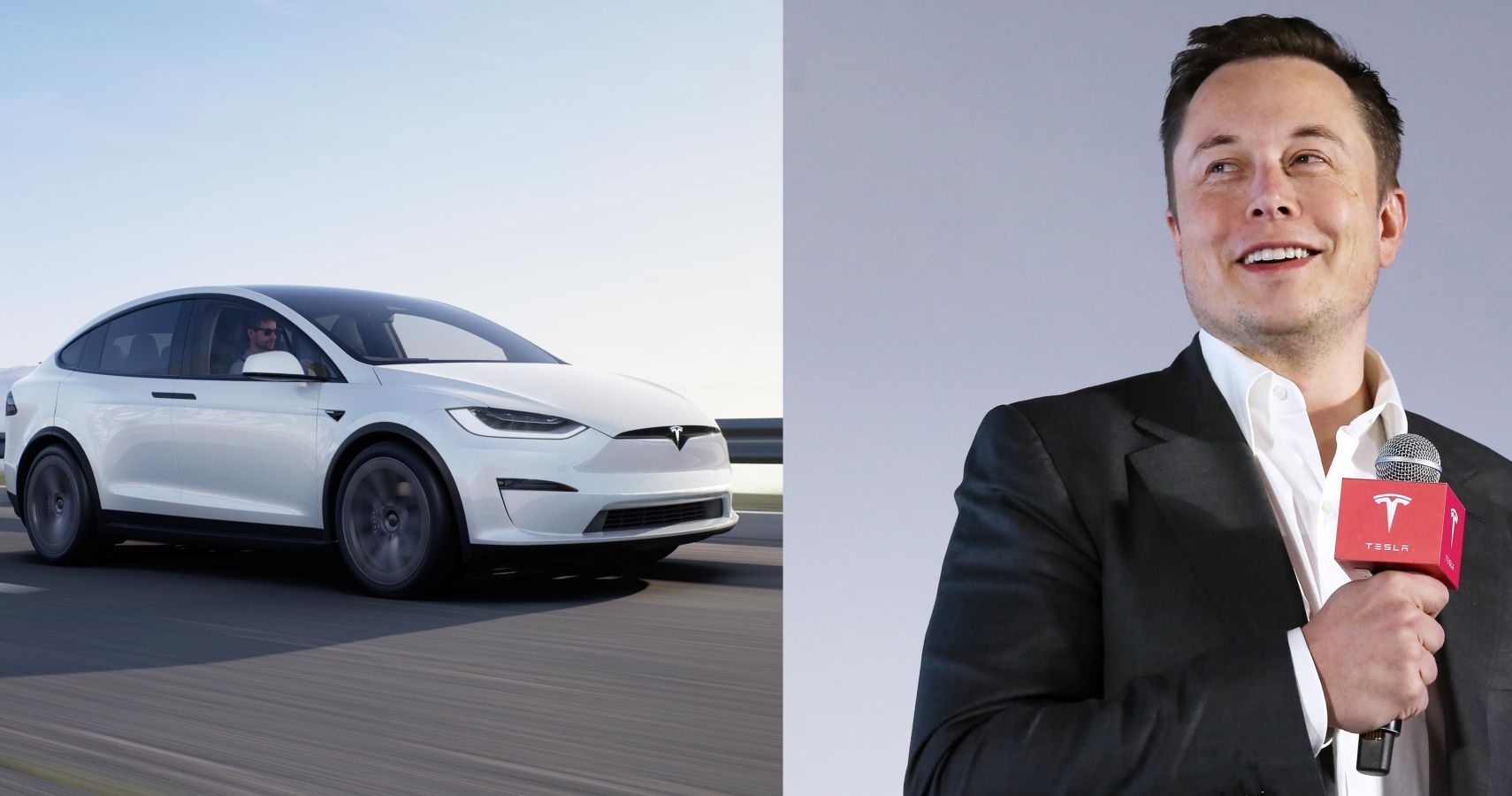
As Tesla transitioned from a niche sports car manufacturer to a mass-market powerhouse with the Model S and Model 3, the definition of “who made” the company shifted toward artificial intelligence and computer vision. The hardware was no longer just about the battery; it was about the sensors and the silicon.
Full Self-Driving (FSD) and Neural Networks
Tesla’s move away from traditional radar and LiDAR sensors toward a “vision-only” approach was a massive technical gamble led by Andrej Karpathy and his AI team. By utilizing deep learning and neural networks, Tesla’s engineers aimed to teach a car to “see” and interpret the world exactly as a human does. This required the development of a massive data pipeline, where millions of Tesla vehicles on the road act as data collection agents, feeding real-world edge cases back to the mothership to train the AI models.
Hardware 4.0 and the Dojo Supercomputer
To process this astronomical amount of data, Tesla realized that off-the-shelf hardware from companies like Nvidia would not suffice for their long-term goals. This led to the creation of the Tesla Silicon team, which designed the FSD Chip—a high-performance AI processor built specifically for neural network inference in vehicles. Furthermore, the development of the Dojo Supercomputer represents Tesla’s transition from a car company to an AI and computing company. Dojo is designed specifically for video training, aiming to provide the immense compute power necessary to solve the “unsolved” problem of autonomous driving.
Redefining Manufacturing: The Gigafactory and Casting Innovations
The physical creation of Tesla vehicles also required a revolution in industrial technology. Musk famously remarked that the “machine that builds the machine” is more important than the product itself. This led to the technical realization of the Gigafactory and new ways of thinking about metallurgy and robotics.
Large-Scale Robotics and Automation
Tesla’s production lines, particularly for the Model 3 and Model Y, utilize some of the highest densities of robotics in the world. The engineering team focused on reducing the “parts count” of the car. While a traditional car frame might be made of hundreds of stamped metal parts welded together, Tesla introduced the “Giga Press.” This massive casting machine allows Tesla to produce the front and rear underbodies of the car as single, solid pieces of aluminum. This technical innovation reduces weight, improves safety, and drastically simplifies the assembly process.
4680 Battery Cells and Structural Packs
The latest leap in Tesla’s manufacturing tech is the 4680 battery cell. By increasing the size of the cell and utilizing a “tabless” design, Tesla’s engineers reduced internal resistance and improved thermal characteristics. More importantly, they integrated these cells into a “structural battery pack.” In this design, the batteries are not just stored in the car; they are the floor of the car, providing structural rigidity. This engineering feat reduces the total mass of the vehicle and improves energy efficiency, further cementing Tesla’s role as a leader in applied physics and materials science.
The Legacy of Tesla’s Technological Open-Source Approach
Who made Tesla Motors? It was a collective of engineers who were willing to ignore the “best practices” of the legacy auto industry in favor of first-principles physics. However, their impact extends beyond the company’s own factory walls.
Impact on the Global EV Ecosystem
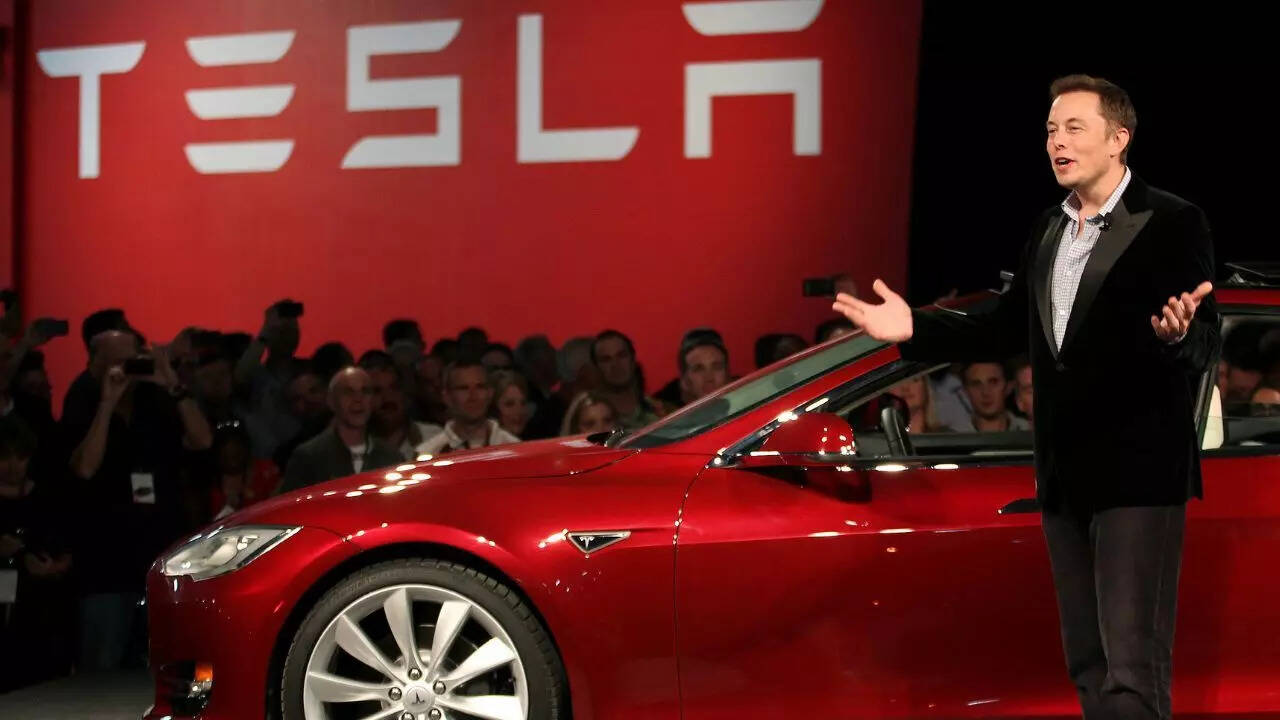
In a rare move for a tech company, Tesla opened up its patents in 2014, inviting other manufacturers to use its technology to accelerate the world’s transition to sustainable energy. This “open-source” philosophy was a strategic tech move to standardize charging infrastructure and battery chemistry. Today, the North American Charging Standard (NACS), developed by Tesla engineers, has become the de facto standard for almost all major automakers in the US.
In conclusion, Tesla Motors was made by those who viewed the automobile not as a mechanical device with some electronics added on, but as a sophisticated computer encased in a high-performance shell. From Eberhard and Tarpenning’s lithium-ion epiphany and Straubel’s battery management systems to the AI researchers developing Dojo and the manufacturing engineers operating the Giga Press, Tesla is a product of continuous, iterative technical brilliance. It is a testament to the fact that in the modern era, the most successful machines are those built by the architects of software, silicon, and sustainable energy.
aViewFromTheCave is a participant in the Amazon Services LLC Associates Program, an affiliate advertising program designed to provide a means for sites to earn advertising fees by advertising and linking to Amazon.com. Amazon, the Amazon logo, AmazonSupply, and the AmazonSupply logo are trademarks of Amazon.com, Inc. or its affiliates. As an Amazon Associate we earn affiliate commissions from qualifying purchases.