
The simple calculator, an indispensable tool for students, engineers, and financial professionals alike, is often taken for granted in our digitally saturated world. Yet, its lineage stretches back centuries, representing a persistent human quest to simplify and accelerate calculation. The question of “who made the first calculator” is not merely a historical trivia point; it’s an exploration into the very foundations of modern computing, a narrative woven with threads of ingenious mechanical design, mathematical breakthroughs, and the relentless pursuit of automation. Understanding this journey is to appreciate the incremental technological leaps that paved the way for the sophisticated devices we interact with daily, from smartphones to supercomputers. It’s a story of how a fundamental human need — the need to count and compute — sparked a technological revolution.

The Quest for Calculation: Early Human Endeavors
Long before the advent of gears and electronic circuits, humanity devised clever systems to manage numbers. The need for precise calculation arose with trade, astronomy, and architecture, pushing early civilizations to invent tools that extended the capabilities of the human mind. These nascent attempts laid the conceptual groundwork for what would eventually become the mechanical and electronic calculators we recognize today.
Ancient Roots: The Abacus and Manual Methods
The earliest forms of calculation were, naturally, manual. Fingers and toes served as the most rudimentary tools, quickly followed by tally marks etched into bone or wood. As civilizations grew in complexity, so did their numerical challenges. The abacus, emerging independently in various cultures from Mesopotamia to China, stands as the quintessential ancient calculating device. Composed of a frame with beads sliding on rods, the abacus allowed users to perform addition, subtraction, multiplication, and division with remarkable speed and accuracy. It was a purely manual device, relying entirely on the operator’s skill and understanding of numerical representation. While not a “calculator” in the sense of an automatic machine, the abacus was a sophisticated computational aid that dominated numerical processing for thousands of years, demonstrating humanity’s early drive to externalize and streamline mathematical operations. Its enduring presence in some cultures even today speaks volumes about its effectiveness and innovative design.
John Napier’s Ingenuity: Napier’s Bones
Fast forward to the early 17th century, a period of burgeoning scientific discovery and a growing demand for more efficient calculation, particularly in astronomy and navigation. Scottish mathematician John Napier, famed for his invention of logarithms, sought to simplify multiplication and division – processes that were still cumbersome even with logarithms. In 1617, he introduced a manual calculating device known as Napier’s Bones. This ingenious tool consisted of a set of rods, typically made of bone, ivory, or wood, marked with digits. By arranging these rods appropriately, users could perform multiplication and division by simply adding numbers derived from the rods, effectively reducing complex multiplication to a series of simpler additions. While still manual, Napier’s Bones represented a significant conceptual leap: it was a device specifically designed to automate parts of the arithmetic process, allowing for quicker results and reducing the potential for human error inherent in long-form calculations. It was a precursor to more complex mechanical devices, showcasing the potential for physical tools to manipulate numbers algorithmically.
The Mechanical Dawn: Pioneering Automatic Computation
The 17th century marked a pivotal moment in the history of calculation: the shift from purely manual aids to mechanical devices capable of performing arithmetic operations automatically. This era saw the birth of the first true “calculators” – machines that could execute calculations without continuous human intervention for each step. These inventions were not just about speed; they were about embedding mathematical logic into physical mechanisms, a foundational concept for all future computational technology.
Blaise Pascal and the Pascaline: A Revolutionary Step
The credit for creating what is widely considered the first true mechanical calculator often goes to Blaise Pascal. A brilliant French mathematician, physicist, inventor, writer, and theologian, Pascal began developing his machine in 1642, at the tender age of nineteen. His motivation was intensely practical: to assist his father, a tax commissioner, with tedious and error-prone arithmetic calculations. The resulting device, known as the Pascaline (or Arithmétique à Roues), was a brass rectangular box that used a series of geared wheels to perform addition and subtraction.
Each wheel represented a decimal digit, and when a wheel completed a full rotation (from 9 to 0), it automatically carried over a digit to the next wheel, much like an odometer. This automatic carry mechanism was a revolutionary feature, distinguishing the Pascaline from all preceding calculating aids. While the Pascaline had limitations – subtraction required a somewhat convoluted method, and it couldn’t perform multiplication or division directly without repeated additions or subtractions – it was a groundbreaking invention. Pascal built around fifty prototypes and at least eight working machines, some of which survive today. Its significance lies in being the first machine that could perform arithmetic operations mechanically, reducing the cognitive load on the operator and dramatically increasing accuracy.
Gottfried Leibniz’s Stepped Reckoner: Advancing Beyond Addition
Building upon Pascal’s work, the German polymath Gottfried Wilhelm Leibniz pushed the boundaries of mechanical calculation further. Fascinated by Pascal’s machine, Leibniz recognized its potential but also its limitations. Between 1672 and 1694, he designed and built the Stepped Reckoner (Staffelwalze). His machine was a significant advancement because it could not only perform addition and subtraction directly but also multiplication and division through a series of repeated additions and subtractions, respectively, which were automated by a clever mechanism.
The core innovation of the Stepped Reckoner was the Leibniz wheel (also known as the stepped drum), a cylinder with nine teeth of varying lengths. This design allowed for the input of multiplicands and divisors through a movable carriage, greatly simplifying complex calculations. Although only two prototypes were ever built, and they were notoriously prone to mechanical issues, Leibniz’s vision was profound. He aimed for a machine that could perform all four basic arithmetic operations efficiently. His work demonstrated a deeper understanding of how mechanical devices could embody complex mathematical algorithms, solidifying the idea that machines could do more than just simple sums – they could truly ‘calculate’. The Stepped Reckoner foreshadowed the capabilities that would be expected of all future calculating machines.
The Ambition of Babbage: Difference and Analytical Engines
The 19th century brought another monumental leap, primarily through the visionary work of British mathematician and inventor Charles Babbage. Often hailed as the “Father of the Computer,” Babbage conceived of machines that went far beyond mere calculation, venturing into the realm of programmable computation.
His first major project, started in 1822, was the Difference Engine. This machine was designed to automate the calculation of polynomial functions and print tabular results, primarily for astronomical and navigation tables, which were notoriously full of human errors. The Difference Engine was fully automatic and designed to compute a series of values using the method of finite differences. Although Babbage never completed a full-scale working model (due to funding issues and the extreme precision required for its thousands of intricate parts), his detailed designs were impeccable. A working replica built in the 1990s by the London Science Museum, following Babbage’s original plans, proved that the machine would have worked perfectly.
Even more ambitious was Babbage’s concept for the Analytical Engine, which he began designing around 1837. This machine was a universal programmable computer, conceptually equivalent to modern digital computers. It featured a “mill” (the central processing unit), a “store” (memory), a “reader” (input, using punched cards adapted from Jacquard’s loom), and a “printer” (output). It could execute conditional branching, looping, and parallel processing. Ada Lovelace, daughter of Lord Byron and a brilliant mathematician, collaborated with Babbage and wrote what many consider to be the first computer program for the Analytical Engine. Like the Difference Engine, the Analytical Engine was never built in Babbage’s lifetime, primarily due to the technological limitations of the era regarding precision manufacturing. However, its conceptual design was so advanced that it wasn’t until the mid-20th century that similar ideas were practically realized. Babbage’s engines, though largely unbuilt, represent the pinnacle of mechanical computation and laid the theoretical groundwork for virtually every aspect of modern computer architecture.
From Mechanical Giants to Electronic Minds: The Evolution Continues

The ingenuity of Pascal, Leibniz, and Babbage set the stage for a dramatic evolution in calculation. While mechanical calculators continued to dominate for another century, the early 20th century ushered in the age of electronics, fundamentally transforming what a “calculator” could be and do.
The Arithmometer Era: Commercializing Mechanical Calculators
Despite the theoretical brilliance of Babbage, practical mechanical calculators for commercial use became widespread only in the late 19th and early 20th centuries. The Arithmometer, invented by Charles Xavier Thomas de Colmar in 1820, was the first mass-produced mechanical calculator. It was based on Leibniz’s Stepped Reckoner design and could perform the four basic arithmetic operations reliably. Its commercial success proved the viability and market demand for mechanical calculating machines. Over the subsequent decades, various companies, such as Felt & Tarrant (Comptometer), Burroughs, and Monroe, developed increasingly sophisticated and user-friendly mechanical calculators. These machines, often operated by highly skilled clerks, became standard equipment in offices, banks, and scientific institutions worldwide, enabling a scale of data processing previously unimaginable. They marked the peak of purely mechanical computation, but their complexity, size, and mechanical limitations soon opened the door for a new paradigm.
The Birth of Electronic Calculation: From Relays to Transistors
The mid-20th century witnessed the dawn of the electronic age, a revolution that would redefine the calculator. The first electronic “calculating machines” were massive computers, like ENIAC, developed during World War II. These early machines used thousands of vacuum tubes and occupied entire rooms, performing calculations at speeds far exceeding any mechanical device. However, a “calculator” in the portable, dedicated sense began to emerge.
The first purely electronic desktop calculators appeared in the early 1960s, notably the British-made Bell Punch ANITA Mark VII in 1961, which used vacuum tubes, and later the Friden EC-130 in 1964, which was among the first to use transistors. The introduction of transistors was a game-changer. Transistors were smaller, more reliable, consumed less power, and generated less heat than vacuum tubes. This miniaturization allowed for the production of increasingly compact and affordable electronic calculators. Companies like Sharp, Canon, and Casio quickly entered the market, driving innovation and rapidly decreasing costs. The shift from mechanical to electronic calculation dramatically increased speed, reduced noise, and improved reliability, paving the way for the personal computing era.
The Modern Calculator: Ubiquity and Specialization
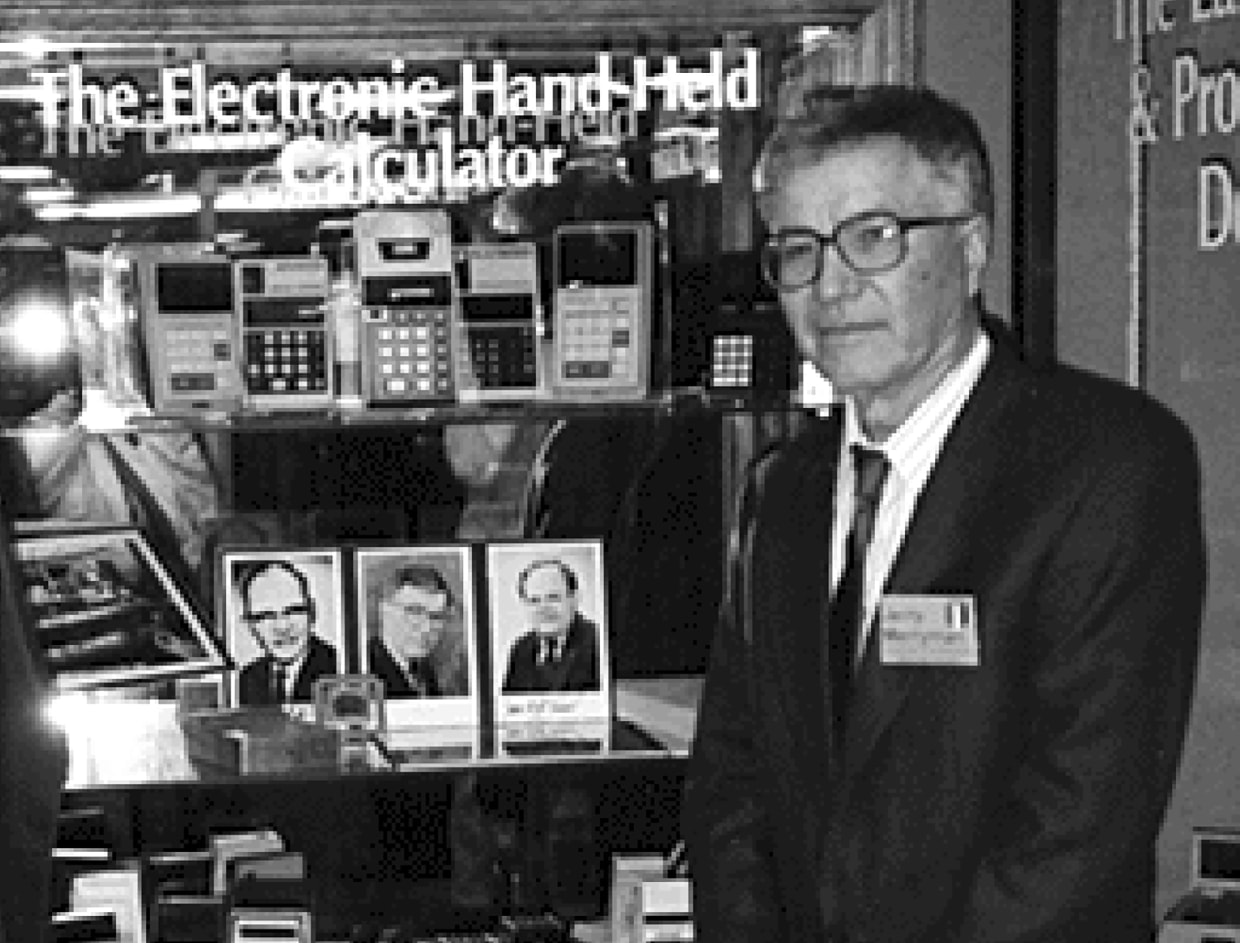
By the 1970s, the electronic calculator had become a consumer product. The development of integrated circuits (microchips) further propelled miniaturization and cost reduction. The release of the Busicom LE-120A “HANDY” in 1971, which was one of the first calculators to use a single LSI (Large-Scale Integration) chip, ushered in the era of truly handheld calculators. Shortly thereafter, companies like Texas Instruments and Hewlett-Packard introduced iconic models such as the TI-2500 Datamath (1972) and the HP-35 (1972), the latter being the first scientific handheld calculator.
Today, calculators are ubiquitous. They are standalone devices, integrated into smartphones, operating systems, and countless applications. From basic arithmetic calculators to advanced graphing calculators, financial calculators, and specialized scientific models, they cater to every conceivable computational need. The evolution from complex mechanical marvels to pocket-sized electronic brains underscores a profound technological journey, highlighting continuous innovation in miniaturization, processing power, and user interface design.
Defining “First”: A Nuance in Innovation
The question “who made the first calculator” is deceptively simple, often leading to a one-word answer. However, the history of technology reveals that innovation is rarely a singular event attributed to a single individual. The concept of “first” is often contingent on how one defines the technology itself.
Criteria for “First”: What Constitutes a Calculator?
To truly answer the question, one must consider what qualifies as a “calculator.” If we mean any device that aids in calculation, then the abacus holds that title, dating back millennia. If we mean a machine that automates parts of the calculation process, Napier’s Bones could be considered. However, if the definition requires a mechanical device capable of performing arithmetic operations automatically with an automatic carry mechanism, then Blaise Pascal’s Pascaline stands as the earliest contender. Leibniz then refined this concept, and Babbage envisioned the programmable future. The lineage continues through mechanical arithmometers to the first electronic desktop models and finally to the handheld devices we know today. Each step represented a “first” in a specific category or capability, illustrating the progressive nature of technological advancement.
The Collaborative Tapestry of Invention
The story of the calculator is not a solitary tale but a collaborative tapestry woven by many minds across different eras. Each inventor built upon the knowledge and designs of their predecessors, iterating and innovating. Pascal was inspired by existing mechanical clocks; Leibniz studied Pascal’s work; Babbage drew upon the principles of mechanical engineering and later, upon the punched cards used in looms. The electronic calculator era saw contributions from countless engineers and scientists across corporations and academic institutions. This interconnectedness highlights a fundamental aspect of technological progress: it is rarely the product of isolated genius but rather the cumulative effort of a vast, global intellectual community responding to shared challenges and building upon collective knowledge.
The Enduring Legacy: Why It Still Matters
The journey from the abacus to the modern calculator is more than a historical recount of ingenious devices; it’s a profound narrative about humanity’s drive to master computation, a drive that underpins our modern digital existence.
Foundations of the Digital Age
The innovations that birthed the calculator, from mechanical gears to electronic circuits, laid the fundamental groundwork for the entire digital age. The principles of automated calculation, memory, input/output, and programmable logic, first conceived and implemented in these early machines, are the very building blocks of modern computers, smartphones, and the internet. Without the iterative development of calculating devices, the computational power that fuels our world would not exist. The quest to build a better calculator transformed into the quest to build a general-purpose computer, demonstrating how a specialized tool can inspire a universal technology.
Inspiring Future Innovators
The story of the first calculator is also a testament to the power of human ingenuity and persistence. Facing complex problems, individuals like Pascal, Leibniz, and Babbage dedicated their lives to inventing solutions that pushed the boundaries of what was thought possible. Their struggles, their breakthroughs, and even their unfinished projects continue to inspire new generations of technologists and engineers. It reminds us that every complex system we rely on today started as a bold idea, often built on earlier, simpler concepts. Understanding “who made the first calculator” is thus not just about honoring the past; it’s about appreciating the iterative nature of innovation and recognizing that the next transformative technological leap will likely emerge from a similar spirit of curiosity, challenge, and relentless problem-solving. It underscores that technological progress is a continuous journey, with each invention serving as a stepping stone to unimaginable future possibilities.
aViewFromTheCave is a participant in the Amazon Services LLC Associates Program, an affiliate advertising program designed to provide a means for sites to earn advertising fees by advertising and linking to Amazon.com. Amazon, the Amazon logo, AmazonSupply, and the AmazonSupply logo are trademarks of Amazon.com, Inc. or its affiliates. As an Amazon Associate we earn affiliate commissions from qualifying purchases.