
In the world of high-performance athletics and strength conditioning, the plyometric movement is often misunderstood as a simple exercise of explosive power. However, to master the physics of human movement, one must look closely at the “amortization phase” and the critical role played by the eccentric contraction. Within the professional landscape of sports science—a sector increasingly driven by data-heavy wearable tech and biomechanical software—understanding the eccentric phase is the equivalent of analyzing the “engine efficiency” of a high-performance vehicle.
The Biomechanics of the Stretch-Shortening Cycle
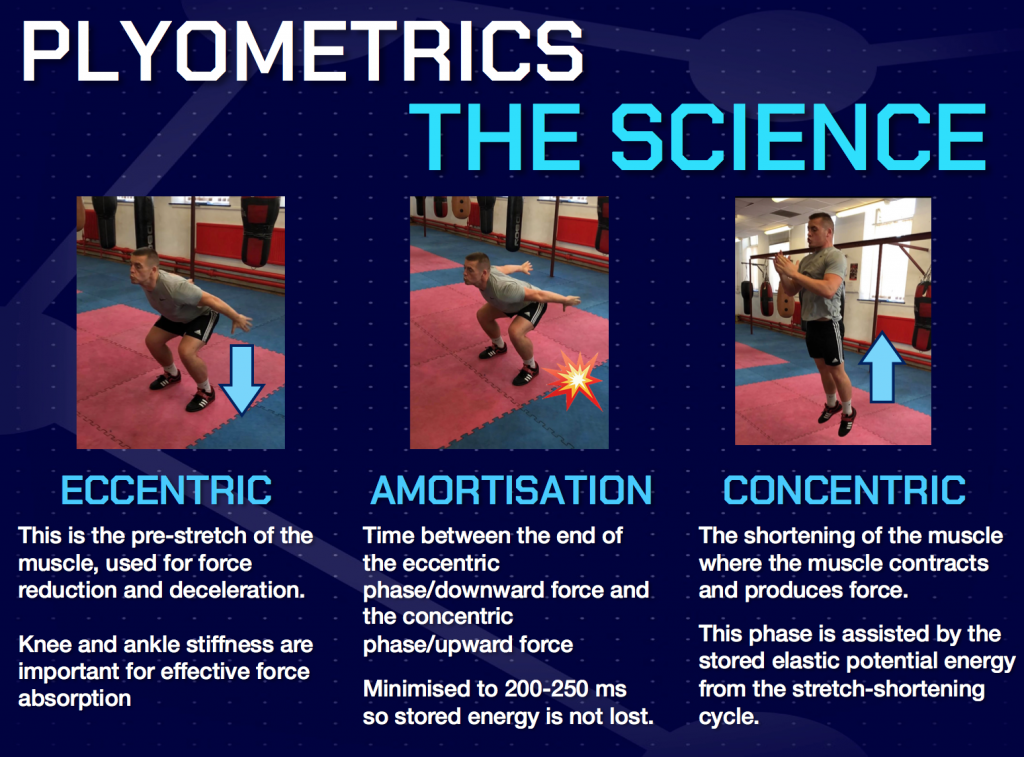
The eccentric phase, or the lengthening of the muscle under tension, is the primary driver of the Stretch-Shortening Cycle (SSC). When an athlete prepares for a vertical jump or a depth drop, the downward movement is not merely a passive act of falling; it is a calculated process of loading the musculotendinous unit.
The Storage of Elastic Energy
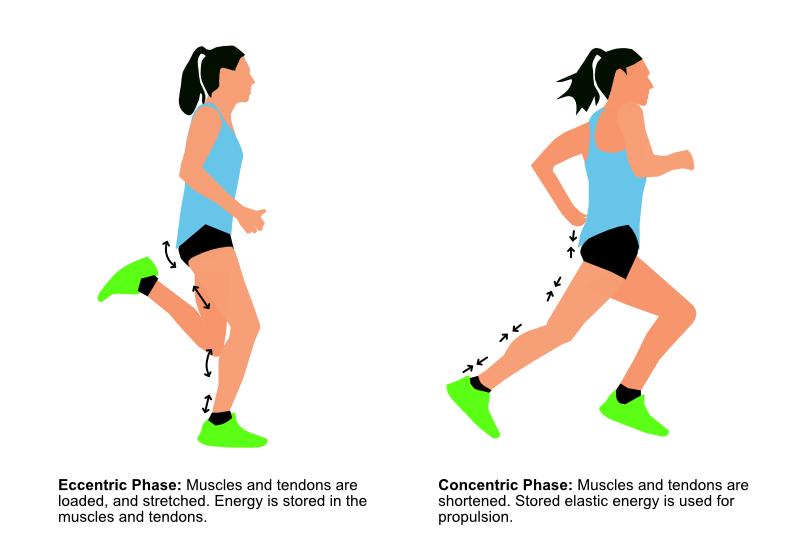
During the eccentric phase, the muscles and tendons act similarly to a mechanical spring. As the body descends, the muscle fibers lengthen while remaining under tension. This process stores potential elastic energy within the series elastic components of the muscle, primarily the tendons. In technological terms, this is akin to a capacitor in an electronic circuit—it holds a charge that can be released in a single, rapid discharge. Without an efficient eccentric phase, this energy is dissipated as heat, resulting in a loss of potential power output.
Neuromuscular Facilitation and the Myotatic Reflex
Beyond the mechanical storage of energy, the eccentric phase triggers the muscle spindles. These specialized sensory receptors detect the rate and magnitude of muscle lengthening. When the eccentric phase is performed with intent and velocity, the spindle sends a rapid signal to the spinal cord, which triggers the stretch reflex. This reflex causes the muscle to contract more forcefully during the subsequent concentric (shortening) phase. In the realm of biomechanical software analysis, we track this as the “rate of force development” (RFD). The eccentric phase is the foundational requirement for the nervous system to “prime” the muscles for an explosive response.
Strategic Integration in Athletic Performance Tech
Modern sports science has moved beyond traditional coaching intuition, utilizing high-speed motion capture and force plates to quantify the efficacy of the eccentric load. For performance coaches and software developers building athlete-tracking platforms, the eccentric phase is the most critical data point for injury prevention and power maximization.
Quantifying Eccentric Velocity with Wearables
With the advent of advanced wearable accelerometers, coaches can now monitor the velocity of the eccentric descent. If the eccentric phase is too slow, the elastic energy stored is negligible, and the muscle remains “cold,” failing to leverage the stretch reflex. Conversely, if the phase is uncontrolled, the risk of tissue damage—specifically within the patellar or Achilles tendons—increases exponentially. Digital platforms now allow us to set “velocity bands” that ensure an athlete is dropping at the precise speed required to maximize the SSC without exceeding their structural load capacity.
The Amortization Phase: The Bridge Between Phases
The eccentric phase concludes at the moment of peak muscle lengthening, transitioning into the concentric phase. This brief transition is known as the amortization phase. In a digital modeling sense, the shorter this window, the higher the “system efficiency.” If an athlete lingers in the eccentric position, the elastic energy stored in the tendons dissipates. Therefore, the goal of training the eccentric phase is not just to lengthen the muscle, but to ensure the transition—the “click” of the switch—is as instantaneous as possible. Algorithms in elite performance apps now specifically calculate the “amortization ratio,” identifying exactly how much energy is being leaked during the reversal of direction.
Optimizing Training Protocols Through Digital Feedback
To leverage the power of the eccentric phase, training must be systematic and data-driven. The shift from “reps and sets” to “velocity-based training” (VBT) has revolutionized how athletes approach plyometrics.
Velocity-Based Training (VBT) Tools
VBT tools, which utilize software to measure the speed of the eccentric load, allow athletes to stay within the “optimal zone.” If an athlete is struggling to maintain a high-velocity eccentric descent, it is often a sign of neural fatigue or inadequate strength levels in the posterior chain. Using apps that provide real-time audio and visual feedback on eccentric rate of movement enables the athlete to self-correct during the workout. This creates a closed-loop system where the athlete is not just performing a movement but is optimizing the “coding” of their motor patterns.
Progressive Loading for Structural Adaptation
The eccentric phase is also where the most significant structural adaptations occur. By utilizing eccentric-overload training—where the eccentric portion of a move is weighted heavier than the concentric—athletes can significantly increase tendon stiffness. Software-driven periodization models track the “eccentric volume” over weeks, ensuring that the athlete is not pushing into a state of overtraining. By analyzing the force-time curve produced by force plates, technicians can determine if the eccentric load is contributing to a “stiffer” musculoskeletal system, which in turn leads to higher vertical jumps and faster sprint times.
Risk Mitigation and the Digital Injury Audit
While the eccentric phase is a power generator, it is also the phase where the highest forces are applied to the human frame. For those managing athletic software or corporate training programs, the “eccentric risk” is a primary concern.
Analyzing Deceleration Profiles
Injury frequently occurs when an athlete lacks the eccentric strength to decelerate their own body mass. Biomechanical analysis software now focuses on the “eccentric deceleration profile.” If an athlete’s data shows a collapse in the eccentric phase—where force production drops off before the transition—it is a red flag for potential ligamentous strain. By running an “eccentric audit,” coaches can determine whether an athlete is ready for high-intensity plyometrics or if they need to regress to eccentric-focused strength training to build the necessary “brakes.”

Data-Driven Progression
The digital transformation of sports training has moved the conversation from “training harder” to “training efficiently.” The eccentric phase is the focal point of this shift. By measuring the displacement and velocity of the eccentric phase, platforms provide the “why” behind an athlete’s performance plateau. Is the athlete losing power because of a slow eccentric transition? Is the nervous system failing to trigger the stretch reflex? These questions can now be answered through data visualization.
As we look toward the future, the integration of AI-driven movement analysis will further refine our understanding of the eccentric phase. We are moving toward a period where training apps will suggest live adjustments to an athlete’s eccentric descent based on their daily readiness scores and current physiological state. By mastering the eccentric phase, we are essentially hacking the human machine to produce more force with less effort, leveraging the physics of elastic storage to reach higher levels of human performance than previously thought possible. Through the marriage of high-level biomechanics and sophisticated digital tracking, the eccentric phase remains the true engine of human explosive power.
aViewFromTheCave is a participant in the Amazon Services LLC Associates Program, an affiliate advertising program designed to provide a means for sites to earn advertising fees by advertising and linking to Amazon.com. Amazon, the Amazon logo, AmazonSupply, and the AmazonSupply logo are trademarks of Amazon.com, Inc. or its affiliates. As an Amazon Associate we earn affiliate commissions from qualifying purchases.