
For many shoppers, Costco Wholesale Corporation is more than just a warehouse club; it is a cultural phenomenon. Known for its bulk quantities, the legendary $1.50 hot dog combo, and the high-quality Kirkland Signature brand, Costco has built a loyal following that rivals the most prestigious luxury brands. However, from a financial and investment perspective, a recurring question emerges among savvy consumers and retail investors alike: Who actually owns Costco?
Unlike many large private companies or family-owned enterprises, the answer to Costco’s ownership is found on the floor of the NASDAQ stock exchange. Costco is not owned by a single individual, a founding family, or a rival retail conglomerate like Walmart. Instead, it is a publicly traded entity owned by thousands of institutional and individual shareholders. To understand the ownership of Costco is to understand the mechanics of modern corporate finance, institutional investing, and the “Costco Effect” that has made it a darling of Wall Street.
The Corporate Structure: From Merger to Public Powerhouse
To understand who owns Costco today, one must first look at how the company was built. Costco Wholesale Corporation (NASDAQ: COST) is a publicly traded “C-Corporation.” This means its ownership is divided into millions of shares of stock, which are traded openly on the public market. Anyone with a brokerage account and enough capital to buy a single share can technically claim they are a “part-owner” of the company.
The Myth of Rival Ownership
A common misconception often circulates in the retail world: the idea that Costco is owned by Walmart or even a foreign entity. This is factually incorrect. While Walmart owns Sam’s Club—Costco’s primary competitor—Costco has remained a fiercely independent entity since its inception. The confusion often stems from the 1993 merger between Costco and Price Club. Founded by Sol Price, Price Club was the pioneer of the warehouse concept. The merger created PriceCostco, which eventually transitioned back to the Costco Wholesale Corporation name we recognize today.
The Role of the Board of Directors
While the shareholders own the equity, they do not manage the day-to-day operations. That responsibility falls to the Board of Directors and the executive leadership team. The board acts as a fiduciary for the owners (shareholders), ensuring that the company is managed in a way that maximizes long-term value. This governance structure is what allows Costco to maintain its unique business model—prioritizing employee wages and customer value over short-term quarterly profit spikes—while still satisfying its diverse base of owners.
Institutional Giants: The Power Players Behind the Scenes
When looking at the breakdown of Costco’s ownership, the most significant “owners” are not individuals, but rather massive institutional investment firms. Approximately 70% to 80% of Costco’s outstanding shares are held by institutions. These firms manage trillions of dollars on behalf of individual investors, pension funds, and retirees.
The Vanguard Group and BlackRock
As of the most recent financial filings, The Vanguard Group is typically the largest shareholder of Costco, often holding between 8% and 9% of the company’s total shares. Following closely is BlackRock, the world’s largest asset manager. These firms do not “control” Costco in the traditional sense; rather, they hold the shares within various mutual funds and Exchange-Traded Funds (ETFs) like the S&P 500 index funds.
If you have a 401(k) or an IRA that tracks the S&P 500, you are likely a fractional owner of Costco. The presence of these institutional giants provides Costco with a stable capital base and reflects the market’s high confidence in the company’s long-term financial health.
State Street and Geode Capital
Other major institutional owners include State Street Corporation and Geode Capital Management. These institutions are attracted to Costco’s “Moat”—a term popularized by Warren Buffett to describe a company’s competitive advantage. For Costco, this moat is its membership model. By charging an annual fee, Costco secures a recurring revenue stream that covers most of its operating costs, allowing it to sell goods at razor-thin margins. For institutional owners, this predictability is financial gold.
Inside the Boardroom: Individual and Executive Shareholders
While institutions hold the lion’s share of the equity, the individuals who lead the company also have “skin in the game.” Insider ownership is a critical metric for investors, as it aligns the interests of the management team with the interests of the shareholders.
The Legacy of James Sinegal and Jeffrey Brotman
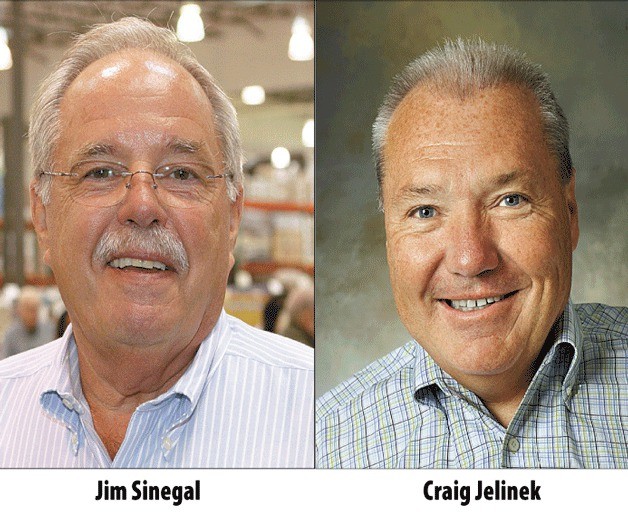
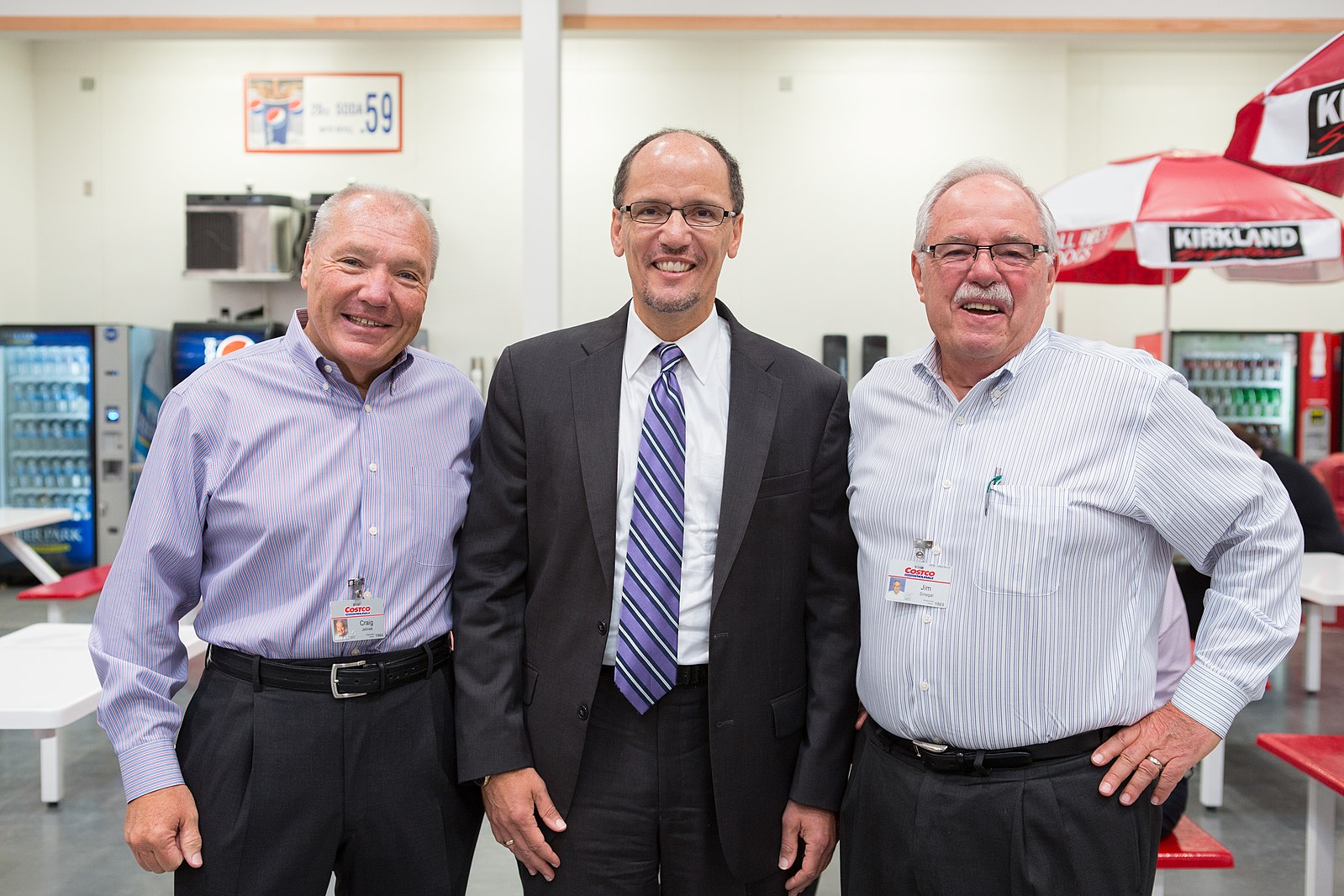
Costco was co-founded by James (Jim) Sinegal and Jeffrey Brotman in 1983. Brotman served as Chairman until his passing in 2017, and Sinegal served as CEO for nearly three decades. Although Sinegal has retired, his influence on the company’s culture—and his remaining stake in the company—remains significant. Unlike many modern tech founders who retain “dual-class” shares to maintain absolute voting control, Costco’s founders chose a more democratic ownership structure.
Current Leadership: Ron Vachris and Craig Jelinek
Ownership also extends to the current executive suite. Craig Jelinek, who served as CEO for over a decade before stepping down in early 2024, holds a substantial number of shares. His successor, Ron Vachris, a veteran who started as a forklift driver at the company, also holds significant equity. This “promote from within” culture ensures that the people running the company are also some of its most dedicated individual owners.
When executives own millions of dollars in company stock, they are less likely to take reckless risks and more likely to focus on sustainable growth. This internal ownership is a primary reason why Costco has avoided the “retail apocalypse” that claimed many of its competitors.
The “Costco Effect” on Shareholder Value
From a “Money” perspective, owning Costco stock has historically been one of the most successful retail investments in history. The company’s ownership structure is designed to reward long-term holders rather than day traders. This is evidenced by the company’s approach to dividends and share buybacks.
Dividends and Special Payouts
Costco offers a modest regular dividend, but it has become famous in the financial world for its “Special Dividends.” Every few years, when the company has excess cash on its balance sheet, it distributes a large, one-time payment to its owners. For example, in early 2024, Costco paid out a massive $15-per-share special dividend. This strategy rewards the owners—from the largest institutional funds to the smallest individual investor—without committing the company to an unsustainably high quarterly payout.
Valuation and the Price-to-Earnings Ratio
Costco often trades at a higher Price-to-Earnings (P/E) ratio than competitors like Target or Walmart. In the world of finance, this means investors are willing to pay a premium for every dollar of Costco’s profit. This high valuation is a testament to the quality of its ownership base. Because the owners believe in the stability of the membership model and the company’s ability to expand internationally (especially in markets like China), they are rarely willing to sell their shares, keeping the price high and the volatility low.

Conclusion: A Global Community of Owners
In summary, the question of “who owns Costco” does not have a single name as an answer. Instead, Costco is owned by a diverse global community. It is owned by the institutional giants of Wall Street who see it as a cornerstone of the American economy. It is owned by the executives who have spent their lives climbing the corporate ladder from the warehouse floor to the C-suite. And most importantly, it is owned by millions of everyday investors who recognize the value of a company that prioritizes people and products over short-term gimmicks.
Costco’s transition from a single warehouse in Seattle to a publicly traded global powerhouse is a masterclass in business finance. By maintaining an independent ownership structure and eschewing the control of a parent conglomerate, Costco has been able to protect its unique culture. For the investor, the employee, and the member, this decentralized ownership is the secret sauce that ensures the “Kirkland” standard of quality remains uncompromised for decades to come. Whether you are holding a share of COST stock or a $1.50 hot dog, you are part of a financial ecosystem that remains one of the most successful experiments in modern capitalism.
aViewFromTheCave is a participant in the Amazon Services LLC Associates Program, an affiliate advertising program designed to provide a means for sites to earn advertising fees by advertising and linking to Amazon.com. Amazon, the Amazon logo, AmazonSupply, and the AmazonSupply logo are trademarks of Amazon.com, Inc. or its affiliates. As an Amazon Associate we earn affiliate commissions from qualifying purchases.