
For millions of Americans, Social Security represents more than just a monthly check; it is the cornerstone of a stable retirement strategy. Yet, despite its importance, the question “How much will I get?” remains one of the most complex queries in personal finance. The answer is not a flat rate, nor is it a simple percentage of your final salary. Instead, it is a highly personalized figure derived from a lifetime of earnings, the age at which you choose to retire, and the shifting economic policies of the federal government.
Understanding the mechanics of Social Security is essential for effective long-term financial planning. Whether you are decades away from retirement or standing on the precipice of your golden years, grasping how these benefits are calculated allows you to make informed decisions that can result in hundreds of thousands of dollars in cumulative gains over your lifetime.
Understanding the Foundation: How the Social Security Formula Works
To estimate your future benefits, you must first understand the underlying machinery used by the Social Security Administration (SSA). Unlike private pensions, which might use a “final three years” average, Social Security looks at a much broader horizon of your professional life.
The Role of Average Indexed Monthly Earnings (AIME)
The SSA begins its calculation by looking at your “Average Indexed Monthly Earnings” (AIME). This involves reviewing your entire work history and identifying your 35 highest-earning years. If you have worked for fewer than 35 years, the SSA fills in the remaining years with zeros, which can significantly drag down your average.
The “indexing” part of AIME is crucial. Because $20,000 in 1985 had more purchasing power than $20,000 today, the SSA applies an indexing factor to your historical earnings to bring them up to modern wage levels. Once these 35 years are indexed and averaged, the SSA arrives at a monthly figure that represents your career-long earning power.
Primary Insurance Amount (PIA) and Bend Points
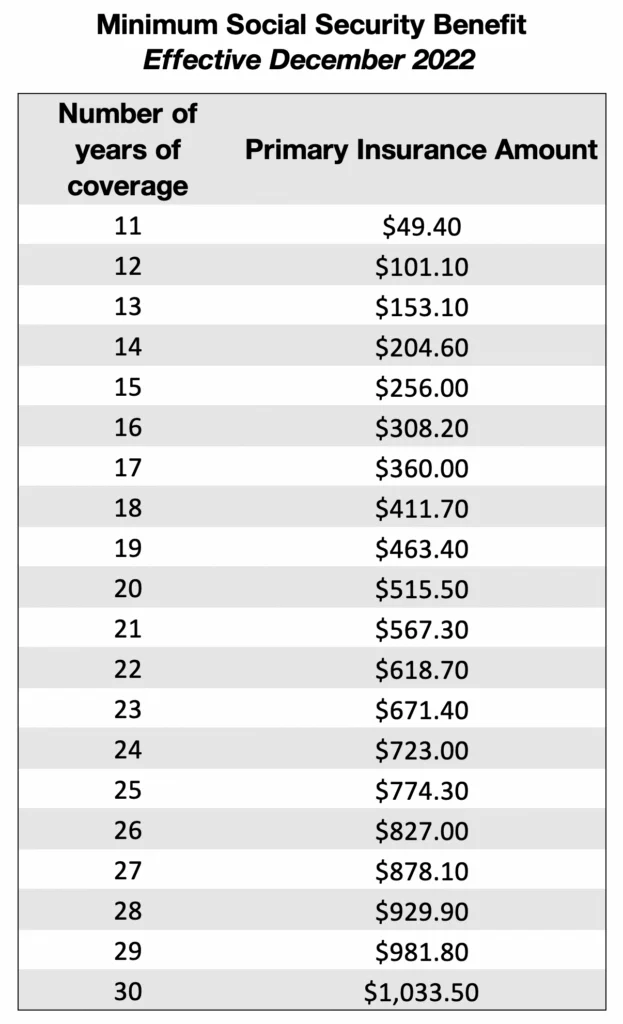
Once the AIME is established, the SSA applies a progressive formula to determine your Primary Insurance Amount (PIA)—the base amount you receive at your Full Retirement Age. The formula is designed to be progressive, meaning it replaces a higher percentage of income for lower earners than for higher earners.
This is achieved through “bend points.” For example, in 2024, the formula might take 90% of the first $1,174 of your AIME, 32% of earnings between $1,174 and $7,078, and only 15% of any amount above that. This tiered structure ensures a social safety net while still rewarding those who contributed more to the system through higher payroll taxes.
Key Factors That Influence Your Monthly Payout
While the formula provides the base, your actual check is dictated by individual choices and your historical contribution to the Social Security trust fund.
The Impact of Your Lifetime Earnings History
Your benefit is directly proportional to the amount of Social Security taxes you paid during your career. There is, however, a “taxable maximum.” In 2024, only the first $168,600 of income is subject to Social Security taxes. If you consistently earn above this ceiling, you will likely qualify for the maximum possible benefit, but you will not receive extra credit for income earned beyond that cap. For those with fluctuating careers, increasing your income even in the final years of your career can “bump out” lower-earning years from your 35-year average, effectively raising your benefit.
Full Retirement Age (FRA) vs. Early or Delayed Filing
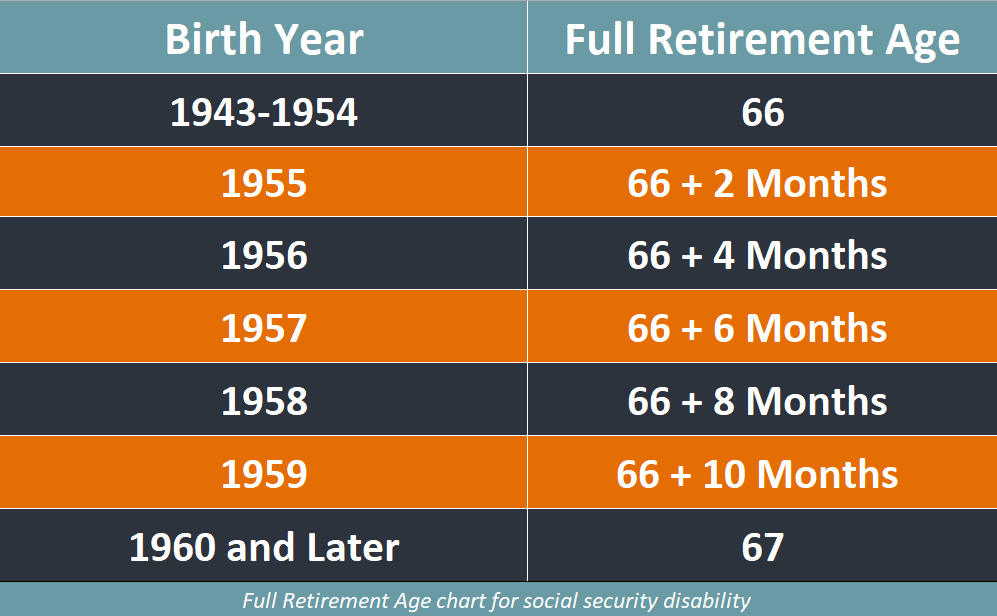
Perhaps the most significant variable under your control is when you choose to claim. Your Full Retirement Age (FRA) depends on the year you were born. For those born in 1960 or later, the FRA is 67.
You can choose to claim benefits as early as age 62, but doing so comes at a cost. Claiming at 62 results in a permanent reduction of roughly 30% compared to your FRA benefit. Conversely, if you choose to delay benefits past your FRA, your payout increases by 8% for every year you wait, up until age 70. This means a person with an FRA of 67 who waits until 70 to file will receive 124% of their base benefit for the rest of their life.
Strategic Planning: Maximizing Your Social Security Check
Maximizing Social Security is not always about waiting as long as possible; it is about coordinating benefits with your overall financial picture, including your health, your spouse’s needs, and your other investment vehicles.
The 8% Bonus: The Power of Delaying Until Age 70
From a pure investment perspective, the 8% annual “guaranteed return” for delaying Social Security from age 67 to 70 is unparalleled in the financial world. There are few market-based investments that offer a risk-free, inflation-adjusted 8% annual increase. For individuals in good health with sufficient savings to bridge the gap between 67 and 70, delaying is often the most mathematically sound strategy to ensure they do not outlive their money.
Spousal and Survivor Benefits: Optimizing the Household Income
Social Security offers unique protections for married couples. A lower-earning spouse is eligible for a “spousal benefit,” which can be up to 50% of the higher-earning spouse’s PIA. If the higher earner passes away, the survivor can inherit 100% of the deceased spouse’s benefit (if they have reached their own FRA), replacing their own smaller benefit.
Strategic couples often have the higher earner delay until age 70. This not only maximizes the monthly check while both are alive but also “locks in” the highest possible survivor benefit for the remaining spouse. This form of “longevity insurance” is a critical component of sophisticated estate and retirement planning.
Navigating the Future: Tax Implications and Cost-of-Living Adjustments (COLA)
It is a common misconception that Social Security benefits are always tax-free. In reality, how much you keep of your check depends on your “combined income.”
Are Your Benefits Taxable? Understanding the Thresholds
The IRS looks at your adjusted gross income, plus any tax-exempt interest, plus 50% of your Social Security benefits. If this “combined income” exceeds $25,000 for individuals or $32,000 for married couples filing jointly, a portion of your benefits (up to 50% or 85%) becomes subject to federal income tax. For high-net-worth retirees with significant 401(k) distributions or rental income, it is vital to plan for this “tax torpedo” to avoid an unexpected dent in their cash flow.
Staying Ahead of Inflation with COLA
One of the most valuable features of Social Security is the Cost-of-Living Adjustment (COLA). Unlike most private annuities or pensions, Social Security benefits are adjusted annually based on the Consumer Price Index for Urban Wage Earners and Clerical Workers (CPI-W). This ensures that your purchasing power is protected against inflation. In years of high inflation, these adjustments can be substantial, providing a crucial hedge that keeps your retirement budget intact as the cost of goods and services rises.
Modern Financial Tools: How to Calculate Your Estimate Today
The days of waiting for a paper statement to arrive in the mail are largely over. Taking a proactive approach to your financial future requires utilizing the digital tools available today.
Using the ‘my Social Security’ Online Portal
The SSA provides a robust online portal where you can view your “Social Security Statement.” This document provides personalized estimates for your benefits at age 62, your FRA, and age 70 based on your actual earnings history to date. It also allows you to verify your earnings history for accuracy. If an employer failed to report your income correctly twenty years ago, it could be shrinking your future check today—checking this tool annually is a best practice for any diligent investor.

Integrating Social Security into a Broader Investment Strategy
Social Security should not be viewed in a vacuum. It is one “bucket” of a diversified retirement portfolio. Professional financial planners often view Social Security as the “fixed-income” or “bond” portion of a portfolio because of its stability and inflation indexing.
By knowing your estimated Social Security amount, you can determine your “income gap”—the difference between your desired retirement lifestyle and your guaranteed income. This gap is what your 401(k), IRA, and brokerage accounts must fill. If your Social Security benefit is projected to be $3,000 a month, but your expenses are $5,000, you know you need to generate $2,000 a month from your private investments.
In conclusion, “how much you will get” from Social Security is a variable that you can influence through career longevity, income growth, and strategic timing. By mastering the formulas and understanding the impact of filing ages and taxes, you transform Social Security from a mysterious government program into a powerful, predictable pillar of your financial independence.
aViewFromTheCave is a participant in the Amazon Services LLC Associates Program, an affiliate advertising program designed to provide a means for sites to earn advertising fees by advertising and linking to Amazon.com. Amazon, the Amazon logo, AmazonSupply, and the AmazonSupply logo are trademarks of Amazon.com, Inc. or its affiliates. As an Amazon Associate we earn affiliate commissions from qualifying purchases.