
In an era of fluctuating inflation and shifting economic landscapes, the question of where to invest cash money has never been more pertinent. For many, “cash” represents a safety net, but for the savvy investor, it represents “dry powder”—capital ready to be deployed to build long-term wealth. However, holding too much cash in a traditional checking account can be a silent wealth killer, as inflation erodes purchasing power over time.
The challenge lies in balancing the need for liquidity with the desire for growth. This guide explores the most effective vehicles for your cash, ranging from ultra-safe liquidity plays to growth-oriented market instruments, ensuring your money works as hard as you do.
1. Low-Risk Liquidity: Preserving Capital While Earning Yield
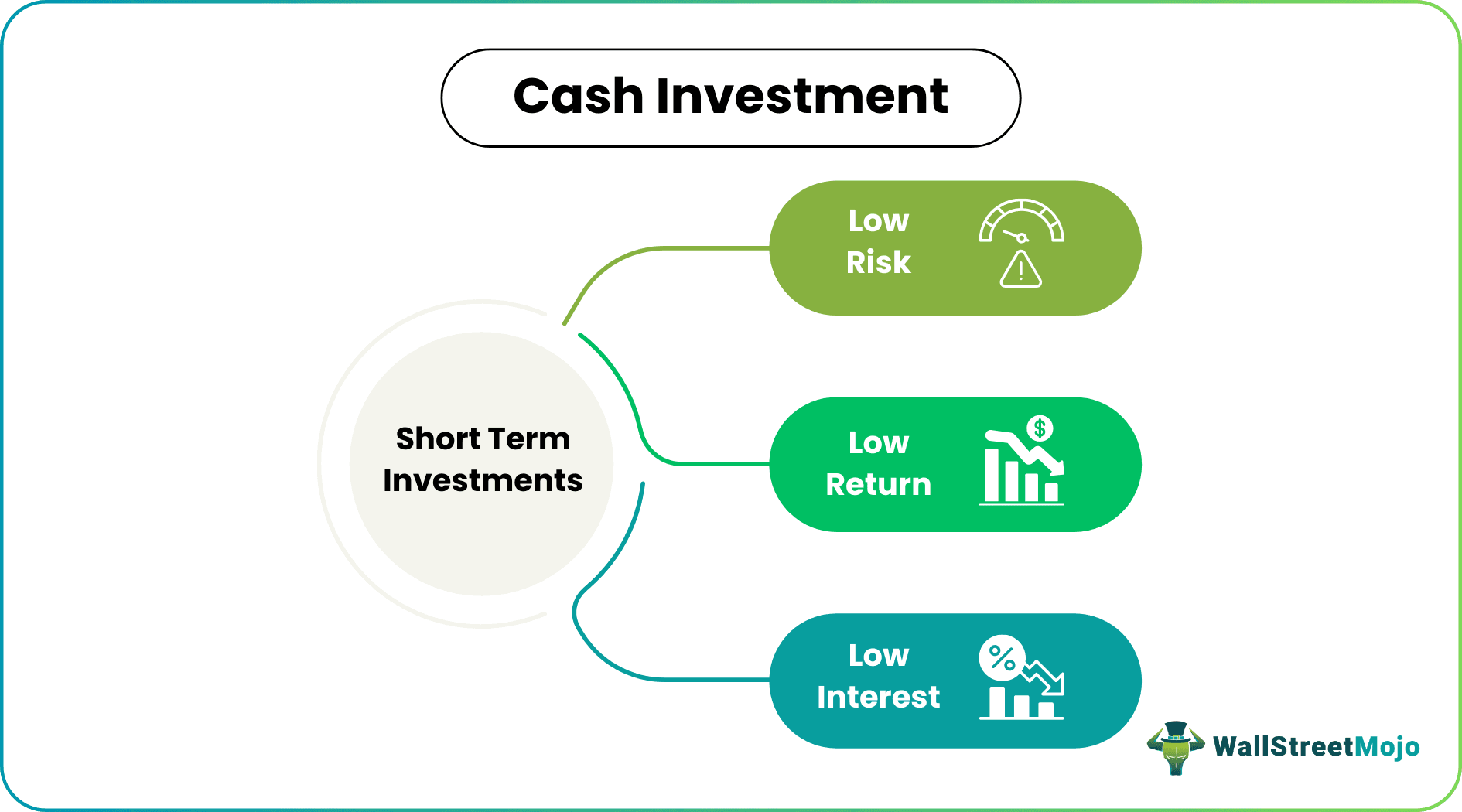
For many investors, the primary goal for cash is “capital preservation.” This is money you might need in the next six months to two years—perhaps for an emergency fund, a down payment on a home, or upcoming tax obligations. In these scenarios, you cannot afford the volatility of the stock market, but you should still seek a competitive yield.
High-Yield Savings Accounts (HYSA)
The High-Yield Savings Account is the cornerstone of modern cash management. Unlike traditional savings accounts at “big-box” banks that offer negligible interest, HYSAs are typically offered by online banks with lower overhead costs. These institutions pass those savings to you in the form of higher interest rates. The primary benefit of an HYSA is that your money remains liquid; you can usually transfer it back to your checking account within one to three business days, all while earning a rate that often keeps pace with or nears the rate of inflation.
Money Market Accounts (MMA)
A Money Market Account is a hybrid between a checking and a savings account. It typically offers interest rates comparable to HYSAs but comes with added features like check-writing privileges or a debit card. This makes it an ideal place to park cash that you might need to access instantly for a large, unexpected purchase. It is important to distinguish these from Money Market Funds (which are mutual funds); an MMA is a bank deposit account and is usually FDIC-insured up to $250,000.
Certificates of Deposit (CDs)
If you are certain you won’t need your cash for a specific period—ranging from three months to five years—Certificates of Deposit offer a way to “lock in” an interest rate. This is particularly advantageous in a falling-rate environment. By committing your capital for a fixed term, the bank rewards you with a guaranteed return. However, the trade-off is liquidity; withdrawing funds before the CD matures usually results in a penalty, often equivalent to several months of interest.
2. Fixed Income and Debt Securities: Stepping Up the Yield Curve
Once you have established an emergency fund in liquid accounts, the next tier of cash investment involves fixed-income securities. These instruments are essentially loans you provide to governments or corporations in exchange for regular interest payments (coupons) and the eventual return of your principal.
Treasury Inflation-Protected Securities (TIPS)
For the conservative investor worried specifically about the rising cost of living, TIPS are a unique tool. Issued by the U.S. government, the principal value of a TIPS bond increases with inflation (measured by the Consumer Price Index) and decreases with deflation. When the bond matures, you are paid the adjusted principal or the original principal, whichever is greater. This makes them one of the few “guaranteed” ways to ensure your cash doesn’t lose its purchasing power.
Short-Term Corporate Bonds and Bond ETFs
If you are willing to take on a slightly higher level of risk than government debt, corporate bonds are an excellent alternative. When you buy a corporate bond, you are lending money to a company. To make this accessible for individual investors, Exchange-Traded Funds (ETFs) that focus on “short-term corporate bonds” allow you to buy a basket of hundreds of different bonds in a single transaction. These offer higher yields than Treasuries because corporations carry a higher default risk than the government, though “investment-grade” bonds remain relatively safe.
Municipal Bonds for High-Earners
For investors in higher tax brackets, where to invest cash money often becomes a question of tax efficiency. Municipal bonds (munis) are issued by states, cities, or counties to fund public projects. The interest earned on these bonds is often exempt from federal income taxes and, in some cases, state and local taxes as well. While the nominal interest rate might look lower than a corporate bond, the “tax-equivalent yield” can often be much higher for those in the 32% tax bracket or above.

3. The Stock Market: Leveraging Equities for Long-Term Growth
If your “cash money” is capital that you do not intend to touch for at least five to ten years, the stock market remains the greatest engine for wealth creation in history. While the risk of short-term loss is higher, the long-term potential for compounding is unmatched by savings accounts or bonds.
Low-Cost Index Funds and ETFs
The most recommended path for the majority of investors is the use of broad-market index funds. Rather than trying to pick the next “winner,” an index fund allows you to own a piece of the entire market—such as the S&P 500. These funds are passively managed, meaning they have extremely low fees. By investing your cash here, you are betting on the long-term growth and productivity of the global economy. Historically, the S&P 500 has returned an average of about 10% annually before inflation.
Dividend Growth Stocks
For those who want their cash to generate a “paycheck,” dividend growth stocks are a compelling choice. These are shares in established companies with a history of not only paying dividends but increasing them year after year. Companies known as “Dividend Aristocrats” have increased their payouts for 25 consecutive years or more. Investing in these companies provides a dual benefit: the potential for the stock price to rise (capital appreciation) and a steady stream of cash flow that can be reinvested to buy more shares.
Sector-Specific Investing and Value Stocks
When the broader market feels overvalued, some investors choose to rotate their cash into specific sectors or “value” stocks. Value investing involves looking for companies that appear to be trading for less than their intrinsic worth. This approach requires more research and a higher tolerance for periods where your chosen sector might underperform the general market. However, for an investor with a professional eye on business fundamentals, this can be a way to find “alpha”—returns that exceed the market average.
4. Alternative Assets: Diversifying Beyond Traditional Markets
In a modern portfolio, investing cash doesn’t have to be limited to just “stocks and bonds.” Alternative assets can provide low correlation to the stock market, meaning they might stay stable or even rise when the market falls.
Real Estate Investment Trusts (REITs)
You don’t need hundreds of thousands of dollars to invest in real estate. REITs are companies that own, operate, or finance income-producing real estate across a range of sectors (like apartments, cell towers, or warehouses). By law, REITs must distribute at least 90% of their taxable income to shareholders as dividends. This makes them a high-yield vehicle for cash, providing exposure to the property market without the headaches of being a landlord.
Precious Metals and Commodities
Gold has been a store of value for millennia. While gold doesn’t pay a dividend or interest, it often acts as a hedge against currency devaluation and geopolitical instability. Many investors choose to keep 5% to 10% of their cash reserves in gold or silver, often via ETFs that hold the physical bullion. This provides a “portfolio insurance” policy during times of extreme market stress.
5. Building a Strategic Allocation Strategy
Deciding where to invest cash money is not a “one-and-done” decision; it requires a strategy tailored to your personal financial situation.
Assessing Risk Tolerance and Time Horizon
The most important factor in your decision is your “time horizon.” If you need the money in 12 months, the stock market is a gamble, not an investment. If you need it in 20 years, a savings account is a guaranteed loss in real terms. A professional approach involves “bucketing” your cash:
- Bucket 1 (0–2 years): HYSAs, CDs, and Money Market Accounts.
- Bucket 2 (3–7 years): Corporate bonds, TIPS, and balanced mutual funds.
- Bucket 3 (7+ years): Index funds, dividend stocks, and alternative assets.

The Importance of Rebalancing
As your investments grow, your original allocation will shift. If the stock market has a banner year, your “equity” bucket might become 80% of your portfolio when you intended it to be 60%. Rebalancing involves selling some of the high-performing assets and moving that “cash” back into underperforming areas or safer vehicles. This disciplined approach forces you to “buy low and sell high,” ensuring your cash is always positioned according to your risk tolerance.
In conclusion, the best place to invest cash money depends entirely on your goals. By diversifying across high-yield liquid accounts for safety, bonds for income, and equities for growth, you can create a robust financial ecosystem that protects your capital today while building your wealth for tomorrow. Professional investing is less about finding a “secret” investment and more about the disciplined allocation of capital across these proven vehicles.
aViewFromTheCave is a participant in the Amazon Services LLC Associates Program, an affiliate advertising program designed to provide a means for sites to earn advertising fees by advertising and linking to Amazon.com. Amazon, the Amazon logo, AmazonSupply, and the AmazonSupply logo are trademarks of Amazon.com, Inc. or its affiliates. As an Amazon Associate we earn affiliate commissions from qualifying purchases.