
In an era increasingly dominated by biometric payments, peer-to-peer apps, and cryptocurrency, the humble paper check can often feel like a relic of a bygone financial era. However, the architecture of the personal check remains a cornerstone of the global banking system. Whether you are starting a new job and need to set up direct deposit, or you are establishing an automated payment for a mortgage or utility bill, knowing how to navigate the strings of digits at the bottom of a check is an essential skill in personal finance.

While digital interfaces often hide the “plumbing” of our bank accounts, the physical check displays the primary identifiers used by the Automated Clearing House (ACH) network. Understanding where to find your account number—and how to distinguish it from other numerical codes—is the first step in mastering your financial tools and ensuring the security of your assets.
The Anatomy of a Check: Decoding the MICR Line
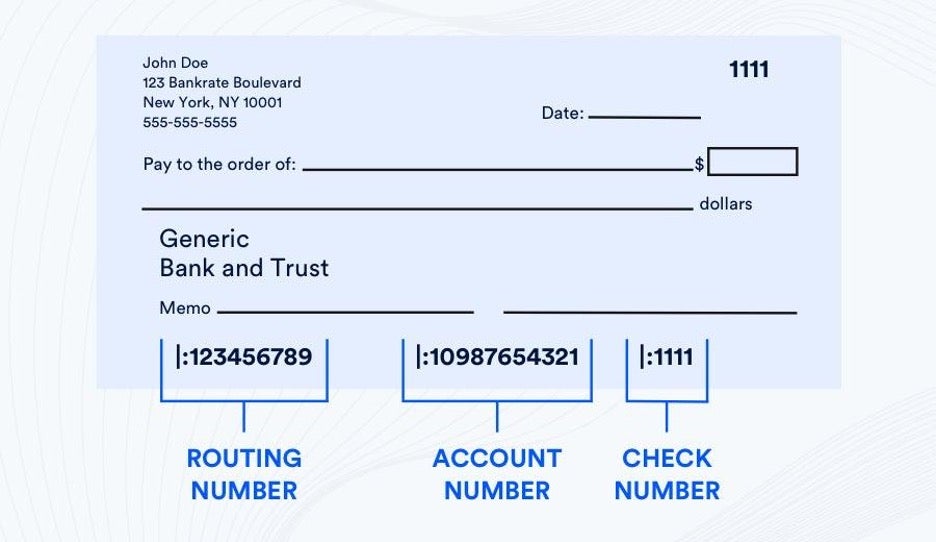
At the bottom of every legitimate personal or business check is a string of numbers printed in a specialized typeface. This is known as the MICR line, which stands for Magnetic Ink Character Recognition. This technology was developed in the 1950s to allow computers to quickly and accurately process the millions of checks that move through the banking system daily.
To find your account number, you must first understand the three distinct components that make up this line.
The Routing Number (The Financial Map)
The first sequence of numbers, usually located on the far left of the bottom row, is the American Bankers Association (ABA) routing transit number. This nine-digit code serves as an address for your specific financial institution. Just as a zip code tells the postal service which town to deliver a letter to, the routing number tells the Federal Reserve and other banks exactly where your funds are held. In the context of personal finance, you will use this number alongside your account number for almost every electronic transfer.
The Account Number (Your Unique Identifier)
The second set of numbers, typically found in the center of the MICR line, is your unique bank account number. Unlike the routing number, which is shared by every customer at your specific branch or bank, the account number is unique to you. It usually ranges from 8 to 12 digits, though this varies by institution. On many checks, the account number is followed by a special “on-us” symbol—a unique glyph used by the scanning hardware to signal the end of the account string.
The Check Number (The Sequence Tracker)
The shortest set of numbers, often appearing at the far right of the bottom line (and also in the top right corner of the check), is the check number. This is a sequential number used for your personal record-keeping. When you look at your bank statement, the check number helps you identify which specific payment was processed. From a financial management perspective, tracking check numbers is vital for balancing your ledger and identifying missing or stolen checks.
Why Your Account Number is the Key to Modern Financial Tools
While you may rarely hand a physical check to a cashier, your account number remains the “primary key” for your financial life. Understanding how to provide this information accurately is crucial for optimizing your cash flow and managing your personal wealth.
Setting Up Seamless Direct Deposits
One of the most common reasons you will need to find your account number on a check is for payroll documentation. Most employers require a “voided check” to ensure they have the correct routing and account digits. By providing these numbers, you allow your employer to bypass the postal service and deposit your earnings directly into your account. In the world of personal finance, this “pay yourself first” mentality is often the bedrock of a successful savings plan, as it allows for the automatic diversion of funds into savings or investment accounts before you have the chance to spend them.
Automating Bill Payments and ACH Transfers
The Automated Clearing House (ACH) network is the backbone of the American financial system. To pay a mortgage, a car loan, or a credit card balance electronically, you must provide your account and routing numbers. Automating these payments is a sophisticated financial strategy that prevents late fees and helps maintain a high credit score. However, a single digit entered incorrectly can lead to a “returned item” fee, making the ability to accurately read your check a cost-saving skill.
Verifying Identity for High-Stakes Transactions
When engaging in significant financial activities—such as wire transfers for a home closing or setting up a brokerage account—banks often require a scan of a check to verify account ownership. This acts as a secondary layer of authentication. By understanding the layout of your check, you can quickly provide this information during time-sensitive transactions, ensuring that your investment opportunities are not delayed by administrative hurdles.
Security Best Practices for Your Banking Information
Because the numbers on your check represent the “keys to the castle,” they are high-value targets for bad actors. In the realm of personal finance, security is just as important as growth. Once you know how to find your account number, you must also know how to protect it.
The Risks of “Check Washing” and Fraud
“Check washing” is a technique where criminals use chemicals to erase the payee and amount on a physical check, leaving the signature and the MICR line (routing and account numbers) intact. They then rewrite the check to themselves for a much higher amount. Because your account number is clearly visible at the bottom, they have everything they need to drain funds. To mitigate this risk, many financial experts recommend using pens with “unerasable” gel ink, which bonds to the paper fibers.
Protecting Your Physical and Digital Check Images
Many people now use mobile banking to deposit checks by taking a photo. While convenient, this creates a digital footprint of your account number. It is vital to ensure that your banking app does not save these images to your general phone gallery. Furthermore, once a check is successfully deposited via a mobile app, you should mark it as “void” or “mobile deposited” and store it in a secure location for 14 days before shredding it. Leaving a check with your account number visible in a trash can is an open invitation to identity thieves.
What to Do If Your Account Number is Compromised
If you suspect that someone has obtained your routing and account numbers through a lost check or a phishing scam, the first step is to contact your financial institution immediately. Unlike a credit card, which can be easily replaced with a new number, your bank account is a foundational identity. You may need to close the account and open a new one, which involves rerouting all your direct deposits and automated bill pays—a tedious but necessary process to protect your long-term financial stability.
Understanding Variations: Business vs. Personal Checks
Not all checks are formatted identically, and as you scale your financial ventures—perhaps moving from personal finance into small business management—you will notice subtle differences in how account information is presented.
Formatting Differences in Business Checks
Business checks are often larger (the “three-to-a-page” style) and may place the check number at the beginning of the MICR line rather than the end. In some corporate formats, the account number might be sandwiched between the check number and the routing number. For a business owner, being able to distinguish these is critical for reconciling accounts and ensuring that vendors are paid from the correct operating or payroll fund.
The Rise of E-Checks and Digital Vouchers
In the contemporary landscape, “e-checks” are becoming a standard for online B2B transactions. These function exactly like paper checks but exist only in digital form. When you use an e-check, the website will ask for your routing and account numbers in separate fields. Having a physical check on hand serves as a reliable reference sheet to ensure that these digital forms are filled out with 100% accuracy, preventing transaction failures that can disrupt your business operations.

Conclusion: The Power of Financial Literacy
Knowing where to find your account number on a check might seem like a small detail, but it is a fundamental component of financial literacy. This string of numbers is the bridge between your hard-earned labor and the tools you use to grow your wealth. By understanding the anatomy of your check—from the ABA routing number to the specific account identifier—you empower yourself to navigate the complexities of modern banking with confidence.
In the world of personal finance, precision is synonymous with security. Whether you are automating your path to retirement or simply ensuring your monthly bills are paid on time, the ability to decode the MICR line is an indispensable asset. Treat your account number with the respect it deserves: use it to build your financial future, but guard it with the vigilance required to keep that future secure.
aViewFromTheCave is a participant in the Amazon Services LLC Associates Program, an affiliate advertising program designed to provide a means for sites to earn advertising fees by advertising and linking to Amazon.com. Amazon, the Amazon logo, AmazonSupply, and the AmazonSupply logo are trademarks of Amazon.com, Inc. or its affiliates. As an Amazon Associate we earn affiliate commissions from qualifying purchases.