
For any investor, from the casual retail trader to the seasoned institutional portfolio manager, the question “when do markets close today” is more than a matter of simple scheduling—it is a fundamental component of execution strategy. Timing is a critical pillar of finance. The moments leading up to the closing bell often witness the highest volatility and liquidity of the day, shaping the trajectory of portfolios overnight.
While the short answer for most U.S. investors is 4:00 PM Eastern Time, the reality of modern finance is far more complex. We live in an era of 24-hour global connectivity, extended-hours trading, and varying international schedules. Understanding the nuances of when markets open and close—and what happens during those transition periods—is essential for anyone looking to navigate the financial landscape effectively.
Understanding Standard Market Hours in the United States
The U.S. equity markets are the most liquid and influential in the world. For the vast majority of stocks listed on major exchanges, the trading day follows a strict, standardized schedule. This “regular session” is when the bulk of price discovery occurs and when the most favorable conditions for individual investors exist.
The NYSE and NASDAQ: The 9:30 AM to 4:00 PM Window
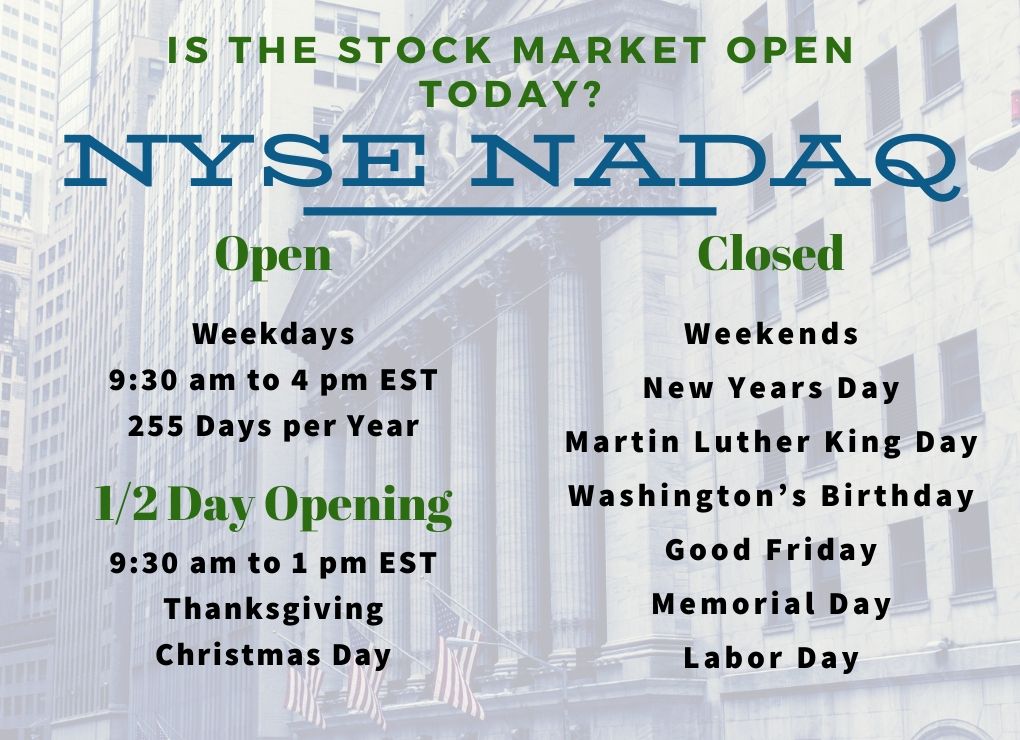
The New York Stock Exchange (NYSE) and the NASDAQ Stock Market both operate from 9:30 AM to 4:00 PM Eastern Time, Monday through Friday. Unlike some international markets that include a mid-day lunch break, U.S. markets trade continuously throughout these six and a half hours. This window represents the period of peak liquidity, where the “bid-ask spread”—the difference between the price a buyer is willing to pay and a seller is willing to accept—is typically at its narrowest.
The Significance of the “Closing Bell”
The 4:00 PM close is not merely a cessation of activity; it is a high-stakes auction. The “Closing Auction” or “Closing Cross” is a process where the exchange aggregates all the “market-on-close” (MOC) and “limit-on-close” (LOC) orders to determine a single, official closing price. This price is vital because it is used to calculate the Net Asset Value (NAV) of mutual funds and is the benchmark for performance reporting. For many institutional investors, executing trades as close to the 4:00 PM bell as possible is a strategy to ensure they receive a price that reflects the day’s consensus value.
How Early Closures and Holidays Affect Your Strategy
The standard schedule is occasionally modified. Most notably, the U.S. markets observe several federal holidays, such as Christmas Day, New Year’s Day, and Labor Day, during which the exchanges are closed entirely. Furthermore, on certain days—typically the day before or after a major holiday, such as the day after Thanksgiving (Black Friday) or Christmas Eve—the markets may observe an early close at 1:00 PM Eastern Time. Investors should always consult a financial calendar at the start of each month to ensure their liquidity needs don’t clash with an unexpected market closure.
Beyond the Bell: Pre-Market and After-Hours Trading
The “close” of the market at 4:00 PM does not mean that trading stops. In the digital age, electronic communication networks (ECNs) allow participants to trade long after the physical floor has cleared. This is known as extended-hours trading, and while it offers flexibility, it carries significant risks that every participant must understand.
How Extended Hours Trading Works
Most major brokerages allow investors to participate in pre-market and after-hours sessions. Pre-market trading in the U.S. typically begins as early as 4:00 AM ET and runs until the official open at 9:30 AM. After-hours trading begins immediately at 4:00 PM and usually concludes at 8:00 PM ET. During these times, trades are matched electronically between individual buyers and sellers.
Risks and Volatility in Post-Market Sessions
The primary danger of trading after the market closes is “thin liquidity.” Because there are fewer participants, a single large order can move a stock’s price significantly more than it would during regular hours. This results in wider bid-ask spreads, meaning you might pay a higher premium to buy or receive a lower price when selling. Furthermore, many brokers only allow “limit orders” during these sessions to protect investors from execution at extreme, unfavorable prices.
Who Should Participate in After-Hours Trading?
After-hours trading is predominantly used to react to breaking news. Most public companies release their quarterly earnings reports or announce major mergers and acquisitions either before 9:30 AM or after 4:00 PM. This is done to give the market time to digest the information without causing a mid-day panic. While professional traders use this time to capitalize on immediate reactions, long-term investors are often better served by waiting until the following day’s regular session, when the “dust has settled” and price discovery is more stable.
Global Market Synchronicity: When Do International Markets Close?
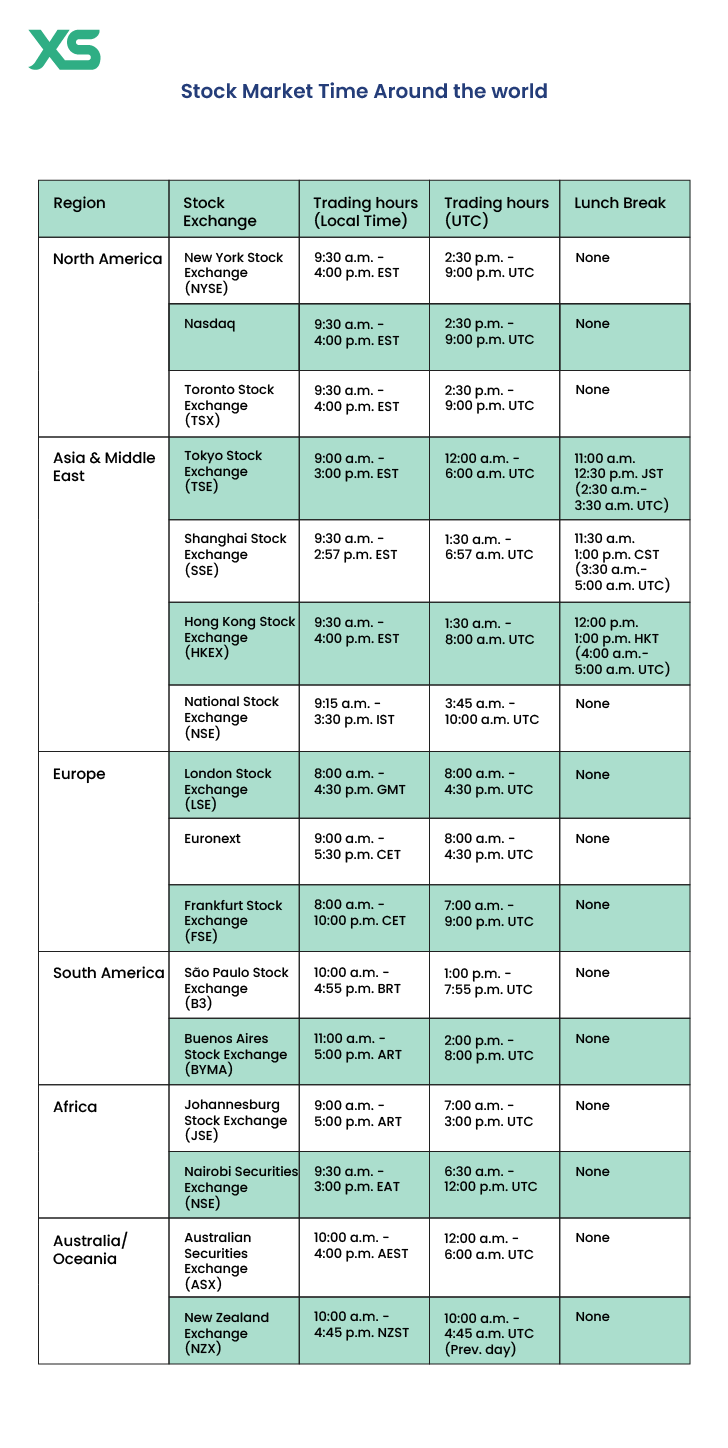
In our interconnected global economy, the U.S. market is just one piece of the puzzle. Events in Tokyo or London can significantly influence the opening prices in New York. If you are interested in international diversification or macro-economic trends, you must keep an eye on global “market close” times.
European Markets: The London and Frankfurt Schedules
The London Stock Exchange (LSE) is a primary hub for European finance. It typically operates from 8:00 AM to 4:30 PM local time (GMT/BST). For an investor in New York, the LSE closes at 11:30 AM ET. This means that for the first few hours of the U.S. trading day, there is an “overlap” where both European and American markets are active. This period often sees high volume and volatility as global themes are traded simultaneously across both continents.
The Asian Powerhouses: Tokyo, Hong Kong, and Shanghai
The Asian markets are often the first to react to news that happens overnight in the West. The Tokyo Stock Exchange (TSE) operates from 9:00 AM to 3:00 PM local time but includes a lunch break from 11:30 AM to 12:30 PM. Similarly, the Hong Kong Stock Exchange (HKEX) and the Shanghai Stock Exchange also feature mid-day breaks. Because of the time difference, these markets are trading while most of North America is asleep, making them the “early warning system” for the global economic mood.
Dealing with Time Zone Arbitrage and Overlap
The concept of “the market never sleeps” stems from the way these time zones hand off the baton to one another. When the U.S. closes, the Asian markets are preparing to open. When Asia closes, Europe is mid-session. Understanding these overlaps is crucial for currency traders (Forex), as the most liquid times to trade a currency pair (like the EUR/USD) occur when the markets of both respective currencies are open at the same time.
Why Market Timing Matters for Personal Finance
Knowing when the market closes is not just about logistics; it is a tactical advantage. The “when” of your trade can be just as important as the “what.” For personal finance management, understanding daily cycles helps in reducing costs and managing risk.
Liquidity and Spreads at Market Close
For a retail investor, the best time to execute a “buy and hold” order is usually during the middle of the trading day or toward the very end. The “mid-day lull” (12:00 PM to 2:00 PM ET) often sees lower volume but stable prices. Conversely, the final 30 minutes of the day, often called the “power hour,” sees a massive influx of volume. If you are looking to move a large position, the liquidity available at the close ensures you won’t “slip” (change the price of the stock through your own buying/selling) as much as you might at 10:30 AM.
The Impact of “Earnings Season” After-Hours Reports
If you hold individual stocks, the period immediately after the 4:00 PM close during earnings season (January, April, July, and October) is the most volatile your portfolio will ever be. A company might report record profits at 4:05 PM, and by 4:10 PM, the stock could be up 10%. Understanding that you cannot easily “exit” these moves at a fair price without high risk is a key part of financial literacy. It highlights the importance of having a long-term thesis rather than trying to “beat the clock.”
Developing a Disciplined Trading Schedule
Successful investors often create a routine based on market hours. This might include checking global market performance at 8:00 AM, reviewing U.S. positions at 10:00 AM after the initial opening volatility has subsided, and making final adjustments at 3:30 PM before the closing auction begins. By aligning your financial activities with the rhythm of the market, you avoid the emotional decision-making that often occurs during the high-stress opening and closing bells.
Essential Tools and Resources for Tracking Market Hours
In a world of daylight savings time changes and international holidays, keeping track of when markets close can be a challenge. Fortunately, several tools can help you stay informed and ensure you never miss a trading opportunity.
Financial Calendars and Real-Time Tracking Apps
Platforms like Bloomberg, CNBC, and Reuters provide comprehensive global market clocks. Furthermore, most modern trading apps (such as Schwab, Fidelity, or Robinhood) provide “market status” indicators that show whether the market is open, in extended hours, or closed for a holiday. For those trading international equities, a “World Market Clock” tool is indispensable for visualizing which regions are currently active.
Setting Alerts for Volatility and Market Open/Close
Most brokerage platforms allow you to set alerts for “Market Open” and “Market Close.” More importantly, you can set alerts for price movements that occur specifically in the after-hours session. This is vital for managing risk; if a stock you own drops significantly after the 4:00 PM close due to bad news, an alert allows you to decide whether to sell in the extended session or wait for the liquidity of the next morning.
The Role of Economic Calendars
Beyond the daily close, you should track the “Economic Calendar.” This tracks when the Federal Reserve makes interest rate announcements (usually at 2:00 PM ET on Wednesdays) or when Jobs Reports are released (8:30 AM ET on Fridays). These events often dictate how the market will behave in the final hours of the day. Knowing that a major Fed announcement is coming at 2:00 PM might lead an investor to wait until 3:45 PM to see how the market reacts before making a move.
In conclusion, knowing “when do markets close today” is the first step in a broader mastery of financial timing. While the 4:00 PM bell signals the end of the official day, the global movement of money is a 24-hour cycle. By understanding the standard hours, the risks of the extended session, and the schedules of international exchanges, you can make more informed, strategic, and profitable decisions for your financial future.
aViewFromTheCave is a participant in the Amazon Services LLC Associates Program, an affiliate advertising program designed to provide a means for sites to earn advertising fees by advertising and linking to Amazon.com. Amazon, the Amazon logo, AmazonSupply, and the AmazonSupply logo are trademarks of Amazon.com, Inc. or its affiliates. As an Amazon Associate we earn affiliate commissions from qualifying purchases.