
In the modern financial landscape, the movement of money has become almost instantaneous. Whether you are setting up direct deposit for a new job, paying your monthly rent through an online portal, or sending a wire transfer to close on a home, you will inevitably be asked for a specific nine-digit code: your bank routing number. While we use our debit cards daily, the routing number often remains tucked away in the background of our financial lives until it becomes an absolute necessity. Understanding where to find this number and, more importantly, understanding its function within the global banking infrastructure is a fundamental component of financial literacy.

Understanding the Importance of the Routing Transit Number (RTN)
The routing transit number (RTN), commonly referred to simply as a routing number, is a nine-digit numerical code used by financial institutions to identify one another. Developed by the American Bankers Association (ABA) in 1910, this system was designed to make the processing of paper checks more efficient. Before this standardization, sorting checks was a logistical nightmare that relied on manual recognition of bank names and locations. Today, the routing number serves as the “address” for your bank within the vast network of the Federal Reserve and the Automated Clearing House (ACH).
What Is a Routing Number?
A routing number is not a random string of digits. It is a carefully structured identifier that conveys specific information to the banking system. The first two digits represent the Federal Reserve district where the bank is located. The third digit identifies the specific Federal Reserve processing center, and the fourth digit signifies the state where the bank is headquartered. Digits five through eight are unique to the individual financial institution, and the final ninth digit is a “check digit” used to verify that the previous eight digits are valid through a complex mathematical formula.
This number ensures that when money is sent, it reaches the correct financial institution. Without it, the digital and physical sorting systems would have no way of distinguishing between “First National Bank” in one state and another bank with a similar name in a different region.
How Routing Numbers Differ from Account Numbers
It is common for consumers to confuse routing numbers with account numbers, but they serve two distinct purposes. If the routing number is the address of the apartment building (your bank), the account number is the specific apartment number (your personal stash of funds).
The routing number is public information. It is not a secret, and you can often find a bank’s routing number by searching their public website. The account number, however, is private and unique to you. When combined, these two numbers create a precise “coordinate” that allows funds to be pulled from or pushed to your specific holdings without error.
5 Reliable Ways to Find Your Bank Routing Number
When you are in the middle of a financial transaction, you need your routing number quickly and accurately. Mis-typing a single digit can lead to rejected payments or, in some cases, funds being diverted to the wrong location. Here are the five most reliable methods to locate your routing number.
1. Locating It on a Personal Check
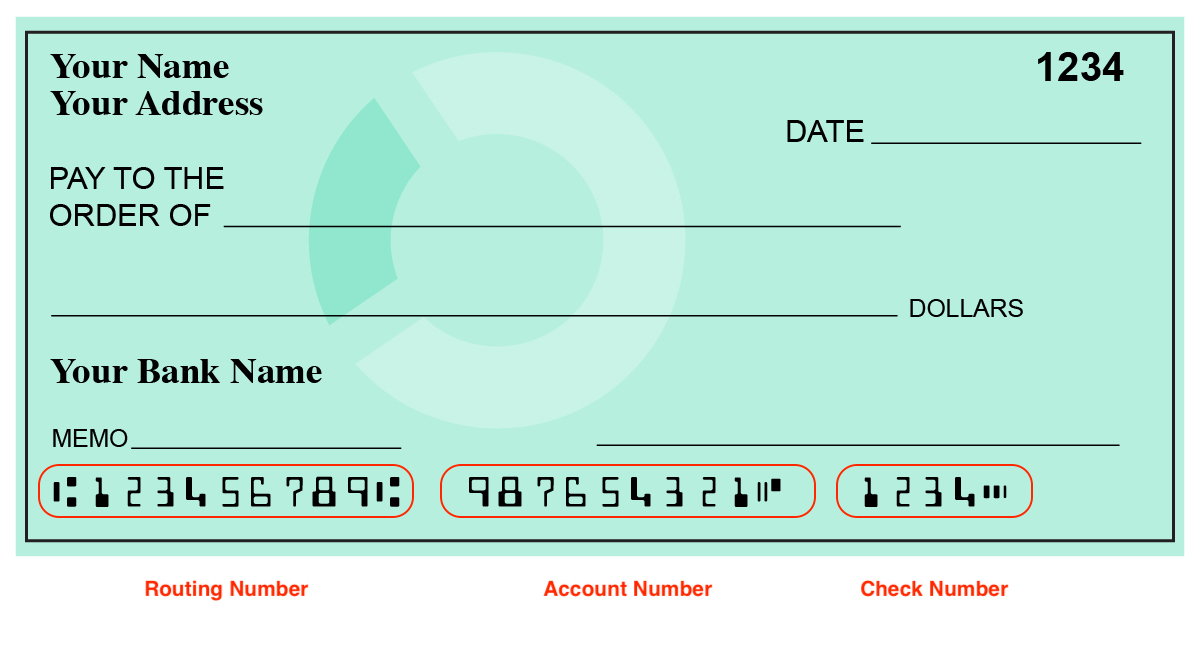
The most traditional way to find your routing number is to look at a physical check associated with your checking account. At the bottom of every check, there is a string of numbers printed in a special font using magnetic ink (known as MICR).
There are typically three sets of numbers at the bottom of a check. The first set of nine digits, located on the far left, is your routing number. It is usually flanked by a specific symbol that looks like a vertical bar and a colon. The second set of numbers is your account number, and the third, shorter set is the individual check number. Always ensure you are reading the nine-digit sequence on the left.
2. Using Online Banking and Mobile Apps
In the digital age, many consumers no longer carry physical checkbooks. If you are among them, your bank’s mobile app or online banking portal is the fastest way to find the information.
Once you log in, navigate to the specific account you wish to use (e.g., “Primary Checking”). Look for a tab or link labeled “Account Details,” “Account Info,” or “Direct Deposit Information.” Most modern banking apps will display both the routing number and the account number in this section. Some apps even provide a pre-filled PDF of a “voided check” which contains all the necessary numbers for setting up direct deposits.
3. Checking Bank Statements and Documents
If you have access to your monthly bank statements—either via mail or as a downloaded PDF—the routing number is almost always listed in the header or the account summary section. Additionally, the paperwork you received when you first opened the account usually contains a “Welcome” letter or a disclosure agreement that lists the routing information for your specific branch or region.
4. Searching the Bank’s Official Website
Since routing numbers are public information, most large national banks (such as Chase, Bank of America, or Wells Fargo) have a dedicated page on their website for routing numbers.
However, a word of caution: large banks often have different routing numbers for different states or regions. If you opened your account in New York but now live in Florida, you may still need to use the New York routing number associated with the branch where your account originated. Always use the search function on the bank’s site and look for “Routing Number by State” to ensure accuracy.
5. Contacting Customer Service or Using the ABA Directory
If you are dealing with a small credit union or a local community bank that doesn’t have a robust mobile app, a quick phone call to customer service will provide you with the information. Alternatively, the American Bankers Association maintains a lookup tool on their website where you can search for a bank’s routing number using its legal name and city/state.
Why You Need Your Routing Number (and When You Don’t)
The routing number is the key to the “plumbing” of the financial world. Understanding the specific scenarios that require this number can help you manage your cash flow more effectively and avoid unnecessary fees.
Direct Deposits and Tax Refunds
The most common use for a routing number is setting up a direct deposit. When you start a new job, your employer’s payroll department needs to know exactly where to send your wages. Similarly, when you file your taxes, the IRS requires your routing and account numbers to issue a refund directly to your bank. Because these transactions are handled through the ACH network, the routing number is the primary piece of data used to navigate the transfer.
Automated Bill Payments and Wire Transfers
Many service providers, such as utility companies or mortgage lenders, allow you to pay via “e-check.” This process uses the ACH system to pull funds directly from your account. To authorize this, you must provide the routing number.
However, it is vital to distinguish between ACH transfers and Wire transfers. A wire transfer is a more immediate, real-time method of sending money, often used for large transactions like real estate purchases. Interestingly, some banks use a different routing number for domestic wire transfers than they do for ACH transactions. Using an ACH routing number for a wire transfer can result in the wire being rejected and the sender being charged a significant “failed wire” fee. Always verify with your bank if they have a dedicated wire routing number.
International Transfers vs. Domestic Transactions
If you are receiving money from another country, a standard nine-digit US routing number might not be enough. International banks typically use the SWIFT (Society for Worldwide Interbank Financial Telecommunication) network. In these cases, you will need to provide your bank’s SWIFT/BIC code, which is an 8 to 11-character alphanumeric code, alongside your personal account details. While the routing number identifies your bank within the US, the SWIFT code identifies it globally.
Security Best Practices for Your Banking Information
Because the routing number is public, its possession by a third party is not inherently a security risk. However, when combined with your account number, it grants the ability to withdraw or deposit funds. Protecting this combination is essential for maintaining your financial security.
Protecting Your Sensitive Data
While you must provide these numbers to legitimate entities like your employer or your utility company, you should never share them over unencrypted email or via text message. Phishing scams often involve fraudulent emails claiming there is an “issue with your direct deposit” and asking you to “verify” your routing and account numbers. Legitimate banks will never ask you to provide this information via an unsolicited email link.
Recognizing “Routing Number Phishing” Scams
In recent years, “Account Takeover” (ATO) fraud has become more sophisticated. Scammers may call pretending to be from your bank’s fraud department, stating that a suspicious transfer is pending. They may then ask you to “confirm” your routing and account number to “cancel” the transfer. In reality, they are seeking the final pieces of information needed to initiate an unauthorized withdrawal. Always hang up and call the number on the back of your official debit card if you suspect a scam.

The Future of Bank Identification: RTNs in the Digital Age
As we move toward a “real-time payments” (RTP) ecosystem, the role of the routing number is evolving but remains foundational. Newer fintech apps and “neobanks” often use a single, centralized routing number for all their users nationwide, simplifying the process. Furthermore, the rise of “FedNow”—the Federal Reserve’s instant payment service—seeks to modernize the infrastructure that has relied on the routing number system for over a century.
Despite these technological leaps, the nine-digit routing number remains the bedrock of American finance. It is the bridge between your physical labor and your digital wealth, ensuring that every dollar earned and every bill paid finds its way to the correct destination. By knowing exactly where to find this number and how to use it correctly, you empower yourself to navigate the complexities of personal and business finance with confidence and precision.
aViewFromTheCave is a participant in the Amazon Services LLC Associates Program, an affiliate advertising program designed to provide a means for sites to earn advertising fees by advertising and linking to Amazon.com. Amazon, the Amazon logo, AmazonSupply, and the AmazonSupply logo are trademarks of Amazon.com, Inc. or its affiliates. As an Amazon Associate we earn affiliate commissions from qualifying purchases.