
In the modern financial landscape, your bank account number serves as the primary identifier for your liquid capital. Whether you are setting up a direct deposit for a new career opportunity, organizing automated bill payments to improve your credit score, or connecting a third-party investment app to grow your wealth, knowing exactly where to find and how to protect this number is fundamental to personal finance. While it might seem like a simple string of digits, the account number is the heartbeat of your transactional life.
Understanding where this information is stored and how to access it securely ensures that you remain in control of your financial destiny. This guide explores the various locations—both digital and physical—where your account number is housed, the technical differences between various banking identifiers, and the security protocols you must follow to keep your assets safe.
Understanding Your Bank Account Number and Why It Matters
Before diving into the “where,” it is essential to understand the “what.” Your bank account number is a unique set of digits assigned by a financial institution to identify your specific account within their internal system. Unlike your debit card number, which can change if the card is lost or expires, your account number remains constant for the life of the account.
The Anatomy of Your Account Number
Most bank account numbers in the United States range from 8 to 12 digits, though some institutions may use up to 17. This number is unique to you and your specific account type—be it checking, savings, or a money market account. In international contexts, you may encounter the IBAN (International Bank Account Number), which incorporates the local account number into a longer, alphanumeric string used for cross-border transactions.
Account Number vs. Routing Number
A common point of confusion for many consumers is the distinction between the account number and the routing number. The routing transit number (RTN) is a nine-digit code that identifies the financial institution itself. Think of the routing number as the “address” of the bank building, while the account number is your specific “apartment number” inside that building.
When you are setting up a transfer, you will almost always need both. The routing number directs the funds to the correct bank, and the account number ensures the money lands in your specific pocket. If you provide the routing number correctly but the account number incorrectly, the transaction will fail, often resulting in “return fees” from your bank.
The Best Digital Tools to Locate Your Account Number Instantly
As the world shifts toward a “mobile-first” banking philosophy, most people find their account information through digital interfaces. Financial institutions have invested billions into user experience (UX) to make this data accessible yet secure.
Mobile Banking Apps: Access on the Go
For most users, the quickest way to find an account number is through a smartphone. After logging in via biometric authentication (FaceID or fingerprint), the account number is typically located under the “Account Details” or “Settings” tab.
To prioritize security, many apps mask the account number by default, displaying only the last four digits (e.g., ****6789). You will usually see a small icon shaped like an eye or a button labeled “Show” or “View” next to the masked number. Tapping this will reveal the full string of digits. This feature is a crucial security measure designed to prevent “shoulder surfing” in public places.
Online Banking Portals: Desktop Convenience
If you are working on a laptop or desktop, logging into your bank’s official website provides a comprehensive view of your financial profile. Once you navigate to your dashboard:
-
Click on the specific account (Checking or Savings).
-
Look for a link labeled “Account Features,” “Details,” or “Account Numbers.”
-
Some banks include this information on the sidebar of the transaction history page.
Digital portals also offer the benefit of “copy and paste” functionality, which reduces the risk of manual entry errors when setting up complex financial transfers or linking external brokerage accounts.
Finding Your Account Number in Physical and Traditional Formats

Despite the digital revolution, physical documents remain a reliable and sometimes necessary way to verify your banking information. In fact, for certain formal processes like applying for a mortgage or verifying identity for a high-value business transaction, a physical document may be required.
The Bottom Line of Your Paper Checks
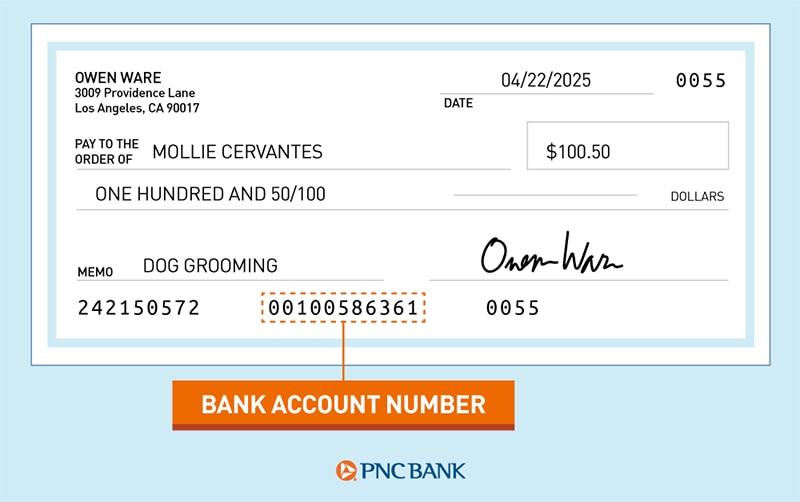
If you still use a physical checkbook, your account number is printed directly on every check. Look at the bottom of a check, and you will see a series of numbers printed in a unique font known as MICR (Magnetic Ink Character Recognition). This line consists of three distinct sets of numbers:
-
The Routing Number: Usually the first nine digits on the left, flanked by specific symbols.
-
The Account Number: Typically the middle set of numbers. It is important to note that on some business checks, the account number and check number may be swapped in order, but the account number is generally the longest string of digits in that section.
-
The Check Number: Usually the shortest set of digits on the far right, matching the number in the top-right corner of the check.
Deciphering Monthly Bank Statements
Your monthly statement is a legal record of your financial activity. Whether you receive this as a PDF “e-Statement” or a paper document in the mail, the account number will be clearly listed at the top of the first page.
Financial experts recommend keeping a digital archive of these statements. Not only do they contain your account number, but they also serve as proof of income and residency. When viewing a statement, ensure you are looking at the “Full Account Number” rather than a truncated version, as some banks mask numbers even on statements for security purposes.
Visiting Your Local Branch
If you lack access to the internet and do not have a checkbook, you can always visit a local branch. You will need to provide a valid government-issued photo ID. The teller or personal banker can provide you with your full account and routing numbers on a printed “Direct Deposit Authorization” form. This is often the safest way to ensure you have the correct information if you are unsure about the digits found elsewhere.
Security Best Practices for Protecting Your Sensitive Financial Data
Your bank account number is a “static” piece of information. Unlike a password that you can change every month, changing an account number usually requires closing the account and opening a new one—a significant administrative burden. Therefore, protecting this number is a cornerstone of digital security.
Guarding Against Social Engineering and Phishing
Sophisticated cybercriminals often use “phishing” emails or “smishing” texts to trick individuals into revealing their account numbers. A legitimate bank will never call, text, or email you asking for your full account number or your password. If you receive a request for this information, do not click any links. Instead, navigate directly to the bank’s official website or call the number on the back of your debit card.
Secure Storage for Digital and Physical Documents
If you download bank statements or take screenshots of your account details, do not store them in your phone’s general photo gallery or an unencrypted “Notes” app. Use a dedicated password manager or an encrypted “vault” app. For physical documents, a fireproof safe or a locked filing cabinet is the gold standard. When disposing of old checks or bank statements, always use a cross-cut shredder to prevent identity theft through “dumpster diving.”
When and Why You’ll Need Your Account Number in the Modern Economy
In the world of personal finance and business, the account number is the “key” that unlocks various automated systems. Understanding its application can help you optimize your cash flow and build financial efficiency.
Setting Up Direct Deposits and Automated Payments
One of the most common uses for an account number is establishing a direct deposit with an employer. This ensures that your salary is available on payday without the need to physically deposit a check. Similarly, “ACH (Automated Clearing House) debits” allow you to pay recurring bills like utilities, mortgages, or insurance premiums directly from your balance. This is often more secure and reliable than sending checks through the mail.

Initiating Wire Transfers and ACH Payments
If you are participating in a side hustle or running a small business, you will often need to provide your account number to clients or platforms to receive payment. Platforms like Stripe, PayPal, and various freelance marketplaces require these numbers to facilitate “payouts.”
Furthermore, for high-value transactions—such as a down payment on a home—you will use your account number to initiate a wire transfer. Wire transfers are near-instant and irreversible, making it absolutely critical that you verify the account number multiple times before hitting “send.” A single digit error could result in funds being sent to the wrong destination, leading to a long and difficult recovery process.
By mastering the various ways to find and use your bank account number, you transition from a passive participant in your finances to an active manager of your capital. Whether through an app, a check, or a statement, this number is your primary link to the global financial system. Keep it accessible to yourself, but hidden from the world.
aViewFromTheCave is a participant in the Amazon Services LLC Associates Program, an affiliate advertising program designed to provide a means for sites to earn advertising fees by advertising and linking to Amazon.com. Amazon, the Amazon logo, AmazonSupply, and the AmazonSupply logo are trademarks of Amazon.com, Inc. or its affiliates. As an Amazon Associate we earn affiliate commissions from qualifying purchases.