
When investors and business analysts ask “How much is Texas Roadhouse?”, they aren’t looking at the price of a 6-ounce sirloin. Instead, they are evaluating one of the most resilient and high-performing entities in the American casual dining sector. Since its inception in 1993, Texas Roadhouse (NASDAQ: TXRH) has evolved from a single storefront in Clarksville, Indiana, into a multi-billion dollar juggernaut that consistently outpaces its competitors in revenue growth, foot traffic, and shareholder value.
To understand the financial weight of Texas Roadhouse, one must look at it through three distinct lenses: its public market valuation, the capital requirements for its franchise operations, and its unit-level economic performance.
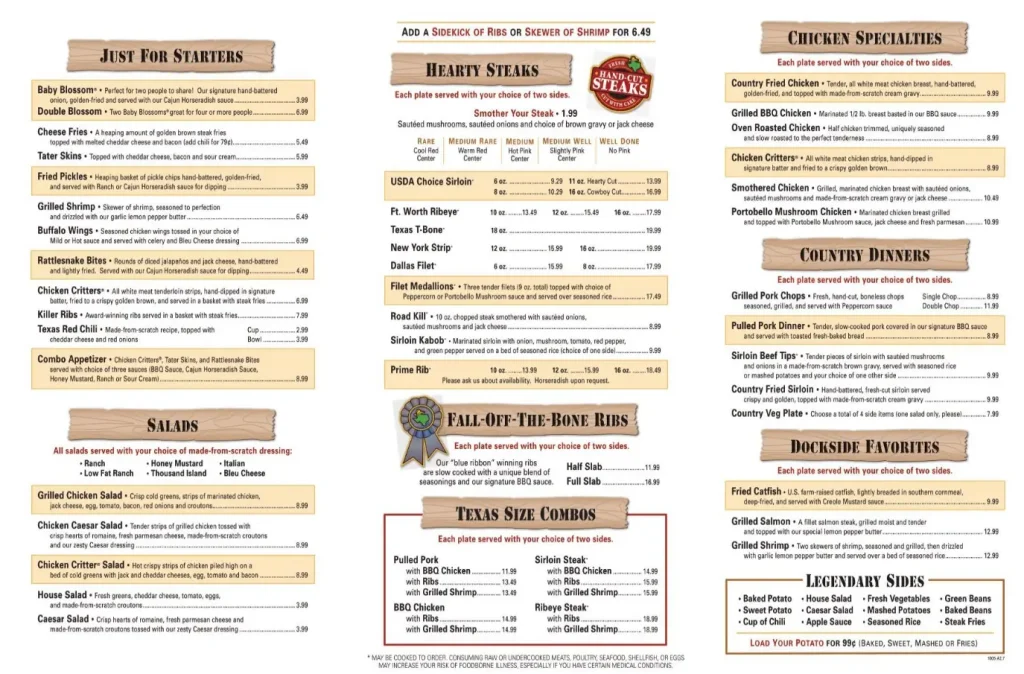
The Corporate Valuation: Understanding TXRH as a Financial Asset
As a publicly-traded company, the “price” of Texas Roadhouse is a moving target dictated by the stock market. However, its valuation is rooted in robust fundamentals that make it a favorite among growth and income investors alike.
Market Capitalization and Revenue Streams
Texas Roadhouse currently commands a market capitalization that frequently fluctuates between $10 billion and $12 billion, depending on quarterly earnings and broader market sentiment. This valuation is a testament to the company’s ability to scale without losing its operational efficiency. Unlike many of its peers in the casual dining space that have struggled with identity crises or declining mall-based foot traffic, Texas Roadhouse has maintained a focused “suburban-standalone” strategy.
The company’s revenue streams are primarily driven by corporate-owned restaurant sales, which account for the vast majority of its top-line growth. With annual revenues surpassing $4.5 billion, the company demonstrates a high level of fiscal health. Investors value the stock not just on current earnings but on the predictability of its cash flow. The brand’s commitment to “Legendary Food, Legendary Service” translates into high customer retention rates, which in financial terms, means lower customer acquisition costs and higher lifetime value per patron.
Growth Strategy and Dividend Yields
A significant portion of the Texas Roadhouse valuation comes from its aggressive yet disciplined expansion. The company consistently opens 25 to 30 new locations annually, funded primarily through internal cash flow rather than heavy debt loads. This “pay-as-you-go” growth model is a rarity in the capital-intensive restaurant industry and provides a safety net during economic downturns.
For income-focused investors, the “cost” of owning Texas Roadhouse stock is offset by its consistent dividend policy. The company has a history of increasing its dividend payouts, reflecting management’s confidence in long-term profitability. This financial discipline ensures that while the company is “expensive” from a Price-to-Earnings (P/E) ratio perspective compared to some legacy brands, the premium is justified by its double-digit growth rates and superior return on invested capital (ROIC).
The Cost of Entry: How Much Does it Cost to Own a Texas Roadhouse?
For entrepreneurs looking to get into the Texas Roadhouse business, the “how much” question takes on a more literal meaning. However, it is important to note that Texas Roadhouse is primarily a company-owned enterprise. While they do have a franchise component, the barrier to entry is exceptionally high, both financially and operationally.
Initial Investment and Liquidity Requirements
To open a Texas Roadhouse franchise, an individual or investment group needs significant liquid capital. The total initial investment required to open a single location typically ranges from $5 million to $7.5 million. This includes everything from the purchase or lease of real estate—often 1.5 to 2.5 acres to accommodate their massive parking requirements—to the construction of the signature 7,000-square-foot building.
Prospective franchisees must generally demonstrate a net worth of at least $5 million and liquidity of at least $1.5 million. Unlike “low-overhead” fast-food franchises, Texas Roadhouse requires a heavy upfront commitment because the brand refuses to compromise on the kitchen infrastructure necessary to hand-cut steaks and bake bread from scratch every five minutes.
Royalties and Ongoing Operational Expenses
Once the doors open, the financial commitment does not end. Franchisees are typically required to pay a royalty fee of 3% to 4% of gross sales. Additionally, there are contributions to national marketing funds. However, the most significant “cost” for a Texas Roadhouse operator is labor and food.

In a financial landscape where “food away from home” inflation has skyrocketed, Texas Roadhouse manages its margins through a unique decentralized management structure. Each “Market Partner” (the company’s term for a general manager with an equity stake) is incentivized to treat the restaurant as their own business. This results in tighter inventory control and lower turnover, which directly impacts the bottom line. The cost of labor is often higher at Texas Roadhouse than at its competitors because of the high staffing levels required to maintain their service speed, but this is viewed as an investment in volume rather than a pure expense.
Unit Economics: Why Texas Roadhouse Outperforms the Competition
To truly answer how much Texas Roadhouse is worth, one must analyze the performance of a single unit. The brand’s unit economics are among the best in the casual dining industry, often outperforming rivals like Outback Steakhouse or LongHorn Steakhouse in key metrics.
Average Unit Volume (AUV) and Profit Margins
The Average Unit Volume (AUV) for a Texas Roadhouse location is a staggering $7 million to $8 million, with high-performing locations in certain markets exceeding $10 million. To put this in perspective, many casual dining brands struggle to maintain an AUV of $4 million.
This high volume is driven by a “high-velocity” business model. By focusing on dinner-only service during the week and all-day service on weekends, they maximize their labor efficiency. The “price” of the meal at Texas Roadhouse is intentionally kept at a value point to ensure high table turns. While the profit margin per steak might be lower than a high-end steakhouse, the sheer volume of guests—often resulting in hour-long wait times even on Tuesday nights—creates a powerhouse of revenue.
Real Estate and Site Selection Strategy
The financial success of the brand is also a result of its real estate strategy. Texas Roadhouse rarely enters high-cost urban centers. Instead, they focus on “Main and Main” locations in suburban markets where land is more affordable and the demographic aligns with their “family-friendly, value-driven” ethos.
By owning a significant portion of their real estate or entering into favorable long-term ground leases, the company insulates itself against the rising rent costs that have plagued other restaurant chains. This real estate strategy adds a layer of “hard asset” value to the company’s balance sheet, making it more than just a service provider but also a significant real estate holder.
Investing in the Brand: A Financial Outlook
When evaluating the long-term “price” of Texas Roadhouse, we must look at the trajectory of the brand and the broader economic factors that influence its valuation.
Historical Performance and Future Projections
Historically, Texas Roadhouse has been a “comp store sales” monster. It has recorded positive year-over-year sales growth in nearly every quarter for over a decade, excluding the height of the 2020 pandemic. For a mature brand, this level of consistency is nearly unheard of. Financial analysts project that as the company continues to rollout its “Roadhouse 76” prototype—a slightly larger footprint designed to handle increased to-go orders—the AUV will continue to climb.
Furthermore, the company’s secondary brands, Bubba’s 33 and Jaggers, provide additional avenues for growth. While these brands are currently a small fraction of the total valuation, they represent the company’s “R&D” into different market segments (sports bars and fast-casual, respectively). If either of these brands reaches a critical mass, the overall “cost” to buy into the TXRH ecosystem today may look like a bargain in a decade.
Risks and Macroeconomic Factors
No financial analysis is complete without considering the risks. The valuation of Texas Roadhouse is highly sensitive to beef prices. As one of the largest purchasers of choice-grade beef in the United States, a spike in cattle futures can compress margins significantly. While the company uses hedging strategies to lock in prices, prolonged inflation in the commodity market remains a primary risk factor.
Additionally, the company’s “Value” proposition is its greatest strength but also a potential financial ceiling. If Texas Roadhouse is forced to raise prices too aggressively to combat labor and food costs, it risks alienating its core demographic. However, thus far, the company has shown a remarkable ability to pass on modest price increases without sacrificing foot traffic, suggesting a high level of brand equity and “price inelasticity” among its loyal customers.
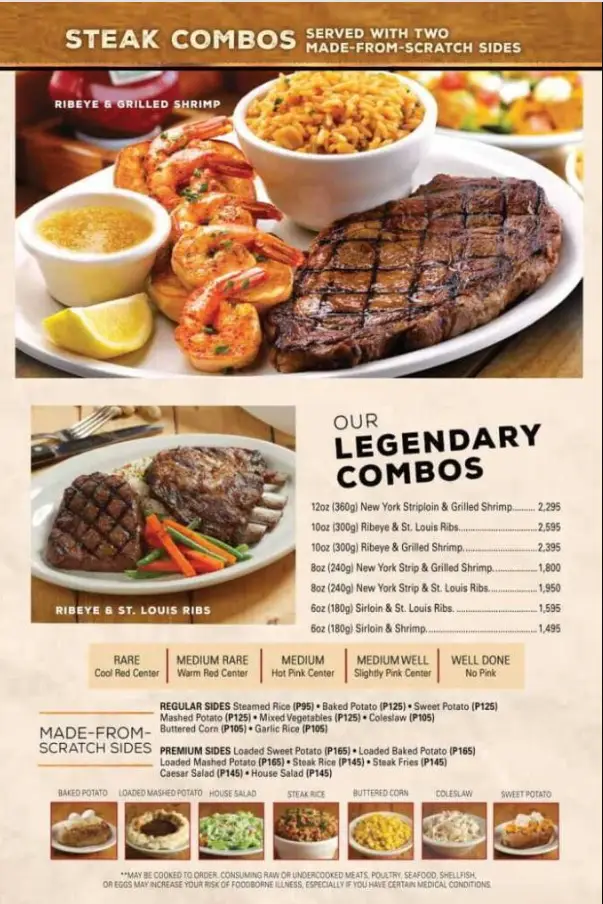
In conclusion, “how much” Texas Roadhouse is depends on where you sit at the table. To a diner, it is an affordable $20-30 experience. To a franchisee, it is a $6 million commitment with high rewards. To a shareholder, it is a $11 billion enterprise that has turned the simple concept of steak and rolls into a masterclass in business finance. By focusing on volume over margin and corporate ownership over rapid franchising, Texas Roadhouse has built a financial fortress that remains the envy of the restaurant world.
aViewFromTheCave is a participant in the Amazon Services LLC Associates Program, an affiliate advertising program designed to provide a means for sites to earn advertising fees by advertising and linking to Amazon.com. Amazon, the Amazon logo, AmazonSupply, and the AmazonSupply logo are trademarks of Amazon.com, Inc. or its affiliates. As an Amazon Associate we earn affiliate commissions from qualifying purchases.