
American Airlines, a name synonymous with American aviation history and global connectivity, holds a prominent position in the intensely competitive airline industry. Its brand identity is not merely built on its logo or advertising campaigns, but intrinsically woven into the fabric of its operational reach—specifically, its extensive network of nonstop flights. Understanding “where American Airlines flies nonstop” is not just about a list of destinations; it’s a deep dive into the strategic decisions that define its corporate identity, market positioning, competitive advantage, and the core promise it delivers to millions of customers worldwide.

For a brand like American Airlines, its flight network is its most tangible product. It dictates market share, influences customer choice, and ultimately shapes its reputation as a reliable and accessible global carrier. This article explores how American Airlines leverages its nonstop routes to solidify its brand, differentiate itself in the market, and foster lasting customer loyalty.
The Strategic Backbone: American Airlines’ Hub-and-Spoke Model
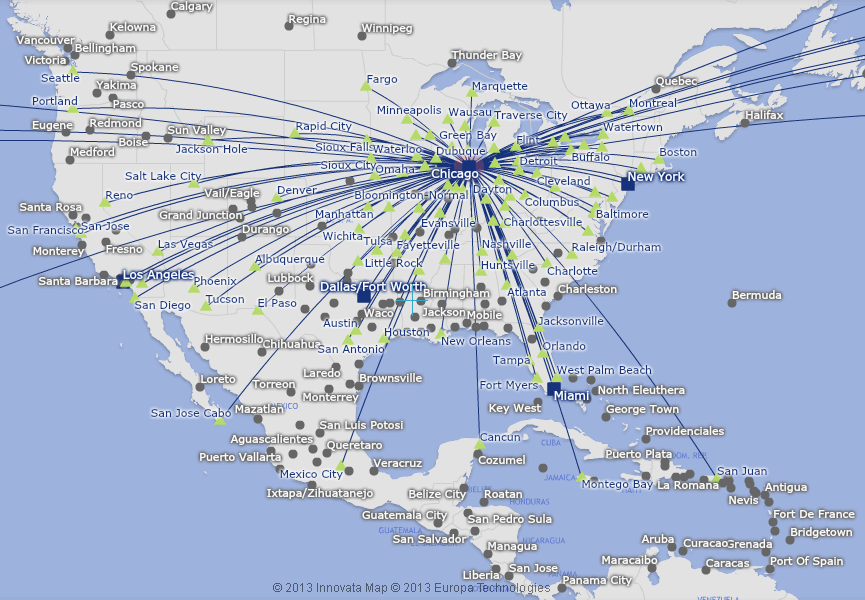
At the heart of American Airlines’ brand strategy lies its sophisticated hub-and-spoke network. This model, characterized by connecting numerous smaller “spoke” cities through larger “hub” airports, is fundamental to how American Airlines projects its image of vast connectivity and operational efficiency. Each hub acts as a critical node, aggregating passenger traffic from various origins and distributing it to a multitude of destinations, significantly increasing the number of city pairs the airline can serve, often with convenient nonstop options to and from these hubs.
Fortifying Domestic Dominance
American Airlines’ brand promise of extensive domestic coverage is heavily reliant on its major US hubs. These strategically located airports serve as bastions of its domestic network, offering an unparalleled number of nonstop flights to cities big and small across the United States. Key domestic hubs include:
-
Dallas/Fort Worth (DFW): The airline’s largest hub, DFW is a colossal operation providing nonstop access to virtually every major and many secondary US cities, cementing American’s brand as the go-to carrier for cross-country travel and inter-regional business.
-
Charlotte (CLT): A crucial East Coast hub, CLT provides robust nonstop service throughout the Southeast and to key Northeast and Midwest markets, reinforcing American’s brand strength in a vital economic corridor.
-
Chicago O’Hare (ORD): As a central gateway, ORD offers extensive nonstop connectivity across the Midwest and to both coasts, bolstering American’s brand as a national connector.
-
Philadelphia (PHL): A primary East Coast and transatlantic gateway, PHL supports American’s brand by offering strong nonstop links to Northeast and Mid-Atlantic regions, alongside international service.
-
Phoenix (PHX): Serving as a significant Western hub, PHX provides nonstop access to destinations across the West, Southwest, and to Hawaii, crucial for leisure and business travelers in the rapidly growing region.
-
Miami (MIA): While also a major international gateway, MIA’s domestic nonstop network is vital for connecting Florida and the Southeast to the rest of the country, underpinning American’s brand presence in this key state.
These hubs, with their vast array of nonstop flights, ensure that American Airlines remains a top choice for domestic travelers, defining its brand through sheer accessibility and frequency.
Gateway to International Markets
Beyond domestic strength, American’s hubs are meticulously positioned to serve as critical gateways for international travel, expanding its brand reach across continents. For example:
-
Miami (MIA): As mentioned, MIA is arguably American’s most important international hub, offering an extensive network of nonstop flights to Latin America and the Caribbean, making American Airlines the dominant brand for travel to these regions.
-
New York (JFK/LGA): American’s presence in New York, particularly JFK, solidifies its brand as a global carrier with numerous nonstop flights to Europe, Latin America, and key domestic routes. LGA focuses more on regional nonstop domestic travel.
-
Los Angeles (LAX): LAX serves as a vital hub for nonstop flights across the Pacific to Asia and Australasia, as well as to Mexico and Latin America, bolstering American’s brand as a transpacific competitor.
By concentrating international departures from these strategic points, American Airlines effectively extends its brand globally, promising direct access to a world of destinations.
The Brand Promise of Connectivity
The hub-and-spoke model, underpinned by a wealth of nonstop routes to and from these hubs, is central to American Airlines’ brand promise: seamless and efficient connectivity. For the business traveler, it means faster routes and fewer layovers to critical meetings. For the leisure traveler, it translates to more direct paths to vacation destinations. This perceived convenience and efficiency are powerful brand attributes that differentiate American from competitors who may offer less direct routes or require multiple connections, thereby strengthening customer loyalty and preference.
Navigating the Americas: A Core Brand Differentiator
American Airlines’ commitment to connecting the Americas is a cornerstone of its brand identity. Its nonstop network within North, Central, and South America, as well as the Caribbean, is arguably unparalleled among its peers, distinguishing it as a true pan-American carrier.
Extensive US Coverage
As detailed earlier, American’s domestic nonstop network from its various hubs is comprehensive. This extensive coverage ensures that whether a customer is flying from a major metropolitan area or a smaller regional city, there is often a convenient nonstop option to one of American’s hubs, from which onward connections or direct services are available. This depth of penetration across the US landscape is a clear brand differentiator, signaling accessibility and convenience to a broad domestic audience. The sheer volume of nonstop routes within the continental US, Hawaii, and Alaska solidifies American’s brand as a national leader.
Deep Roots in Latin America and the Caribbean
No other US airline brand offers the same breadth and depth of nonstop service to Latin America and the Caribbean as American Airlines. With Miami (MIA) as its primary gateway, supported by Dallas/Fort Worth (DFW), Charlotte (CLT), and New York (JFK), American provides direct flights to an astonishing array of destinations across Mexico, Central America, South America, and the island nations of the Caribbean. This unparalleled regional presence is a definitive brand strength, appealing to:
-
VFR (Visiting Friends and Relatives) travelers: A significant demographic with strong ties to these regions.
-
Business travelers: Companies with operations or clients in Latin American markets rely heavily on American’s network.
-
Leisure travelers: Seeking direct access to popular resort destinations.
This robust network is not just about flying; it’s about cultural connection and economic linkage, allowing American Airlines to build a powerful brand association with these vibrant regions. It positions American as the authority for travel to and from this hemisphere.
Strengthening Cross-Border Business & Leisure Brand
The extensive nonstop network across the Americas allows American Airlines to cater effectively to both business and leisure segments, strengthening its brand in both arenas. For multinational corporations operating across the Americas, American provides the critical direct links necessary for efficient operations. For the booming leisure travel market, the abundance of nonstop flights to popular vacation spots—from Cancun to Rio de Janeiro, from Montego Bay to Buenos Aires—makes American a top-of-mind brand. This dual appeal, facilitated by its unique network, underscores American’s versatility and comprehensive market understanding.
Transatlantic and Transpacific Reach: Projecting a Global Brand Image
While the Americas form the bedrock of American Airlines’ brand, its global aspirations and identity are reinforced by its strategic nonstop flights across the Atlantic and Pacific oceans. These long-haul routes are crucial for projecting American’s brand as a truly international carrier.
Key European Gateways and Partnerships
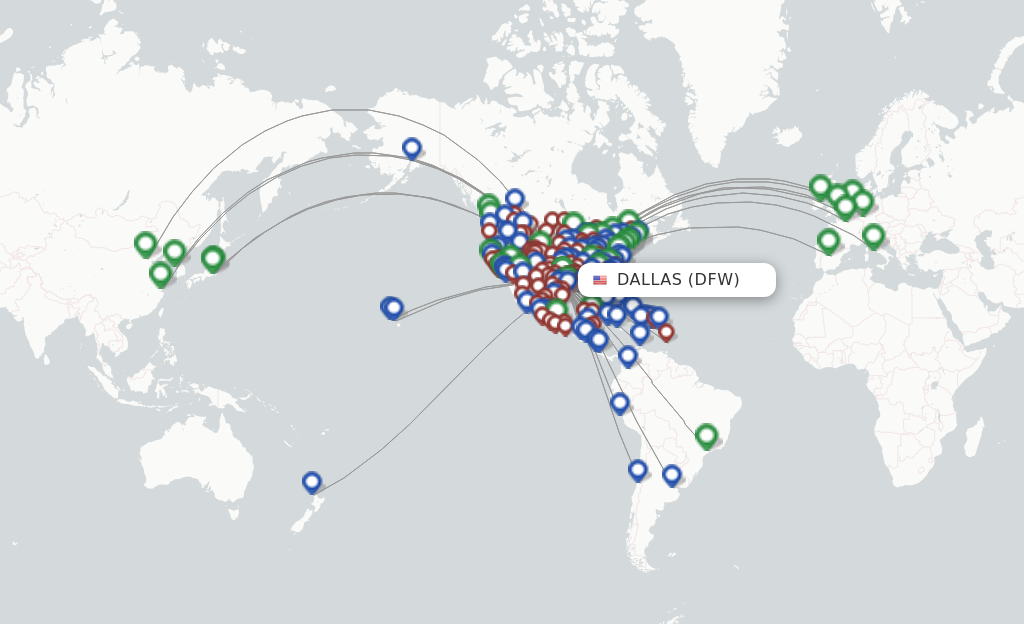
American Airlines maintains a strong presence across Europe, offering numerous nonstop flights from its key US hubs. Major European gateways include:
-
London Heathrow (LHR): A cornerstone of its transatlantic operations, LHR is heavily served from multiple American hubs, leveraging its joint venture with British Airways and Iberia (part of the Oneworld alliance) to offer seamless connections across Europe. This JV significantly enhances American’s brand reach and competitiveness.
-
Paris (CDG), Frankfurt (FRA), Rome (FCO), Madrid (MAD): These major European capitals and economic centers are connected by nonstop flights from American’s US gateways, particularly from New York (JFK), Philadelphia (PHL), and Dallas/Fort Worth (DFW).
This extensive European network, often bolstered by alliance partners, allows American to present itself as a convenient option for business travel to major financial centers and leisure travel to iconic European destinations, effectively broadening its brand appeal.
Strategic Presence in Asia-Pacific
American Airlines’ brand also extends across the Pacific, with nonstop services to key Asian markets, although this segment has seen strategic adjustments over time. Routes to cities like:
-
Tokyo (NRT/HND) and Seoul (ICN): These vital Asian economic hubs are connected from American’s Western hubs like Dallas/Fort Worth (DFW) and Los Angeles (LAX).
-
Australia and New Zealand: Nonstop flights to Sydney (SYD) and Auckland (AKL) from LAX and DFW bolster American’s brand in the lucrative Australasian market, often in partnership with Qantas.
While competitive dynamics in Asia have led to some route adjustments, American’s commitment to these critical markets underscores its brand ambition to be a significant player in transpacific travel, offering direct access to key business and tourist destinations in the Eastern Hemisphere.
Reinforcing the “Global Carrier” Brand Identity
The cumulative effect of these transatlantic and transpacific nonstop routes is the reinforcement of American Airlines’ brand as a “global carrier.” It’s not just an airline that flies within the US or to nearby countries; it’s a brand that connects continents, facilitating international trade, tourism, and cultural exchange. This global footprint, made tangible by its nonstop network, is a powerful statement about the airline’s scale, reliability, and commitment to serving a diverse international clientele. It elevates the brand from a domestic giant to a truly worldwide aviation entity.
The Customer Experience and Brand Loyalty Driven by Nonstop Routes
Ultimately, the utility and perception of American Airlines’ nonstop network directly impact customer experience and, consequently, brand loyalty. The decision to choose an airline is often driven by convenience and efficiency, both of which are epitomized by nonstop service.
Convenience as a Brand Attribute
For many travelers, particularly those on business or families with children, the convenience of a nonstop flight is paramount. It reduces travel time, minimizes the stress of connections, and lowers the risk of missed flights or lost luggage. American Airlines’ extensive nonstop offerings, therefore, directly contribute to its brand image as a convenient and reliable choice. This focus on convenience transforms a transactional flight into a positive brand interaction, making the journey smoother and more predictable. It’s a key factor in building preference.
Tailoring Routes to Customer Segments
American Airlines strategically deploys its nonstop routes to cater to specific customer segments. High-frequency business routes between major economic centers often feature multiple daily nonstop flights, signaling American’s dedication to corporate travelers. Similarly, the seasonal deployment of nonstop flights to popular leisure destinations during peak seasons demonstrates the brand’s responsiveness to the vacation market. This intelligent segmentation through network planning allows American to communicate specific value propositions to different customer groups, reinforcing its brand as versatile and customer-centric.
Brand Perception Through Network Reliability
The reliability of a nonstop network is also crucial for brand perception. When American Airlines consistently delivers on its promise of direct travel, with minimal delays or cancellations, it builds trust. This operational reliability—the ability to get passengers directly from point A to point B as scheduled—is a powerful, albeit often unspoken, brand attribute. A robust and dependable nonstop network underpins a brand’s reputation for efficiency and professionalism, fostering repeat business and positive word-of-mouth.
Competitive Landscape and Brand Positioning Through Network Strategy
In a highly competitive industry, American Airlines’ nonstop network is a formidable tool for brand positioning and differentiation against rivals.
Differentiating from Legacy and Low-Cost Carriers
American’s comprehensive nonstop network allows it to stand apart from both other legacy carriers and low-cost airlines. Against other major full-service airlines (like Delta or United), American strives to offer a competitive or superior number of nonstop options in its key markets, using its hub strength as a leverage point. Against low-cost carriers, which often focus on point-to-point routes between select cities, American’s hub-and-spoke system offers a breadth of nonstop connectivity that LCCs cannot match, especially for complex itineraries or international travel. This broad offering reinforces American’s brand as the premium, comprehensive choice.
Alliance Partnerships and Brand Extension (Oneworld)
American Airlines extends its brand reach significantly through its membership in the Oneworld alliance. This partnership allows American to offer its customers access to an even larger global network of nonstop and connecting flights operated by alliance members like British Airways, Iberia, Qantas, Japan Airlines, and Cathay Pacific. For American’s brand, Oneworld membership means:
-
Extended Global Reach: Customers perceive American as having access to destinations far beyond its own metal.
-
Seamless Travel: The brand promise of smooth connections, even across different airlines.
-
Enhanced Loyalty Programs: Reciprocal benefits that strengthen customer ties to the American Airlines brand and its partners.
Through Oneworld, American’s brand effectively globalizes, tapping into shared networks to offer an even more compelling proposition of worldwide nonstop and single-connection travel.
Future-Proofing the Brand Through Network Evolution
The “where does American Airlines fly nonstop” question is not static; it’s a dynamic reflection of market demand, geopolitical shifts, and competitive pressures. American Airlines continuously evaluates and adapts its nonstop network to remain relevant and competitive. By strategically opening new routes, adjusting frequencies, and sometimes consolidating services, the brand demonstrates its agility and commitment to meeting evolving customer needs. This continuous evolution of its nonstop offerings is essential for future-proofing American’s brand, ensuring it remains a leading, adaptable, and customer-focused global airline in an ever-changing world.
In conclusion, American Airlines’ vast and strategically managed network of nonstop flights is more than just operational logistics; it is a critical pillar of its brand identity. It defines its market presence, underpins its competitive strategy, shapes its corporate identity as a global connector, and forms the bedrock of its brand promise to deliver convenience, reliability, and unparalleled access to the world. Understanding where American Airlines flies nonstop is to understand the very essence of its brand.
aViewFromTheCave is a participant in the Amazon Services LLC Associates Program, an affiliate advertising program designed to provide a means for sites to earn advertising fees by advertising and linking to Amazon.com. Amazon, the Amazon logo, AmazonSupply, and the AmazonSupply logo are trademarks of Amazon.com, Inc. or its affiliates. As an Amazon Associate we earn affiliate commissions from qualifying purchases.