
The question “When will my car be paid off?” is a common one, resonating with millions of car owners globally. For many, a car loan is one of the largest debts they’ll carry, second only to a mortgage. Understanding your car loan’s lifecycle and accurately predicting its payoff date isn’t just about curiosity; it’s a critical component of sound personal financial management. Knowing when you’ll be free from this monthly obligation provides clarity, empowers better budgeting, and can unlock significant financial freedom. This comprehensive guide will delve into the mechanics of car loans, the factors influencing your payoff date, and actionable strategies to accelerate your journey to debt-free car ownership.
Understanding Your Car Loan Basics
Before you can determine your payoff date, it’s essential to grasp the fundamental components of your auto loan. These elements dictate how your payments are structured and how quickly your principal balance decreases.
Key Loan Terms: Principal, Interest Rate, and Loan Term
-
Principal: This is the original amount of money you borrowed to purchase the vehicle. Every payment you make chipping away at this principal amount is a step closer to owning your car outright.
-
Interest Rate (APR): The annual percentage rate (APR) is the cost of borrowing money, expressed as a percentage. A higher interest rate means a larger portion of your early payments will go towards interest rather than reducing the principal, effectively extending the time it takes to pay off the loan and increasing the total cost.
-
Loan Term: This refers to the duration of the loan, typically expressed in months (e.g., 36, 48, 60, 72, or even 84 months). A longer loan term generally results in lower monthly payments, but it also means you’ll pay more in total interest over the life of the loan. Conversely, a shorter term leads to higher monthly payments but less total interest paid and a quicker payoff.
Amortization Schedule: How Payments Are Applied
An amortization schedule is a table detailing each payment made over the life of the loan, showing how much goes towards interest and how much towards the principal. In the early stages of an auto loan, a larger portion of your payment is allocated to interest. As the loan matures, the proportion shifts, with more of each payment going towards reducing the principal. This structure is why making extra principal payments early in the loan term can have a dramatic effect on your total interest paid and your payoff date. Understanding this schedule can illuminate why seemingly small extra payments can make a big difference.
The Impact of Down Payments and Trade-Ins
The amount you put down initially, whether in cash or through the value of a trade-in, directly impacts your principal balance. A larger down payment reduces the amount you need to borrow, which in turn means less interest paid over the life of the loan and a potentially quicker payoff, even if your original loan term remains the same. It also reduces your monthly payment, offering more flexibility to apply extra funds towards the principal.
Factors Influencing Your Payoff Date
While your original loan agreement provides a projected payoff date, several dynamic factors can either accelerate or delay that timeline. Proactive management of these factors is key to controlling your financial destiny.
Original Loan Term vs. Actual Payoff
Your loan agreement specifies an “expected” payoff date based on regular, on-time payments. However, this is just a baseline. If you consistently make only the minimum payment, this is precisely when your car will be paid off. Any deviation from this—whether extra payments or missed payments—will alter that date.
The Power of Extra Payments
This is perhaps the most significant factor you can control. Every dollar you pay above your minimum required payment, specifically designated for the principal, directly reduces your loan balance. Because interest is calculated on the outstanding principal, reducing that principal earlier means less interest accrues in subsequent periods. Even small, consistent extra payments can shave months or even years off your loan term and save you hundreds or thousands in interest.
Refinancing Your Auto Loan
Refinancing involves taking out a new loan to pay off your existing car loan, often with a different lender. People typically refinance for two main reasons:
-
Lower Interest Rate: If your credit score has improved since you first took out the loan, or if market rates have dropped, you might qualify for a lower interest rate. A lower rate means more of your payment goes to principal, speeding up the payoff and reducing total interest.
-
Shorter Loan Term: You might choose to refinance into a shorter loan term to pay off the car faster, understanding that your monthly payments will increase.
Carefully weigh the costs associated with refinancing, such as fees, against the potential savings.
Dealing with Missed Payments or Deferrals
Missing payments or opting for payment deferrals (often offered by lenders during financial hardship) will extend your loan term and increase the total interest paid. When payments are deferred, interest typically continues to accrue on the outstanding balance, meaning you’ll owe more in the long run. It’s crucial to understand the terms of any deferral program and how it will impact your total loan cost and payoff date.
Strategies to Accelerate Your Car Loan Payoff
Taking a proactive approach to your car loan can significantly shorten its life. Here are several effective strategies to consider:
The “13th Payment” Method
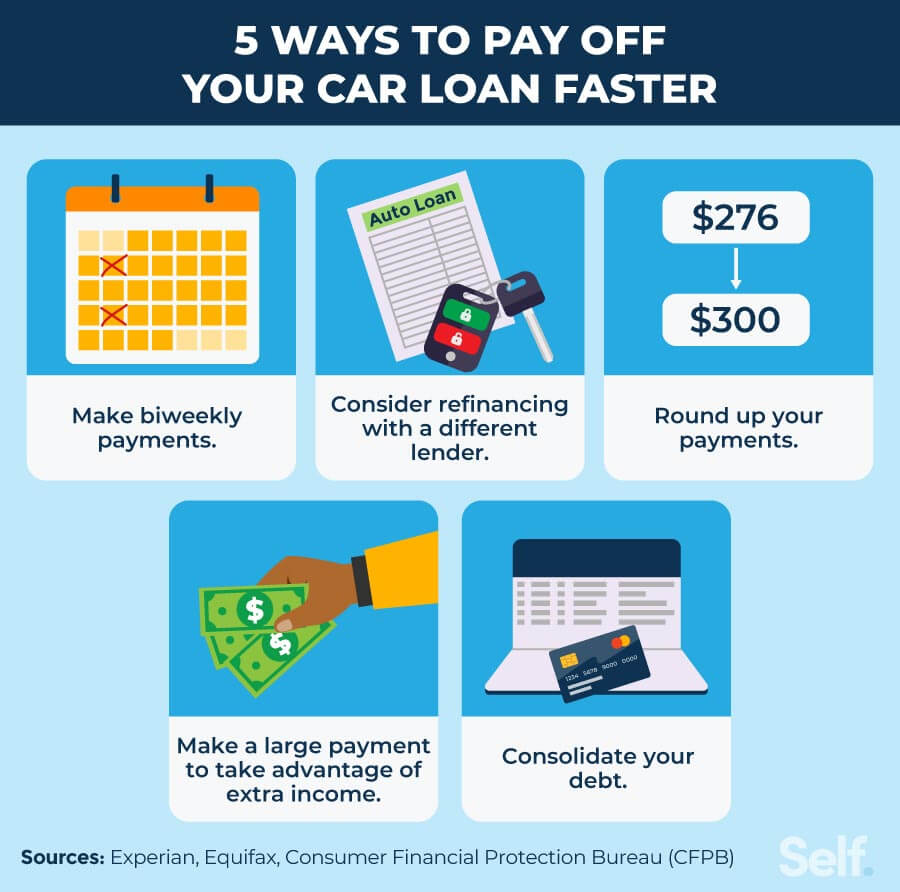
Instead of making 12 monthly payments, aim to make the equivalent of 13 payments per year. You can achieve this by dividing your monthly payment by 12 and adding that amount to each of your regular monthly payments. For example, if your payment is $300, you’d add $25 to each payment ($300/12 = $25), effectively making an extra payment over the course of the year. This method gradually chips away at the principal, reducing your overall loan term.
Rounding Up Your Payments
This is a simple yet effective strategy. If your payment is $378, round it up to $400. That extra $22 might seem negligible, but consistently applying it to the principal each month can add up to significant savings and a faster payoff, often without feeling like a major financial stretch.
Applying Windfalls and Bonuses
Any unexpected money—a work bonus, tax refund, inheritance, or even a gift—can be a powerful tool for debt reduction. Instead of spending it, consider applying a portion or all of it directly to your car loan principal. Lump-sum payments can dramatically reduce your outstanding balance and, consequently, the interest you’ll pay over the remaining life of the loan.
Bi-Weekly Payment Approach
This strategy involves making half of your monthly payment every two weeks. Since there are 52 weeks in a year, this results in 26 half-payments, which equates to 13 full monthly payments annually. This is essentially the same as the “13th payment” method but structured differently. It often aligns well with bi-weekly pay schedules and can feel less burdensome than a single large monthly payment.
Tools and Resources for Tracking Your Progress
Staying informed about your loan’s status is crucial. Fortunately, numerous tools and resources can help you monitor your progress and calculate potential payoff dates under different scenarios.
Online Loan Calculators
Dozens of free online auto loan calculators allow you to input your current loan details (principal balance, interest rate, remaining term) and then experiment with making extra payments. These calculators can instantly show you how much interest you’ll save and how many months you’ll shave off your loan term by adding even a small amount to your monthly payment or making a one-time lump sum payment. They are invaluable for visualizing the impact of your efforts.
Consulting Your Loan Servicer
Your loan servicer (the company you send your payments to) is your primary resource for accurate, up-to-date information. You can typically log into their online portal, where you’ll find your current principal balance, an estimated payoff date, and often the option to make extra principal-only payments. If you have questions about how payments are applied or want to confirm your payoff balance, calling their customer service is always a good idea.
Personal Finance Apps
Many personal finance apps (e.g., Mint, YNAB, Personal Capital) allow you to link your bank accounts and loans, providing a comprehensive view of your financial landscape. These apps can track your loan balances, monitor your spending, and some even offer debt payoff calculators or goal-setting features that can help you stay on track with your car loan acceleration plan.
The Benefits of an Early Car Loan Payoff
Paying off your car loan ahead of schedule offers a multitude of financial advantages, extending beyond simply not having a monthly payment.
Saving on Interest Costs
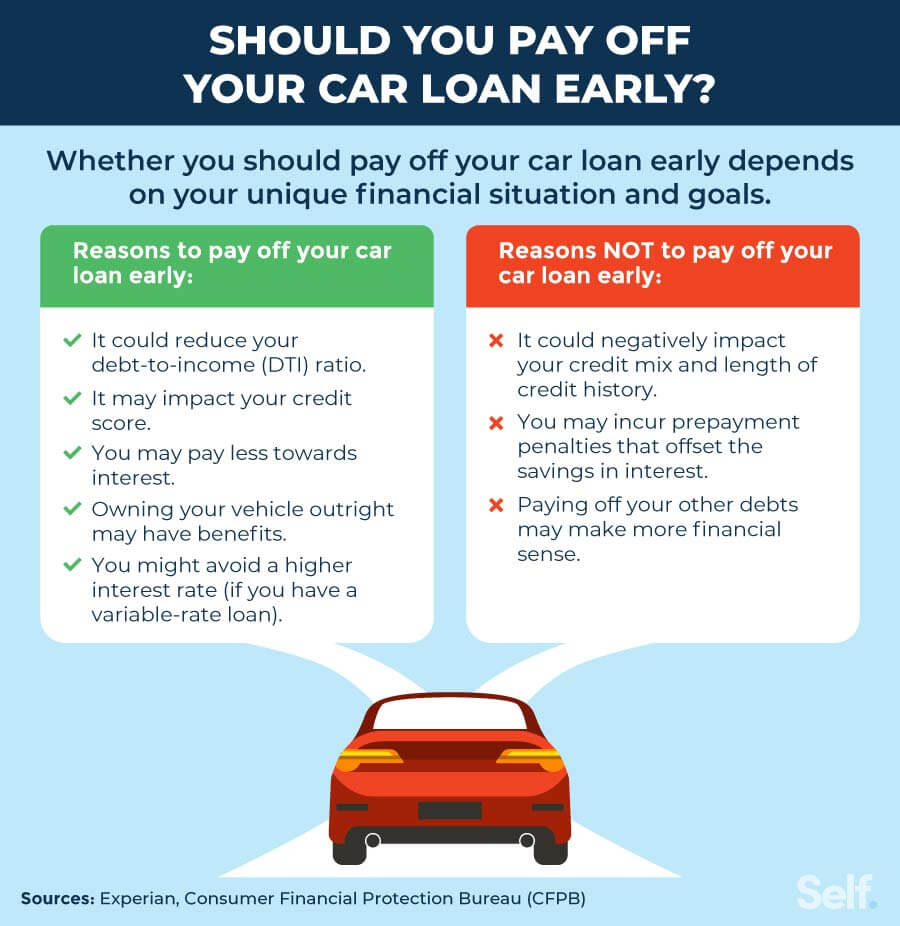
This is often the most significant and quantifiable benefit. By reducing the time your money is borrowed, you reduce the total interest paid. Over the life of a typical car loan, this can amount to hundreds or even thousands of dollars that you can then reallocate to other financial goals.
Increased Financial Flexibility
Eliminating a significant monthly car payment frees up a substantial portion of your income. This newfound flexibility can be channeled towards other priorities: building an emergency fund, investing for retirement, paying down higher-interest debt (like credit cards), saving for a down payment on a home, or simply increasing your discretionary spending without financial stress.
Owning a Valuable Asset Outright
Once your car loan is paid off, you own the vehicle free and clear. This means no more liens on your title, and you have complete control over your asset. Should you decide to sell or trade it in the future, the full value of the car goes directly to you, rather than being used to satisfy an outstanding loan.
Peace of Mind and Reduced Stress
There’s an undeniable psychological benefit to being debt-free. Knowing that a major monthly obligation is gone can significantly reduce financial stress and provide a sense of accomplishment and peace of mind. This emotional relief can be just as valuable as the monetary savings.
In conclusion, understanding when your car will be paid off is a fundamental step in taking control of your personal finances. By grasping the basics of your loan, identifying the factors you can influence, and implementing strategic repayment methods, you can not only predict your payoff date but actively accelerate it. The benefits—from significant interest savings to enhanced financial flexibility and invaluable peace of mind—make the effort well worth it. Start by examining your current loan, set realistic goals, and take proactive steps today to drive towards debt-free car ownership.
aViewFromTheCave is a participant in the Amazon Services LLC Associates Program, an affiliate advertising program designed to provide a means for sites to earn advertising fees by advertising and linking to Amazon.com. Amazon, the Amazon logo, AmazonSupply, and the AmazonSupply logo are trademarks of Amazon.com, Inc. or its affiliates. As an Amazon Associate we earn affiliate commissions from qualifying purchases.