
For investors, analysts, and business professionals, the question “Where does AA fly?” transcends simple geography. While a traveler might look at a route map to plan a vacation, a financial stakeholder looks at that same map to understand revenue concentration, capital allocation, and market dominance. American Airlines (AA) operates one of the most expansive networks in the world, but in the realm of business finance, the destination is only half the story. The true focus lies in the profitability of those routes, the efficiency of the fleet servicing them, and the strategic maneuvering required to maintain a competitive edge in a capital-intensive industry.
This analysis explores the financial trajectory of American Airlines, examining where the company is directing its resources, how it capitalizes on its global network, and what the future holds for its valuation in an increasingly complex macroeconomic environment.
The Economics of the Hub-and-Spoke Model: Mapping Revenue Streams
At the heart of American Airlines’ financial strategy is the “hub-and-spoke” model. This system isn’t just about moving people; it is a sophisticated mechanism for maximizing Revenue Per Available Seat Mile (RASM). By funneling passengers through central hubs, AA creates a density of demand that allows for higher frequency and better pricing power.
The Profitability of Domestic Dominance
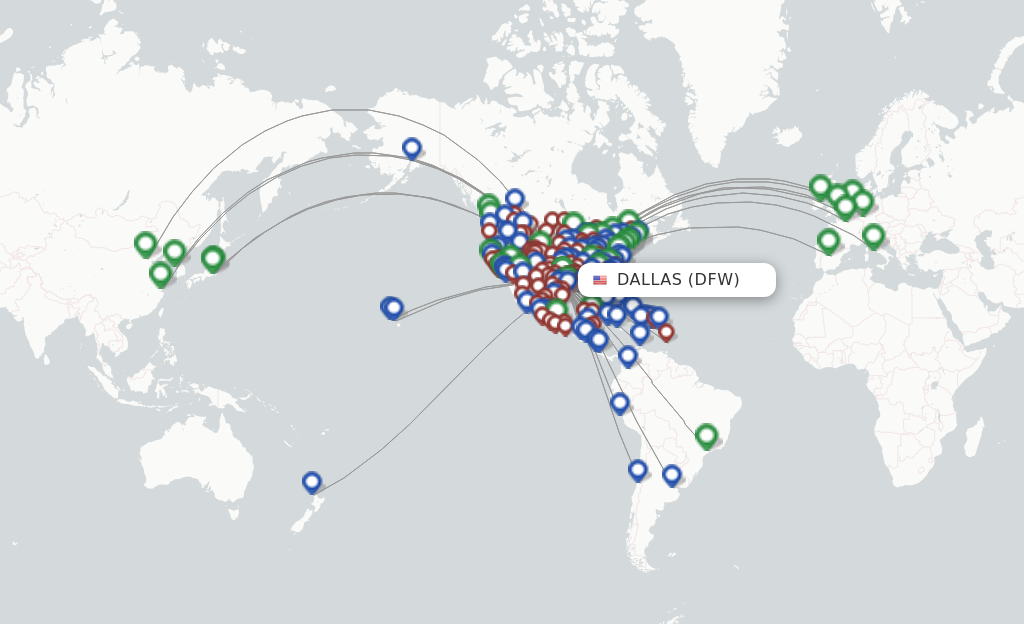
American’s domestic network remains its primary engine for cash flow. Hubs like Dallas/Fort Worth (DFW), Charlotte (CLT), and Miami (MIA) serve as high-margin fortresses. In the world of personal finance and corporate investing, these hubs are viewed as “moats.” For instance, at DFW, American controls the vast majority of gates, allowing it to dictate schedules that cater to high-yield business travelers. The domestic sector is less susceptible to geopolitical shocks than international travel, providing a stable foundation for the company’s quarterly earnings.
Transatlantic and Transpacific: High-Yield Routes
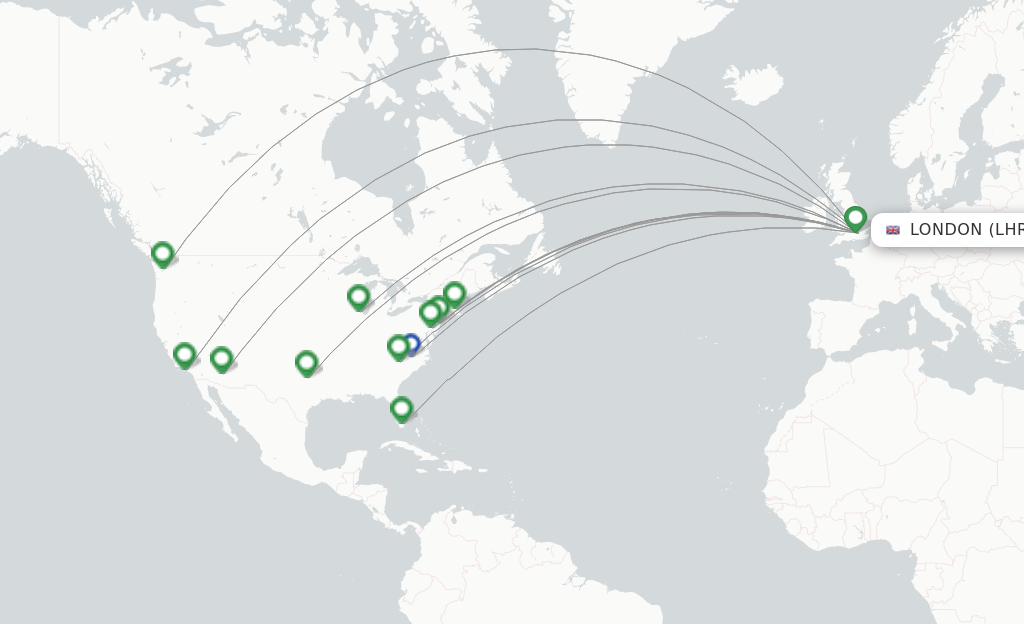
When we ask where AA flies internationally, we are looking at the company’s most prestigious—and often most volatile—revenue streams. Through the Atlantic Joint Business agreement with British Airways and Iberia, American maximizes its presence in London Heathrow, one of the world’s most lucrative business hubs. These premium-heavy routes are essential for the company’s “Money” metrics, as a single business-class seat can generate more profit than an entire row in economy.
The Role of Regional Subsidiaries in Operational Efficiency
American Eagle and other regional partners allow AA to “fly” into smaller markets without the high overhead of mainline aircraft. From a business finance perspective, this is an exercise in cost optimization. By using smaller, more fuel-efficient regional jets for low-demand routes, AA maintains a presence in secondary markets—feeding the larger hubs—while keeping the Cost per Available Seat Mile (CASM) under control.
Capital Allocation and Fleet Modernization
A critical component of American’s financial health is its fleet. Where AA flies is largely determined by what it flies. The company has undergone one of the most aggressive fleet modernization programs in aviation history, a move that has significant implications for its balance sheet and long-term investment profile.
Investing in the Future: The Billions Behind Aircraft Acquisition
Since the merger with US Airways, American has spent tens of billions of dollars on new Boeing and Airbus aircraft. In the niche of business finance, this represents a massive capital expenditure (CapEx) cycle. While this increased the company’s debt load, it resulted in the youngest fleet among the “Big Three” U.S. carriers. A younger fleet reduces maintenance costs and provides a more attractive product to consumers, which helps sustain higher ticket prices.
Fuel Efficiency as a Financial Hedge
Fuel is typically an airline’s first or second largest expense. By flying modern aircraft like the Boeing 787 Dreamliner and the Airbus A321neo, American has significantly improved its fuel burn per passenger. This modernization acts as a natural hedge against fluctuating oil prices. For investors, this efficiency is a key metric in assessing the company’s ability to remain profitable during periods of high energy costs.
Debt Management and Liquidity in a Volatile Market
The downside of a massive fleet overhaul is the accumulation of debt. American Airlines carries a significant amount of leverage compared to its peers. Financial analysts closely monitor AA’s “liquidity” and its “debt-to-EBITDA” ratio. The company’s strategy has recently shifted from expansion to deleveraging—using free cash flow to pay down high-interest debt and improve its credit rating, which is a vital sign for long-term stock value.
The Digital Dividend: Monetizing the AAdvantage Loyalty Program

In modern airline finance, the value of the company isn’t just in the planes; it’s in the data and the loyalty. To understand where AA “flies” in a financial sense, one must look at its AAdvantage program, which has evolved from a marketing tool into a multibillion-dollar financial asset.
Loyalty Programs as a Multibillion-Dollar Asset
The AAdvantage program is often valued higher than the airline itself. During the pandemic, American used its loyalty program as collateral to secure billions in financing. This demonstrates the immense “hidden” value on the balance sheet. The program generates steady, high-margin revenue that is decoupled from the actual operation of flights.
Co-Branded Credit Cards and Ancillary Revenue
A significant portion of AA’s “Money” comes from its partnerships with financial institutions like Citi and Barclays. These banks pay American for miles, which are then awarded to cardholders. This “ancillary revenue” is pure profit with very low overhead. For the savvy investor, the growth of the co-branded credit card market is a more reliable indicator of AA’s financial health than seasonal fluctuations in ticket sales.
Data-Driven Marketing: Maximizing Customer Lifetime Value
By tracking where its customers fly and how they spend, American can use AI and advanced analytics to offer personalized upgrades and targeted marketing. This digital strategy increases the “Customer Lifetime Value” (CLV). In the context of online income and business finance, this represents a sophisticated shift toward a recurring revenue model, similar to a subscription service, which is highly favored by Wall Street.
Navigating Macroeconomic Headwinds and Market Competition
No discussion of where AA flies is complete without addressing the turbulent economic skies it must navigate. The airline industry is a bellwether for the broader economy, sensitive to everything from interest rates to labor trends.
Labor Costs and the Impact of Union Negotiations
One of the largest challenges facing AA’s financial stability is the rising cost of labor. With pilots and flight attendants securing record-breaking contracts, the company’s fixed costs are increasing. Management must balance the need for a satisfied, professional workforce with the necessity of maintaining a competitive cost structure. This tension is a central theme in recent earnings calls and a primary concern for value investors.
The Competitive Landscape: ULCCs vs. Legacy Carriers
In the domestic market, American faces intense competition from Ultra-Low-Cost Carriers (ULCCs) like Spirit and Frontier. These airlines “fly” the same routes but at a fraction of the cost. AA’s financial response has been the introduction of “Basic Economy” and a tiered pricing strategy designed to segment the market. This allows American to compete on price with the budget airlines while still capturing the premium spend of corporate travelers.
Geopolitical Factors Influencing International Expansion
Expansion into markets like China or South America is not just a matter of logistics; it is a matter of international finance and diplomacy. Fluctuations in foreign exchange rates can erode international profits, and trade tensions can lead to reduced business travel. AA’s financial team must constantly evaluate the “risk-adjusted return” of its international routes, sometimes choosing to pull out of underperforming markets to protect the bottom line.
The Investor’s Verdict: Assessing AA’s Long-Term Value
Where does American Airlines go from here? For the person interested in “Money” and “Investing,” the conclusion is a mix of caution and opportunity.
Key Financial Ratios for Airline Investors
Investors looking at AA should focus on several specific metrics:
- RASM (Revenue per Available Seat Mile): Is the airline getting more efficient at squeezing revenue out of every seat?
- Free Cash Flow: After paying for new planes and operations, how much cash is left to pay down debt?
- Net Debt: Is the company making meaningful progress in reducing its leverage?
Future Growth Catalysts
The potential for growth lies in the continued recovery of corporate travel and the further monetization of the AAdvantage program. If American can successfully integrate its digital tools to improve the passenger experience while maintaining its lean post-pandemic operational structure, the stock could see significant upside.
Risk Factors and Mitigation Strategies
The primary risks remain external: a sudden spike in oil prices, a global recession, or further labor unrest. American’s strategy for mitigation involves maintaining high liquidity levels and continuing to diversify its revenue streams away from pure ticket sales toward financial services and cargo operations.
In summary, when we ask “Where does AA fly?”, the answer is a complex tapestry of global routes, massive capital investments, and sophisticated financial instruments. For the investor, American Airlines represents a high-stakes play on global mobility and domestic economic strength. By understanding the financial “flight path” behind the route map, one can better appreciate the challenges and rewards of investing in one of the world’s largest transportation icons.
aViewFromTheCave is a participant in the Amazon Services LLC Associates Program, an affiliate advertising program designed to provide a means for sites to earn advertising fees by advertising and linking to Amazon.com. Amazon, the Amazon logo, AmazonSupply, and the AmazonSupply logo are trademarks of Amazon.com, Inc. or its affiliates. As an Amazon Associate we earn affiliate commissions from qualifying purchases.