
The question of which game reigns supreme as the best-selling of all time is a perennial topic of fascination for gamers and industry observers alike. While simple sales figures can offer a snapshot, understanding the true drivers behind such monumental success requires a nuanced exploration of technological innovation, platform evolution, and the strategic business decisions that have propelled certain titles to unprecedented commercial heights. This article delves into the technological underpinnings that have facilitated the mass adoption of gaming and examines the economic models that have enabled the continued dominance of certain franchises, ultimately shedding light on what constitutes “best-selling” in the ever-evolving digital entertainment landscape.
The Technological Pillars of Gaming’s Global Reach
The journey to becoming the best-selling game of all time is intrinsically linked to the technological advancements that have made gaming accessible, engaging, and ubiquitous. From the nascent days of arcade cabinets and home consoles to the current era of cloud gaming and mobile dominance, technology has been the fundamental enabler.
From Pixels to Photorealism: The Evolution of Graphics and Gameplay
The evolution of graphical fidelity has been a primary catalyst for gaming’s appeal. Early games, characterized by simple sprites and limited color palettes, laid the groundwork for interactive entertainment. However, it was the advent of 3D graphics, initially through dedicated hardware like the Nintendo 64 and PlayStation, that truly revolutionized the visual experience. This leap allowed for more immersive worlds, complex character models, and realistic environments, captivating players on a deeper level.
Beyond raw visual power, advancements in processing power and memory have enabled increasingly sophisticated gameplay mechanics. Physics engines that simulate realistic interactions, AI that provides challenging and adaptive opponents, and complex game design tools that allow for vast, open worlds have all contributed to the depth and replayability of modern titles. The ability to create experiences that feel dynamic and responsive, rather than static and predictable, is a key factor in retaining player engagement and driving sustained sales.
The Ubiquity of Platforms: Consoles, PCs, and the Mobile Revolution
The “best-selling” status of a game is heavily influenced by the platforms it’s available on and their respective market penetration. The console wars, fought fiercely between Nintendo, Sega, Sony, and Microsoft, have historically driven massive hardware sales, creating dedicated player bases for exclusive titles. Games that achieve multi-platform releases across these major consoles, and also leverage the expansive reach of PC gaming, naturally have a much larger potential audience.
However, the most significant democratizing force in gaming technology has undoubtedly been the rise of mobile. Smartphones, now in the pockets of billions worldwide, have transformed casual gaming from a niche hobby into a mainstream activity. Games designed for touch interfaces and playable in short bursts have achieved astronomical download and revenue figures, often surpassing traditional console and PC titles in sheer volume. This accessibility has opened up gaming to demographics previously underserved by the industry, fundamentally reshaping the landscape of what constitutes a “best-selling” phenomenon.
The Network Effect: Online Multiplayer and Digital Distribution
The internet’s integration into gaming has been a monumental shift, fostering a sense of community and enabling persistent online experiences. The ability to connect with friends and strangers across the globe in real-time has transformed games from solitary pursuits into social events. This “network effect” drives player retention and word-of-mouth marketing, indirectly boosting sales as more players join the communal experience.
Furthermore, the evolution of digital distribution platforms like Steam, PlayStation Store, Xbox Games Store, and mobile app stores has streamlined the purchasing process and broadened game accessibility. This has significantly reduced the friction associated with acquiring games, allowing for instant downloads and often facilitating more frequent sales and promotions that can drive impulse purchases and sustain long-term revenue streams for popular titles. The ease of access and continuous engagement fostered by these digital ecosystems are critical components of sustained commercial success.
The Economic Engine: Business Models and Monetization Strategies
Beyond the technological marvels, the economic frameworks within which games are developed, marketed, and sold play an equally crucial role in determining their ultimate commercial success. Understanding these financial models is key to deciphering the immense revenues generated by top-tier titles.
The Rise of Free-to-Play and the Freemium Model
Perhaps the most disruptive economic shift in modern gaming has been the widespread adoption of the free-to-play (F2P) model, particularly in the mobile and PC markets. This model fundamentally alters the entry barrier, allowing players to download and experience a game without any upfront cost. Revenue is then generated through a variety of in-game purchases, often referred to as “microtransactions.”

These microtransactions can range from cosmetic items that personalize a player’s avatar or experience, to “pay-to-win” elements that offer gameplay advantages, or even “loot boxes” that provide randomized rewards. The success of F2P hinges on attracting a massive player base and then converting a smaller percentage of those players into paying customers. The sheer volume of players in games like Fortnite, League of Legends, or PUBG Mobile has allowed them to generate billions of dollars, proving the potent scalability of this economic approach. The ongoing debate surrounding the ethics of certain F2P monetization strategies, such as aggressive “gacha” mechanics, also highlights the significant financial stakes involved.
The Enduring Power of the Premium Model and its Variations
While F2P has captured significant market share, the traditional premium model, where a game is purchased for a fixed upfront price, remains a powerful force, especially in the console and PC space. However, the definition of “premium” has evolved. Many AAA titles now launch with base prices and are further supplemented by post-launch content in the form of downloadable content (DLC), season passes, and expansion packs.
This approach allows developers to recoup initial development costs and continue to generate revenue from a successful title long after its initial release. Games that offer substantial post-launch support and engage players with ongoing narratives or competitive modes can maintain strong sales momentum for years. Franchises like Call of Duty, Grand Theft Auto, and The Witcher have demonstrated the enduring appeal and profitability of a well-executed premium model bolstered by consistent, high-quality content updates. The perceived value proposition for players – a complete and engaging experience with the potential for further enriching content – is key to this model’s continued success.
The Role of Intellectual Property and Franchise Building
Beyond individual game sales, the concept of the “best-selling” often extends to the broader impact of a franchise. Games that establish strong intellectual property (IP) can spawn sequels, spin-off titles, merchandise, and even media adaptations like movies and TV shows. This creates a halo effect, where the success of one iteration of a game can drive awareness and sales for subsequent releases and related products.
The creation of deeply engaging characters, compelling storylines, and distinctive game worlds are crucial for building a memorable IP. Nintendo’s Mario and Zelda franchises, for example, have achieved enduring popularity and commercial success over decades, not just through individual game sales but through the consistent cultivation of their beloved universes. Similarly, Microsoft’s Halo and Sony’s PlayStation franchises have become synonymous with their respective platforms, driving hardware sales and fostering loyal fan bases that eagerly anticipate new installments. The long-term strategic value of a successful game IP can far exceed its initial sales figures.
Defining “Best-Selling”: A Multifaceted Metric
Ultimately, the title of “best-selling game of all time” is not a static designation and can be interpreted in various ways, depending on the metrics used and the scope of the analysis. It requires a comprehensive understanding of both technological enablers and economic strategies.
Units Sold vs. Revenue Generated: A Critical Distinction
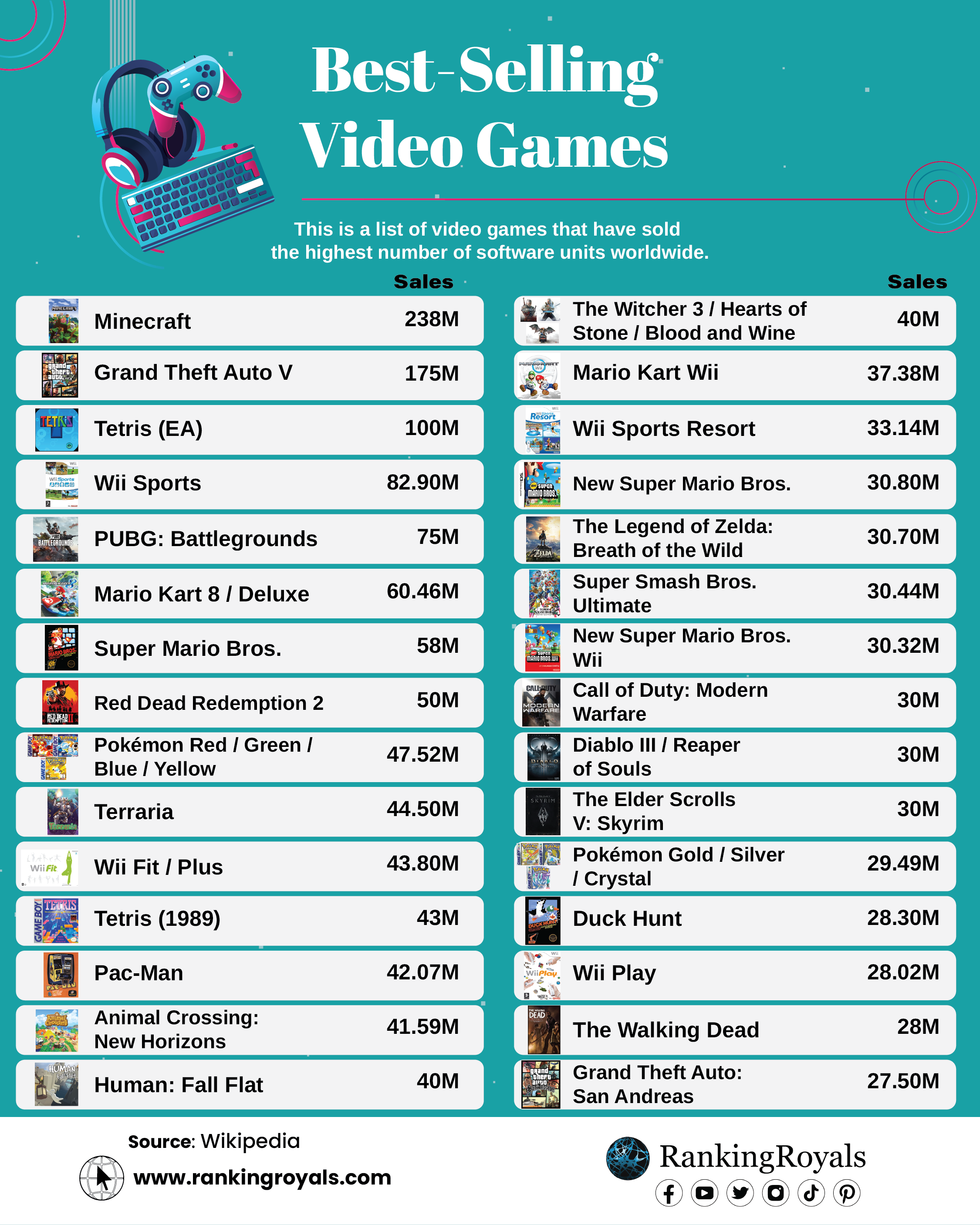
The most common interpretation of “best-selling” refers to the sheer number of units sold. This metric is straightforward and often highlights games that have achieved widespread accessibility, such as Minecraft and Grand Theft Auto V, which have sold hundreds of millions of copies across numerous platforms. These titles have transcended traditional gaming demographics and become cultural phenomena.
However, focusing solely on units sold can sometimes overlook games that, while not necessarily having the highest unit count, have generated immense revenue. The free-to-play model, with its continuous stream of microtransactions, can lead to titles generating billions of dollars in revenue without a traditional upfront purchase. Games like Honor of Kings (also known as Arena of Valor internationally) or Genshin Impact, despite potentially lower “unit sales” in the traditional sense, have achieved staggering financial success through their monetization strategies. Therefore, a complete picture requires considering both unit sales and overall revenue.
The Impact of Platform and Legacy: A Temporal Perspective
The historical context of a game’s release also significantly impacts its sales potential. Games released during earlier eras of gaming, when fewer titles competed for consumer attention and hardware sales were concentrated, might have achieved impressive unit sales relative to their contemporaries. For instance, Tetris, in its many iterations across countless platforms, is often cited as one of the highest-selling games due to its early ubiquity.
Conversely, modern games benefit from globalized markets, digital distribution, and a much larger potential player base. The ability to release a game simultaneously on multiple continents and reach billions of potential players through mobile devices creates opportunities for sales figures that were unimaginable in the past. Analyzing “best-selling” also requires acknowledging the time factor – a game released today has a different competitive landscape and technological ecosystem to contend with than a game released decades ago.

The Unquantifiable: Cultural Impact and Lasting Influence
Beyond tangible sales figures and revenue, the “best-selling” title can also be seen through the lens of its cultural impact and lasting influence. Games that have fundamentally shifted player expectations, inspired new genres, or become deeply ingrained in popular culture, even if their direct sales figures are not the absolute highest, hold a significant place in gaming history.
Titles like Super Mario Bros., Doom, or World of Warcraft didn’t just sell well; they revolutionized how games were played, perceived, and marketed. They created enduring communities, inspired generations of developers, and left an indelible mark on the entertainment industry. While difficult to quantify in monetary terms, this legacy is a crucial aspect of a game’s ultimate success and its place in the annals of gaming. The best-selling game of all time is not just a statistic; it is a testament to technological innovation, strategic business acumen, and the profound, enduring appeal of interactive entertainment.
aViewFromTheCave is a participant in the Amazon Services LLC Associates Program, an affiliate advertising program designed to provide a means for sites to earn advertising fees by advertising and linking to Amazon.com. Amazon, the Amazon logo, AmazonSupply, and the AmazonSupply logo are trademarks of Amazon.com, Inc. or its affiliates. As an Amazon Associate we earn affiliate commissions from qualifying purchases.