
For employers, navigating federal payroll tax obligations is a cornerstone of responsible business finance. Among these, filing Form 941, the Employer’s Quarterly Federal Tax Return, and remitting associated payments is a critical, recurring task. Missing deadlines or making errors can lead to significant penalties, making it imperative to understand not just what to file, but where and how to send your payment accurately and efficiently. While the question seems simple, the answer has evolved significantly with the IRS’s strong push towards electronic transactions, though a physical mailing address still exists for specific scenarios. This guide delves into the specifics, ensuring you fulfill your quarterly obligations correctly.
Understanding Form 941: A Critical Employer Obligation
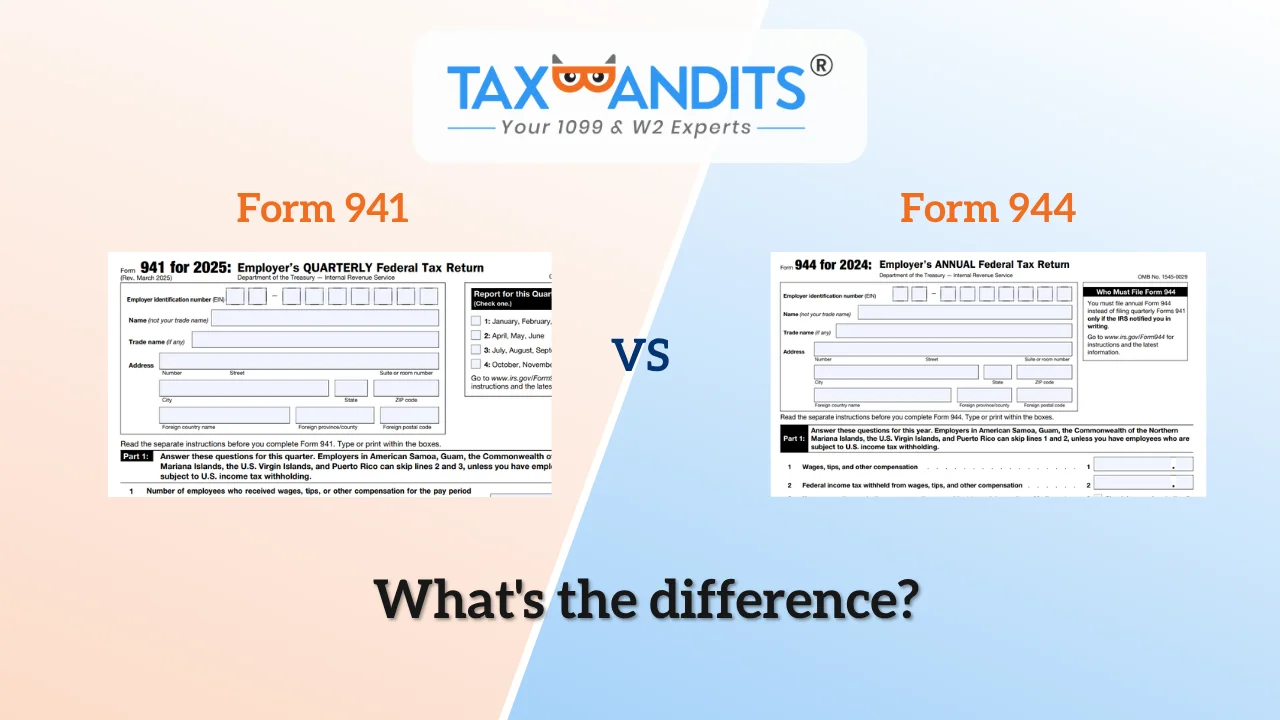
Before discussing where to send your payment, it’s essential to grasp the purpose and importance of Form 941 itself. This quarterly return is a vital mechanism for employers to report the federal income tax, Social Security tax, and Medicare tax they’ve withheld from their employees’ paychecks, as well as the employer’s share of Social Security and Medicare taxes.
What is Form 941 and Who Must File It?
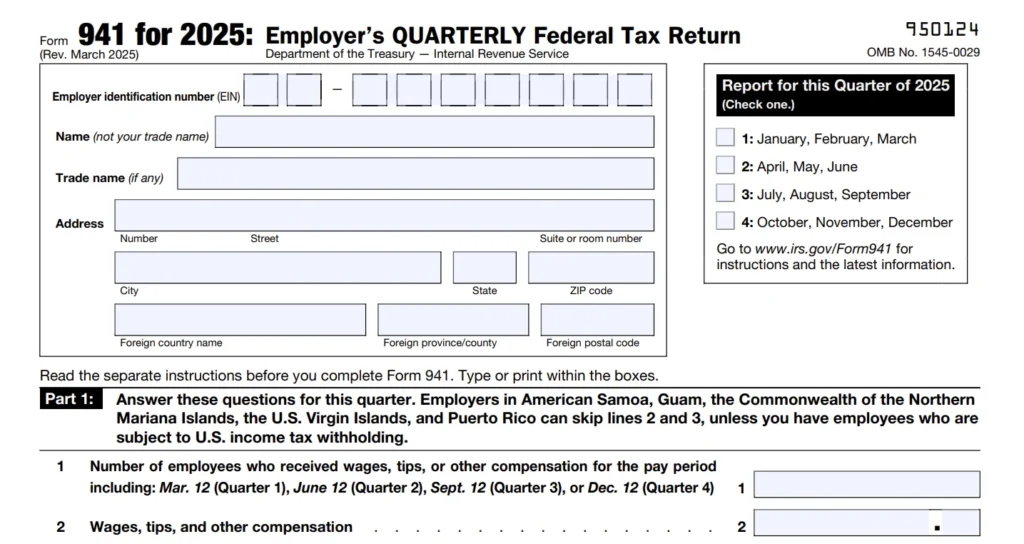
Form 941, officially titled “Employer’s Quarterly Federal Tax Return,” is used by most employers who pay wages subject to income tax withholding, social security tax, or Medicare tax. This includes virtually every business that has employees. It’s a summary of the payroll taxes you’ve collected and your share of FICA taxes over the quarter. Without this form, the IRS cannot reconcile your payroll tax deposits, leading to potential discrepancies and penalties.
Key Deadlines for Form 941
Form 941 is a quarterly filing, meaning it must be submitted four times a year. The deadlines are typically the last day of the month following the end of the quarter:
-
Q1 (January 1 – March 31): Due April 30
-
Q2 (April 1 – June 30): Due July 31
-
Q3 (July 1 – September 30): Due October 31
-
Q4 (October 1 – December 31): Due January 31 of the following year
It’s crucial to remember that these are the filing deadlines. Payroll tax deposits are generally required much more frequently throughout the quarter (either semi-weekly or monthly), depending on your total tax liability. Form 941 reconciles these deposits against your total liability for the quarter.
Penalties for Non-Compliance
The IRS imposes steep penalties for failure to file Form 941 on time, failure to pay on time, or failure to deposit payroll taxes on time. These penalties can compound rapidly and significantly impact a business’s financial health.
-
Failure to file: A penalty of 5% of the unpaid tax for each month or part of a month the return is late, capped at 25%.
-
Failure to pay: A penalty of 0.5% of the unpaid taxes for each month or part of a month the taxes remain unpaid, also capped at 25%.
-
Failure to deposit: Penalties range from 2% to 15% depending on how late the deposit is made, with higher percentages for longer delays. These are in addition to the failure-to-pay penalties.
Given these severe repercussions, understanding the correct procedures for both filing and payment is non-negotiable.
Navigating the Payment Process: EFTPS is King
For the vast majority of employers, the question of “where do I send Form 941 with payment” is definitively answered by the IRS’s strong preference for electronic payments. The days of regularly mailing checks for payroll taxes are largely (and intentionally) behind us.
The IRS’s Preferred Method: Electronic Federal Tax Payment System (EFTPS)
The Electronic Federal Tax Payment System (EFTPS) is the primary method mandated by the IRS for most federal tax deposits, including those related to Form 941. If your total tax liability was $2,500 or more in any prior quarter, you are generally required to use EFTPS. However, even if you don’t meet this threshold, the IRS highly encourages all businesses to use it.
Benefits of EFTPS
-
Security: EFTPS transactions are encrypted and secure, minimizing the risk associated with mailing checks.
-
Accuracy: Reduces human error common with manual calculations and paper forms.
-
Convenience: Payments can be scheduled 24/7, up to 365 days in advance. You can make payments from anywhere with internet access.
-
Proof of Payment: Provides an immediate confirmation number and a printable payment history, which serves as invaluable documentation.
-
Timeliness: Payments are considered made when scheduled, provided sufficient funds are available.
How to Enroll in EFTPS
Enrollment is a one-time process and typically takes 5-7 business days to complete.
-
Online: Visit www.eftps.gov and select “Enroll.” You’ll need your Employer Identification Number (EIN) and banking information.
-
Phone: Call EFTPS Customer Service at 1-800-555-4477 to enroll via phone.
-
Mail: Request an enrollment form (Form 9779) by mail, complete it, and send it back.
Once enrolled, you’ll receive a Personal Identification Number (PIN) via U.S. mail. You’ll then use your EIN, PIN, and an internet password (created during enrollment) to access the system and schedule payments.
Making Payments via EFTPS
When using EFTPS, you select the tax type (e.g., Form 941, Employer’s Quarterly Federal Tax), the tax period, and the amount. It’s crucial to schedule your payment by 8 p.m. ET at least one calendar day before your tax due date to ensure it’s processed on time. Many businesses schedule payments weeks or even months in advance to avoid missing deadlines.
Other Electronic Payment Options
While EFTPS is the primary system, there are a few other electronic methods, primarily for larger entities or specific circumstances:
-
ACH Credit: This option is typically used by financial institutions or payroll service providers on behalf of their clients. It involves the taxpayer initiating an ACH transaction through their bank to deposit funds directly to the Treasury’s account. This method requires careful coordination with your financial institution and adherence to IRS specifications.
-
Wire Transfers: For very large tax payments (generally over $1 million), wire transfers can be used. This is a complex method usually reserved for major corporations and requires specific instructions from the IRS. It’s generally not applicable for typical small to medium-sized businesses filing Form 941.
When and Why You Might Still Mail Your Payment
Despite the IRS’s strong preference for EFTPS, there are still very limited circumstances where mailing a physical check with Form 941 might be necessary or permissible. It’s important to understand these exceptions and, crucially, to use the correct mailing address.
Specific Scenarios for Mailed Payments
-
New Businesses (First Payment): If you are a brand new employer and haven’t yet received your EFTPS PIN, or are in the process of enrolling, you might need to make your first payment by mail. However, you should still enroll in EFTPS immediately for future payments.
-
Waivers/Special Circumstances: In rare cases, the IRS may grant a waiver from electronic deposit requirements. These are uncommon and require a formal request.
-
De Minimis Payments: If your total tax liability for the entire quarter is less than $2,500 and you aren’t required to make monthly or semi-weekly deposits, you may be allowed to pay the tax when you file Form 941. Even in this scenario, electronic payment via EFTPS is still preferred.
Important Note: Even if you mail your payment, you must still file Form 941. The payment and the return are separate components of your tax obligation.
The Right Address: IRS Mailing Addresses for Form 941 Payments
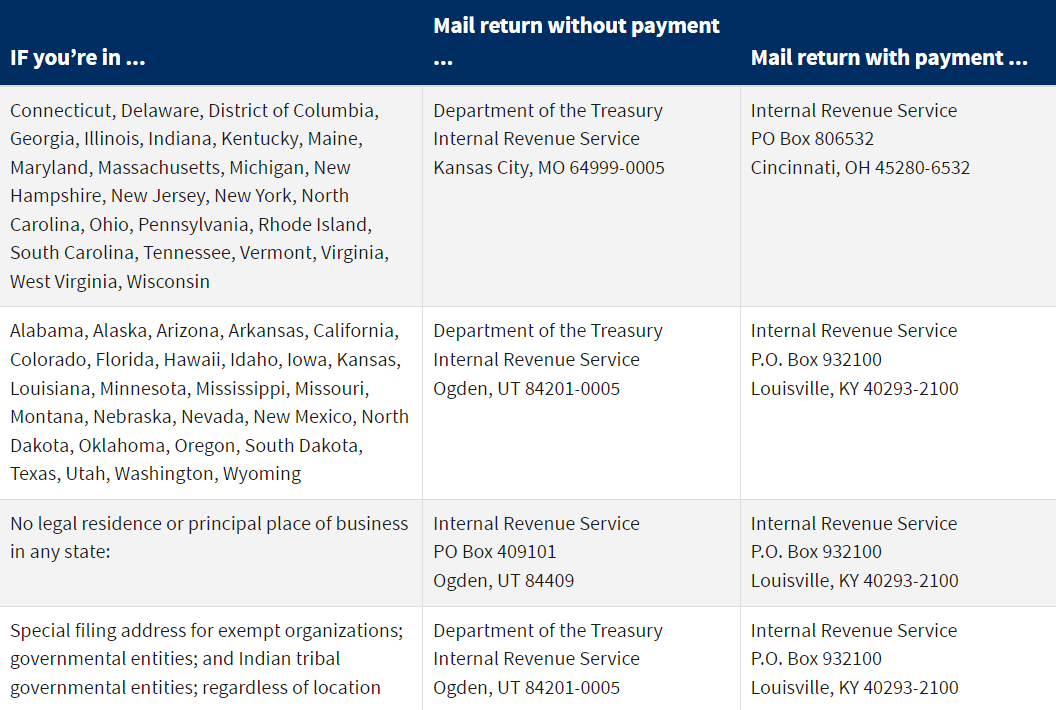
This is where the “where do I send” question becomes critical. IRS mailing addresses for Form 941 vary based on whether you are including a payment and, significantly, the state where your business’s principal place of business, office, or agency is located. It is absolutely crucial to consult the official IRS instructions for Form 941 (specifically, “Where To File” section) for the current tax year to ensure you are using the most up-to-date and correct address. These addresses can change.
Generally, the IRS provides separate addresses for:
-
Form 941 with a payment.
-
Form 941 without a payment.
General Guidance (Always Verify on IRS.gov):
The addresses are typically grouped by the state your business is in. For example, a common structure might look like this (these are illustrative and must be verified annually on IRS.gov):
-
If you are in Connecticut, Delaware, District of Columbia, Florida, Georgia, Illinois, Indiana, Kentucky, Maine, Maryland, Massachusetts, Michigan, New Hampshire, New Jersey, New York, North Carolina, Ohio, Pennsylvania, Rhode Island, South Carolina, Tennessee, Vermont, Virginia, West Virginia, Wisconsin, or any foreign country, U.S. possession or territory, or use a foreign address:
-
With a Payment:
Internal Revenue Service
P.O. Box 8010
Cincinnati, OH 45201-8010
-
-
If you are in Alabama, Alaska, Arizona, Arkansas, California, Colorado, Hawaii, Idaho, Iowa, Kansas, Louisiana, Minnesota, Mississippi, Missouri, Montana, Nebraska, Nevada, New Mexico, North Dakota, Oklahoma, Oregon, South Dakota, Texas, Utah, Washington, Wyoming:
-
With a Payment:
Internal Revenue Service
P.O. Box 932100
Louisville, KY 40293-2100
-
Again, these are examples. Always, always check the official IRS instructions for the current tax period on IRS.gov or by calling the IRS directly. Using an incorrect address can delay processing and potentially lead to penalties.
Essential Tips for Mailed Payments
If you must mail a payment, follow these best practices:
-
Use Form 941-V: Always include Form 941-V, Payment Voucher, with your check. This voucher helps the IRS correctly apply your payment. Do not attach it to Form 941 itself.
-
Check Details: Make your check or money order payable to the “United States Treasury.” Write your EIN, “Form 941,” and the tax period (e.g., “Q3 2023”) on the memo line of your payment.
-
No Staples or Paperclips: Do not staple or paperclip the check or Form 941-V to your Form 941. Place them loosely in the envelope.
-
Certified Mail with Return Receipt: To prove timely mailing and delivery, consider sending your payment and return via certified mail with a return receipt requested. The postmark date is generally considered the filing/payment date.
-
Keep Records: Always keep a copy of your filed Form 941, the payment voucher, and the check for your records.
Beyond the Basics: What Else Employers Should Know
Successful payroll tax management goes beyond simply knowing where to send Form 941 with payment. It involves understanding the entire lifecycle of your tax obligations.
Depositing Payroll Taxes vs. Filing Form 941
It’s crucial to distinguish between depositing payroll taxes and filing Form 941.
-
Depositing: This refers to the act of sending the money you owe (withheld taxes + employer share) to the IRS. This typically happens frequently throughout the quarter (monthly or semi-weekly) via EFTPS.
-
Filing: This refers to the act of submitting the report (Form 941) to the IRS, summarizing your total liability and deposits for the quarter. This happens quarterly.
Think of it like this: you deposit money into your bank account throughout the month, and then at the end of the month, you receive a statement (the “filing”) summarizing all those deposits and withdrawals. Form 941 is that summary statement for your quarterly payroll taxes.
Correcting Errors: Form 941-X
Mistakes happen. If you discover an error on a previously filed Form 941, you must correct it using Form 941-X, Adjusted Employer’s Quarterly Federal Tax Return or Claim for Refund. Do not file another Form 941 for the same quarter. Form 941-X is used to correct underreported or overreported taxes and wages for past quarters.
Seeking Professional Guidance
Payroll taxes can be complex, especially with varying deposit schedules, changing regulations, and the potential for costly errors. Many businesses, particularly small to medium-sized ones, benefit greatly from engaging a qualified tax professional, such as a Certified Public Accountant (CPA) or a reputable payroll service provider. These experts can ensure compliance, manage deposits and filings, and provide invaluable advice, freeing you to focus on running your business.
The Future of Tax Filing: Digital Transformation
The trend is clear: the IRS continues its strong push for digital interaction. Understanding this trajectory helps employers prepare for future changes and leverage current technologies for greater efficiency.
The Push for Electronic Filing
Electronic filing (e-file) for Form 941 is highly encouraged, and for tax preparers filing a certain number of returns, it’s often mandated. E-filing offers many of the same benefits as electronic payments: faster processing, fewer errors, and instant confirmation. The IRS’s long-term goal is to have nearly all business tax returns filed and paid electronically. Embracing this now simplifies compliance and positions your business for future digital-first tax environments.
Integrating Payroll and Accounting Software
Modern payroll and accounting software solutions are designed to integrate seamlessly with the IRS’s electronic systems. Many popular platforms can:
-
Calculate payroll taxes automatically.
-
Generate Form 941 for e-filing.
-
Facilitate payments through EFTPS by integrating directly or providing the necessary data.
-
Provide comprehensive audit trails and reporting.
Investing in and properly utilizing such tools can drastically reduce the administrative burden of payroll tax compliance, minimize errors, and ensure timely adherence to all obligations.
Conclusion
Understanding where to send Form 941 with payment is a fundamental aspect of employer responsibility. While the immediate answer for most businesses is the Electronic Federal Tax Payment System (EFTPS), it’s crucial to know the rare exceptions and the precise protocol for mailed payments, always consulting the current IRS instructions for the correct mailing address. Beyond the act of sending, a holistic approach to payroll tax management — embracing electronic tools, adhering to deadlines, and seeking professional advice when needed — is paramount to maintaining financial health and avoiding costly penalties. By prioritizing accuracy and timeliness, businesses can navigate their tax obligations with confidence and clarity.
aViewFromTheCave is a participant in the Amazon Services LLC Associates Program, an affiliate advertising program designed to provide a means for sites to earn advertising fees by advertising and linking to Amazon.com. Amazon, the Amazon logo, AmazonSupply, and the AmazonSupply logo are trademarks of Amazon.com, Inc. or its affiliates. As an Amazon Associate we earn affiliate commissions from qualifying purchases.