
For members of Navy Federal Credit Union (NFCU), understanding the various ways to deposit cash is crucial for effective personal financial management. While digital transactions increasingly dominate the banking landscape, cash remains an indispensable component of many individuals’ financial lives, from daily transactions to unique situations requiring physical currency. This guide delves into the practical, secure, and financially sound methods available for depositing cash into your Navy Federal account, ensuring you can manage your money efficiently and confidently.
Navy Federal Credit Union, known for its dedication to military members, veterans, and their families, offers a robust suite of financial services. Accessing these services, especially fundamental tasks like cash deposits, should be straightforward. This article will break down your options, providing insights into each method’s advantages and considerations from a personal finance perspective.
Navigating Your Cash Deposit Options with Navy Federal Credit Union
Successfully managing your personal finances hinges on easy access to your funds and convenient methods for depositing them. For Navy Federal members, the question of “where to deposit cash” is a common and important one, directly impacting liquidity and financial planning.
Understanding the Unique Credit Union Advantage
Credit unions like Navy Federal operate differently from traditional banks. They are non-profit organizations owned by their members, which often translates to better rates, lower fees, and a more member-centric approach to services. However, their physical footprint might differ from large commercial banks. This distinction is vital when considering deposit options, especially regarding branch availability and network partnerships. For NFCU members, understanding this cooperative model helps appreciate the shared branching and ATM networks designed to extend their reach. The advantage for you, the member, is often lower banking costs and a more personalized service experience, which can contribute significantly to long-term financial health.
Why Cash Deposits Remain Essential in a Digital Age
Despite the rise of mobile banking, direct deposits, and peer-to-peer payment apps, cash continues to play a significant role in the economy and personal finance. Many transactions, especially in smaller businesses or among individuals, still occur in cash. Furthermore, some individuals prefer to manage a portion of their budget using physical currency to control spending or save for specific goals. For small business owners who are also NFCU members, handling cash receipts from daily operations is a regular occurrence. Knowing reliable ways to deposit this cash ensures these funds are securely integrated into their accessible accounts, preventing potential loss and allowing for further investment or bill payments. From a financial planning standpoint, readily available cash deposit options provide flexibility and peace of mind, ensuring that all forms of your income or savings can be easily converted into usable digital funds within your NFCU account.
Direct Pathways to Deposit Cash into Your NFCU Account
For immediate and reliable cash deposits, Navy Federal Credit Union provides several direct methods designed for convenience and security. These pathways ensure your cash makes it into your account efficiently, allowing for timely access to your funds.
The In-Person Experience: Navy Federal Branches
The most traditional and often preferred method for depositing cash is by visiting a Navy Federal Credit Union branch. This method offers the highest level of security and personalized service, making it ideal for large sums of cash or when you require assistance with other banking needs.
Locating a Branch Near You
Navy Federal has a significant number of branches, many strategically located near military installations. To find the nearest branch, members can use the “Locations” tool on the Navy Federal website or within their mobile banking app. Simply enter your zip code or allow the app to use your current location. This feature is invaluable for planning your deposit, especially if you’re traveling or have recently relocated. Always check the branch hours before visiting to ensure they are open for transactions.
What to Expect During a Branch Visit
When you visit a Navy Federal branch for a cash deposit, you’ll typically approach a teller. You’ll need your account number (or debit card), the cash you wish to deposit, and a valid form of identification. The teller will count the cash, process the deposit, and provide you with a receipt confirming the transaction. This direct interaction allows for immediate confirmation of the deposit and the opportunity to ask any questions you might have about your account or other financial services. From a personal finance perspective, using a branch provides an excellent opportunity to speak with a financial service representative about budgeting, savings goals, or loan options while you’re there.
Leveraging the CO-OP Shared Branching Network
One of the most significant advantages of being a credit union member is access to the CO-OP Shared Branching network. This network expands your in-person banking options far beyond Navy Federal’s proprietary branches, offering unparalleled convenience for cash deposits.
How Shared Branching Works for NFCU Members
The CO-OP Shared Branching network allows members of participating credit unions (including Navy Federal) to conduct transactions at other credit unions as if they were their own home branch. This means you can walk into a participating credit union across the country, present your Navy Federal account information and ID, and deposit cash directly into your NFCU account. This inter-credit union cooperation is a powerful tool for managing your money, especially if you live in an area without a direct NFCU branch or if you’re traveling. It effectively gives Navy Federal members access to thousands of additional branch locations.
Finding Participating Credit Unions
Locating a shared branch is as easy as finding an NFCU branch. The CO-OP Financial Services website (co-opfs.org) features a comprehensive locator tool for both shared branches and ATMs. You can also typically find this information within the Navy Federal mobile app or on their website. Look for the CO-OP Shared Branching logo when searching or entering your location. Before visiting, it’s always wise to confirm the specific services offered at that particular shared branch, as some may have limitations. This network is a cornerstone of the credit union philosophy, offering a collective advantage that directly benefits members’ financial accessibility.
Utilizing ATMs for Convenient Cash Deposits
ATMs provide a quick and convenient way to deposit cash, often outside of traditional banking hours. Navy Federal offers access to a broad network of ATMs that accept cash deposits.
Navy Federal-Owned ATMs
Many Navy Federal branches and standalone locations feature ATMs that accept cash deposits. These machines are typically the most straightforward to use for NFCU members, offering direct processing and often immediate (or near-immediate) credit for the deposited funds, depending on the amount and time of deposit. Look for clearly marked Navy Federal ATMs.
Partner ATMs within the Network (e.g., CO-OP, Plus/Allpoint)
Beyond their own machines, Navy Federal members can often deposit cash at select partner ATMs within broader networks. The CO-OP ATM Network, for instance, is extensive and includes many machines that accept cash deposits. Some credit unions participating in the CO-OP network may also have ATMs that support cash deposits for other CO-OP members. Similarly, while Allpoint and Plus networks are primarily known for surcharge-free withdrawals, specific ATMs within these networks might also support cash deposits. It is crucial to verify if a particular ATM accepts cash deposits for Navy Federal accounts before attempting a transaction, as not all network ATMs have this capability. Look for deposit-accepting machines specifically, and confirm the network affiliation.
Understanding ATM Deposit Limits and Availability
ATMs often have daily cash deposit limits, which can vary by the type of machine and the network. It’s important to be aware of these limits, especially if you are depositing a large sum. Additionally, while the ATM will issue a receipt, the funds may be subject to a hold period, meaning they might not be immediately available for withdrawal or use. Navy Federal, like other financial institutions, has policies regarding funds availability (Regulation CC). Understanding these policies is crucial for managing your budget and ensuring you have access to your funds when you need them. If immediate access is critical, a branch deposit might be a more suitable option.
Exploring Alternative and Indirect Methods for Funding Your NFCU Account
While direct deposits are generally preferred, there are situations where alternative methods might be considered. It’s important to understand the distinctions, fees, and processing times associated with these options, as they can impact your financial liquidity and planning.
Money Orders and Cashier’s Checks
If you have cash but are unable to reach a branch or a deposit-enabled ATM, converting your cash into a money order or a cashier’s check is a viable indirect method to get funds into your Navy Federal account.
Purchasing and Depositing These Instruments
You can purchase money orders at post offices, many grocery stores, and convenience stores for a small fee. Cashier’s checks are typically issued by banks or credit unions. Once you have a money order or cashier’s check made out to yourself or Navy Federal, you can deposit it into your NFCU account using several methods:
-
Mobile Deposit: Use the Navy Federal mobile app to take a picture of the money order/cashier’s check for remote deposit. This is generally the most convenient method.
-
Mail Deposit: Endorse the instrument and mail it to Navy Federal with a deposit slip.
-
ATM Deposit: Most ATMs that accept check deposits will also accept money orders and cashier’s checks.
-
Branch/Shared Branch Deposit: Deposit in person at any NFCU branch or CO-OP Shared Branch.
Considerations for Fees and Processing Times
Keep in mind that purchasing a money order incurs a fee. Cashier’s checks from other financial institutions may also have fees. Furthermore, while these instruments are generally considered secure, they are still subject to processing times and potential holds, similar to personal checks. Mobile deposits often have different availability schedules than in-person deposits. From a financial management perspective, factor in these fees and potential delays when choosing this method, especially if the funds are urgently needed.
Third-Party Retailer Options: A Limited Landscape
Many commercial banks have partnerships with large retailers (like Walmart or CVS) that allow customers to deposit cash at the service desk. However, this is generally not an option for Navy Federal Credit Union members.
Are There Retail Stores for NFCU Deposits? (Generally No, emphasize this)
Currently, Navy Federal Credit Union does not have widespread partnerships with major retail chains for direct cash deposits. While some specific, localized arrangements might exist in isolated cases, it is not a standard service for NFCU members. Therefore, do not assume you can deposit cash at a supermarket or convenience store for your Navy Federal account. Attempting to do so will likely result in a wasted trip.
Distinguishing from Bill Pay Services
It’s important to differentiate direct cash deposits from bill payment services available at retailers. Many stores offer services where you can pay bills (e.g., utility bills, credit card bills) in cash, and the retailer forwards the payment. This is not the same as depositing cash directly into your personal checking or savings account at Navy Federal. Always verify the exact service being offered by a third-party retailer to avoid confusion. For NFCU members, the CO-OP Shared Branch and ATM networks are the primary third-party alternatives for cash deposits, not retail stores.
Ensuring Security and Maximizing Efficiency with Your Deposits
Beyond knowing where to deposit cash, understanding how to do so securely and efficiently is vital for sound financial management. These best practices protect your money and ensure it’s available when you need it.
Best Practices for Secure Cash Handling
Handling physical cash carries inherent risks, from loss to theft. Taking precautions when transporting and depositing cash is a fundamental aspect of personal financial security.
Minimizing Risk During Transit
When carrying cash for a deposit, avoid making it obvious. Use a secure wallet or pouch, keep it out of sight, and avoid displaying large sums of money. If depositing a significant amount, consider traveling with a trusted companion. Choose routes and times that feel safest. It’s also wise to prepare your deposit slip or have your account information ready before you arrive at the branch or ATM to minimize the time you spend handling cash publicly. Planning your deposit during daylight hours and avoiding isolated locations can further enhance safety.
Verifying Transaction Details
Regardless of the method—teller, ATM, or shared branch—always double-check the transaction details on your receipt. Ensure the deposited amount is correct and that the funds were directed to the proper account. Keep your receipts for your records until you can verify the deposit has posted correctly to your account online or through your mobile app. This habit is a crucial component of good financial record-keeping and provides proof of transaction in case of any discrepancies.
Understanding Funds Availability and Deposit Holds
Even after a deposit is made, the funds may not be immediately available. This is a standard banking practice governed by federal regulations (Regulation CC) and specific institution policies, designed to mitigate risks like check fraud.
Impact on Your Financial Planning
When depositing cash, especially via ATM or money order, be aware that there might be a hold period before the full amount is available. While cash deposits at a teller often result in immediate availability, other methods can involve delays of one or more business days. This delay can impact your ability to pay bills, make purchases, or transfer funds. For effective financial planning, always confirm the expected availability of funds, especially if you have upcoming expenses or critical transactions tied to that deposit. Don’t assume immediate access to newly deposited funds.
Tips for Expediting Fund Access
To expedite fund access, whenever possible, deposit cash directly with a teller at a Navy Federal branch. For large or critical deposits made via ATM or money order, consider making the deposit earlier in the day and on a business day to avoid weekend or holiday delays. If a hold is placed, Navy Federal’s online banking or mobile app will typically show the available balance and the hold amount, allowing you to track when your funds will clear. If you frequently deposit cash and need immediate access, discussing your options with a Navy Federal representative can help identify the most suitable methods for your financial flow.
Strategic Financial Management Beyond Simple Deposits with NFCU
Depositing cash is just one piece of the larger financial puzzle. Leveraging Navy Federal Credit Union’s services strategically can enhance your overall financial well-being, moving beyond mere transaction processing to proactive money management.
Integrating Deposits into Your Personal Budget
Regularly depositing cash, whether it’s income, savings from a side hustle, or money earmarked for specific goals, should be seamlessly integrated into your personal budget.
Regular Deposits for Savings Goals
Consistent cash deposits can be a powerful tool for achieving savings goals. Whether it’s for a down payment on a home, a new car, or a significant purchase, setting up a routine for depositing cash (e.g., weekly or bi-weekly) helps build discipline. Use Navy Federal’s multiple savings account options to categorize your goals, making it easier to track progress. For example, you might have one savings account for an emergency fund and another for a vacation, depositing cash into the appropriate account. This structured approach helps transform loose cash into purposeful savings.
Managing Emergency Funds
An emergency fund is a cornerstone of financial security. Cash deposits can be an excellent way to feed this fund. By having a clear, accessible way to deposit cash into a designated emergency savings account with NFCU, you ensure that any unexpected cash windfalls or careful budgeting surpluses contribute directly to your financial safety net. Navy Federal’s mobile banking and online tools allow you to easily monitor your emergency fund’s growth, ensuring it remains robust enough to cover several months of living expenses.
Leveraging NFCU’s Digital Tools for Account Oversight
After depositing cash, leveraging Navy Federal’s digital tools is essential for tracking your funds, monitoring your budget, and maintaining complete oversight of your financial health.
Mobile Banking and Deposit Tracking
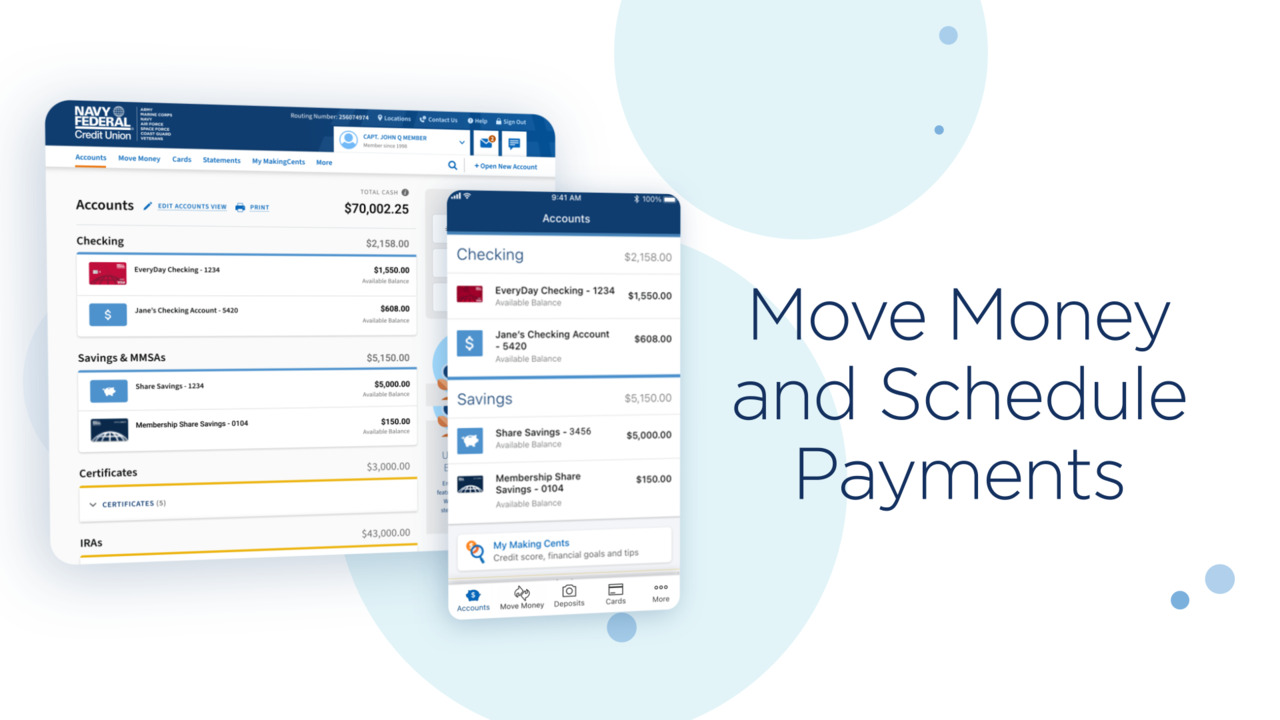
The Navy Federal mobile banking app is a robust financial tool. After depositing cash, whether at an ATM or branch, you can immediately check your account balance and transaction history within the app. Mobile deposit features for checks and money orders are also incredibly convenient. The app provides real-time updates, allowing you to track when your deposits clear and when funds become available. This immediate feedback empowers you to make informed financial decisions without delay.

Online Statements and Transaction History
Navy Federal’s online banking platform offers comprehensive access to your statements and transaction history. Regularly reviewing these documents allows you to reconcile your deposits with your spending, identify any discrepancies, and ensure accurate record-keeping. Utilizing these digital resources for financial analysis is a proactive step in managing your budget, identifying spending patterns, and ultimately achieving your financial objectives with Navy Federal Credit Union.
In conclusion, Navy Federal Credit Union offers diverse and convenient options for depositing cash, catering to the varied needs of its members. From the personal touch of branch visits and the expansive reach of the CO-OP Shared Branching network to the around-the-clock availability of ATMs, members have multiple reliable pathways. While alternative methods like money orders exist, and direct retail deposits are generally not an option, understanding each method’s nuances, fees, and processing times is crucial. By combining these deposit methods with sound security practices and the strategic use of NFCU’s digital financial management tools, members can ensure their cash flows seamlessly into their accounts, supporting their overall financial stability and goals.
aViewFromTheCave is a participant in the Amazon Services LLC Associates Program, an affiliate advertising program designed to provide a means for sites to earn advertising fees by advertising and linking to Amazon.com. Amazon, the Amazon logo, AmazonSupply, and the AmazonSupply logo are trademarks of Amazon.com, Inc. or its affiliates. As an Amazon Associate we earn affiliate commissions from qualifying purchases.