
Understanding how to calculate percentage increase is a fundamental skill that underpins sound financial decision-making, whether you’re managing personal investments, evaluating business performance, or simply tracking your salary growth. In the complex world of finance, where numbers dictate opportunity and risk, the ability to accurately assess growth is not merely a mathematical exercise; it’s a critical lens through which to view progress, identify trends, and make informed choices. This guide will demystify the process, explain its profound relevance in various financial contexts, and equip you with the knowledge to apply it confidently in your money matters.
From tracking the ascent of your investment portfolio to dissecting inflation rates that erode purchasing power, percentage increase provides a standardized, comparative metric. It allows us to move beyond raw numbers and grasp the true magnitude of change, offering insights that absolute figures alone cannot. Without this tool, navigating financial reports, negotiating salaries, or even planning for retirement would be significantly more challenging. Let’s delve into the mechanics and applications of this indispensable financial concept.
The Fundamental Formula: Demystifying Percentage Increase
At its core, calculating percentage increase is about understanding the relative change between two values. It tells us by what proportion an initial quantity has grown to reach a new, larger quantity. This straightforward mathematical operation is a cornerstone of financial analysis and reporting, enabling clear communication of growth trajectories.
The Core Calculation
The formula for percentage increase is remarkably simple yet incredibly powerful:
Percentage Increase = ((New Value – Old Value) / Old Value) * 100
Let’s break down each component:
-
New Value: This is the current, larger, or later figure you are comparing. It represents the value after the increase has occurred.
-
Old Value: This is the original, smaller, or earlier figure from which the growth is measured. It serves as the baseline for your calculation.
-
(New Value – Old Value): This part of the formula determines the absolute increase – the raw numerical difference between the two values.
-
(/ Old Value): Dividing the absolute increase by the Old Value converts this raw difference into a decimal representing the proportional increase. It shows how large the increase is relative to the starting point.
-
(* 100): Multiplying by 100 converts the decimal proportion into a percentage, making it easier to understand and compare.
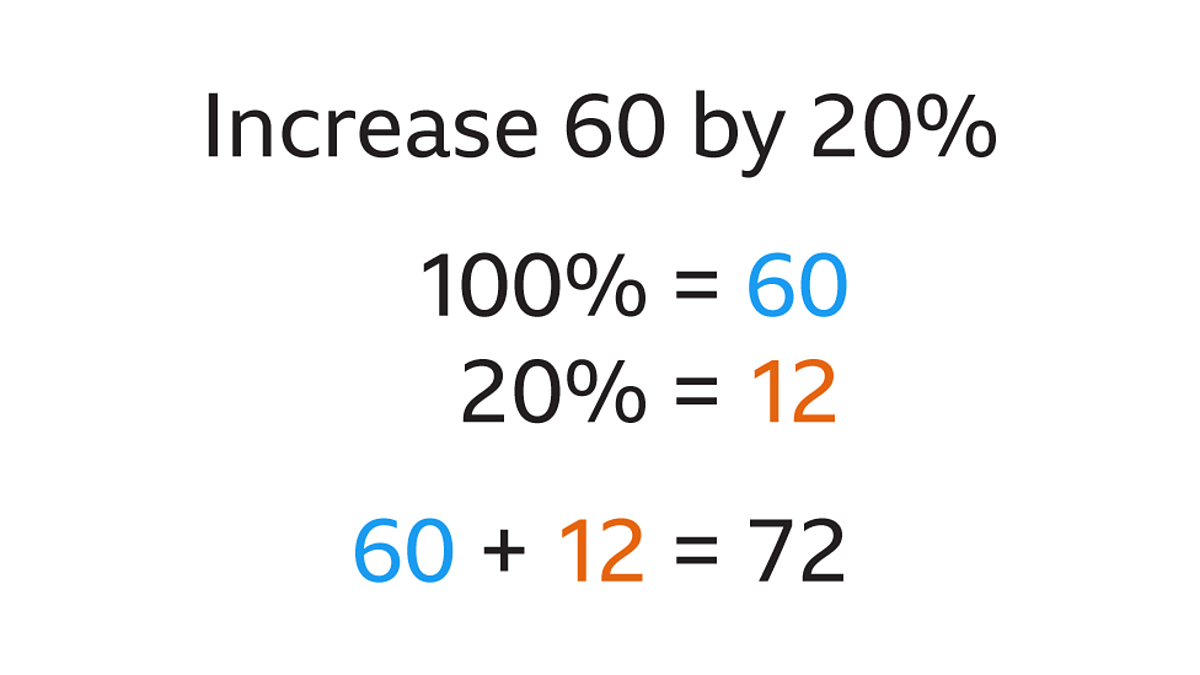
Consider a simple non-financial example to illustrate: If a product’s price increased from $50 (Old Value) to $60 (New Value), the absolute increase is $10. Dividing $10 by $50 yields 0.20, which, when multiplied by 100, gives a 20% increase. This simple framework applies universally, from product prices to complex financial data.
Step-by-Step Application
Applying the formula effectively requires a clear process. Let’s walk through an example relevant to personal finance.
Scenario: You bought shares in a company for $1000 (Old Value). After one year, their value has grown to $1250 (New Value). What is the percentage increase in your investment?
Step 1: Identify the Old and New Values.
-
Old Value (Initial Investment) = $1000
-
New Value (Current Investment Value) = $1250
Step 2: Calculate the Absolute Increase.
-
Absolute Increase = New Value – Old Value
-
Absolute Increase = $1250 – $1000 = $250
Step 3: Divide the Absolute Increase by the Old Value.
-
Proportional Increase = Absolute Increase / Old Value
-
Proportional Increase = $250 / $1000 = 0.25
Step 4: Multiply by 100 to Express as a Percentage.
-
Percentage Increase = Proportional Increase * 100
-
Percentage Increase = 0.25 * 100 = 25%
Therefore, your investment has seen a 25% increase. This systematic approach ensures accuracy and clarity, preventing common errors that can arise from misidentifying the base value.
Why Percentage Increase Matters in Personal Finance
In the realm of personal finance, percentage increase is more than just a number; it’s a vital indicator of progress and a powerful tool for informed decision-making. It enables individuals to effectively track their financial health, evaluate opportunities, and plan for the future.
Tracking Investment Growth
One of the most common and crucial applications of percentage increase in personal finance is evaluating investment performance. Whether you’re invested in stocks, mutual funds, real estate, or even a simple savings account, understanding the percentage growth of your assets is paramount.
-
Portfolio Performance: Comparing the current value of your investment portfolio against its initial cost or a previous period’s value reveals its percentage growth. This allows you to assess the effectiveness of your investment strategies and make adjustments if necessary. For instance, knowing that your stock portfolio grew by 15% last year gives you a clear metric, irrespective of the actual dollar amount, which might vary significantly between different investors.
-
Benchmarking: Percentage increase allows you to benchmark your investments against market indices (like the S&P 500) or other investment opportunities. If your fund grew by 10% but the market grew by 15% in the same period, your fund underperformed. This comparative insight is invaluable.
-
Compound Annual Growth Rate (CAGR): For investments over multiple years, percentage increase forms the basis of CAGR. While a simple percentage increase tells you the change over one period, CAGR provides a smoothed, annualized rate of return, essential for understanding long-term growth and the power of compounding.
Understanding Salary & Income Changes
Your income is the foundation of your financial life, and understanding its growth in percentage terms is crucial for personal financial planning.
-
Evaluating Pay Raises: When you receive a pay raise, the percentage increase tells you how significant that raise truly is. A 5% raise on a $50,000 salary ($2,500) is different from a 5% raise on a $100,000 salary ($5,000), but the relative growth is the same, allowing for a standardized assessment of career progression or inflationary adjustments.
-
Real vs. Nominal Growth: It’s vital to compare your salary percentage increase against the inflation rate. If your salary increases by 3% but inflation is 4%, your real purchasing power has actually decreased, despite a nominal increase. Percentage increase helps highlight this critical distinction.
-
Side Hustle Performance: For those engaging in online income or side hustles, tracking percentage growth in revenue or profit helps assess the viability and scalability of these ventures, guiding decisions on resource allocation.
Managing Debt and Savings
While often associated with growth, the concept of percentage change also applies to areas like savings and, indirectly, debt.

-
Savings Growth: Tracking the percentage increase in your savings account balance due to interest earnings helps you understand the effectiveness of your savings rate and the impact of compounding interest.
-
Impact of Interest Rates on Debt (Indirect): While debt typically involves percentage decreases in the amount owed, understanding interest rates (which are percentages) is crucial for appreciating how quickly debt can grow if not managed. The same calculation principle applies when analyzing how much more you pay due to an increased interest rate.
Strategic Applications in Business Finance and Economics
Beyond personal finances, the calculation of percentage increase is a cornerstone of business analysis and macroeconomic understanding. Businesses use it to gauge performance and strategize, while economists use it to interpret the health and direction of national and global economies.
Analyzing Business Performance
For business owners, investors, and analysts, percentage increase is an indispensable tool for dissecting a company’s financial health and operational efficiency.
-
Sales Growth: Tracking the percentage increase in sales revenue quarter-over-quarter or year-over-year provides a clear indication of market demand for a company’s products or services and the effectiveness of its sales strategies. A consistent percentage increase in sales is often a sign of a healthy, expanding business.
-
Profit Margin Increase: Analyzing the percentage increase in net profit or gross profit margin indicates how efficiently a company is managing its costs and pricing its products. An increasing profit margin percentage suggests improved operational efficiency or stronger pricing power.
-
Customer Acquisition Growth: For subscription-based or service-oriented businesses, the percentage increase in customer base or recurring revenue is a key performance indicator (KPI) that informs marketing and expansion strategies.
-
Benchmarking and Competitor Analysis: Comparing a company’s percentage growth in various metrics against industry averages or direct competitors provides crucial insights into its competitive standing and market share trends.
Interpreting Economic Indicators
At a macro level, percentage increase is the language of economic indicators, helping governments, businesses, and individuals understand broader economic trends.
-
Inflation Rates (CPI): The Consumer Price Index (CPI) measures the average percentage change over time in the prices paid by urban consumers for a market basket of consumer goods and services. A positive percentage increase in CPI signifies inflation, indicating a decrease in purchasing power and influencing monetary policy decisions.
-
Gross Domestic Product (GDP) Growth: GDP growth is expressed as a percentage increase, indicating the rate at which an economy is expanding or contracting. A healthy positive percentage increase in GDP is generally indicative of economic prosperity and job creation.
-
Unemployment Rate Changes: While typically a percentage decrease is desired, the measurement of changes in unemployment is often discussed in percentage points, which are derived from percentage calculations, reflecting shifts in the labor market.
-
Interest Rate Changes: Central banks adjust interest rates, expressed as percentages, to influence economic activity. Understanding the percentage change in these rates is vital for predicting impacts on lending, borrowing, and investment.
Projecting Future Financial Scenarios
While past performance is not indicative of future results, historical percentage increases are frequently used as a basis for financial forecasting and scenario planning in both business and personal finance.
-
Sales and Revenue Forecasting: Businesses often project future sales based on historical percentage growth rates, adjusted for market conditions, new product launches, or economic outlooks.
-
Investment Return Projections: Investors might use average historical percentage returns of asset classes to project potential future returns, helping them plan for retirement or other long-term financial goals, albeit with inherent uncertainties.
-
Budgeting and Expense Planning: Individuals and businesses can use historical percentage increases in various expense categories (e.g., utility costs, healthcare premiums) to create more realistic future budgets and anticipate financial demands.
Common Pitfalls and Advanced Considerations
While the formula for percentage increase is straightforward, its application in real-world financial contexts requires nuance and an awareness of potential misinterpretations. Understanding these pitfalls and advanced considerations ensures a more robust and insightful analysis.
The Base Value Trap
One of the most common pitfalls when interpreting percentage increases is the “base value trap.” The perceived significance of a percentage change can be heavily skewed by the size of the initial (old) value.
-
Small Base, Large Percentage: A small absolute increase can translate into a massive percentage increase if the original value was very small. For instance, an investment growing from $10 to $20 is a 100% increase, which sounds impressive. However, the absolute gain is only $10.
-
Large Base, Small Percentage: Conversely, a large absolute increase might appear modest in percentage terms if the base value is very large. An increase of $1,000,000 on a $100,000,000 portfolio is only a 1% increase.
Insight: Always consider the absolute numbers alongside the percentage increase. Context is paramount. A 50% increase in a niche market of 100 customers might be less impactful than a 5% increase in a market of 100,000 customers.
Compounding vs. Simple Growth
Understanding the difference between simple percentage growth and compound growth is crucial, especially for long-term financial planning.
-
Simple Percentage Increase: This is the calculation we’ve discussed so far – the growth over a single period. If your investment grows by 10% each year, a simple increase would apply to the initial principal only.
-
Compounding Growth: This refers to the growth on both the initial principal and the accumulated interest or returns from previous periods. If your investment earns 10% compounded annually, in the second year, you earn 10% on your initial principal plus the 10% earned in the first year. This “interest on interest” effect leads to exponential growth over time and is the engine behind long-term wealth creation.
Insight: For periods longer than a single calculation cycle (e.g., annual growth over several years), use tools like Compound Annual Growth Rate (CAGR) to understand the average annual compounded return, which provides a more realistic view of multi-year investment performance.
Accounting for Inflation
Perhaps the most critical advanced consideration in finance is distinguishing between nominal and real percentage increase by accounting for inflation.
-
Nominal Percentage Increase: This is the raw percentage increase calculated using the values as they appear in current dollars, without adjusting for changes in purchasing power. For example, if your salary goes from $50,000 to $52,500, that’s a nominal 5% increase.
-
Real Percentage Increase: This adjusts the nominal increase for the effects of inflation, providing a truer picture of changes in purchasing power. If your nominal salary increase is 5%, but inflation (as measured by CPI) was 3% during the same period, your real salary increase is approximately 2% (5% – 3%). This means your ability to buy goods and services only increased by 2%, not 5%.
Insight: Always consider inflation when evaluating financial growth, especially for income, investments, and savings over time. A seemingly positive nominal percentage increase can turn into a real decrease if inflation outpaces it, eroding your wealth and purchasing power. Using tools that adjust for inflation provides a more accurate and insightful view of your financial standing.

Conclusion
The ability to accurately figure the percentage increase is far more than a simple arithmetic skill; it is a foundational pillar of financial literacy. From dissecting the performance of your personal investment portfolio to understanding the broader economic forces at play, this calculation provides a standardized, comparative metric that absolute numbers alone cannot deliver. It empowers you to make informed decisions, critically evaluate financial claims, and strategically plan for your future.
By mastering the core formula, understanding its diverse applications in personal and business finance, and being aware of potential pitfalls like the base value trap or the insidious effects of inflation, you equip yourself with a powerful analytical tool. In an increasingly data-driven world, where financial information is constantly presented in percentages, this mastery translates directly into greater confidence and control over your financial destiny. Embrace this essential skill, and transform raw numbers into actionable insights, paving the way for more intelligent and empowered financial management.
aViewFromTheCave is a participant in the Amazon Services LLC Associates Program, an affiliate advertising program designed to provide a means for sites to earn advertising fees by advertising and linking to Amazon.com. Amazon, the Amazon logo, AmazonSupply, and the AmazonSupply logo are trademarks of Amazon.com, Inc. or its affiliates. As an Amazon Associate we earn affiliate commissions from qualifying purchases.