
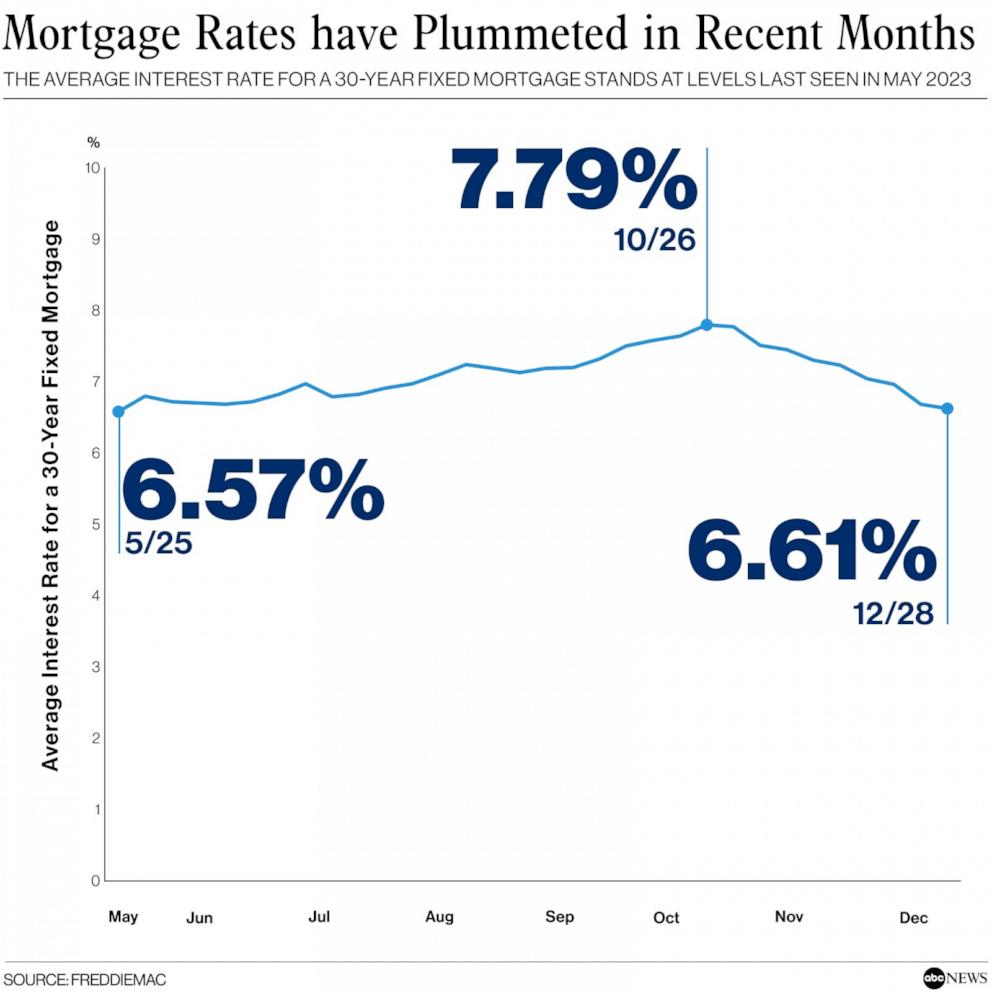
The question of when housing interest rates will drop looms large over prospective homebuyers, current homeowners, and the broader financial market. After a period of historically low rates, the rapid ascent of borrowing costs has reshaped the real estate landscape, making affordability a pressing concern for millions. Understanding the intricate forces that influence these rates is crucial for anyone looking to navigate the housing market in the coming years. This article delves into the complex interplay of economic indicators, central bank policies, and market dynamics to provide an insightful look into the future of housing interest rates.
Decoding the Dynamics of Housing Interest Rates
Housing interest rates, particularly those tied to mortgages, are not determined in isolation. They are a reflection of a vast and interconnected global financial system, influenced by a multitude of economic factors and policy decisions. To predict their trajectory, one must first grasp the foundational elements that drive them.
The Federal Reserve’s Mandate and Tools
At the heart of interest rate movements in the United States is the Federal Reserve, the nation’s central bank. The Fed has a dual mandate: to achieve maximum employment and maintain price stability (i.e., control inflation). To fulfill these objectives, it employs several powerful monetary policy tools, chief among them the federal funds rate. This is the target rate for overnight borrowing between banks, and while it doesn’t directly dictate mortgage rates, it serves as a benchmark for all other interest rates in the economy. When the Fed raises the federal funds rate, it generally makes borrowing more expensive across the board, including for mortgages. Conversely, a reduction signals a loosening of monetary policy, typically leading to lower rates. The Fed’s decisions are guided by its assessment of economic conditions and its projections for inflation and employment.
Inflation and Economic Growth
Inflation is arguably the single most significant driver of interest rates. When inflation is high, the purchasing power of money erodes, and lenders demand higher interest rates to compensate for this loss in value over the life of a loan. The Federal Reserve often raises rates to cool an overheating economy and bring inflation back to its target of around 2%. Conversely, a slowdown in inflation or a threat of deflation can prompt the Fed to lower rates to stimulate economic activity. Beyond inflation, the overall health and growth trajectory of the economy also play a role. A robust economy with strong growth often sees higher demand for credit, which can push rates up, while a recessionary environment typically leads to lower rates as the Fed tries to encourage spending and investment.
Supply and Demand in the Bond Market
Mortgage rates are closely tied to the yields on U.S. Treasury bonds, particularly the 10-year Treasury note. This is because mortgage lenders often use these yields as a benchmark for pricing their long-term loans. The yields on these bonds, in turn, are determined by the fundamental principles of supply and demand. When there’s high demand for Treasury bonds (e.g., from investors seeking safe-haven assets), bond prices go up and yields (which move inversely to prices) go down. This can put downward pressure on mortgage rates. Conversely, when investors sell off bonds, prices fall, yields rise, and mortgage rates tend to follow suit. Factors like global economic stability, geopolitical events, and investor sentiment all influence the demand for U.S. Treasury bonds.
Key Economic Indicators to Track
Forecasting interest rate movements requires a keen eye on a range of economic indicators. These data points provide critical insights into the health of the economy, inflationary pressures, and the potential direction of the Federal Reserve’s monetary policy.
Consumer Price Index (CPI) and Inflation Data
The Consumer Price Index (CPI) is the most widely watched measure of inflation, tracking the average change over time in the prices paid by urban consumers for a market basket of consumer goods and services. A persistently high CPI signals ongoing inflationary pressures, likely prompting the Fed to maintain or even raise interest rates. Conversely, a sustained decline in CPI readings could signal that inflation is under control, potentially opening the door for rate cuts. Other inflation measures, such as the Personal Consumption Expenditures (PCE) price index (the Fed’s preferred metric), are also closely monitored.
Employment Reports and Wage Growth
The health of the labor market is another critical barometer. Monthly jobs reports, including non-farm payrolls, unemployment rates, and average hourly earnings, provide a snapshot of employment levels and wage growth. A strong labor market with low unemployment and rising wages can fuel consumer spending, potentially leading to increased inflation, which in turn could keep interest rates elevated. Conversely, signs of labor market weakening, such as rising unemployment or slowing wage growth, could signal a cooling economy and potentially prompt the Fed to consider easing monetary policy.
GDP Growth and Economic Health
Gross Domestic Product (GDP) measures the total value of goods and services produced in an economy. It’s a broad indicator of economic health and growth. Strong, consistent GDP growth suggests a robust economy, which might support higher interest rates as demand for credit increases. Conversely, sluggish or negative GDP growth could signal an economic downturn, prompting the Fed to lower rates to stimulate activity. Recessions, by definition, involve significant declines in economic activity and are almost always accompanied by a dovish shift in monetary policy.
Global Economic Influences
While domestic factors are paramount, global economic conditions also play a role. International trade, geopolitical stability, and the economic performance of major trading partners can indirectly influence U.S. interest rates. For instance, a global slowdown might increase demand for safe-haven U.S. Treasuries, pushing yields down, or conversely, a global inflationary shock could feed into domestic prices. The strength of the U.S. dollar relative to other currencies also impacts trade and inflation, indirectly affecting the Fed’s calculus.
The Federal Reserve’s Playbook: What to Expect
The Federal Reserve’s actions and communications are pivotal in shaping market expectations for interest rates. Its “playbook” involves not just rate hikes or cuts, but also a broader strategy of influencing economic conditions.
Federal Funds Rate and its Ripple Effect
As mentioned, the federal funds rate is the primary short-term rate targeted by the Fed. When the Fed raises this rate, the cost of borrowing for banks increases, and this higher cost is passed on to consumers and businesses in the form of higher rates on everything from credit cards and auto loans to mortgages. Conversely, lowering the federal funds rate makes borrowing cheaper, stimulating economic activity. The market constantly anticipates the Fed’s moves, and even subtle shifts in rhetoric from Fed officials can cause significant market reactions, including changes in mortgage rates.
Quantitative Tightening (QT) and its Implications
Beyond manipulating the federal funds rate, the Fed also influences long-term rates through its balance sheet. During periods of economic stress or to stimulate growth, the Fed engages in Quantitative Easing (QE), buying large quantities of government bonds and mortgage-backed securities (MBS) to inject liquidity into the financial system and suppress long-term rates. When the economy is strong and inflation is a concern, the Fed reverses this process through Quantitative Tightening (QT), allowing its bond holdings to mature without reinvesting the proceeds. This effectively reduces the money supply and can put upward pressure on long-term rates, including mortgage rates, as there’s less demand for these assets from the Fed.
Forward Guidance and Market Reactions
The Fed doesn’t just act; it also communicates. Its “forward guidance” involves providing clear signals about its future policy intentions. This guidance helps manage market expectations, aiming to prevent unnecessary volatility and ensure that its policies are effective. Speeches by Fed officials, minutes from Federal Open Market Committee (FOMC) meetings, and the “dot plot” (which shows individual committee members’ projections for the federal funds rate) are all crucial pieces of information that market participants scrutinize for clues about future rate moves. Any deviation from expected guidance can cause swift market reactions, including shifts in mortgage rates.
Impact on Homebuyers and the Broader Housing Market
High or low interest rates profoundly impact the housing market, influencing everything from affordability to inventory levels.
Affordability Challenges and Buyer Behavior
Higher mortgage rates directly translate to higher monthly mortgage payments for the same loan amount. This significantly erodes affordability, especially for first-time homebuyers or those in competitive markets. As payments rise, some potential buyers are priced out of the market, while others are forced to settle for smaller homes or less desirable locations. This reduced purchasing power can lead to a slowdown in home sales and, in some cases, a moderation or even decline in home prices as demand wanes. Conversely, when rates drop, affordability improves, stimulating demand and often leading to increased sales activity and upward pressure on home prices.
Refinancing Opportunities and Challenges
For existing homeowners, interest rate movements create either opportunities or challenges. When rates drop significantly below their current mortgage rate, homeowners may have an opportunity to refinance their loans, securing a lower monthly payment, reducing their overall interest costs, or tapping into their home equity. This can free up disposable income and boost household finances. However, when rates are high or rising, refinancing becomes less attractive or even impossible, potentially trapping homeowners with higher rates and limiting their financial flexibility.
Housing Inventory and Price Dynamics
Interest rates indirectly influence housing inventory. When rates are high, some potential sellers, particularly those with historically low mortgage rates, may be reluctant to sell their homes, as they would have to finance their next purchase at a much higher rate. This “lock-in” effect can constrain inventory, which paradoxically can keep prices elevated even as demand cools. Conversely, a drop in rates could encourage more homeowners to sell, knowing they can secure a more favorable mortgage on their next home, thereby increasing inventory and potentially easing price growth. Price dynamics are a complex interplay of supply, demand, and affordability, all heavily influenced by interest rate levels.
Strategies for Navigating an Evolving Rate Environment
Given the uncertainty surrounding when exactly housing interest rates will drop, both prospective homebuyers and existing homeowners need a strategic approach to navigate the current and future market.
For Prospective Homebuyers
- Get Prequalified/Pre-approved: Understand what you can truly afford based on current rates. This provides clarity and strengthens your offer.
- Focus on Budget and Payment: Instead of just the total price, focus on the monthly payment that is comfortable for your budget. A slightly higher rate on a smaller loan might be more manageable than a lower rate on a stretched budget.
- Consider Adjustable-Rate Mortgages (ARMs) with Caution: If you expect rates to drop significantly in a few years and plan to sell or refinance before the adjustable period begins, an ARM might offer a lower initial rate. However, be aware of the risks if rates rise or you can’t refinance.
- Shop Around for Lenders: Mortgage rates can vary significantly between lenders. Compare offers from multiple banks, credit unions, and brokers.
- Build a Strong Financial Profile: A higher credit score, lower debt-to-income ratio, and a substantial down payment can help you qualify for the best available rates.
- Stay Informed, But Don’t Over-Speculate: While it’s good to track economic news, don’t let speculation paralyze your decision-making. If you find a home you love and can comfortably afford it, delaying for a potentially lower rate might mean missing out or facing higher home prices.
For Existing Homeowners
- Assess Refinancing Potential: Regularly monitor current mortgage rates. If rates drop significantly below your existing rate, explore refinancing options. Factor in closing costs to determine if it’s financially beneficial.
- Consider a Home Equity Line of Credit (HELOC) or Loan: If you need to access home equity for renovations or other purposes, evaluate HELOCs or home equity loans, but be mindful that their rates can also fluctuate or be tied to the prime rate.
- Pay Down Principal: If refinancing isn’t viable, consider making extra principal payments, even small ones. This can reduce the total interest paid over the life of the loan and shorten the repayment period.
- Monitor Home Value: Keep an eye on your home’s value. Increased equity can provide financial flexibility in the future, regardless of interest rates.
Long-Term Outlook and Planning
Predicting the precise timing of interest rate drops is notoriously difficult. However, the consensus among many economists is that as inflation cools and the Federal Reserve achieves its price stability goals, there will eventually be room for rates to moderate from their current elevated levels. This doesn’t necessarily mean a return to the ultra-low rates seen during the pandemic, but a more normalized range.
For both individuals and businesses, the key is to adopt a flexible and informed financial strategy. Understand that interest rates are cyclical and influenced by dynamic economic conditions. Building financial resilience, maintaining a healthy emergency fund, and making housing decisions based on long-term affordability rather than short-term rate fluctuations will be the most prudent approach. While the exact “when” remains uncertain, preparing for various scenarios will ensure you are well-positioned to capitalize on opportunities or mitigate risks as the housing interest rate environment continues to evolve.
aViewFromTheCave is a participant in the Amazon Services LLC Associates Program, an affiliate advertising program designed to provide a means for sites to earn advertising fees by advertising and linking to Amazon.com. Amazon, the Amazon logo, AmazonSupply, and the AmazonSupply logo are trademarks of Amazon.com, Inc. or its affiliates. As an Amazon Associate we earn affiliate commissions from qualifying purchases.