
For anyone involved in the world of finance, from seasoned institutional investors to budding personal finance enthusiasts, understanding the operating hours of Wall Street is not just a matter of trivia – it’s fundamental to strategy, risk management, and opportunity identification. Wall Street, often used as a shorthand for the financial markets of the United States, primarily refers to the New York Stock Exchange (NYSE) and the NASDAQ Stock Market. These exchanges dictate the rhythm of global finance, and their closing bell signifies more than just the end of a trading day; it marks a critical juncture for analysis, planning, and preparation for the next market cycle.
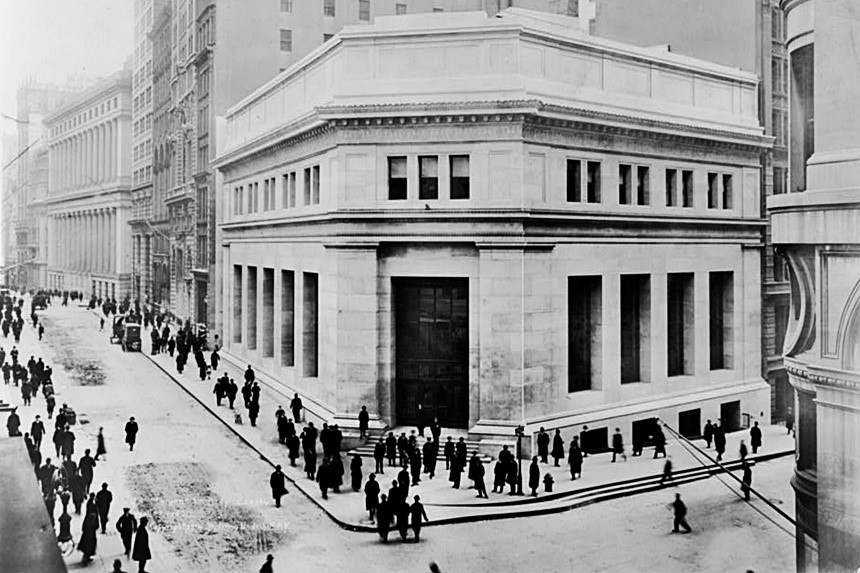
This article delves into the precise timings of Wall Street’s closures, exploring not only the standard trading day but also the nuances of pre-market and after-hours sessions, the impact of holidays, and the strategic implications for investors navigating the complex landscape of modern finance.
The Standard Operating Hours of Wall Street’s Major Exchanges
The core of Wall Street’s activity revolves around well-defined trading hours designed to concentrate liquidity and facilitate orderly market operations. These hours have largely remained consistent for decades, providing a predictable framework for millions of daily transactions.
The New York Stock Exchange (NYSE)
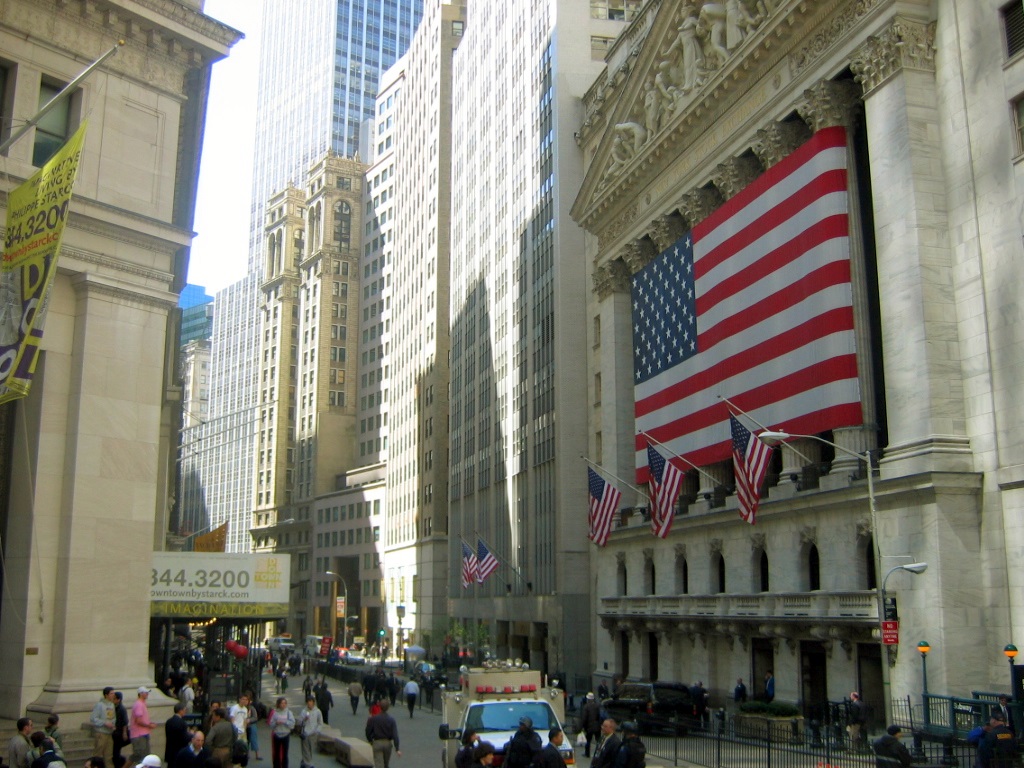
The NYSE, often considered the world’s largest stock exchange by market capitalization, operates with a time-honored schedule. Its iconic opening and closing bells have become symbols of financial activity. The standard trading hours for the NYSE are from 9:30 AM to 4:00 PM Eastern Time (ET), Monday through Friday. During these hours, a vast array of companies, from established blue-chips to growing mid-caps, are actively traded. The concentration of trading within this window ensures maximum liquidity, meaning there are usually plenty of buyers and sellers for most stocks, facilitating smoother price discovery and execution of orders.
The NASDAQ Stock Market
The NASDAQ, known for its strong focus on technology and growth companies, operates on the same standard schedule as the NYSE. Its trading hours are also from 9:30 AM to 4:00 PM ET, Monday through Friday. While NASDAQ is an electronic exchange and doesn’t have a physical trading floor like the NYSE once famously did, its adherence to these standardized hours ensures synergy and consistency across the major U.S. markets. This synchronicity is crucial for arbitrage opportunities, cross-listed securities, and overall market stability.
Why These Hours? Historical Context and Regulatory Reasons
The 9:30 AM to 4:00 PM ET trading window is not arbitrary. Historically, these hours were established to allow sufficient time for back-office operations, settlement of trades, and for brokers to manage their books before and after the trading frenzy. In the modern era, while much of the process is automated, the benefits of concentrated liquidity remain paramount. Regulators also play a role, ensuring fair and orderly markets by setting clear boundaries for when trading can occur. These defined hours minimize the chances of extreme volatility that could arise from highly fragmented trading sessions throughout the day and night, ensuring that news and economic data can be processed and reacted to in a centralized, efficient manner.
Beyond the Trading Day: Pre-Market and After-Hours Trading
While the standard 9:30 AM to 4:00 PM window defines the official trading day, the financial markets don’t entirely go dormant outside these hours. Modern technology has enabled “extended hours trading,” allowing investors to react to news and execute trades before the opening bell and after the closing bell.
Understanding Extended Trading Sessions
Extended trading refers to the periods when trading occurs outside of the standard market hours. These sessions are typically divided into:
- Pre-Market Trading: Generally runs from 4:00 AM ET to 9:30 AM ET.
- After-Hours Trading: Typically runs from 4:00 PM ET to 8:00 PM ET.
These extended sessions are facilitated by electronic communication networks (ECNs) and are primarily utilized by institutional investors, professional traders, and increasingly, by retail investors with brokerages that offer this service. The primary drivers for extended hours trading are often the release of corporate earnings reports, major economic data, or breaking news events that occur outside of the standard market window.
Risks and Opportunities in Extended Hours
Trading outside standard hours comes with a distinct set of characteristics, presenting both unique opportunities and heightened risks:
- Lower Liquidity: One of the most significant differences is the reduced trading volume. Fewer participants mean wider bid-ask spreads, making it harder to buy or sell at desired prices. This can lead to increased slippage – the difference between the expected price of a trade and the price at which the trade is actually executed.
- Higher Volatility: Due to lower liquidity and the tendency for major news to drop during these periods, prices can be far more volatile. A small number of trades can have a disproportionately large impact on a stock’s price, leading to rapid and dramatic swings.
- News Reactions: This is where the opportunity lies. Investors can react immediately to earnings announcements or critical news before the broader market opens or after it closes, potentially capitalizing on significant price movements. However, misinterpreting news or acting on incomplete information can also lead to substantial losses.
- Institutional vs. Retail Access: While many retail brokers now offer extended hours trading, the institutional players often have an edge with sophisticated algorithmic trading systems and deeper access to liquidity pools, which can influence pricing.
How Extended Hours Impact Price Discovery
Extended hours trading plays a crucial role in price discovery by allowing the market to begin processing new information before or after the standard session. Pre-market activity can offer a valuable indication of how a stock might perform at the open, often setting the tone for the day’s trading. Similarly, after-hours trading can reveal initial market sentiment towards a company’s quarterly results or a major corporate announcement, which can then carry over into the next day’s open. For astute investors, monitoring these sessions can provide an early signal, though it’s important to remember that these price movements can often be reversed or significantly altered once the full market depth and liquidity of standard hours kick in.
Weekends, Holidays, and Market Interruptions
Beyond the daily grind, Wall Street observes specific non-trading periods that are critical for investors to understand. These scheduled breaks are designed for market stability and to align with national observances.
The Predictable Silence: Weekend Closures
The most consistent closure of Wall Street is over the weekend. Both the NYSE and NASDAQ are closed on Saturdays and Sundays. This two-day pause allows investors, traders, and financial institutions to step away, review their positions, and prepare for the upcoming week. It also prevents the chaos that could ensue if markets were open around the clock, allowing time for news to settle and for market participants to digest events without immediate pressure to trade. While cryptocurrencies and some global markets may operate 24/7, traditional equity markets adhere to this structured week.
Federal Holidays and Their Market Impact
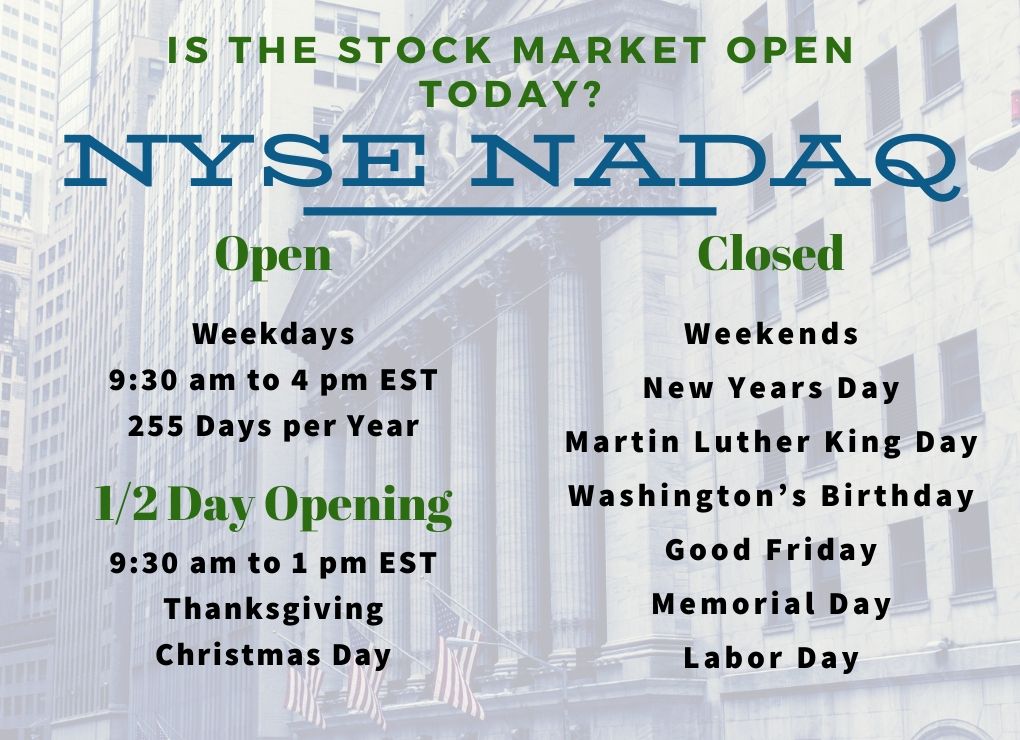
The U.S. financial markets observe a set of federal holidays, resulting in complete closures or, occasionally, early closures. These holidays are:
- New Year’s Day (January 1)
- Martin Luther King, Jr. Day (Third Monday in January)
- Presidents’ Day (Third Monday in February)
- Good Friday (Varies, Friday before Easter Sunday)
- Memorial Day (Last Monday in May)
- Juneteenth National Independence Day (June 19)
- Independence Day (July 4)
- Labor Day (First Monday in September)
- Thanksgiving Day (Fourth Thursday in November) – The day after Thanksgiving (Black Friday) is typically an early close, usually at 1:00 PM ET.
- Christmas Day (December 25)
When a holiday falls on a weekend, the market typically observes it on the preceding Friday or the following Monday. For instance, if Christmas Day is a Saturday, the market might close on Friday, December 24th. These closures mean no trading, no price movements, and no ability to execute orders until the market reopens. This has implications for options expiration, settlement cycles, and immediate reactions to news released on a holiday.
Unexpected Closures and Market Circuit Breakers
While rare, markets can also experience unexpected closures or trading halts. These usually occur in extreme circumstances, such as:
- Natural Disasters: Historically, events like Hurricane Sandy led to multi-day closures of the NYSE.
- Major National Emergencies: Events like 9/11 caused the markets to close for several days.
- Market Circuit Breakers: These are pre-defined mechanisms designed to temporarily halt trading during periods of extreme market volatility. For example, if the S&P 500 drops by a certain percentage (e.g., 7%, 13%, 20%) within a single trading day, trading across all U.S. equity markets can be paused for 15 minutes or longer, depending on the severity and timing of the drop. These are not closures in the traditional sense but rather mandatory pauses to allow investors to absorb information and prevent panic selling.
The Strategic Importance of Wall Street’s Closing for Investors
Understanding Wall Street’s closing times is not merely an operational detail; it’s a cornerstone of effective investment strategy. These timings influence market psychology, the flow of information, and the practicalities of managing investment portfolios.
Market Psychology and Decision-Making
The opening and closing bells are powerful psychological markers. The “open” often brings a surge of activity as investors react to overnight news, economic data, and pre-market price action. The “close” can also see increased volume as traders square off positions, institutional investors rebalance portfolios, or news that was held until the last minute is released. For individual investors, this means being aware that early and late trading can be more volatile and emotionally charged. A disciplined approach, rather than reactive decisions based on the immediate open or close, is often beneficial.
Digesting News and Earnings Reports
Many companies strategically release their quarterly earnings reports or significant corporate news either before the market opens (e.g., 7:00 AM ET) or after it closes (e.g., 4:30 PM ET). This allows time for analysts and investors to digest the information without the immediate pressure of an open market, theoretically leading to a more considered reaction once trading resumes. For investors, this timing is crucial: it means a significant portion of their research and analytical work may need to happen outside of standard trading hours, informing their decisions for the next day’s open or for after-hours trading.
Risk Management and Position Sizing
Market closures present inherent risks, particularly over weekends or long holiday breaks. Any significant geopolitical event, economic shock, or company-specific news that breaks while markets are closed cannot be immediately reacted to by investors. This creates “gap risk” – the possibility that a stock or the entire market will open significantly higher or lower than its previous close. Sophisticated investors manage this by adjusting position sizes, utilizing options for hedging, or reducing exposure before closures if significant uncertainty looms. Personal finance managers often advise clients to consider this risk when holding highly volatile assets over extended non-trading periods.
Global Market Interplay
While Wall Street sleeps, other major global markets – in Asia, Europe, and elsewhere – are active. Events unfolding in Tokyo, London, Frankfurt, or Shanghai can significantly influence sentiment and price action in the U.S. markets when they reopen. For example, a major economic announcement from China during Wall Street’s night can lead to a specific reaction in Asian markets, which then “gaps” into European markets, and finally impacts the U.S. open. Savvy investors understand this global interconnectedness and monitor international developments even when their primary market is closed.
Maximizing Your Investment Strategy Around Market Hours
Understanding Wall Street’s operational schedule is a practical necessity for investors. Integrating this knowledge into a coherent strategy can lead to more informed decisions, better risk management, and potentially enhanced returns.
Developing a Disciplined Trading Schedule
For active traders, developing a routine around market hours is essential. This might involve setting aside time before the open for news review and strategy adjustment, focusing on peak liquidity hours for executing trades, and dedicating time after the close for portfolio review and planning. For long-term investors, while daily market fluctuations are less critical, knowing when major economic reports or earnings calls are scheduled (often outside market hours) allows for proactive research and analysis, rather than reactive decisions.
Utilizing Financial Tools for Off-Hours Monitoring
Modern financial technology offers a plethora of tools to help investors stay informed even when markets are closed. Real-time news feeds, economic calendars, earnings report schedules, and customizable price alerts can keep investors abreast of developments. Many brokerage platforms offer tools to monitor pre-market and after-hours price movements, allowing for early detection of potential opportunities or risks. Leveraging these tools helps bridge the gap between market closures, ensuring that investors are never truly “out of the loop.”
Considering Long-Term vs. Short-Term Strategies
The impact of Wall Street’s closing times varies significantly based on an investor’s time horizon. Short-term traders and day traders are highly sensitive to market open and close, as well as extended hours volatility. Their strategies often revolve around exploiting these intraday and extended-hour movements. Long-term investors, however, are typically less concerned with daily or hourly fluctuations. For them, the overall trend and fundamental value of an asset are paramount. While they still need to be aware of significant news that breaks outside market hours, their investment decisions are generally less impacted by the immediate implications of a market closure. Understanding which strategy applies to your investment goals will dictate how intensely you need to focus on market timings.
The Role of Automation and AI in Modern Trading
For institutional players and even some advanced retail traders, algorithmic trading and AI-driven systems operate 24/7, even when human traders are off duty. These systems are programmed to react to specific triggers, economic data, or news events, executing trades in extended hours or across different global markets. While this is primarily the domain of sophisticated financial firms, the proliferation of such technology means that the underlying market dynamics, even outside standard U.S. trading hours, are increasingly influenced by automated processes. This underscores the importance of understanding not just when humans are trading, but when and how the automated systems are active.
In conclusion, Wall Street’s closing times are more than just an endpoint; they are integral to the structure and functioning of the financial markets. From the predictable rhythm of the standard trading day to the extended hours and holiday pauses, each aspect carries significant implications for investors. A comprehensive understanding of “when Wall Street closes” empowers investors to make more informed decisions, manage risk effectively, and ultimately, navigate the complex world of finance with greater confidence and strategic insight.
aViewFromTheCave is a participant in the Amazon Services LLC Associates Program, an affiliate advertising program designed to provide a means for sites to earn advertising fees by advertising and linking to Amazon.com. Amazon, the Amazon logo, AmazonSupply, and the AmazonSupply logo are trademarks of Amazon.com, Inc. or its affiliates. As an Amazon Associate we earn affiliate commissions from qualifying purchases.