
The S&P 500 is not merely a number; it’s a barometer of the U.S. economy, representing the performance of 500 of the largest publicly traded companies in the United States. For investors seeking broad market exposure, long-term growth, and a diversified portfolio, gaining access to the S&P 500 is often a cornerstone strategy. However, unlike purchasing shares of an individual company, you cannot “buy” the S&P 500 index directly. Instead, investors gain exposure to its performance through various financial instruments designed to track the index. This guide will demystify the process, outlining the primary methods, platforms, and considerations for anyone looking to invest in this iconic benchmark.
Understanding the S&P 500: A Gateway to U.S. Market Exposure
Before diving into the “how,” it’s crucial to grasp the “what” and “why” behind the S&P 500. This understanding forms the foundation for making informed investment decisions.
What is the S&P 500?
The S&P 500, or Standard & Poor’s 500, is a stock market index that tracks the performance of 500 large companies listed on U.S. stock exchanges. It is a market-capitalization-weighted index, meaning companies with larger market values have a greater impact on the index’s performance. Managed by S&P Dow Jones Indices, it is widely considered one of the best gauges of large-cap U.S. equities and a leading indicator of the overall health of the U.S. economy. The companies included are selected by a committee based on criteria such as market size, liquidity, and sector representation, ensuring it remains reflective of the broad market.
Why Invest in the S&P 500?
Investing in the S&P 500 offers several compelling advantages for both novice and seasoned investors:
- Diversification: By investing in an S&P 500-tracking product, you instantly gain exposure to 500 different companies across various sectors, reducing the risk associated with investing in individual stocks. If one company performs poorly, its impact on your overall investment is mitigated by the performance of the other 499 companies.
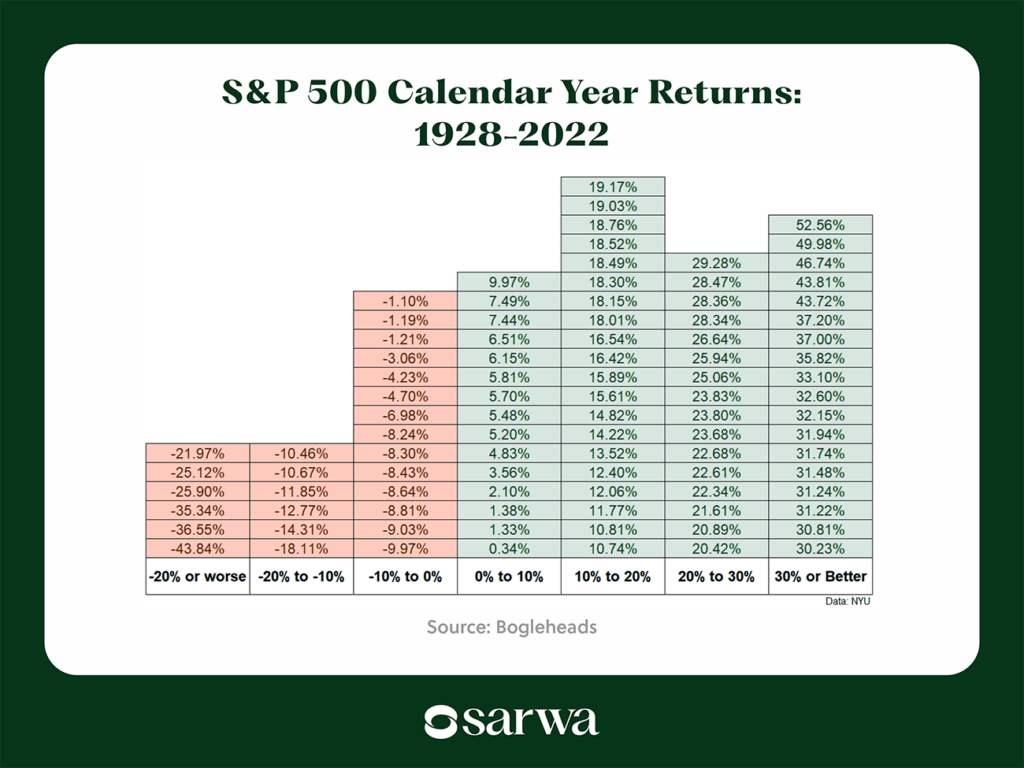
- Historical Performance: Over the long term, the S&P 500 has demonstrated robust growth, averaging approximately 10-12% annually, though past performance is not indicative of future results. This strong historical track record makes it an attractive option for long-term wealth accumulation.
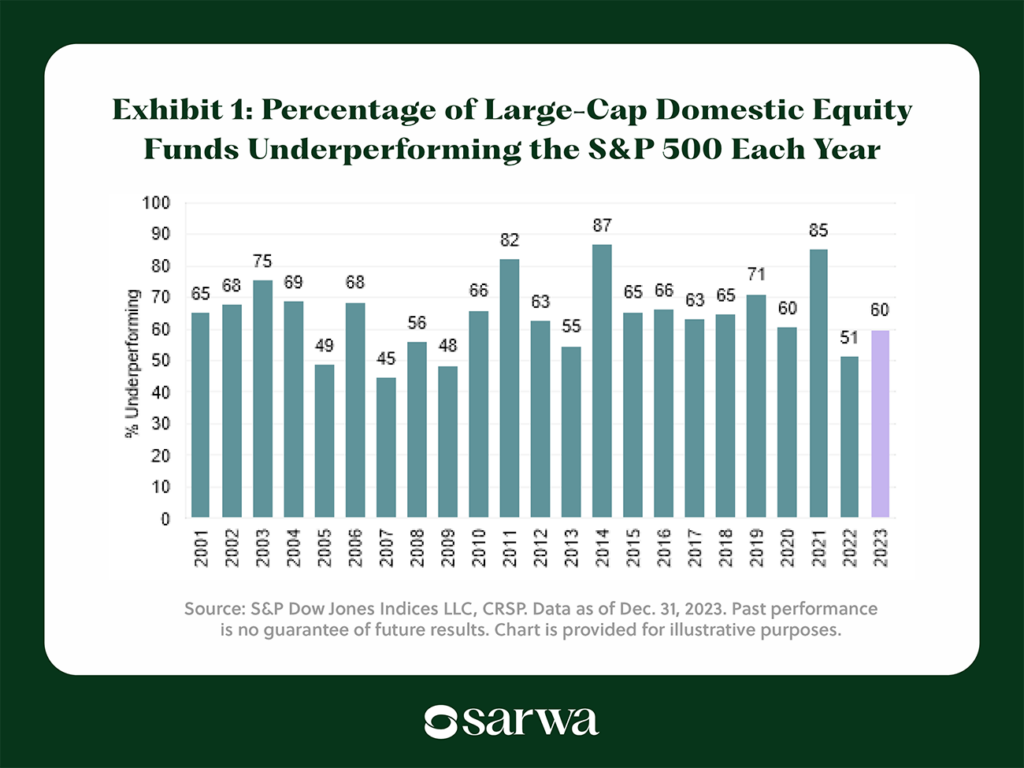
- Passive Investing Benefits: Investing in an S&P 500 index fund or ETF is a form of passive investing. It eliminates the need for active stock picking, which can be time-consuming and often underperforms the market. This strategy is ideal for investors who believe in the efficiency of the market and prefer a hands-off approach.
- Broad Market Exposure: For those looking to invest in the U.S. economy as a whole, the S&P 500 offers comprehensive exposure to large-cap companies that drive innovation and economic growth.
Direct vs. Indirect S&P 500 Investing: Choosing Your Vehicle
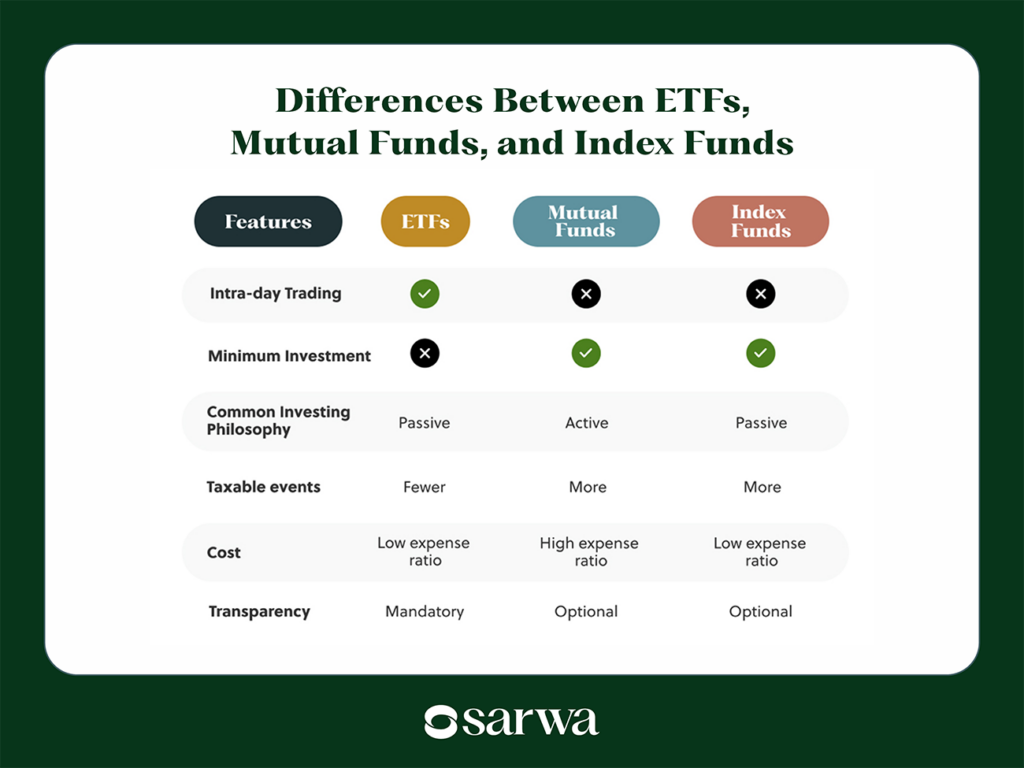
As established, you cannot directly purchase the S&P 500 index. Instead, you invest in financial products that are designed to replicate its performance. The two primary vehicles for doing so are Exchange-Traded Funds (ETFs) and Mutual Funds.
The Myth of “Directly Buying” the S&P 500
It’s a common misconception that one can “buy” the S&P 500. The index itself is a theoretical construct, a calculation that aggregates the performance of its constituent stocks. To own a piece of the S&P 500’s performance, you need an investment vehicle that holds the underlying stocks (or derivatives of them) in the same proportion as the index.
Exchange-Traded Funds (ETFs) for S&P 500 Exposure
ETFs are a popular and highly efficient way to invest in the S&P 500. An S&P 500 ETF is a type of investment fund that holds a portfolio of stocks designed to mirror the performance of the S&P 500 index.
- How They Work: ETFs trade on stock exchanges throughout the day, much like individual stocks. Their prices fluctuate based on market demand and the net asset value (NAV) of their underlying holdings. When you buy shares of an S&P 500 ETF, you’re essentially buying a small piece of all 500 companies in the index.
- Popular S&P 500 ETFs:
- SPDR S&P 500 ETF Trust (SPY): One of the oldest and largest ETFs, highly liquid.
- iShares Core S&P 500 ETF (IVV): Known for its low expense ratio.
- Vanguard S&P 500 ETF (VOO): Another low-cost option from Vanguard, often favored by long-term investors.
- Pros: Low expense ratios, high liquidity (can be bought and sold throughout the trading day), transparency in holdings, and tax efficiency (due to their creation/redemption mechanism).
- Cons: Requires active trading decisions (when to buy/sell), and some brokers may charge commissions (though many offer commission-free ETF trading).
Mutual Funds Tracking the S&P 500
Mutual funds are another effective way to invest in the S&P 500, particularly for those who prefer a simpler, hands-off approach or utilize employer-sponsored retirement plans. An S&P 500 mutual fund pools money from multiple investors to invest in a diversified portfolio that tracks the S&P 500.
- How They Work: Unlike ETFs, mutual funds are typically bought and sold once a day, after the market closes, at their Net Asset Value (NAV). They are professionally managed, though for an index fund, the management strategy is purely to replicate the index.
- Examples: Many large fund providers like Vanguard, Fidelity, and Charles Schwab offer S&P 500 index mutual funds (e.g., VFIAX from Vanguard, FXAIX from Fidelity).
- Pros: Automatic reinvestment of dividends, convenient for regular contributions (e.g., through payroll deductions), and often have lower minimum investment amounts than ETFs for initial purchase (though some require higher initial investments than a single share of an ETF).
- Cons: Generally higher expense ratios than equivalent ETFs (though some institutional index funds are very competitive), only trade once a day, and may have redemption fees if shares are sold too quickly.
Index Funds as a Subset
It’s important to clarify that “index fund” is a broader term referring to any fund (ETF or mutual fund) that aims to track a specific market index. Both S&P 500 ETFs and S&P 500 mutual funds are types of index funds. The key distinction for S&P 500 exposure often boils down to the ETF vs. traditional mutual fund structure. For most investors, low-cost index funds (whether ETF or mutual fund) tracking the S&P 500 are the preferred choice.
Selecting the Right Brokerage Account
Once you’ve decided on an S&P 500 investment vehicle, the next crucial step is choosing where to buy it. This involves opening an investment account with a brokerage firm.
Types of Brokerage Accounts
The type of account you choose will depend on your investment goals and tax situation:
- Individual Taxable Brokerage Account: This is a standard investment account where you can buy and sell various securities. Gains and income (like dividends) are subject to capital gains and ordinary income taxes, respectively. Ideal for flexible investing beyond retirement limits.
- Roth IRA: A retirement account where contributions are made with after-tax dollars. Qualified withdrawals in retirement are tax-free. Excellent for long-term S&P 500 growth where future tax-free income is desired.
- Traditional IRA: Contributions may be tax-deductible, and earnings grow tax-deferred. Withdrawals in retirement are taxed as ordinary income. Good for those seeking immediate tax deductions.
- 401(k) / 403(b): Employer-sponsored retirement plans. Many plans offer S&P 500 index funds as investment options. These are often the first place to invest for retirement due to employer matching contributions.
- Custodial Accounts (e.g., UGMA/UTMA): Accounts set up for minors, with an adult acting as custodian. Useful for investing for a child’s future.
Full-Service Brokers vs. Discount Brokers
Your choice of brokerage will impact fees, available tools, and level of support.
- Full-Service Brokers: Offer comprehensive financial advice, wealth management, and a wide range of products. They come with higher fees, often justified for high-net-worth individuals needing personalized planning. Examples include Merrill Lynch or Edward Jones.
- Discount Brokers (Online Brokers): Provide a platform for self-directed investing with significantly lower fees, often commission-free trading for stocks and ETFs. They are ideal for most individual investors who are comfortable managing their own investments. Examples include Fidelity, Vanguard, Charles Schwab, E*TRADE, and Interactive Brokers.
Key Factors When Choosing a Broker
When selecting an online broker to buy S&P 500 funds, consider the following:
- Fees and Commissions: Look for brokers offering commission-free trading for ETFs and low expense ratios for mutual funds.
- Minimums: Some brokers or specific funds may have minimum initial investment requirements.
- Research Tools and Educational Resources: A good broker provides robust tools to research S&P 500 ETFs/mutual funds, analyze performance, and understand market trends.
- Customer Service: Reliable customer support is essential, especially for new investors.
- Mobile App and Platform Usability: A user-friendly interface and a functional mobile app can greatly enhance your investing experience.
- Investment Options: Ensure the broker offers the specific S&P 500 ETFs or mutual funds you are interested in.
Practical Steps to Investing in the S&P 500
Once you’ve chosen your investment vehicle and brokerage, the actual process of buying S&P 500 exposure is straightforward.
Step 1: Open and Fund Your Account
- Application: Complete an online application with your chosen brokerage. This typically requires personal information, including your Social Security number, address, and employment details.
- Verification: Your identity will be verified, usually electronically.
- Funding: Link your bank account (checking or savings) to your brokerage account. You can then transfer funds via Electronic Funds Transfer (EFT), wire transfer, or even mail a check. Some brokers allow funding directly from services like PayPal.
Step 2: Research S&P 500 ETFs or Mutual Funds
Using your brokerage’s platform, navigate to their fund screener or search function. Look for S&P 500 tracking funds. Pay close attention to:
- Ticker Symbol: (e.g., SPY, IVV, VOO for ETFs; VFIAX, FXAIX for mutual funds).
- Expense Ratio: This is the annual fee charged as a percentage of your investment. Lower is generally better for index funds (aim for below 0.10% for core S&P 500 funds).
- Assets Under Management (AUM): Larger AUM generally indicates greater liquidity and stability.
- Tracking Error: How closely the fund tracks the index (should be minimal for S&P 500 index funds).
Step 3: Place Your Order
- ETFs: Go to the trading section, enter the ETF’s ticker symbol, the number of shares you wish to buy, and the order type (e.g., “market order” for immediate execution at the current price, or “limit order” to buy at a specific price or lower).
- Mutual Funds: Search for the mutual fund by name or ticker. You’ll typically enter a dollar amount you wish to invest, and the order will be processed after the market closes at that day’s NAV.
- Dollar-Cost Averaging: Consider investing a fixed amount regularly (e.g., $100 every month). This strategy, known as dollar-cost averaging, averages out your purchase price over time and reduces the risk of trying to “time the market.”
Step 4: Monitor and Rebalance
While S&P 500 investing is largely passive, it’s wise to:
- Monitor Performance: Periodically check your investment’s performance, but avoid overreacting to short-term fluctuations.
- Review Your Portfolio: As your investment grows and your financial situation changes, you may want to rebalance your overall portfolio to maintain your desired asset allocation. This might involve adding other asset classes like bonds or international stocks, rather than solely focusing on the S&P 500.
Important Considerations and Advanced Strategies
Maximizing your S&P 500 investment involves understanding a few more nuances.
Understanding Expense Ratios and Fees
Even a small difference in expense ratios can have a significant impact on your long-term returns due to compounding. For example, a 0.03% expense ratio versus a 0.50% expense ratio on a $100,000 investment over 30 years could mean tens of thousands of dollars more in your pocket with the lower-cost option. Always prioritize low-cost index funds.
Tax Implications
- Dividends: S&P 500 companies pay dividends, which are distributions of their earnings. These are taxable income in a taxable brokerage account.
- Capital Gains: When you sell an S&P 500 ETF or mutual fund share for more than you paid for it, you realize a capital gain, which is also taxable.
- Tax-Advantaged Accounts: Investing in the S&P 500 through retirement accounts like IRAs or 401(k)s offers significant tax benefits, either by allowing tax-deductible contributions and tax-deferred growth (Traditional IRA/401(k)) or tax-free withdrawals in retirement (Roth IRA/401(k)). Prioritizing these accounts for long-term S&P 500 investments is often a smart move.
The Role of the S&P 500 in a Diversified Portfolio
While the S&P 500 offers excellent diversification within U.S. large-cap equities, it should ideally be one component of a broader, well-diversified portfolio. Consider complementing your S&P 500 exposure with:
- International Stocks: To gain exposure to global markets and economies.
- Small-Cap and Mid-Cap Stocks: For potential higher growth, though with increased volatility.
- Bonds: To reduce overall portfolio volatility and provide income.
- Alternative Investments: (For more advanced investors) like real estate or commodities.
Long-Term vs. Short-Term Trading
The S&P 500 is overwhelmingly best suited for long-term investment strategies. Its historical returns demonstrate that patience and consistent investing over decades yield the most significant benefits. Attempting to time the market by frequently buying and selling S&P 500 funds is notoriously difficult and often leads to lower returns due to transaction costs and missed market rallies.
In conclusion, investing in the S&P 500 is an accessible and powerful strategy for achieving broad market exposure and long-term wealth accumulation. By understanding the available investment vehicles—primarily low-cost ETFs and mutual funds—and selecting the right brokerage account, investors can efficiently tap into the performance of America’s leading companies. With a focus on long-term commitment, disciplined saving, and an awareness of fees and tax implications, the S&P 500 can be a foundational element of a robust financial future.
aViewFromTheCave is a participant in the Amazon Services LLC Associates Program, an affiliate advertising program designed to provide a means for sites to earn advertising fees by advertising and linking to Amazon.com. Amazon, the Amazon logo, AmazonSupply, and the AmazonSupply logo are trademarks of Amazon.com, Inc. or its affiliates. As an Amazon Associate we earn affiliate commissions from qualifying purchases.