
For both seasoned investors and curious newcomers, understanding the operational rhythm of the New York Stock Exchange (NYSE) is fundamental to navigating the financial markets. The question “When do NYSE close?” might seem straightforward, but its implications reach far beyond a simple timestamp. It touches upon market liquidity, volatility, order execution, and strategic planning for millions of participants globally. Delving into the nuances of NYSE trading hours, holiday schedules, and the mechanics surrounding the market close offers a richer perspective on how the world’s largest stock exchange functions and how investors can best position themselves.
Understanding Standard NYSE Trading Hours
The NYSE, a cornerstone of global finance, operates within clearly defined parameters. These standard hours are the bedrock upon which daily market activities are built, influencing everything from price discovery to investor sentiment.
The Regular Trading Session: Open and Close Times
The regular trading session for the New York Stock Exchange is perhaps the most recognized aspect of its operation. It dictates the primary window during which most public trading occurs and prices are most actively determined.
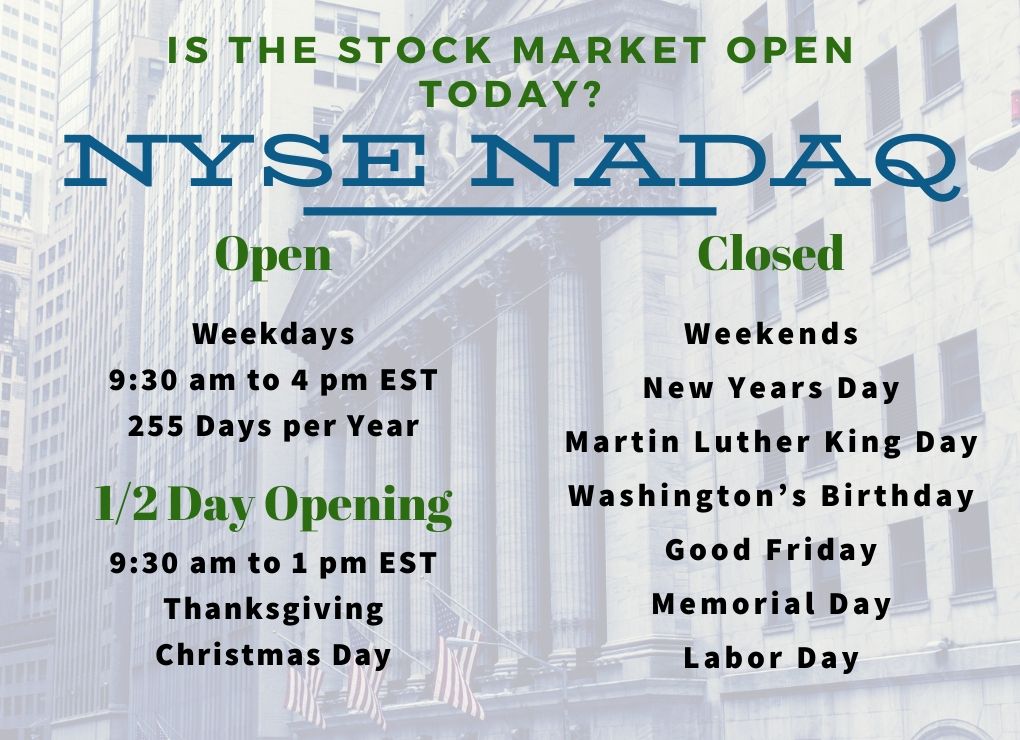
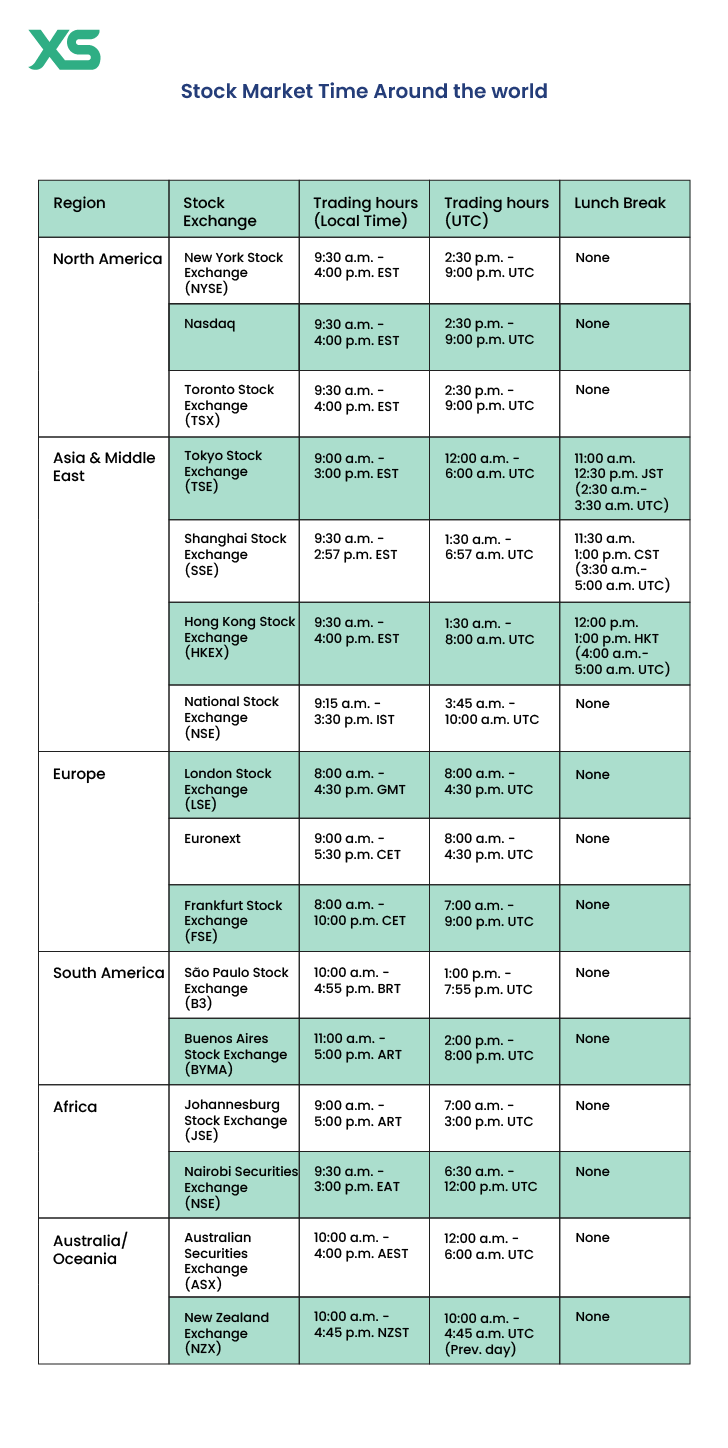
The NYSE opens for trading at 9:30 AM Eastern Time (ET) and closes at 4:00 PM ET on weekdays. This seven-and-a-half-hour window is characterized by its high volume, significant liquidity, and intense activity. During these hours, institutional investors, hedge funds, retail traders, and market makers all converge, executing trades that move billions of dollars daily. The uniformity of these hours across major U.S. exchanges, including the Nasdaq, ensures a synchronized market environment, making it easier for participants to conduct business without having to track differing schedules. This consistency also fosters greater transparency and efficiency in price discovery, as a broad consensus forms around asset valuations based on real-time supply and demand.
What Happens Before the Open and After the Close? (Pre-market and After-hours)
While the regular session commands the most attention, market activity doesn’t begin and end precisely at 9:30 AM and 4:00 PM ET. The market effectively extends through pre-market and after-hours trading sessions, albeit with different characteristics and rules.
Pre-market trading typically begins as early as 4:00 AM ET and runs until the market open at 9:30 AM ET. Similarly, after-hours trading commences immediately following the 4:00 PM ET close and can extend as late as 8:00 PM ET. These extended hours are facilitated by electronic communication networks (ECNs) rather than the physical trading floor. They offer investors the flexibility to react to news released outside regular hours, such as earnings reports or major economic data, without waiting for the next market open. However, trading in these sessions often comes with lower liquidity and wider bid-ask spreads, making prices potentially more volatile and execution more challenging. Understanding these limitations is crucial for investors considering participating in extended-hours trading.
Why Standard Hours Matter for Investors
The fixed nature of standard trading hours is not arbitrary; it serves several critical functions that benefit the entire market ecosystem. Firstly, it concentrates trading activity into specific windows, ensuring maximal liquidity and tighter spreads. This concentration allows for more efficient price discovery, as a greater number of buyers and sellers interacting simultaneously leads to more accurate and fair pricing. Secondly, it provides a predictable framework for businesses to release financial reports and news, knowing when the market will be most receptive to process and react to this information. For investors, these hours define the period of highest reliability for trade execution and offer a common reference point for market analysis. Planning investment strategies, monitoring portfolios, and making timely decisions are all predicated on the understanding and respect of these established market hours.
Navigating Market Holidays and Early Closures
The NYSE does not operate every single weekday of the year. Like most institutions, it observes a schedule of holidays and, on occasion, implements early closures. Being aware of these exceptions is vital for investors to avoid missing trading opportunities or facing unexpected delays.
Federal Holidays Observed by the NYSE
The New York Stock Exchange typically closes in observance of most U.S. federal holidays. These closures provide market participants a break and ensure that the financial infrastructure can reset and prepare for future trading days. Common holidays include:
- New Year’s Day: January 1st
- Martin Luther King, Jr.’s Birthday: Third Monday in January
- Washington’s Birthday (Presidents’ Day): Third Monday in February
- Good Friday: The Friday before Easter
- Memorial Day: Last Monday in May
- Juneteenth National Independence Day: June 19th
- Independence Day: July 4th
- Labor Day: First Monday in September
- Thanksgiving Day: Fourth Thursday in November
- Christmas Day: December 25th
It’s important to note that if a holiday falls on a weekend, the NYSE may observe it on the preceding Friday or the following Monday. The NYSE publishes its official holiday schedule well in advance, usually available on its website, allowing market participants ample time to adjust their trading plans. During these full market closures, no trading occurs, and all market orders are held until the next open trading day.
Special Early Closing Days (e.g., day after Thanksgiving, Christmas Eve)
Beyond full-day holidays, the NYSE also implements early closures on specific dates, primarily around major holidays. These abbreviated sessions still allow for trading but end at an earlier time, typically 1:00 PM ET. Prominent examples include:
- The Friday after Thanksgiving (Black Friday): A common early close at 1:00 PM ET.
- Christmas Eve: If it falls on a weekday, the market often closes early at 1:00 PM ET.
- New Year’s Eve: Similarly, if it falls on a weekday, an early close at 1:00 PM ET is possible.
These early closures are designed to allow market professionals and support staff to spend time with their families during holiday periods while still offering a trading window for those who need it. The reduced hours often lead to lower trading volumes and potentially increased volatility during the abbreviated session, as fewer participants are active.
Impact of Holiday Schedules on Trading Strategy
The intermittent nature of market holidays and early closures has a tangible impact on trading strategies. For long-term investors, the impact might be minimal, primarily affecting when dividend payments or corporate actions are processed. However, for short-term traders and institutional investors, these schedules require careful planning.
Firstly, liquidity can dry up significantly around holidays. This can lead to wider bid-ask spreads and difficulty in executing large orders without impacting prices. Secondly, major news or economic data released during a market closure can lead to significant “gap” openings on the next trading day, presenting both opportunities and risks. Traders might adjust position sizes, close out risky positions, or avoid opening new ones immediately before a long weekend. Understanding the NYSE holiday calendar is not just about knowing when you can’t trade; it’s about anticipating market behavior during and immediately after these periods of inactivity, and adapting one’s strategy accordingly.
The Mechanics of Market Closes and Order Execution
The sounding of the closing bell at 4:00 PM ET is more than a symbolic end to the trading day; it’s a critical moment where specific market mechanisms come into play, influencing final prices and the execution of certain order types.
The Closing Auction and its Significance
The NYSE utilizes a sophisticated mechanism known as the closing auction to determine the official closing price for each stock. This auction, which typically begins to consolidate orders in the final minutes of the trading day, is designed to match buying and selling interest accumulated throughout the day and execute them at a single, fair closing price. Large institutional orders that seek to buy or sell significant blocks of shares often participate in the closing auction, as it provides a deep pool of liquidity to minimize market impact.
The significance of the closing auction cannot be overstated. The official closing price is used for various purposes: valuing portfolios, calculating index values, settling options and futures contracts, and determining performance benchmarks. It represents a consensus price based on the aggregated demand and supply at the very end of the regular trading session. Market participants closely watch the order imbalances that build up towards the close, as these can provide clues about potential price movements during the auction.
Order Types and Their Execution at Market Close
Different types of orders behave distinctly as the market approaches its close.
- Market Orders: These orders are designed to be executed immediately at the best available price. If a market order is placed just before the close, it will typically be filled in the closing auction at the official closing price. However, if placed after the auction has begun or after 4:00 PM, it might be held for the next trading day’s open or potentially executed in after-hours trading, depending on the broker and the specific order routing.
- Limit Orders: A limit order specifies a maximum price an investor is willing to pay (for buying) or a minimum price they are willing to accept (for selling). If a limit order’s price is not met by the 4:00 PM close, it will expire or be carried over to the next trading day, depending on whether it was specified as a “day order” or “good ’til canceled” (GTC). Unfilled limit orders do not participate in the closing auction unless explicitly structured to do so.
- Stop Orders: These orders become market orders once a specified “stop price” is reached. If the stop price is triggered near the close, the order will execute at the closing auction price. If the stop price is not hit, the order will remain active for the next day (if GTC) or expire (if a day order).
Understanding how your specific order types interact with the closing mechanisms is crucial to avoid unexpected executions or missed opportunities.
Understanding Price Discovery at the End of the Day
The period leading up to and including the closing auction is a vital phase for price discovery. While prices fluctuate throughout the day based on news, economic data, and general sentiment, the closing moments often reflect a consolidation of these factors. Large institutional trades, rebalancing efforts by index funds, and end-of-day portfolio adjustments can exert significant influence.
The official closing price, therefore, is not merely the last traded price; it is a meticulously determined value reflecting the market’s aggregate opinion of a stock’s worth at that specific moment. It serves as a benchmark for performance measurement and a critical data point for analysts and investors. Fluctuations around the close can indicate strong underlying buying or selling pressure, providing insights into potential momentum for the following trading day. For traders, this period can be fraught with volatility but also offers opportunities for those who can accurately interpret the signals.
Beyond the Bell: After-Hours Trading and Its Implications
The formal close of the NYSE at 4:00 PM ET does not signify the complete cessation of trading activity. Modern electronic trading platforms allow for significant movement in share prices well beyond these traditional boundaries, offering both new avenues and new challenges for investors.
Accessing Extended Trading Sessions
After-hours trading typically runs from 4:00 PM ET until 8:00 PM ET, though specific brokerages may offer slightly different windows. Similarly, pre-market trading can commence as early as 4:00 AM ET. These extended sessions are facilitated by Electronic Communication Networks (ECNs) and are available to most retail investors through their brokerage accounts. To participate, investors usually need to specify that their orders are valid for extended hours trading, as standard market orders are typically restricted to the regular session.
The accessibility of these sessions means that significant news — such as quarterly earnings reports, mergers and acquisitions announcements, or major economic policy shifts — can have an immediate impact on stock prices, rather than requiring investors to wait until the next morning’s market open. This capability provides a crucial window for investors to react swiftly, but it also comes with a unique set of considerations.
Risks and Opportunities in After-Hours Trading
While after-hours trading offers flexibility, it is generally characterized by lower liquidity and higher volatility compared to the regular session. With fewer participants, larger bid-ask spreads are common, meaning the difference between the highest price a buyer is willing to pay and the lowest price a seller is willing to accept is wider. This can lead to less favorable execution prices and difficulty in filling large orders without significantly moving the market.
Opportunities arise from the ability to react quickly to breaking news. For instance, if a company releases better-than-expected earnings after the close, investors can buy shares before the regular market opens and potentially benefit from a price surge. Conversely, negative news can be acted upon immediately to mitigate losses.
However, risks are substantial. The lower liquidity can exacerbate price swings, making it easier for a few large orders to dramatically alter a stock’s value. There’s also less transparency, as fewer analysts and market makers are actively pricing securities. Retail investors, in particular, should exercise caution, as institutional players with more resources and information often dominate these extended sessions.
How Extended Hours Influence Next Day’s Open
Price movements in after-hours and pre-market trading often set the stage for the next regular trading session. A stock’s closing price from 4:00 PM ET might be significantly different from its price just before the 9:30 AM ET open due to activities in these extended sessions. This phenomenon is known as “gapping” — where a stock opens noticeably higher or lower than its previous day’s close.
These gaps are a direct reflection of how the market has digested and reacted to news outside of regular hours. For example, a positive drug trial result released overnight could cause a biotech stock to “gap up” significantly at the opening bell. Conversely, a regulatory setback could lead to a “gap down.” Understanding these dynamics is crucial for investors, as it can influence opening strategies, risk management, and overall market sentiment for the day ahead. The interplay between traditional trading hours and extended sessions paints a more complete picture of modern market dynamics.
Strategic Considerations for Investors Around Closing Times
The moments leading up to and immediately after the NYSE close are pivotal for market participants. The distinct characteristics of these periods demand specific strategic considerations to manage risk, capitalize on opportunities, and optimize investment outcomes.
Managing Volatility and Risk at the Close
The final hour of trading, often referred to as “the power hour,” and the closing auction can be periods of heightened volatility. Large institutional orders, portfolio rebalancing, and last-minute reactions to news can lead to rapid price movements. For day traders, this can present both opportunities and significant risks. A stock that has been relatively stable throughout the day might experience a dramatic shift in price within the last 15-30 minutes, particularly if there’s a strong order imbalance feeding into the closing auction.
To manage this risk, investors might choose to:
- Reduce position sizes: Smaller positions are less susceptible to large price swings.
- Set tighter stop-loss orders: While not foolproof, stop-losses can help limit potential losses from unexpected volatility.
- Avoid opening new positions: Unless specifically targeting closing dynamics, it’s often prudent to avoid initiating trades in the final moments of the regular session due to increased unpredictability.
- Monitor order imbalances: Many platforms provide data on buy/sell order imbalances leading into the close, offering clues about potential price direction.
End-of-Day Trading Strategies
Despite the risks, the end of the day also offers unique strategic opportunities for certain types of traders.
- “Closing Bell” Plays: Some traders look for stocks that have been consolidating all day and show strong buying or selling pressure heading into the close, anticipating a breakout or breakdown in the closing auction or into after-hours.
- Index Rebalancing: Major index funds (e.g., S&P 500 ETFs) often have to buy or sell significant blocks of shares at the market close to rebalance their portfolios, which can create predictable demand or supply for specific stocks. Traders aware of these rebalancing events might try to front-run these institutional orders.
- Options Expiration: On options expiration days (typically the third Friday of each month), the market close can be particularly volatile as options positions are settled, leading to hedging activities in the underlying stocks.
- Overnight Holds: Decisions about holding positions overnight are critical at the close. Traders assess potential overnight news, economic reports, and global market movements that could impact their holdings before the next day’s open.
The Psychological Impact of Market Closes
Beyond the technical aspects, the market close carries a significant psychological weight for investors. The final price of the day often dictates the immediate sentiment and determines whether investors feel successful or disappointed. A strong close can boost confidence and encourage further investment, while a weak close can foster anxiety and lead to defensive positioning.
This psychological factor can influence market behavior. Investors might chase rallies into the close or panic sell to avoid holding positions overnight after a particularly bad day. Understanding this human element is crucial for maintaining a rational investment approach. It underscores the importance of having a well-defined strategy that accounts for end-of-day dynamics, rather than succumbing to emotional reactions driven by the immediate outcome of the closing bell.
In conclusion, knowing “when do NYSE close” is far more than a simple schedule query. It’s an entry point into understanding the intricate mechanisms of market hours, the impact of holidays, the critical role of the closing auction, and the opportunities and risks associated with extended trading. For anyone engaged with the financial markets, a comprehensive grasp of these operational nuances is indispensable for informed decision-making and strategic investment success.
aViewFromTheCave is a participant in the Amazon Services LLC Associates Program, an affiliate advertising program designed to provide a means for sites to earn advertising fees by advertising and linking to Amazon.com. Amazon, the Amazon logo, AmazonSupply, and the AmazonSupply logo are trademarks of Amazon.com, Inc. or its affiliates. As an Amazon Associate we earn affiliate commissions from qualifying purchases.