
The phrase “tire cupping” might sound like a culinary term or a casual way to describe a collection of something, but in the world of automotive technology and maintenance, it refers to a specific and problematic form of tire wear. Understanding tire cupping is crucial for vehicle owners, as it directly impacts safety, performance, and the longevity of tires, ultimately affecting the overall financial investment in vehicle ownership. This phenomenon, characterized by uneven wear patterns on the tire’s tread, often manifests as circular depressions or “cups” that can significantly compromise a tire’s ability to grip the road, especially in adverse conditions.

While tire cupping can arise from a variety of mechanical issues, its identification and remediation often involve an understanding of the underlying technological systems within a vehicle. From the intricate workings of the suspension and steering components to the sophisticated engineering of modern tires themselves, the causes of cupping are rooted in how these systems interact and are maintained. This article will delve into the technical aspects of tire cupping, exploring its causes, the diagnostic approaches, and the technological solutions that can prevent or rectify this detrimental wear pattern.
Understanding the Mechanics of Tire Wear
Tire wear is a complex interplay of forces, friction, and material degradation. Tires are designed to provide grip, absorb road imperfections, and transmit power and braking forces. When these functions are not performed in perfect balance, uneven wear, including cupping, can occur.
The Role of Suspension and Alignment
The suspension system of a vehicle is a marvel of engineering, designed to isolate the cabin from road shock while maintaining tire contact with the road surface. It comprises numerous components, including springs, shock absorbers (or struts), control arms, bushings, and ball joints. Each of these parts plays a vital role in controlling wheel movement and ensuring the tire remains at an optimal angle relative to the road.
When suspension components begin to wear out, they lose their ability to accurately control wheel position and movement. For instance, worn-out shock absorbers or struts can lead to excessive bouncing of the tire. This uncontrolled vertical movement causes the tire to repeatedly lift off and then slam back onto the road. During these moments of contact, different parts of the tire tread can experience varying degrees of pressure and friction, initiating the cupping process. Imagine a skipping rope; each time it hits the ground, it does so with a specific impact. Similarly, a bouncing tire can create localized wear patterns.
Alignment refers to the angles at which the wheels are set in relation to each other and the vehicle body. Key alignment angles include:
- Camber: The inward or outward tilt of the top of the tire when viewed from the front of the vehicle. Excessive positive or negative camber can cause wear on the inner or outer edge of the tire, but can also contribute to cupping if the tire is constantly being pushed sideways by the misalignment.
- Caster: The forward or backward tilt of the steering axis when viewed from the side of the vehicle. Caster primarily affects steering stability and returnability, but significant imbalances can indirectly influence tire wear.
- Toe: The inward or outward angle of the tires when viewed from above. Toe-in means the front edges of the tires are closer than the rear edges, while toe-out means the opposite. Incorrect toe settings create a scrubbing effect as the wheels try to travel in different directions, leading to rapid and uneven wear, often manifesting as feathering and, in more severe cases, cupping.
When alignment is out of specification, the tires are not traveling parallel to each other or perpendicular to the direction of travel. This forced deviation results in a constant scrubbing motion of the tire tread against the road surface, which is a primary culprit for the formation of cupped wear patterns.
The Influence of Tire Pressure and Balance
Tire pressure is a critical factor in how a tire performs and wears. Tires are designed to operate within a specific pressure range, typically indicated on a sticker inside the driver’s side door jamb or in the owner’s manual.
- Underinflation: When a tire is underinflated, the center of the tread lifts away from the road surface, and the outer edges bear the brunt of the vehicle’s weight and the forces of acceleration and braking. This can lead to wear on the outer edges and, over time, can contribute to cupping in the center or outer portions of the tread as the tire flexes abnormally.
- Overinflation: Conversely, overinflated tires have an overly rigid sidewall and tread. This pushes the center of the tread more firmly onto the road, resulting in excessive wear in the middle of the tire. While this typically leads to center wear, the unnatural rigidity and stress can also contribute to the development of cupped areas, particularly if the overinflation is uneven or combined with other issues.
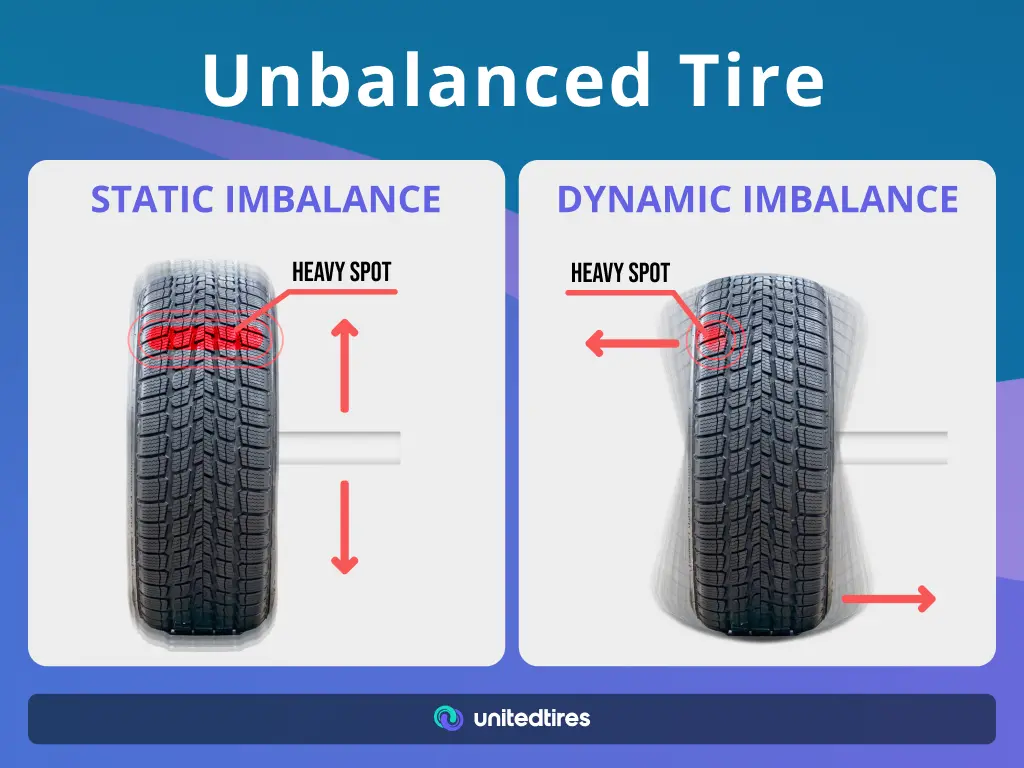
Tire balance, on the other hand, ensures that the weight distribution around the tire and wheel assembly is uniform. When an assembly is unbalanced, it will naturally try to “wobble” or vibrate as it rotates, especially at higher speeds. This imbalance causes certain parts of the tire tread to strike the road harder and more frequently than others. Think of an unbalanced washing machine drum; it vibrates violently. This constant, uneven impact force can lead to localized depressions and wear patterns that characterize cupping. Balancing is achieved by attaching small weights to the wheel rim to counteract any heavier spots, ensuring smooth rotation.
Diagnostic Approaches to Identifying Tire Cupping
Identifying tire cupping requires a systematic approach that involves visual inspection, tactile assessment, and an understanding of the potential underlying mechanical issues. Early detection is key to preventing further damage and costly repairs.
Visual Inspection and Tactile Assessment
The most straightforward way to identify tire cupping is through visual inspection. Walk around your vehicle and examine each tire closely. Look for:
- Circular Depressions: The hallmark of cupping is the presence of distinct, rounded indentations or “cups” in the tread. These are often scattered across the tire’s circumference.
- Feathering: Sometimes, cupping is preceded or accompanied by feathering, where the edges of the tread blocks are worn at an angle. This can be felt by running your hand over the tread surface in the direction of rotation.
- Uneven Wear Patterns: Beyond distinct cups, look for any general unevenness in the tread depth. Some areas might be significantly more worn than others.
- Bald Spots: In severe cases, cupping can lead to bald spots where the tread has been completely worn away.
A tactile assessment can often reveal subtle cupping that might be missed by the naked eye. Carefully run your hand across the tread surface, both in the direction of rotation and against it. You should feel a smooth, consistent surface. If you feel dips, valleys, or an irregular, choppy texture, it’s a strong indication of cupping. Pay attention to the edges of the tread blocks as well, as they can provide further clues about the nature of the wear.
Connecting Wear Patterns to Mechanical Faults
The location and pattern of the cupping can often provide valuable clues about the underlying mechanical issue:
- Cupping on the Edges (Inner or Outer): This often points to alignment issues, specifically excessive camber or toe. If the outer edge is worn, it might indicate positive camber or toe-out. If the inner edge is worn, it could be negative camber or excessive toe-in.
- Cupping in the Center of the Tread: This is less common for cupping and more indicative of overinflation or a tire that’s too wide for the wheel. However, if it’s a localized depression, it could also relate to a suspension component causing uneven load distribution.
- Scattered Cupping: This is often associated with worn shock absorbers or struts. The uncontrolled bouncing of the tire leads to random impacts and wear patterns across the tread.
- Feathering: Feathering, where the tread blocks are worn on an angle, strongly suggests an alignment issue, particularly incorrect toe settings.
When diagnosing tire cupping, it’s essential to consider the wear patterns on all four tires. If the same type of wear is present on multiple tires, it might indicate a broader systemic issue. If only one tire is affected, the problem is likely localized to that specific wheel’s suspension, steering, or braking components.
Technological Solutions for Preventing and Mitigating Tire Cupping
The prevention and mitigation of tire cupping rely heavily on leveraging automotive technology, from precise diagnostic tools to advanced tire and suspension designs. Proactive maintenance and the use of appropriate technologies are key.
Advanced Wheel Alignment Systems
Modern wheel alignment systems are far more sophisticated than those used in previous decades. Using digital cameras, laser beams, and advanced sensor arrays, these systems can measure the wheel’s angles with extreme precision. Technicians can input the vehicle’s specifications from a comprehensive database, and the system guides them in making minute adjustments to achieve factory-recommended alignment.
- 3D Wheel Alignment: This technology provides a dynamic and accurate representation of the wheel angles. The cameras capture images of targets mounted on the wheels, creating a 3D model of the vehicle’s wheel geometry. This allows for more precise identification of subtle deviations that could lead to tire wear.
- Computerized Measurement and Adjustment: After measurements are taken, sophisticated software calculates the necessary adjustments for camber, caster, and toe. Modern alignment machines often provide real-time feedback to the technician as adjustments are made, ensuring that the vehicle is brought back into perfect specification.
Regular alignment checks, especially after hitting potholes or curbs, are a critical preventative measure. The technology exists to ensure wheels are tracking correctly, minimizing the scrubbing and uneven forces that cause cupping.
Tire Pressure Monitoring Systems (TPMS) and Smart Tires
Tire Pressure Monitoring Systems (TPMS) have become standard on most new vehicles and are a valuable technological aid in preventing tire cupping. TPMS uses sensors within each tire to continuously monitor inflation pressure and transmit this data to the vehicle’s computer. If a tire is significantly underinflated, a warning light illuminates on the dashboard, alerting the driver to check and correct the pressure.
- Direct TPMS: These systems use individual pressure sensors in each wheel. They offer the most accurate real-time data and can often detect slow leaks before they become critical.
- Indirect TPMS: These systems use the vehicle’s anti-lock braking system (ABS) wheel speed sensors to infer tire pressure. While less precise than direct TPMS, they still provide a crucial warning for significant underinflation.
Beyond TPMS, the concept of “smart tires” is emerging. These advanced tires incorporate embedded sensors that can monitor not only pressure but also temperature, tread wear, and even road surface conditions. This data can be fed back to the vehicle’s control systems, allowing for dynamic adjustments to suspension and traction control settings, potentially even alerting the driver to impending tire wear issues long before they manifest as cupping.

High-Performance Tires and Suspension Components
The selection of appropriate tires and the maintenance of suspension components also play a significant role.
- Tire Design and Compound: Modern tires are engineered with advanced tread patterns and rubber compounds that are more resistant to wear and better equipped to handle the stresses of daily driving. Some performance tires, for instance, are designed with stiffer sidewalls and specific tread blocks that can help resist the forces that lead to cupping.
- Quality Suspension Components: While replacement parts are necessary over time, opting for high-quality OEM (Original Equipment Manufacturer) or reputable aftermarket suspension components can ensure that the system performs as intended. Worn bushings, loose ball joints, or failing shock absorbers are primary culprits for the uncontrolled movement that leads to cupping. Regular inspection of these components during tire rotations or brake services can identify issues before they cause significant tire damage.
By understanding the technical underpinnings of tire wear, vehicle owners can implement proactive strategies, utilize advanced diagnostic tools, and choose the right technologies to keep their tires in optimal condition, ensuring safety, performance, and extending the life of their automotive investment.
aViewFromTheCave is a participant in the Amazon Services LLC Associates Program, an affiliate advertising program designed to provide a means for sites to earn advertising fees by advertising and linking to Amazon.com. Amazon, the Amazon logo, AmazonSupply, and the AmazonSupply logo are trademarks of Amazon.com, Inc. or its affiliates. As an Amazon Associate we earn affiliate commissions from qualifying purchases.