
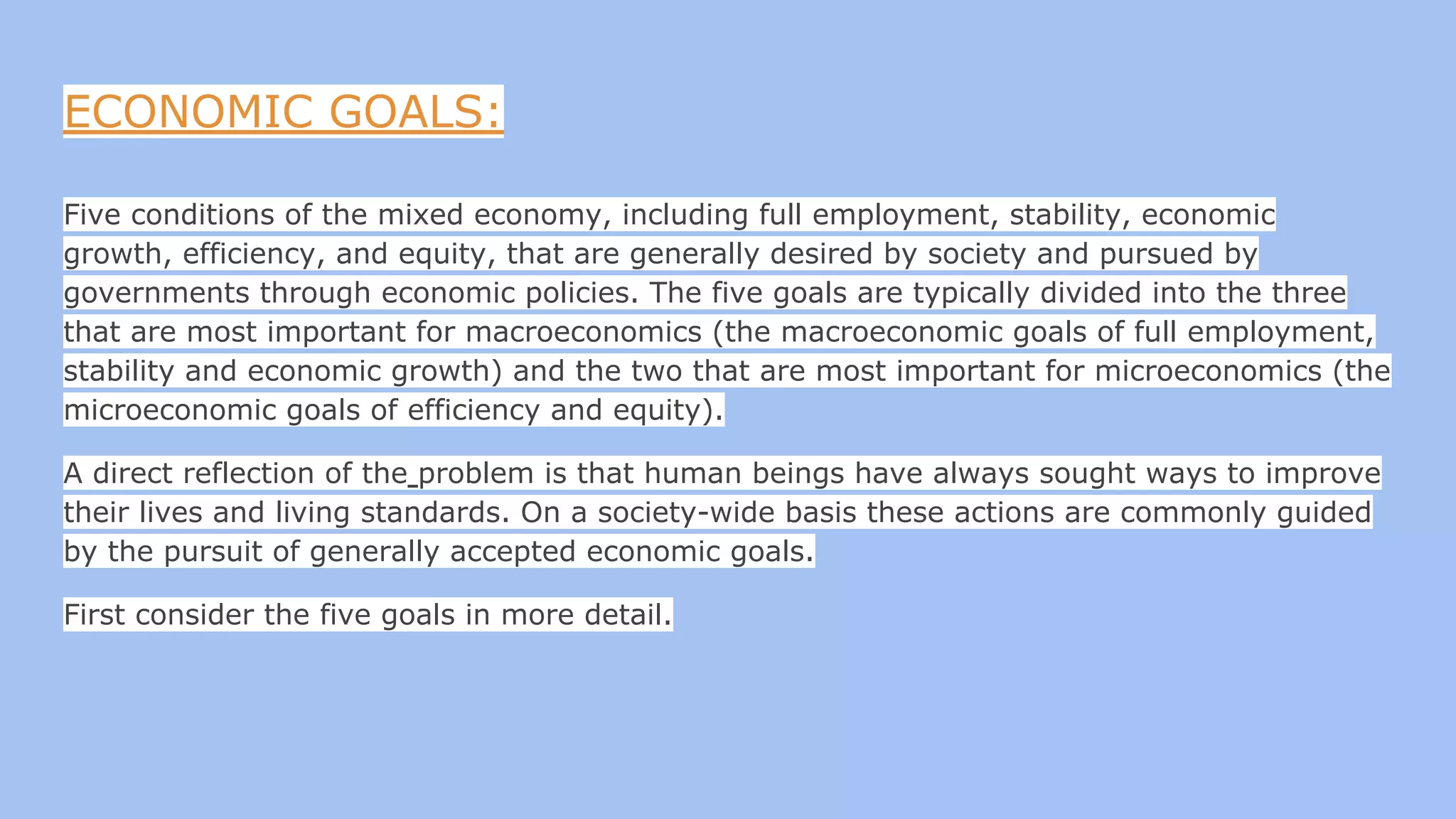
Governments, at their core, serve as stewards of national well-being, and a significant facet of this responsibility lies in steering the economy. While the immediate answer to “what is a primary economic goal of governments?” might seem singular, the reality is a complex tapestry of interconnected objectives, each crucial for fostering prosperity, stability, and societal advancement. There isn’t a single, universally agreed-upon “primary” goal, but rather a dynamic interplay of aims that governments constantly strive to balance, adapt, and achieve. These goals often include macroeconomic stability, equitable distribution of wealth, fiscal responsibility, global competitiveness, and long-term sustainability. Understanding this multifaceted approach is key to comprehending the intricate world of public finance and economic policy.

Macroeconomic Stability: The Foundation of Prosperity
Perhaps the most fundamental and universally recognized economic goal of any government is the pursuit of macroeconomic stability. This involves creating an economic environment where growth is consistent, prices are predictable, and employment levels are high. Without this stable foundation, other economic and social objectives become exceedingly difficult to achieve.
Price Stability and Controlling Inflation
One of the cornerstones of macroeconomic stability is maintaining price stability, which primarily means keeping inflation under control. Inflation, a sustained increase in the general price level of goods and services, erodes purchasing power, disproportionately harms those on fixed incomes, creates uncertainty for businesses, and can distort investment decisions. Governments, often through their independent central banks, utilize monetary policy tools like interest rate adjustments and quantitative easing/tightening to manage the money supply and influence inflation. The goal is typically to maintain a low, stable, and predictable rate of inflation (often around 2-3%) to provide a healthy economic environment without undermining consumer confidence or business planning. Deflation, a sustained decrease in prices, is also a concern, as it can discourage spending and investment, leading to economic stagnation.
Full Employment and Labor Market Health
Another paramount objective is achieving and maintaining full employment. While “full employment” doesn’t necessarily mean zero unemployment (as some level of frictional and structural unemployment is natural), it signifies a state where nearly everyone who wants to work can find a job. High unemployment rates lead to lost economic output, increased social welfare costs, and significant social distress. Governments implement various fiscal policies (e.g., public works projects, tax incentives), labor market policies (e.g., job training programs, employment services), and sometimes even wage subsidies to stimulate job creation and ensure a healthy, active workforce. The goal is to maximize the utilization of human capital, thereby increasing national output and improving living standards.
Sustainable Economic Growth
Beyond stability, governments aim for sustainable economic growth – a steady, long-term increase in the production of goods and services within an economy, typically measured by Gross Domestic Product (GDP). Economic growth is essential for raising living standards, reducing poverty, and funding public services. However, this growth must be “sustainable,” meaning it doesn’t deplete natural resources at an irreversible rate, exacerbate social inequalities, or create unmanageable debt burdens for future generations. Governments foster growth through investments in infrastructure, education, research and development, creating a favorable business environment, and promoting competition and innovation. The challenge lies in balancing short-term economic stimulus with long-term ecological and social responsibility.
Equitable Distribution of Wealth and Income
While macroeconomic stability provides the foundation, a purely growth-oriented approach can sometimes lead to widening disparities. Therefore, another crucial economic goal for many governments is to promote a more equitable distribution of wealth and income. This objective stems from both ethical considerations and the understanding that extreme inequality can lead to social unrest, reduced aggregate demand, and hinder overall economic progress.
Addressing Income Inequality
Income inequality, the extent to which income is distributed unevenly among a population, is a persistent concern. Governments address this through various mechanisms. Progressive taxation systems, where higher earners pay a larger percentage of their income in taxes, are a common tool. Social safety nets, including unemployment benefits, minimum wage laws, and welfare programs, provide a basic standard of living for vulnerable populations. Furthermore, investments in education, vocational training, and affordable healthcare aim to increase opportunities for upward mobility, ensuring that a broader segment of the population can participate effectively in the labor market and enjoy the benefits of economic growth.
Poverty Reduction and Social Welfare
A direct corollary to addressing inequality is the goal of poverty reduction. Governments aim to lift their citizens out of destitution by providing direct financial assistance, access to essential services (housing, food), and pathways to self-sufficiency. Social welfare programs are not just about humanitarian aid; they are seen as investments in human capital, reducing future social costs associated with poor health, crime, and lack of education. By establishing a robust social safety net, governments aim to ensure that no citizen is left behind, fostering social cohesion and a sense of shared prosperity.
Fiscal Responsibility and Public Finance Management

A government’s ability to achieve its economic goals is fundamentally tied to its fiscal health and how effectively it manages public finances. Fiscal responsibility involves careful budgeting, managing national debt, and ensuring the efficient allocation of taxpayer money.
Balanced Budgets and Debt Management
Governments strive for fiscal prudence, which often involves aiming for balanced budgets—where government revenues (primarily from taxes) equal or exceed expenditures. While deficit spending can be a tool during economic downturns, chronic deficits lead to accumulating national debt. Excessive debt can burden future generations, crowd out private investment, increase borrowing costs, and, in extreme cases, lead to financial crises. Governments manage debt through a combination of revenue generation (taxation), expenditure control, and responsible borrowing strategies. Long-term fiscal sustainability is a critical indicator of a nation’s economic health and its ability to fund future priorities.
Efficient Allocation of Public Resources
Beyond just balancing the books, governments must ensure that public resources are allocated efficiently to areas that provide the greatest benefit to society. This involves prioritizing spending on essential public goods and services such as infrastructure (roads, bridges, utilities), national defense, public safety, education, and healthcare. Effective public finance management also entails combating waste, corruption, and inefficiency in government spending programs. Cost-benefit analysis, performance metrics, and transparent budgeting processes are tools used to ensure that taxpayer money is deployed strategically to achieve desired economic and social outcomes.
Global Competitiveness and International Economic Relations
In an increasingly interconnected world, no nation operates in economic isolation. Therefore, a significant economic goal for governments is to enhance their nation’s global competitiveness and manage its international economic relations effectively.
Promoting Exports and Attracting Foreign Investment
Governments actively work to promote exports of domestic goods and services, as this brings foreign currency into the country, supports domestic industries, and creates jobs. This can involve trade agreements, export subsidies, and diplomatic efforts to open new markets. Simultaneously, attracting Foreign Direct Investment (FDI) is crucial. FDI brings capital, technology, management expertise, and job creation. Governments create attractive environments for FDI through stable legal frameworks, tax incentives, infrastructure development, and a skilled workforce. A strong presence in global markets is vital for sustained economic growth and innovation.
Managing Exchange Rates and Balance of Payments
Governments also play a role in managing their nation’s exchange rate and its balance of payments. The exchange rate influences the competitiveness of exports and the cost of imports. Governments (often through central banks) may intervene in currency markets or use monetary policy to influence the value of their currency. The balance of payments, which records all economic transactions between a country and the rest of the world, must be managed to avoid unsustainable deficits or surpluses that could destabilize the economy. Policies related to trade, capital flows, and international finance all contribute to achieving a healthy external economic position.
Long-Term Sustainability and Future-Proofing the Economy
Finally, a truly forward-looking government recognizes that its economic goals must extend beyond the immediate term to encompass long-term sustainability and the ability to adapt to future challenges. This involves considering environmental, social, and technological changes.
Environmental Stewardship and Resource Management
A critical long-term economic goal is environmental stewardship. Economic activity often has environmental consequences, such as climate change, pollution, and resource depletion. Governments aim to integrate environmental protection into economic policy by promoting green technologies, regulating emissions, incentivizing sustainable practices, and investing in renewable energy. Sustainable resource management ensures that future generations will also have access to the natural capital required for their prosperity, turning environmental challenges into economic opportunities.
Human Capital Development and Innovation
The future strength of an economy rests heavily on its human capital – the skills, knowledge, and health of its population. Governments prioritize investments in education at all levels, from early childhood to higher education and lifelong learning programs. Healthcare systems are also crucial, as a healthy population is a productive one. Furthermore, fostering innovation through support for research and development, protecting intellectual property, and encouraging entrepreneurship ensures that the economy remains dynamic and adaptable to technological shifts. Governments aim to create an environment where creativity and new ideas can flourish, driving future economic growth and competitiveness.
In conclusion, while “macroeconomic stability” might be the most direct answer to what constitutes a primary economic goal, it is more accurate to view it as the bedrock upon which a government builds a comprehensive set of objectives. These goals – encompassing growth, equity, fiscal prudence, global engagement, and long-term sustainability – are deeply interconnected. Governments constantly navigate trade-offs and priorities, striving to create an economy that not only grows but also distributes its benefits broadly, responsibly manages its finances, competes globally, and is resilient for generations to come. This ongoing balancing act defines the complex and critical economic role of governments in the modern world.
aViewFromTheCave is a participant in the Amazon Services LLC Associates Program, an affiliate advertising program designed to provide a means for sites to earn advertising fees by advertising and linking to Amazon.com. Amazon, the Amazon logo, AmazonSupply, and the AmazonSupply logo are trademarks of Amazon.com, Inc. or its affiliates. As an Amazon Associate we earn affiliate commissions from qualifying purchases.