
For investors, analysts, and market watchers alike, the earnings announcements of bellwether companies like NVIDIA (NVDA) are among the most eagerly anticipated events on the financial calendar. These quarterly reports offer a critical window into a company’s financial health, operational efficiency, and future prospects, often acting as a significant catalyst for stock price movement and broader market sentiment. For a company at the forefront of the artificial intelligence revolution and the dominant player in high-performance computing, understanding when NVDA earnings are released and what to look for is not just helpful—it’s essential for informed investment decisions.
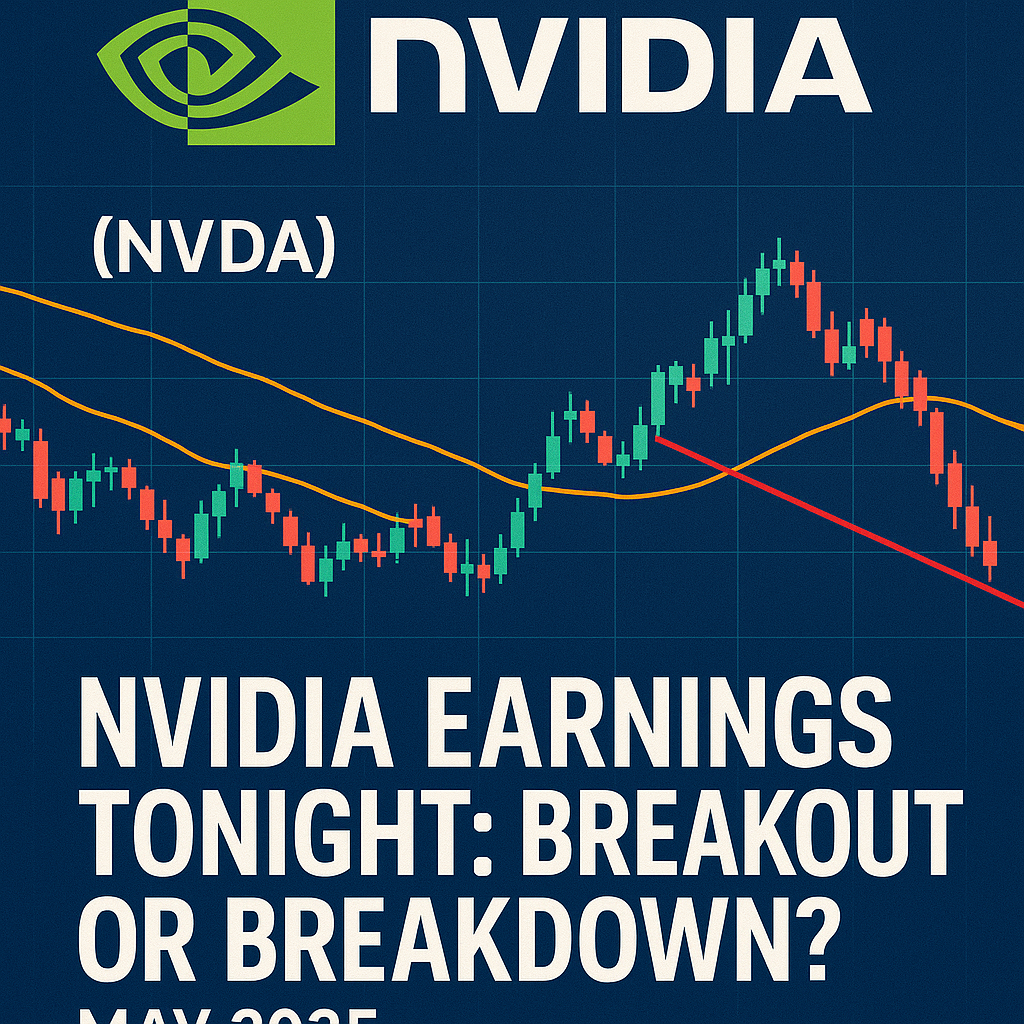
NVIDIA typically announces its earnings for each fiscal quarter approximately four to six weeks after the quarter ends. While the exact dates vary slightly each year and are formally communicated through press releases and SEC filings, investors can generally expect these reports around:
- Q1 Earnings: Late May (for the fiscal quarter ending April)
- Q2 Earnings: Late August (for the fiscal quarter ending July)
- Q3 Earnings: Late November (for the fiscal quarter ending October)
- Q4 Earnings: Late February (for the fiscal quarter ending January of the following calendar year)
These dates are provisional and based on historical patterns; definitive dates are always published on NVIDIA’s investor relations website and relevant financial news outlets closer to the announcement. The anticipation surrounding these dates is palpable, turning each earnings season into a high-stakes event for anyone with skin in the game.
The Critical Importance of NVIDIA’s Earnings Season
NVIDIA is no ordinary semiconductor company; it stands as a cornerstone of modern computing infrastructure, powering everything from advanced gaming rigs to the data centers driving AI innovation. Consequently, its financial performance has ramifications that extend far beyond its own stock, influencing sector-wide trends and even macroeconomic outlooks.
The Market-Moving Power of NVIDIA
As one of the largest and most influential companies in the technology sector, NVIDIA’s earnings reports have a profound market-moving power. Its valuation, which has soared on the back of unprecedented demand for its AI accelerators, means that any significant deviation from analyst expectations—whether positive or negative—can trigger substantial shifts not only in NVDA’s stock price but also across the broader semiconductor industry, the AI ecosystem, and even major market indices. Investors keenly watch these reports to gauge the health of crucial tech segments, particularly in areas like data center growth, cloud computing expansion, and the escalating AI arms race. A strong earnings report can instill confidence and fuel rallies, while a miss can spark concerns about future demand or competitive pressures, leading to pullbacks.
Why Quarterly Announcements Are Pivotal
Each fiscal quarter provides a snapshot of NVIDIA’s operational performance and strategic execution. These quarterly announcements are pivotal because they offer the most frequent and comprehensive updates on the company’s financial trajectory. Unlike annual reports, which can be backward-looking by the time they are released, quarterly reports offer a more current perspective, allowing investors to track progress, identify emerging trends, and react more promptly to changes in the business environment. They are essential for:
- Assessing Growth Trajectories: Investors look for consistent revenue growth, especially in key segments like data center.
- Evaluating Profitability: Gross margins, net income, and earnings per share (EPS) indicate the company’s efficiency and financial strength.
- Understanding Market Demand: Sales figures across different segments reveal the underlying demand for NVIDIA’s products in various end markets.
- Gauging Management’s Outlook: Forward-looking guidance is often more impactful than past results, shaping future expectations.
Understanding Earnings Call Dynamics
Beyond the raw numbers released in the earnings report, the subsequent earnings call is equally, if not more, important. During this call, NVIDIA’s executive leadership, including CEO Jensen Huang and CFO Colette Kress, discuss the quarter’s results in detail, provide context, and offer forward-looking guidance for the next quarter and sometimes the full fiscal year. This call typically includes a prepared statement followed by a Q&A session with analysts. Investors listen closely for:
- Management Commentary: Insights into current market conditions, strategic priorities, and competitive landscape.
- Guidance Revisions: Any changes to revenue, gross margin, or operating expense forecasts for upcoming periods.
- New Initiatives and Partnerships: Announcements of significant collaborations or product roadmap updates that could impact future revenue.
- Supply Chain Updates: Information regarding production capacities, component availability, and potential bottlenecks.
The tone and confidence of management during these calls can significantly influence investor sentiment, sometimes outweighing the actual reported numbers.
Decoding NVIDIA’s Earnings Report: Key Metrics to Watch
A deep dive into NVIDIA’s earnings report requires more than just glancing at the headline figures. Savvy investors scrutinize several key metrics to form a comprehensive understanding of the company’s performance and future potential.
Revenue and Growth Segments
NVIDIA operates across several core segments, each contributing to its overall revenue. Investors pay close attention to the revenue generated by each segment, as well as their year-over-year and sequential growth rates.
- Data Center: This is by far the most critical segment, driven by the insatiable demand for GPUs in AI training and inference, high-performance computing (HPC), and cloud infrastructure. Its growth rate is a primary indicator of NVIDIA’s dominance in the AI revolution.
- Gaming: Historically NVIDIA’s largest segment, it still represents a significant portion of revenue. Growth here indicates demand for its GeForce GPUs among PC gamers.
- Professional Visualization: This segment caters to workstations and professional applications in design, media, and scientific visualization.
- Automotive: While smaller, this segment is watched for its potential in autonomous driving platforms and in-car infotainment systems.
- OEM & Other: This includes a variety of specialized products and custom solutions.
Disproportionate growth in the data center segment is generally viewed very favorably, signaling NVIDIA’s strategic positioning in the highest-growth markets.
Profitability and Margins
Beyond top-line growth, profitability metrics reveal how efficiently NVIDIA is converting revenue into earnings.
- Gross Margin: This percentage indicates the profit generated from sales after deducting the cost of goods sold. A high and stable or improving gross margin is crucial, especially for a hardware-heavy business, as it reflects pricing power and efficient manufacturing.
- Operating Expenses: These include R&D, sales and marketing, and general and administrative costs. While R&D is vital for innovation, investors monitor operating expenses to ensure they are controlled relative to revenue growth.
- Net Income and Earnings Per Share (EPS): These are the ultimate measures of a company’s profit. Investors compare reported EPS against analyst consensus estimates. A beat or miss can significantly impact stock performance.
Inventory Levels and Supply Chain Health
In a capital-intensive industry prone to boom-and-bust cycles, inventory management is crucial. High inventory levels can signal slowing demand or overproduction, potentially leading to future price cuts and margin compression. Conversely, very low inventory in high-demand segments like data center GPUs can indicate supply constraints that limit revenue growth. Investors look for a healthy balance, along with commentary from management regarding supply chain stability and capacity expansion plans. Given past supply challenges, particularly during the pandemic and cryptocurrency mining boom/bust cycles, this remains a vital area of scrutiny.

Research & Development (R&D) Investments
NVIDIA’s leadership position is built on relentless innovation. Therefore, R&D spending is a critical metric. Investors want to see substantial, but not wasteful, investments in R&D to ensure the company maintains its technological edge and develops future growth engines. This includes investments in new chip architectures, software platforms (like CUDA), and emerging technologies such as omniverse and robotics. Adequate R&D ensures the pipeline for future revenue generation remains robust.
Navigating the Post-Earnings Landscape: Investor Reactions and Market Impact
The period immediately following NVIDIA’s earnings announcement is often characterized by heightened volatility, as the market digests the news and adjusts expectations.
The Immediate Aftermath: Pre-Market and After-Hours Trading
NVIDIA typically releases its earnings report after market close. This triggers intense activity in after-hours trading, with significant price swings based on the initial interpretation of the results and guidance. Analysts and sophisticated algorithms rapidly process the information, leading to immediate buying or selling pressure. This volatility often extends into the pre-market session the following day, before regular market hours begin. These rapid movements reflect the market’s initial verdict on whether NVIDIA “beat,” “met,” or “missed” expectations, particularly concerning EPS and revenue, and how its guidance compares to consensus.
Analyst Revisions and Price Targets
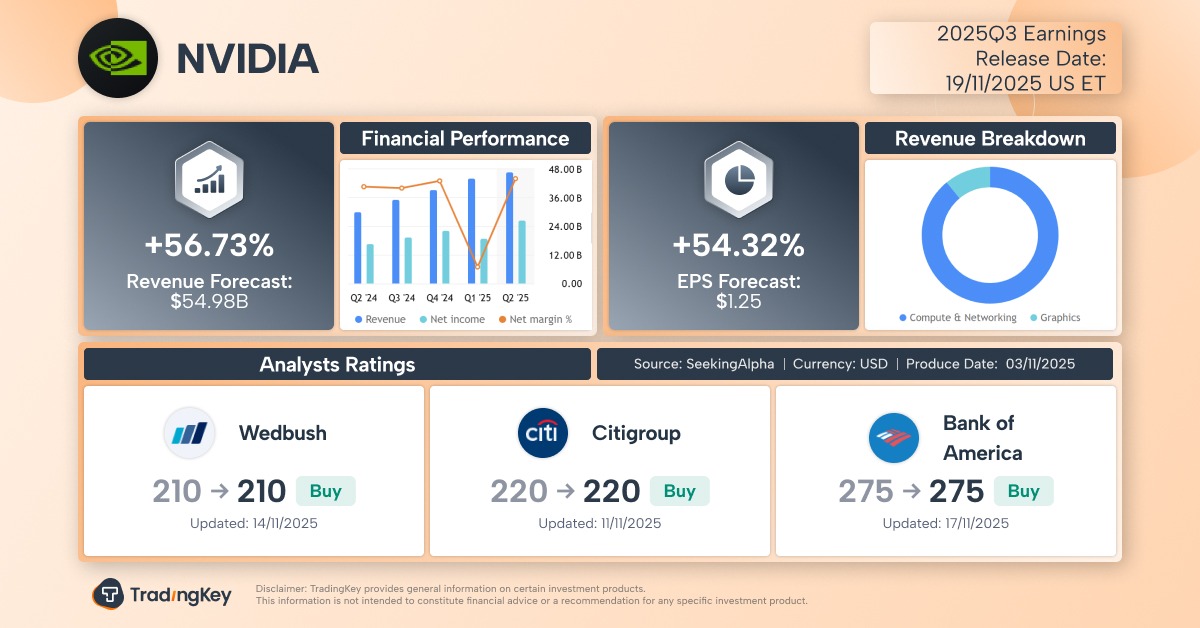
Following the earnings call, financial analysts from various investment banks and research firms quickly update their models, revise their ratings, and adjust their price targets for NVDA stock. These revisions are closely watched by investors. Upgrades and increased price targets can signal renewed confidence and attract institutional buying, while downgrades or reduced targets can trigger selling pressure. The consensus of analyst ratings often serves as a barometer of market sentiment and future expectations. Investors should, however, consider these revisions within their broader investment thesis rather than blindly following them.
Broader Sector and Market Ripple Effects
Given NVIDIA’s outsized role in the semiconductor and AI industries, its earnings performance can create significant ripple effects across related sectors and the broader market. A strong report often bodes well for other chip manufacturers, AI infrastructure providers, and even cloud computing giants, suggesting robust demand for underlying technologies. Conversely, a weak report could signal a slowdown in these critical areas, leading to downward pressure on peer stocks and potentially impacting overall market sentiment, particularly for growth-oriented technology funds and indices. The sheer scale of NVIDIA’s market capitalization means its movements can notably influence the performance of major ETFs and indices like the S&P 500 and Nasdaq 100.
Forecasting NVIDIA’s Future: Guidance and Industry Trends
While historical performance is important, investors in high-growth companies like NVIDIA are often more focused on what the future holds. Management’s guidance and prevailing industry trends provide crucial clues.
Management’s Forward-Looking Statements and Projections
The most impactful part of an earnings report, arguably, is management’s guidance for the upcoming quarter and, sometimes, the full fiscal year. This includes projections for revenue, gross margins, and operating expenses. Investors scrutinize these forecasts, comparing them to analyst consensus estimates. Guidance that exceeds expectations can send the stock soaring, even if the past quarter’s results were merely in line. Conversely, a conservative outlook, even after a strong quarter, can lead to a sell-off as investors adjust their growth expectations. Management commentary on long-term trends, strategic initiatives, and market opportunities during the earnings call also plays a significant role in shaping future perceptions.
The Dominant Role of AI and Data Center Growth
NVIDIA’s future is inextricably linked to the growth of artificial intelligence and the expansion of data centers globally. The company’s CUDA platform and H100/GH200 GPUs have established it as the undisputed leader in AI acceleration. Investors are constantly assessing the sustainability of this demand, the pace of AI adoption across industries, and NVIDIA’s ability to maintain its technological lead against emerging competitors. Updates on cloud service provider spending, enterprise AI deployments, and new AI model development are key indicators. Any signs of deceleration in data center growth or increased competitive threats could significantly temper future expectations.
Geopolitical and Macroeconomic Headwinds/Tailwinds
NVIDIA operates in a complex global environment. Geopolitical tensions, particularly concerning U.S.-China relations and export controls on advanced semiconductors, can present significant headwinds. Macroeconomic factors like interest rates, inflation, and global economic growth also influence enterprise spending on IT infrastructure and consumer demand for gaming GPUs. Investors need to consider how these external factors might impact NVIDIA’s supply chain, market access, and customer spending patterns. Currency fluctuations can also affect reported international revenues and profitability.
Strategic Considerations for Investors Ahead of NVDA Earnings
Investing around earnings announcements requires a well-thought-out strategy, given the inherent volatility and speculative nature of the event.
Understanding Volatility and Risk Management
NVIDIA’s stock is highly volatile, especially around earnings. The potential for significant price swings, both up and down, means investors must exercise prudent risk management. This could involve adjusting position sizes, setting stop-loss orders, or using options strategies to hedge against adverse movements. For long-term investors, short-term earnings volatility might be less concerning than for traders looking to capitalize on immediate price reactions. Understanding one’s own risk tolerance is paramount.
The Buy-the-Rumor, Sell-the-News Phenomenon
A common market dynamic, especially with highly anticipated stocks, is the “buy-the-rumor, sell-the-news” phenomenon. This refers to a scenario where a stock’s price rises significantly in the weeks leading up to an earnings announcement, driven by optimistic speculation. However, once the actual news is released—even if positive—the stock may experience a sell-off as investors who bought on anticipation take profits. Conversely, a stock might fall on negative news, but if the “bad news” was already priced in, it might rebound quickly. Recognizing this pattern can help investors avoid emotional decisions and understand short-term market behavior.
Long-Term vs. Short-Term Investment Perspectives
For many, NVIDIA is a long-term investment betting on the sustained growth of AI and high-performance computing. From this perspective, individual quarterly earnings reports, while important, are part of a larger narrative. Short-term price fluctuations around earnings might be viewed as noise, opportunities to average down, or simply part of the journey. In contrast, short-term traders might employ sophisticated strategies to profit from the immediate volatility, often exiting positions within hours or days of the announcement. Understanding one’s own investment horizon and goals is crucial for interpreting and reacting to NVIDIA’s earnings announcements effectively.
In conclusion, knowing when NVIDIA’s earnings come out is merely the starting point. A truly informed investor understands the immense significance of these announcements, delves into the critical metrics, anticipates market reactions, and considers both the immediate and long-term implications for their investment strategy. NVIDIA remains a pivotal player in shaping the future of technology, making its financial disclosures essential reading for the global investment community.
aViewFromTheCave is a participant in the Amazon Services LLC Associates Program, an affiliate advertising program designed to provide a means for sites to earn advertising fees by advertising and linking to Amazon.com. Amazon, the Amazon logo, AmazonSupply, and the AmazonSupply logo are trademarks of Amazon.com, Inc. or its affiliates. As an Amazon Associate we earn affiliate commissions from qualifying purchases.