
For seasoned investors and curious newcomers alike, understanding the intricate dance of financial markets is paramount. Among the myriad instruments available, Dow futures stand out as a critical barometer, offering a real-time pulse of market sentiment even before the primary exchanges officially kick into gear. But for those looking to tap into this powerful mechanism, a fundamental question often arises: “When do Dow futures open?” The answer is more nuanced than a simple clock-in time; it involves a continuous, nearly 24-hour cycle that reflects the interconnectedness of global finance. This article will delve into the precise trading hours, the implications of these schedules, and the strategic advantages available to those who master the timing of Dow futures.

Dow futures, specifically the E-mini Dow futures contract, are derivatives that allow traders to speculate on the future price of the Dow Jones Industrial Average (DJIA) or hedge existing portfolios against its movements. Unlike the underlying index, which only updates during regular stock market hours, futures contracts trade extensively beyond these times, providing invaluable insights into how global events and overnight news are likely to influence U.S. equities. This extended trading window transforms Dow futures into an essential tool for price discovery and risk management, dictating the narrative of the market long before the opening bell rings on Wall Street. Mastering their schedule is not just about knowing when to trade; it’s about understanding the rhythm of the global economy.
Understanding Dow Futures: A Gateway to Market Insights
To fully appreciate the significance of Dow futures and their trading hours, it’s essential to grasp what they are and why they matter so profoundly to the financial world. These contracts serve as a window into investor sentiment and a mechanism for managing exposure to the broader U.S. stock market.
What Are Dow Futures?
Dow futures are standardized, exchange-traded contracts that obligate the buyer to purchase, or the seller to sell, a specified amount of the underlying asset (in this case, the Dow Jones Industrial Average) at a predetermined price on a future date. The most commonly traded Dow futures contract is the E-mini Dow futures, known for its smaller contract size, which makes it accessible to a wider range of traders, from institutional investors to individual retail participants. Each point movement in the E-mini Dow futures translates to a specific dollar value (e.g., $5 per point), making it a leveraged instrument where relatively small price changes can result in significant gains or losses. They trade on regulated exchanges, primarily the Chicago Mercantile Exchange (CME) Group’s electronic platform, Globex.
The Significance of Dow Futures Trading
The importance of Dow futures extends far beyond mere speculation. They are crucial for several reasons. Firstly, they act as a leading indicator for the broader stock market. Because they trade almost continuously, they provide a real-time gauge of investor sentiment and potential market direction before the New York Stock Exchange (NYSE) or NASDAQ even open. Overnight news, geopolitical developments, and economic data releases from around the world are immediately priced into Dow futures, offering a preview of how the DJIA might perform once regular trading begins. Secondly, they are indispensable for hedging. Portfolio managers and institutional investors use Dow futures to protect their equity portfolios against potential downturns, effectively locking in a selling price for a portion of their holdings. Lastly, they offer significant liquidity and opportunities for speculation, allowing traders to profit from both upward and downward market movements.
Key Participants in the Dow Futures Market
The Dow futures market is a dynamic ecosystem populated by a diverse array of participants, each with distinct motivations. At the institutional level, investment banks, hedge funds, and pension funds utilize futures for portfolio management, hedging strategies, and large-scale directional bets. These large players often influence market trends due to their substantial capital. Retail traders, empowered by online brokerage platforms and advanced trading tools, also form a significant segment, engaging in futures for speculation, day trading, or smaller-scale hedging. Furthermore, professional market makers and algorithmic trading firms play a vital role by providing liquidity, continuously quoting buy and sell prices, thereby narrowing spreads and facilitating efficient order execution. The interplay of these participants creates a highly liquid and competitive environment, contributing to the efficient pricing of futures contracts.
The Trading Schedule: Pinpointing Opening and Closing Times
The defining characteristic of Dow futures trading, distinguishing it from traditional stock market hours, is its nearly 24-hour operational cycle. Understanding this schedule is fundamental for any serious trader or investor.
Regular Trading Hours for E-mini Dow Futures
The E-mini Dow futures contracts, traded on the CME Group’s Globex electronic trading platform, boast an exceptionally long trading window. The core schedule is as follows:
- Sunday Evening to Friday Afternoon: Dow futures generally open on Sunday evening at 6:00 PM Eastern Time (ET) and trade continuously until Friday afternoon at 5:00 PM ET.
- Daily Maintenance Break: Within this continuous window, there is a daily short maintenance period. Trading typically pauses for a brief interval each day from 5:00 PM ET to 6:00 PM ET. This one-hour break is used by the exchange for system maintenance and to process end-of-day data.
This means that for virtually 23 hours a day, five days a week, Dow futures are active, reflecting new information and shifting market dynamics. This near-continuous access offers unparalleled flexibility and responsiveness to global events.
Extended Trading Sessions and Their Importance
The concept of “extended trading” takes on a different meaning in the context of Dow futures compared to individual stocks. For futures, the entire period outside of the traditional 9:30 AM to 4:00 PM ET stock market hours is essentially an extended session. These periods are particularly crucial:
- Overnight (Sunday PM through Monday AM): The opening on Sunday evening is a critical moment. It’s the first opportunity for markets to react to weekend news, geopolitical developments, or economic data releases from Asian markets that occurred while U.S. markets were closed. The price action during this period can set the tone for the entire trading week.
- Pre-Market (Monday-Friday, 6:00 PM ET to 9:30 AM ET): Throughout the week, the hours leading up to the U.S. stock market open (from the daily futures open at 6:00 PM ET the previous day until 9:30 AM ET) are vital. Economic reports from Europe, company earnings announcements made after the prior day’s close, and overnight news flow are all factored into futures prices, offering a strong indication of the upcoming U.S. stock market open. Significant rallies or sell-offs in futures during these hours often dictate the opening direction of the Dow Jones Industrial Average itself.
Weekend and Holiday Trading Considerations
While Dow futures trade nearly 24/5, there are specific periods of closure that traders must be aware of:
- Weekends: The market closes on Friday at 5:00 PM ET and remains closed until Sunday at 6:00 PM ET. This weekend gap can be a source of significant price movements at Sunday’s open if major news breaks during this inactive period. Traders holding positions over the weekend face “weekend risk” due to potential gap openings.
- Holidays: U.S. public holidays that affect the underlying stock market (like Christmas Day, New Year’s Day, Thanksgiving, etc.) also impact futures trading. While futures might have abbreviated trading hours or close entirely on such days, it’s crucial to consult the CME Group’s official holiday schedule well in advance, as these can vary. Often, futures markets will close earlier on holiday eves or remain closed on the holiday itself, impacting liquidity and trading opportunities.
Impact of Futures Opening on Global Markets
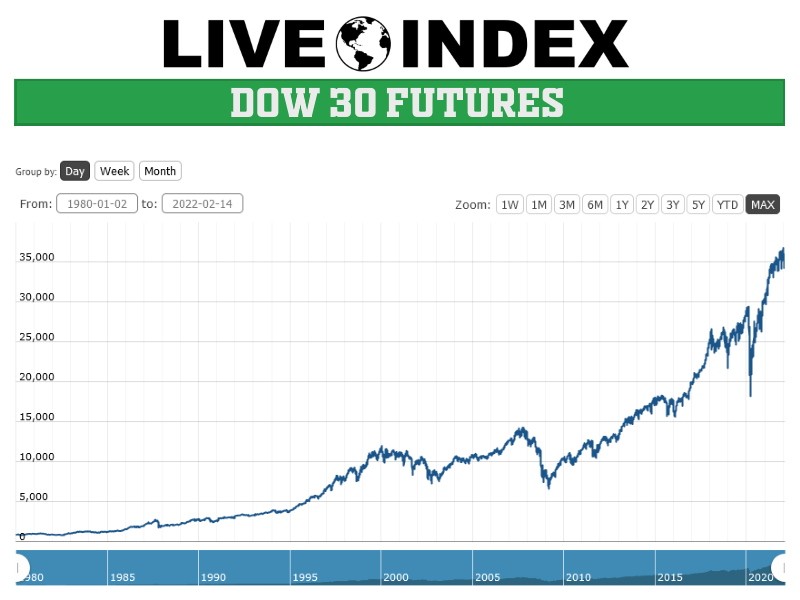
The opening of Dow futures, particularly the Sunday evening session, is not just a localized event for U.S. markets; it sends ripples across the global financial landscape, providing immediate direction and sentiment.
Pre-Market Indicators and Sentiment Gauges
The moment Dow futures open on Sunday evening, they immediately become the primary pre-market indicator for the upcoming trading week in the U.S. financial markets. Investors and analysts worldwide closely monitor these opening moves to gauge global risk appetite and reactions to any news that transpired over the weekend. A strong positive open in Dow futures, for example, might suggest that market participants are shrugging off concerns or reacting positively to new information. Conversely, a sharp sell-off can signal underlying anxieties or a negative reception to weekend events. This early price discovery mechanism allows for a more informed opening for the underlying equity indexes, preventing wild swings at the NYSE and NASDAQ open. It acts as an early warning system, helping traders and portfolio managers adjust their strategies proactively.
Asian and European Market Influence
The nearly continuous trading of Dow futures seamlessly connects U.S. market sentiment with that of Asia and Europe. When Asian markets (like those in Tokyo, Shanghai, or Hong Kong) are active during the U.S. overnight session, their performance and economic data releases are almost immediately reflected in Dow futures prices. Similarly, as European markets (London, Frankfurt, Paris) open their trading days, their direction and responses to regional news or economic reports will also influence Dow futures. This interconnectedness means that Dow futures act as a central hub, aggregating and reflecting global investor sentiment. A significant move in the Nikkei or the DAX, for instance, often translates directly into corresponding movements in Dow futures, underscoring the globalized nature of modern finance and providing a constant flow of actionable information.
The Role of Futures in Overnight Price Discovery
Price discovery is the process by which the market determines the fair value of an asset. For the Dow Jones Industrial Average, this process is significantly enhanced by the 23-hour trading of its futures contracts. During the hours when the U.S. stock market is closed, any new information—be it a surprise earnings announcement from a major company, a change in central bank policy from a foreign nation, or breaking geopolitical news—is immediately absorbed and reflected in the price of Dow futures. This “overnight price discovery” mechanism is invaluable. Without it, the market would open with a massive information backlog, leading to potentially chaotic and volatile price gaps. Instead, Dow futures act as a continuous auction, steadily incorporating new data and allowing prices to adjust gradually, providing a more orderly transition from one trading day to the next for the underlying cash index.
Strategies and Considerations for Futures Traders
Navigating the Dow futures market effectively requires more than just knowing the opening times; it demands strategic thinking, robust risk management, and an understanding of how to leverage these instruments.
Capitalizing on Volatility During Opening Hours
The opening hours of Dow futures, particularly the Sunday evening session and the pre-market hours leading up to the U.S. equity market open, are often characterized by heightened volatility and increased trading volume. This surge in activity presents both opportunities and risks. Experienced traders may seek to capitalize on these movements, identifying early trends or reversals that can be indicative of the broader market’s direction. For instance, a strong gap up or down at the Sunday open might signal a significant shift in sentiment, offering an opportunity for trend-following strategies. However, increased volatility also means wider price swings and potential for rapid losses. Traders aiming to leverage these periods must employ sophisticated technical analysis, quick decision-making, and often, higher leverage, which amplifies both potential gains and losses.
Risk Management and Position Sizing
Effective risk management is paramount when trading leveraged instruments like Dow futures. Given their volatility and the significant capital at risk, proper position sizing is critical. Traders must determine the appropriate number of contracts to trade based on their overall capital, risk tolerance, and the expected volatility of the market. Over-leveraging can lead to margin calls and rapid account depletion. Implementing stop-loss orders is another fundamental risk management technique, automatically exiting a trade if it moves against the trader beyond a predetermined point. Furthermore, traders should never risk more than a small percentage of their total trading capital on any single trade. Understanding margin requirements – the amount of capital needed to open and maintain a futures position – is also crucial, as these can change based on market conditions and broker policies.
Utilizing Futures for Hedging and Speculation
Dow futures serve a dual purpose: hedging and speculation. For long-term investors or portfolio managers, futures offer an excellent tool for hedging. If an investor holds a large portfolio of U.S. blue-chip stocks and anticipates a short-term market downturn, they can sell Dow futures contracts. If the market indeed falls, the gains from the futures short position can offset some of the losses in their stock portfolio. This strategy helps to mitigate portfolio risk without having to liquidate underlying stock holdings. On the speculative side, traders use Dow futures to profit from anticipated market movements. This could involve day trading based on intraday price fluctuations, swing trading to capture multi-day trends, or longer-term directional bets based on macroeconomic analysis. The high liquidity and leverage of Dow futures make them attractive for those looking to profit from market volatility, provided they have a well-defined trading plan and robust risk controls.
Navigating the Futures Landscape: Tools and Platforms
Engaging with the Dow futures market requires access to specialized tools and platforms that facilitate trading, analysis, and information flow.
Brokerage Platforms for Futures Trading
To trade Dow futures, individuals need an account with a brokerage firm that offers futures trading. Not all stock brokers offer futures, so it’s essential to choose a specialized platform. Leading futures brokers provide robust trading platforms with features tailored for derivatives, including advanced order types, real-time quotes, and fast execution speeds. When selecting a broker, consider factors such as commission fees, margin requirements, platform stability, customer support, and the availability of educational resources. Many brokers offer demo accounts, allowing new traders to practice strategies and familiarize themselves with the platform in a risk-free environment before committing real capital.
Real-Time Data and Charting Tools
Access to real-time market data is indispensable for futures traders. Price action can be rapid, and delayed data can lead to missed opportunities or poor execution. Reputable brokerage platforms and dedicated data providers offer streaming real-time quotes, allowing traders to see price movements as they happen. Coupled with this, advanced charting tools are vital for technical analysis. These tools allow traders to visualize price patterns, identify trends, plot indicators (like moving averages, RSI, MACD), and conduct in-depth analysis across various timeframes. Features such as drawing tools, customizable indicators, and the ability to save chart templates enhance a trader’s analytical capabilities, helping them make informed decisions based on historical and current price data.

Regulatory Frameworks and Investor Protection
The futures market operates under strict regulatory frameworks designed to ensure fair and orderly trading and to protect market participants. In the United States, the Commodity Futures Trading Commission (CFTC) oversees the futures and options markets, while the National Futures Association (NFA) is a self-regulatory organization for the U.S. futures industry. These bodies establish rules regarding market conduct, financial stability of brokers, and transparency. Traders should be aware that futures trading carries significant risk, and while regulatory bodies aim to protect against fraud and manipulation, they do not guarantee profits or protect against market losses. Understanding the regulatory environment, ensuring your broker is properly regulated, and being aware of the inherent risks are crucial steps for responsible engagement in the futures market.
In conclusion, understanding “when do Dow futures open” is more than just a matter of checking a clock; it’s about grasping the rhythm of global finance. With their nearly 24-hour trading cycle, Dow futures serve as an indispensable tool for price discovery, risk management, and speculation. By offering continuous insight into market sentiment, connecting global economies, and providing advanced mechanisms for hedging and strategic trading, they empower investors and traders to navigate the complexities of modern financial markets with greater precision and foresight. Mastering their schedule and leveraging the right tools and strategies are key to unlocking their full potential.
aViewFromTheCave is a participant in the Amazon Services LLC Associates Program, an affiliate advertising program designed to provide a means for sites to earn advertising fees by advertising and linking to Amazon.com. Amazon, the Amazon logo, AmazonSupply, and the AmazonSupply logo are trademarks of Amazon.com, Inc. or its affiliates. As an Amazon Associate we earn affiliate commissions from qualifying purchases.