
In the world of high-stakes investing, time is more than just a measurement; it is a fundamental variable that dictates liquidity, volatility, and opportunity. For the modern investor, the question “when are the markets opening?” is rarely a simple one. We no longer live in an era where trading is confined to a local physical floor between 9:00 AM and 5:00 PM. Instead, the global financial landscape is a 24-hour relay race, passing the baton of capital from Tokyo to London to New York.
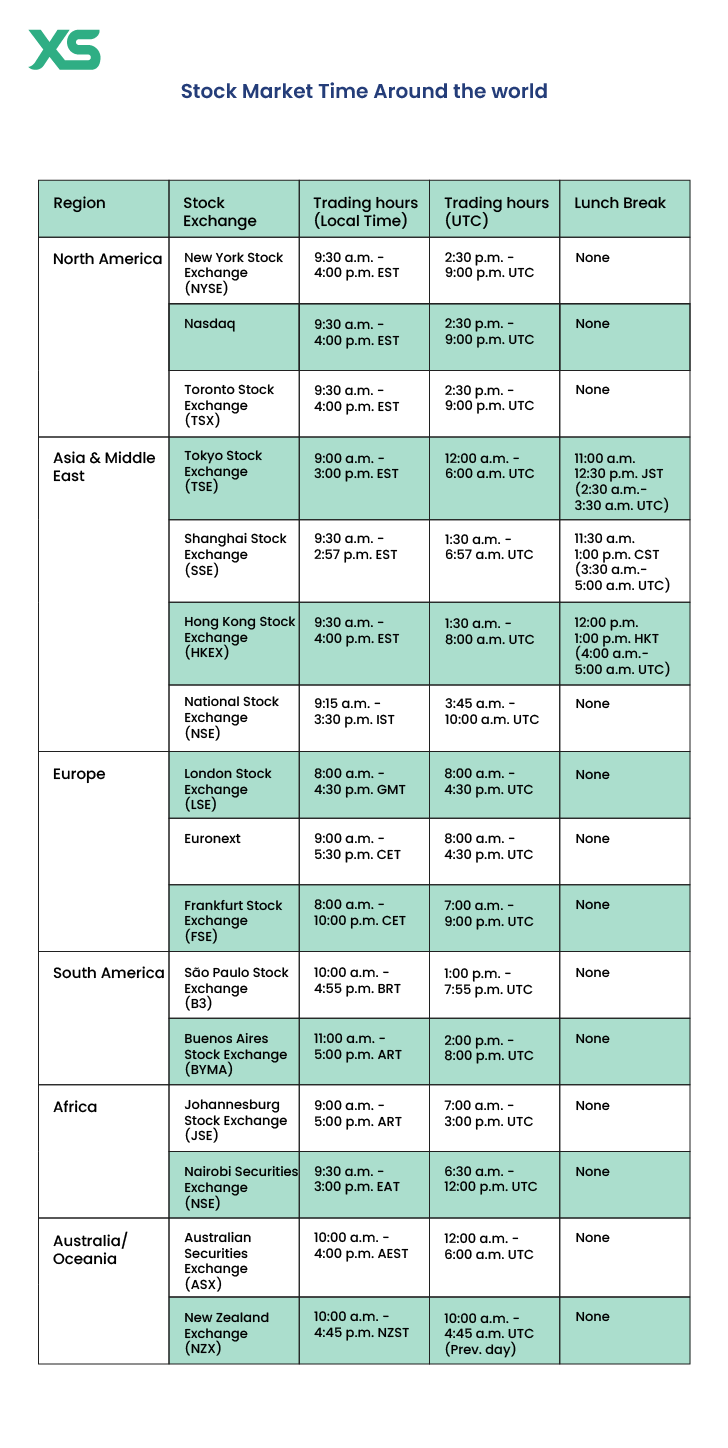
Understanding the opening and closing bells of the world’s major exchanges is essential for anyone looking to optimize their entry and exit points. Whether you are a day trader looking for the “opening cross” volatility or a long-term investor monitoring your portfolio’s reaction to overnight global news, mastering the market clock is a prerequisite for financial success.
The Global Relay: Key Market Opening Hours Across Time Zones
The global equity market is structured around three primary sessions: the Asian session, the European session, and the North American session. Because these markets operate in different time zones, there is almost always a major exchange open somewhere in the world, influencing the prices of derivatives, currencies, and equities.
The North American Powerhouse (NYSE and NASDAQ)
The New York Stock Exchange (NYSE) and the NASDAQ are the world’s largest markets by market capitalization. They officially open at 9:30 AM Eastern Time (ET) and close at 4:00 PM ET. For traders in Europe, this represents an afternoon session, while for those in Asia, it is a late-night endeavor. The 9:30 AM open is often the most volatile period of the day as the market “digests” news that broke overnight or during the pre-market hours.
The European Hub: London and the LSE
The London Stock Exchange (LSE) is the crown jewel of European finance. It opens at 8:00 AM Greenwich Mean Time (GMT) and closes at 4:30 PM GMT. Because London sits geographically between the Asian and American markets, its opening often sets the tone for the Western trading day. Many institutional investors look to the LSE open for early signals on how global sentiment is shifting before New York begins its session.
The Asian Session: Tokyo, Hong Kong, and Shanghai
The trading day begins in the East. The Tokyo Stock Exchange (TSE) opens at 9:00 AM Japan Standard Time (JST). One unique aspect of many Asian markets, including the Hong Kong Stock Exchange (HKEX) and the Shanghai Stock Exchange (SSE), is the mid-day lunch break. For example, Tokyo closes for lunch from 11:30 AM to 12:30 PM. This creates a distinct “two-act” trading day that is largely absent in Western markets.
Beyond the Bell: The Dynamics of Pre-Market and After-Hours Trading
While the official “opening” refers to the start of regular session trading, the digital nature of modern finance allows for activity long before the physical or electronic bell rings. Electronic Communication Networks (ECNs) enable investors to trade outside of standard hours, though this comes with a specific set of rules and risks.
The Mechanics of Pre-Market Trading
In the United States, pre-market trading can begin as early as 4:00 AM ET, though the bulk of the volume occurs after 8:00 AM ET. This period is primarily utilized by institutional investors and seasoned traders to react to earnings reports or geopolitical events that occurred overnight. For the retail investor, the pre-market is a double-edged sword: while it allows for early positioning, the “spread” (the difference between the buy and sell price) is often much wider due to lower liquidity.
After-Hours Trading and Earnings Season
The after-hours session typically runs from 4:00 PM to 8:00 PM ET. This is perhaps the most critical time for corporate finance, as most publicly traded companies release their quarterly earnings results immediately after the 4:00 PM close. This avoids causing chaotic price swings during the regular session but often leads to massive “gaps” in price when the market opens the following morning.
Risks of Extended Hours: Volatility and Liquidity
The primary risk of trading when the main markets are not “open” is the lack of liquidity. With fewer participants, a single large sell order can move the price of a stock significantly more than it would during the regular session. Furthermore, many brokerage firms place restrictions on the types of orders (such as limit orders only) that can be executed during these times to protect investors from extreme price slippage.
The “Golden Hours”: Why Market Overlaps Matter
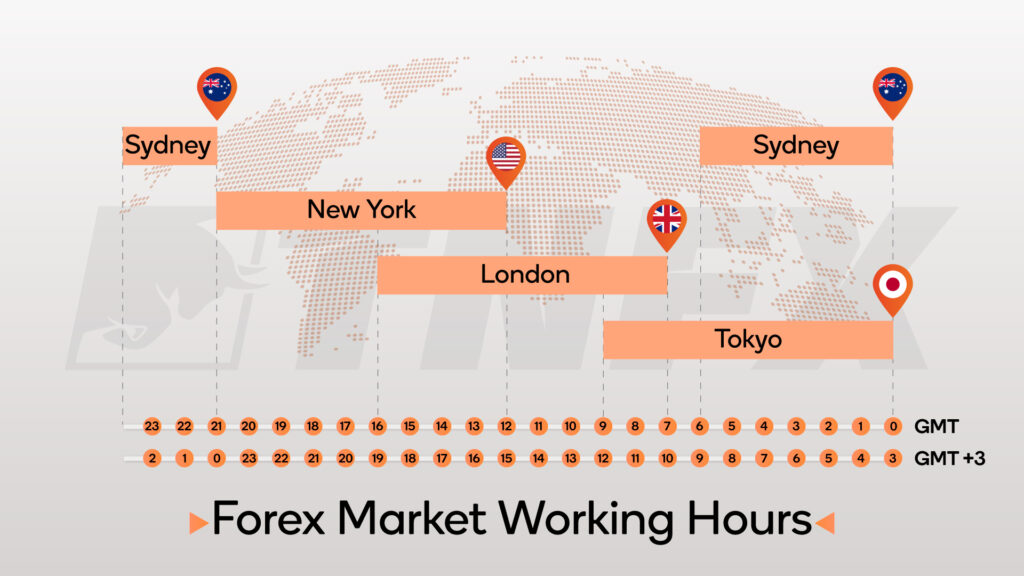
In the world of professional trading, the most important time is not necessarily when one market opens, but when two major markets are open simultaneously. These overlaps create the highest periods of liquidity and the tightest spreads, making them the most cost-effective times to trade.
The London-New York Overlap
The most significant overlap occurs between 8:00 AM and 12:00 PM ET. During these four hours, both the European and North American markets are active. This is the period of maximum global liquidity. For currency traders (Forex) and large-scale equity fund managers, this is the “Golden Hour” where the largest volumes of capital are moved. If you are looking to execute a large position without significantly impacting the market price, this is the window to do it.
The Asian-European Transition
There is a smaller, often overlooked overlap between the end of the Tokyo session and the start of the London session (around 2:00 AM to 3:00 AM ET). While not as high-volume as the London-New York overlap, this period is crucial for investors dealing in international conglomerates that have dual listings or significant supply chain exposure in both regions.
Managing Volatility During the Open and Close
Statistically, the first 30 minutes and the last 30 minutes of the market day see the highest volume of trades. The “Opening Cross” and the “Closing Cross” are automated processes used by exchanges to match buy and sell orders in a way that creates a single, fair price. Understanding these mechanisms is vital for investors who want to avoid the “noise” of the initial 9:30 AM scramble.
Holidays, Early Closes, and the 24/7 Crypto Exception
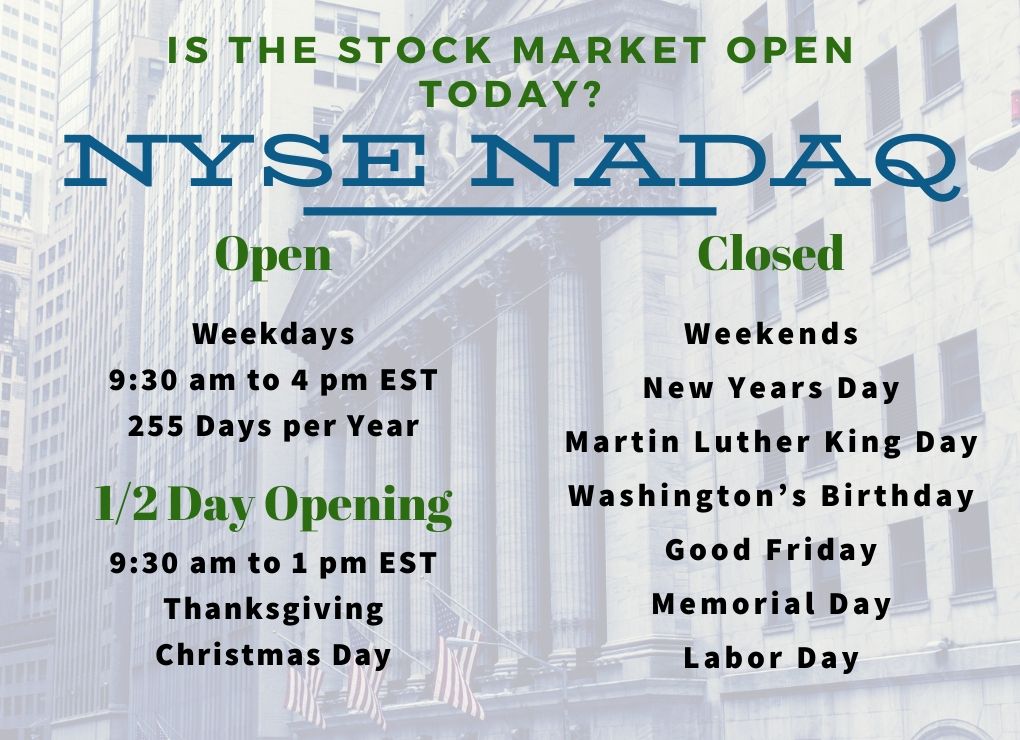
Just as important as knowing when the markets open is knowing when they stay closed. Market holidays can vary significantly by country, and failing to account for them can lead to “trapped” capital or missed opportunities.
Major Market Holidays and Cultural Differences
While the U.S. markets close for holidays like Thanksgiving and Independence Day, the rest of the world remains active. Conversely, Western investors must be aware of “Golden Week” in China or “Bank Holidays” in the UK. During these times, global liquidity may drop, and volatility in certain sectors (like commodities or specific currency pairs) may spike as one major player is removed from the field.
Early Closures and the “Half-Day” Phenomenon
In the U.S., the markets often have scheduled early closures, typically at 1:00 PM ET, on the days preceding or following major holidays (such as the day after Thanksgiving or Christmas Eve). Volume is usually thin during these sessions, and many professional desks are unmanned, which can lead to erratic price movements on low volume.
The Contrast: Cryptocurrency Markets
No discussion of market hours is complete without mentioning the digital asset space. Unlike traditional stock and bond markets, the cryptocurrency market never closes. It operates 24 hours a day, 7 days a week, 365 days a year. This creates a unique challenge for traditional finance: news that breaks on a Sunday afternoon will be immediately reflected in Bitcoin prices but won’t hit the S&P 500 until Monday morning. This “asynchronous” information flow is becoming a major study area for modern financial analysts.
Tactical Timing: Optimizing Your Investment Strategy
Knowing when the markets open is only half the battle; the other half is knowing how to use that information to improve your financial outcomes.
The Best Time to Trade for Retail Investors
For most long-term, “buy and hold” investors, the best strategy is often to avoid the first 30-60 minutes of the market open. By waiting until 10:30 AM or 11:00 AM ET, the initial volatility has usually settled, and the “true” direction of the day’s trend becomes clearer. This reduces the risk of getting “stopped out” by a temporary price spike.
Setting Alerts and Using Automation
Since it is impossible for a single person to monitor every global opening bell, savvy investors use financial tools to set alerts. Setting a notification for the London open or the release of Japanese inflation data allows you to stay informed without sacrificing sleep. Furthermore, using “Good ‘Til Canceled” (GTC) orders allows your trades to execute at your desired price point regardless of whether you are awake when the market opens.
The Psychological Aspect of the Opening Bell
There is a profound psychological component to the market open. It represents the “reset” of sentiment. Professional traders often look at the “gap”—whether a stock opens higher or lower than it closed the previous day—to gauge the conviction of the market. Understanding that the opening price is a reflection of collective human emotion and overnight data can help you remain objective in your decision-making.
In conclusion, the question of when markets open is the gateway to understanding the pulse of global finance. By synchronizing your strategy with the global clock—acknowledging the power of overlaps, the risks of extended hours, and the persistence of the 24/7 digital economy—you position yourself not just as a participant, but as a strategic architect of your own financial future. In the world of money, timing isn’t just everything; it’s the only thing that separates a calculated move from a gamble.
aViewFromTheCave is a participant in the Amazon Services LLC Associates Program, an affiliate advertising program designed to provide a means for sites to earn advertising fees by advertising and linking to Amazon.com. Amazon, the Amazon logo, AmazonSupply, and the AmazonSupply logo are trademarks of Amazon.com, Inc. or its affiliates. As an Amazon Associate we earn affiliate commissions from qualifying purchases.