
In our modern world, conversations often revolve around technological breakthroughs, sophisticated brand strategies, and the ever-present pursuit of financial prosperity. We dissect the latest AI tools, analyze viral marketing campaigns, and navigate the complexities of personal investing. Yet, beneath the surface of our digital lives and economic pursuits lies a fundamental, often overlooked, resource that underpins much of our existence: water. And more specifically, the vast, hidden reservoirs that hold it – aquifers.
While the term “aquifer” might sound geological and perhaps a bit removed from our daily concerns with tech, branding, and money, understanding what an aquifer is and how it functions is crucial. Our ability to innovate, build strong brands, and achieve financial stability is intrinsically linked to the availability of clean, reliable water. From the agricultural sector that feeds us to the industries that drive our economies, water is a silent partner in every aspect of human endeavor. This article aims to demystify the concept of aquifers, exploring their definition, formation, significance, and the critical role they play in sustaining life and our modern world.
Unearthing the Definition: What Exactly is an Aquifer?
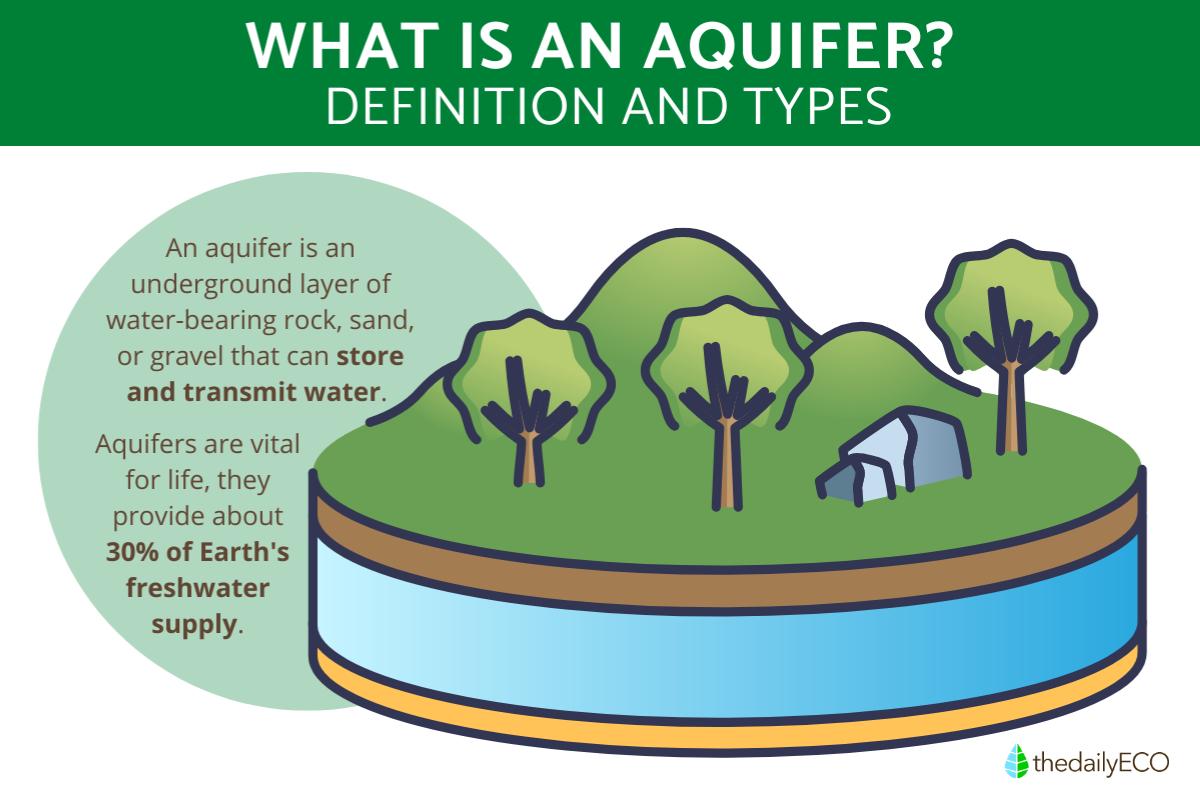
At its core, an aquifer is an underground layer of water-bearing permeable rock, sediment, or soil. Think of it as a vast, natural sponge, capable of absorbing and storing significant amounts of water. The key to an aquifer’s function lies in two crucial properties: permeability and porosity.
Porosity refers to the amount of empty space within the rock or soil. Imagine a loaf of bread – the air pockets within it are its pores. The more pores a material has, the more it can hold. In geological terms, porous materials like sand, gravel, and sandstone are excellent candidates for forming aquifers because they have a high percentage of open spaces.
Permeability, on the other hand, describes how easily water can flow through these pore spaces. A highly permeable material allows water to move freely, while a low-permeability material, like clay, might be porous but will restrict water flow. For a geological formation to be considered an aquifer, it must possess both sufficient porosity to store water and sufficient permeability to allow water to move into, through, and out of it.
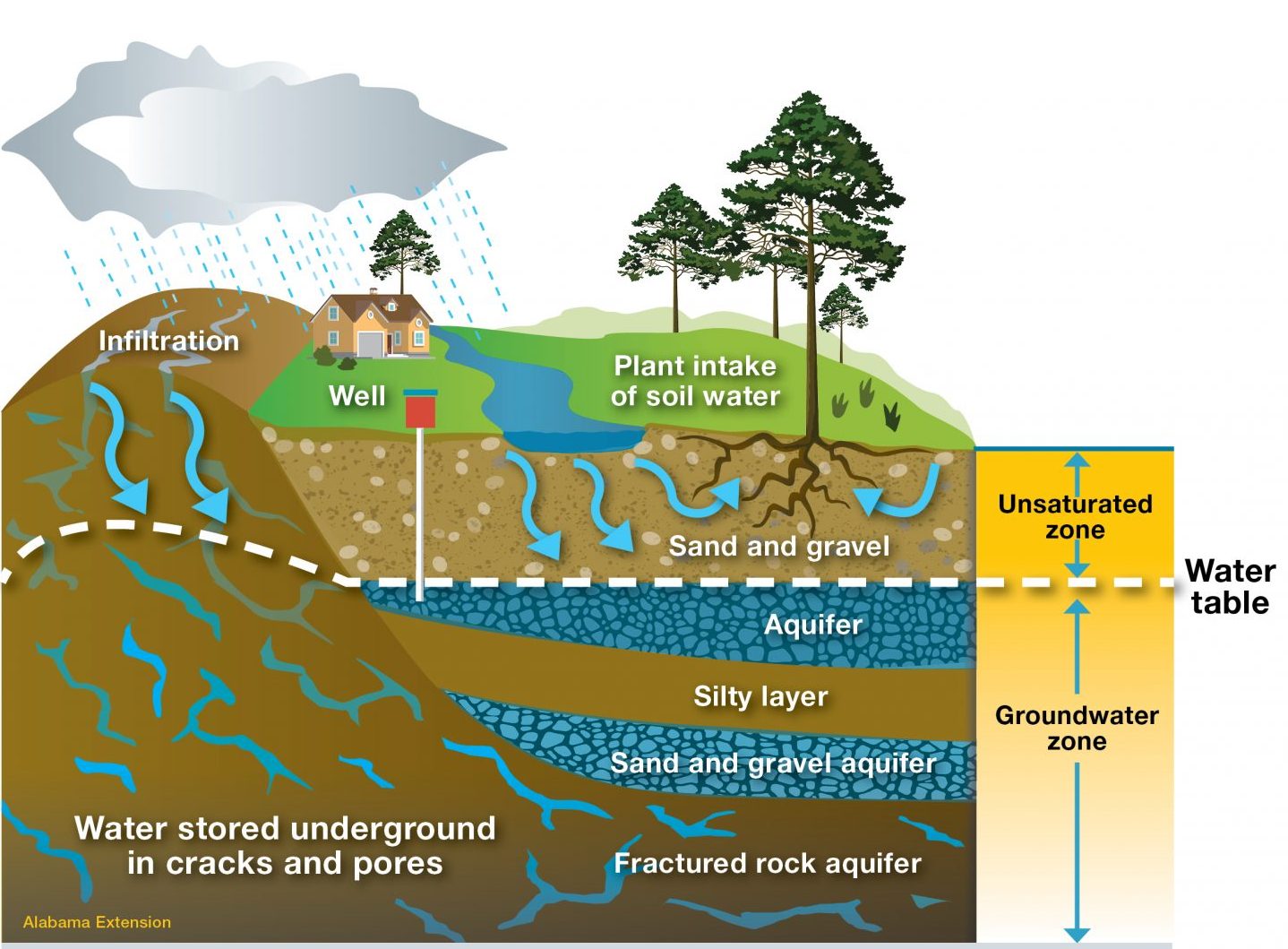
These underground water reservoirs are not static pools. They are dynamic systems, constantly being replenished by precipitation that seeps down through the soil and rock layers above. This process is known as recharge. The water within an aquifer can move slowly over time, sometimes over decades or centuries, following the slope of the underground layers and driven by gravity and pressure gradients.
Aquifers can vary greatly in size, depth, and the type of water they hold. Some might be shallow and extensive, easily accessible for wells, while others can be deep, vast formations stretching across hundreds of square miles. The water they contain can range from fresh to brackish or even saline, depending on the geological environment and the age of the water.
The Genesis of Aquifers: How Nature Constructs These Hidden Reserves
The formation of aquifers is a fascinating geological process, a testament to the slow, powerful forces shaping our planet over millennia. They are typically born from specific combinations of rock types, geological structures, and climatic conditions.
Rock Types and Geological Formations
The foundation of any aquifer is its geological composition. Certain rock types are far more conducive to storing and transmitting water than others.
-
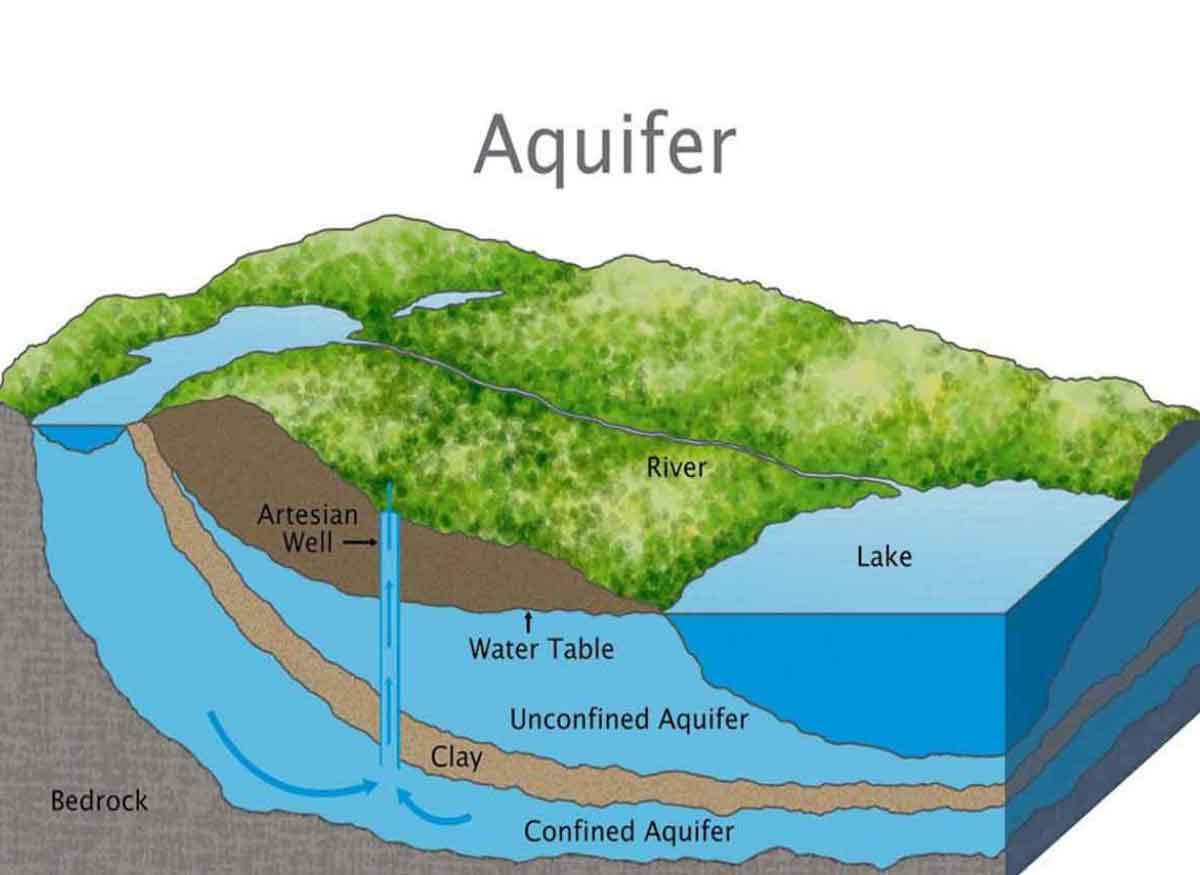
Unconsolidated Sediments: Layers of sand, gravel, and alluvium (deposited by rivers) are prime candidates. These materials are naturally porous and permeable, forming what are often referred to as unconfined aquifers. In these aquifers, the water table (the upper level of the saturated zone) is at atmospheric pressure and is in direct contact with the overlying unsaturated zone. They are directly recharged by rainfall and surface water.
-
Sedimentary Rocks: Porous and permeable sedimentary rocks like sandstone and limestone are also excellent aquifer materials. Sandstone, with its granular structure, often has good pore space and connectivity. Limestone can be permeable due to fractures and dissolution cavities that form over time as slightly acidic rainwater slowly erodes the rock. These can form both unconfined and confined aquifers.
-
Fractured Bedrock: Even seemingly solid bedrock can become an aquifer if it is fractured. Water can seep into these cracks and fissures, accumulating and flowing through them. While the solid rock itself might have low permeability, the network of fractures can create a significant water-bearing zone.
The Role of Impermeable Layers: Aquitards and Aquicludes
For an aquifer to effectively store water, it often needs to be sandwiched between layers of impermeable or semi-permeable material. These layers, known as aquitards (which retard but don’t completely stop water flow) and aquicludes (which are essentially impermeable barriers), act like the sealant in a container, preventing water from escaping downwards or laterally too quickly.
-
Confined Aquifers: When an aquifer is situated between two impermeable layers, it becomes a confined aquifer. The water within a confined aquifer is under pressure, often greater than atmospheric pressure, due to the weight of the overlying rock and sediment. If a well is drilled into a confined aquifer, the water can rise above the top of the aquifer, and in some cases, it can even flow to the surface under its own pressure, creating an artesian well. These aquifers are recharged in areas where the confining layers are absent or are much thinner, allowing water to infiltrate.
-
Perched Aquifers: Sometimes, a small, localized body of groundwater can be found above the main water table. This occurs when a layer of impermeable material, like a lens of clay within a sandy formation, prevents downward percolation of water. This creates a smaller, “perched” aquifer that is often shallower and more susceptible to drying up during droughts.
The geological history of a region plays a vital role in the type and extent of aquifers present. Tectonic activity, erosion, sedimentation patterns, and the presence of ancient riverbeds or glacial deposits all contribute to the intricate underground plumbing systems that are our aquifers.
The Indispensable Significance of Aquifers: Why They Matter to Us
The importance of aquifers extends far beyond their geological definition. They are fundamental to our planet’s hydrological cycle and play a critical, often underappreciated, role in supporting human civilization and ecosystems.
Water Supply for Millions: The Backbone of Our Communities
For a significant portion of the world’s population, aquifers are the primary source of drinking water. Millions of people rely on groundwater drawn from aquifers for their daily needs – for consumption, sanitation, and hygiene. Municipal water systems in many towns and cities depend heavily on wells that tap into these underground reserves.
Beyond domestic use, agriculture is a massive consumer of water, and aquifers are vital for irrigation. In regions where rainfall is inconsistent or insufficient, groundwater provides a reliable supply for crops, enabling food production and supporting rural economies. The efficiency of irrigation techniques and the sustainable management of aquifer extraction are therefore critical for food security.
Industrial and Economic Engines: Fueling Progress
Many industries rely on groundwater for their operations. Manufacturing processes often require large volumes of water for cooling, cleaning, and as a component in their products. Power generation, particularly thermal and nuclear power plants, utilizes vast amounts of water for cooling. Mining operations also frequently interact with groundwater, sometimes requiring its removal to access ore bodies.
The economic implications of aquifer depletion or contamination can be profound. A reliable and clean water supply is a prerequisite for industrial growth and economic development. Conversely, water scarcity can stifle industries, increase operational costs, and lead to economic instability.
Ecosystem Health and Biodiversity: The Silent Sustainer
Aquifers are not just sources of water for human use; they are also integral to the health of natural ecosystems. Many rivers, lakes, and wetlands are sustained by groundwater discharge. During dry periods, springs and seeps fed by aquifers can be the only source of water for plants and animals, supporting biodiversity and maintaining crucial habitats.
The health of riparian zones, the areas along rivers and streams, is directly linked to the underlying groundwater levels. When aquifers are over-extracted, these ecosystems can suffer from reduced flow, habitat loss, and a decline in plant and animal life.
Recharge and Sustainability: A Finite Resource
Understanding aquifers also necessitates an appreciation for their recharge mechanisms. While rainfall is the primary source of recharge for many aquifers, the rate at which this recharge occurs can be slow, especially for deep confined aquifers. This is why aquifers are often considered fossil water sources – water that was recharged thousands or even millions of years ago and is not being replenished at a rate comparable to its extraction.
The concept of sustainable yield is crucial in aquifer management. This refers to the amount of water that can be extracted from an aquifer without causing long-term detrimental effects, such as depletion of the water table, land subsidence, or saltwater intrusion (in coastal areas). Over-extraction, known as groundwater mining, can lead to irreversible damage, making the water resource unsustainable for future generations.
In conclusion, aquifers are far more than just geological formations; they are dynamic, essential components of our planet’s life-support system. Recognizing their definition, understanding their formation, and appreciating their profound significance are crucial steps in ensuring their responsible management and the long-term well-being of our communities, economies, and ecosystems. As we continue to innovate in technology, refine our branding, and pursue financial goals, let us not forget the fundamental resource that makes it all possible – the hidden, life-giving waters within Earth’s aquifers.
aViewFromTheCave is a participant in the Amazon Services LLC Associates Program, an affiliate advertising program designed to provide a means for sites to earn advertising fees by advertising and linking to Amazon.com. Amazon, the Amazon logo, AmazonSupply, and the AmazonSupply logo are trademarks of Amazon.com, Inc. or its affiliates. As an Amazon Associate we earn affiliate commissions from qualifying purchases.