
Investing can often seem daunting, a complex world reserved for financial gurus and high-net-worth individuals. However, the truth is far simpler, especially when you consider broad-market index funds like those tracking the S&P 500. For everyday investors looking to build wealth over the long term, understanding how to invest in an S&P 500 index fund is an essential first step towards achieving financial freedom. This guide will demystify the process, offering clear, actionable steps to help you confidently navigate the world of passive investing.
The S&P 500 represents the performance of 500 of the largest publicly traded companies in the United States, making it a powerful benchmark for the overall health of the U.S. stock market. By investing in an S&P 500 index fund, you’re essentially buying a tiny slice of these economic giants, from tech behemoths to consumer staples, all in one go. This approach offers unparalleled diversification, a lower cost structure compared to actively managed funds, and a historical track record of robust returns, making it a cornerstone of many successful investment portfolios. Let’s explore how you can make this smart investment a reality.
Understanding the S&P 500 Index Fund Landscape
Before diving into the mechanics of buying, it’s crucial to grasp what you’re investing in and why it’s a popular choice among both novice and seasoned investors. The S&P 500 is more than just a number; it’s a representation of American corporate strength and innovation.
What is the S&P 500?
The S&P 500, or Standard & Poor’s 500, is a stock market index maintained by S&P Dow Jones Indices. It comprises 500 of the largest U.S. publicly traded companies by market capitalization, selected by a committee to be representative of the U.S. economy across various sectors. Unlike the Dow Jones Industrial Average, which is price-weighted and only tracks 30 companies, the S&P 500 is market-capitalization-weighted, meaning companies with larger market values have a greater impact on the index’s performance. It serves as a barometer for the health of the U.S. stock market and is widely regarded as one of the best gauges of large-cap U.S. equities.
Why Invest in an S&P 500 Index Fund?
Investing in an S&P 500 index fund offers several compelling advantages that make it an attractive option for long-term wealth accumulation:
- Diversification: Instead of picking individual stocks, which carries significant risk, an S&P 500 fund instantly diversifies your investment across 500 different companies. This broad exposure mitigates company-specific risk, meaning the poor performance of one or a few companies won’t derail your entire portfolio.
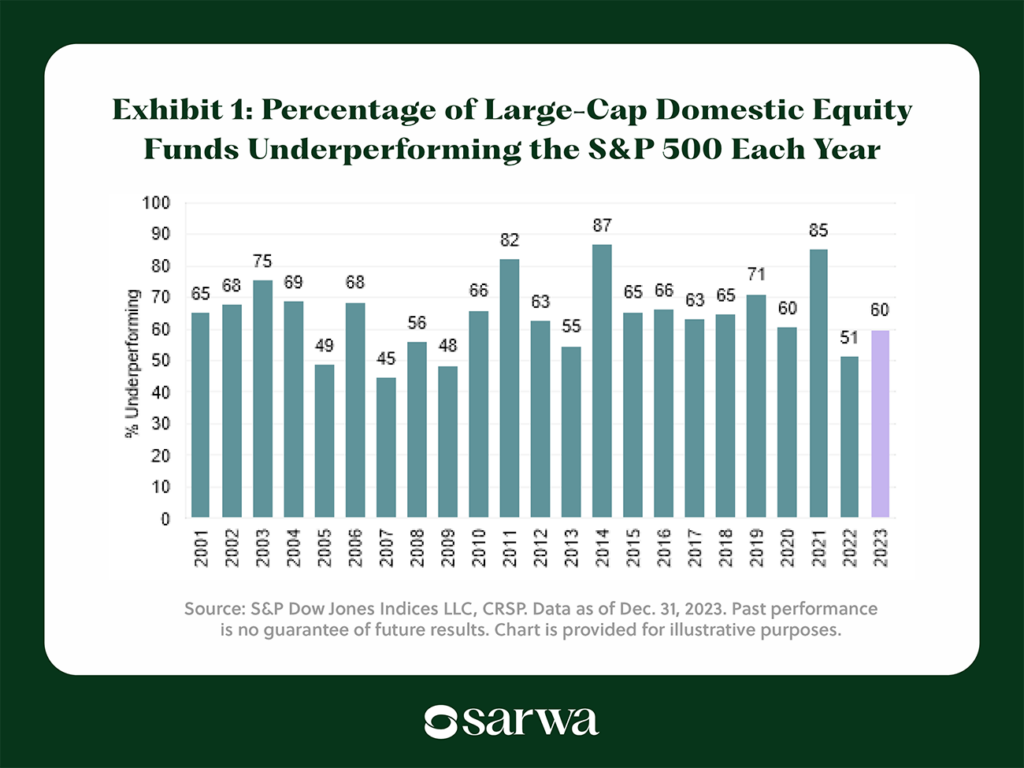
- Low Cost: Index funds are passively managed, aiming simply to replicate the performance of an underlying index rather than outperform it. This passive approach translates to significantly lower management fees (known as expense ratios) compared to actively managed mutual funds, where portfolio managers actively buy and sell securities. Over decades, these lower fees can save you tens of thousands of dollars, allowing more of your money to compound.
- Long-Term Growth Potential: Historically, the S&P 500 has delivered average annual returns of approximately 10-12% over long periods. While past performance is no guarantee of future results, this consistent growth has made it a powerful engine for wealth creation, easily outpacing inflation and savings accounts.
- Simplicity and Accessibility: Investing in an S&P 500 fund is straightforward. You don’t need to research individual companies or time the market. It’s a “set it and forget it” strategy that aligns well with the principles of passive investing.
Index Funds vs. ETFs: A Quick Distinction
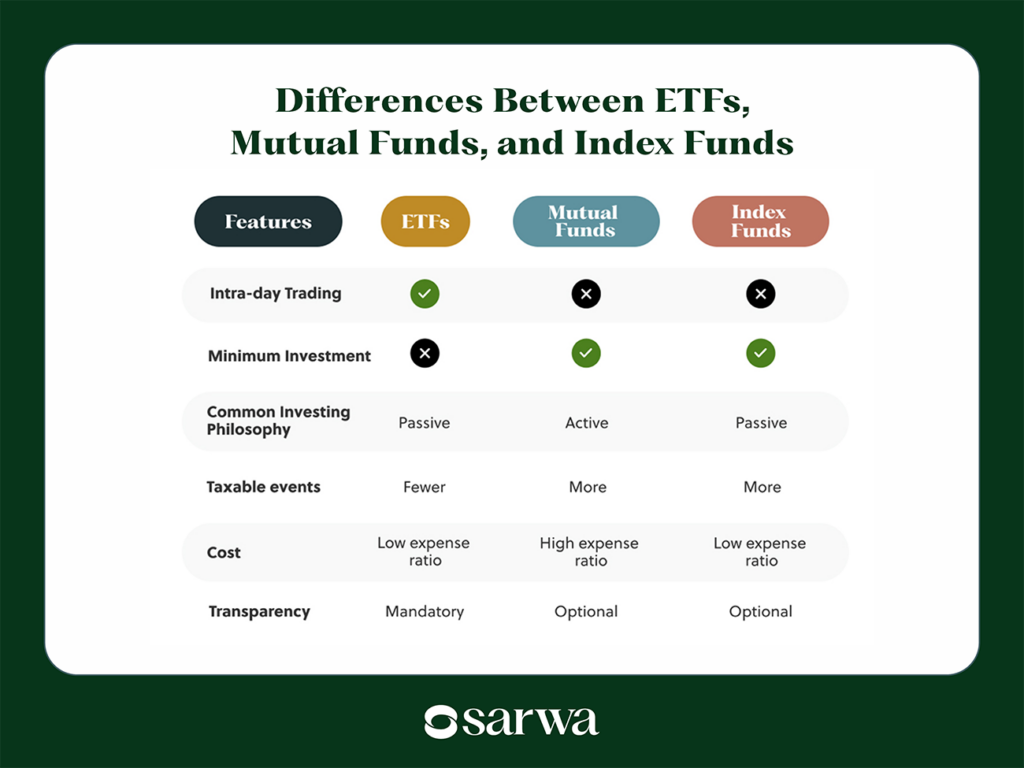
When investing in the S&P 500, you’ll typically encounter two primary structures: mutual funds and Exchange Traded Funds (ETFs). Both offer broad market exposure and passive management, but they have key differences:
- Mutual Funds: These are pooled investments where many investors’ money is combined to buy a portfolio of stocks. When you invest in an S&P 500 mutual fund (like Vanguard’s VFIAX), you buy shares directly from the fund company at the end-of-day Net Asset Value (NAV). They are typically bought and sold in dollar amounts.
- ETFs: ETFs (like SPY, IVV, or VOO) are similar to mutual funds but trade on stock exchanges throughout the day, much like individual stocks. You can buy and sell ETF shares at market prices during trading hours. They offer more flexibility in trading and are often preferred by those who want to buy fractional shares through certain platforms or prefer the intraday trading liquidity. For most long-term investors, the choice between an S&P 500 index mutual fund and an S&P 500 ETF often comes down to personal preference for trading flexibility and minimum investment requirements.
Preparing for Your Investment Journey
Before you open an account and start buying, a few foundational financial steps are essential to ensure your investment journey is sustainable and stress-free. Smart investing is built on a solid financial foundation.
Assess Your Financial Goals and Risk Tolerance
Understanding your “why” for investing is paramount. Are you saving for retirement, a down payment on a house, or your child’s education? Your goals will dictate your investment timeline and, consequently, the level of risk you’re comfortable taking. While S&P 500 funds are diversified, they are still equity investments and subject to market fluctuations. A longer time horizon (10+ years) allows you to ride out market volatility, while shorter-term goals might warrant a more conservative approach. Be honest about how much risk you can stomach; panic selling during downturns is a common pitfall.
Build an Emergency Fund
Before deploying significant capital into the market, ensure you have a robust emergency fund in place. This is typically 3-6 months’ worth of living expenses stored in an easily accessible, liquid account (like a high-yield savings account). An emergency fund acts as a financial safety net, preventing you from having to sell your investments at an inopportune time to cover unexpected expenses, such as job loss or medical emergencies.
Understand Investment Costs
While S&P 500 index funds are known for their low costs, it’s still crucial to be aware of the fees involved. The primary cost is the expense ratio, an annual fee expressed as a percentage of your total investment. For S&P 500 index funds, this is often very low, sometimes below 0.05%. For instance, an expense ratio of 0.03% means you’d pay $3 annually for every $10,000 invested. Additionally, some brokerage platforms might charge trading commissions (though many now offer commission-free trading for ETFs) or account maintenance fees. Always read the fund’s prospectus and your brokerage’s fee schedule.
Step-by-Step Guide to Investing in the S&P 500
Once your financial foundation is solid, you can proceed with the practical steps of making your investment. This process is often simpler than many imagine.
Choose an Investment Platform
Your first practical step is selecting where you will buy your S&P 500 fund. Common choices include:
- Online Brokerage Firms: Companies like Fidelity, Charles Schwab, Vanguard, E*TRADE, and TD Ameritrade (now Schwab) offer self-directed investment accounts. These platforms provide a wide range of investment products, research tools, and educational resources. They are ideal for investors who want to manage their portfolios actively but still benefit from passive index fund investing.
- Robo-Advisors: Services like Betterment and Wealthfront provide automated, algorithm-driven financial planning services with little to no human intervention. They build and manage diversified portfolios based on your risk tolerance and goals, often including S&P 500 ETFs. Robo-advisors are an excellent option for hands-off investors or those new to investing who want guidance on asset allocation.
- Retirement Accounts: If you’re saving for retirement, you might invest in an S&P 500 fund through a tax-advantaged account like a 401(k), IRA (Traditional or Roth), or SEP IRA. Employer-sponsored 401(k) plans often offer S&P 500 index funds as an investment option, and IRAs can be opened with any brokerage firm.
Select Your S&P 500 Fund
Once you have an account, you’ll need to choose the specific S&P 500 fund you want to invest in. Popular options include:
- ETFs:
- SPDR S&P 500 ETF Trust (SPY): One of the oldest and most liquid S&P 500 ETFs.
- iShares Core S&P 500 ETF (IVV): Known for its low expense ratio.
- Vanguard S&P 500 ETF (VOO): Another low-cost option from Vanguard.
- Mutual Funds:
- Vanguard 500 Index Fund Admiral Shares (VFIAX): Vanguard’s widely popular S&P 500 index mutual fund, requiring a minimum initial investment (often $3,000).
- Fidelity 500 Index Fund (FXAIX): Fidelity’s equivalent, often with no minimum initial investment.
When choosing, compare expense ratios, trading liquidity (for ETFs), and minimum investment requirements. For most long-term investors, the differences in performance between these top S&P 500 funds are negligible, so focus on cost and ease of access.
Fund Your Account
After selecting your platform and fund, you’ll need to deposit money into your investment account. Common methods include:
- Electronic Funds Transfer (EFT): Linking your bank account for direct transfers, typically taking 1-3 business days.
- Wire Transfer: Faster but often incurs a fee.
- Check Deposit: Slower and less common nowadays.
- Rollover: Transferring funds from an old 401(k) or IRA.
Place Your Order
Once your account is funded, you can place your order.
- For ETFs: You’ll place a buy order just like you would for an individual stock.
- Market Order: Buys shares immediately at the current market price. This is suitable for liquid ETFs like S&P 500 funds.
- Limit Order: Specifies the maximum price you’re willing to pay. Useful in volatile markets or for less liquid securities, though generally not necessary for highly traded S&P 500 ETFs.
- For Mutual Funds: You’ll typically specify a dollar amount you want to invest. The trade will execute at the fund’s Net Asset Value (NAV) calculated at the end of the trading day.
Consider using dollar-cost averaging by investing a fixed amount regularly (e.g., $100 every month). This strategy helps mitigate risk by averaging out your purchase price over time, reducing the impact of market volatility.
Strategies for Long-Term Success
Investing in an S&P 500 index fund is a marathon, not a sprint. Success hinges on discipline, patience, and a long-term perspective.
The Power of Dollar-Cost Averaging
As mentioned, dollar-cost averaging involves investing a consistent amount of money at regular intervals, regardless of market conditions. When prices are high, your fixed dollar amount buys fewer shares; when prices are low, it buys more shares. Over time, this strategy helps reduce the average cost per share and takes the emotion out of investing, preventing you from trying to “time the market.” It’s a particularly effective strategy for long-term investors in volatile markets.
Reinvesting Dividends
Many S&P 500 companies pay dividends, which are portions of their earnings distributed to shareholders. When you invest in an S&P 500 index fund, these dividends are pooled. Most brokerage accounts offer the option to automatically reinvest these dividends, meaning they are used to buy more shares of the fund. This allows your earnings to generate further earnings, harnessing the incredible power of compound interest, which is a major driver of long-term wealth accumulation.
Stay the Course: The Importance of Patience
Market downturns are an inevitable part of investing. During these periods, it can be tempting to sell your investments to “stop the bleeding.” However, history consistently shows that patience and staying invested through volatility are crucial. The S&P 500 has always recovered from bear markets and gone on to reach new highs. Emotional reactions often lead to poor financial decisions. Stick to your long-term plan, ride out the storms, and trust in the resilience of the market.
Diversification Beyond the S&P 500
While the S&P 500 offers excellent diversification within large-cap U.S. equities, a truly robust portfolio extends beyond this single index. Consider adding other asset classes to further enhance diversification and potentially improve risk-adjusted returns:
- International Stocks: Exposure to developed and emerging markets can provide growth opportunities and reduce reliance on the U.S. economy.
- Bonds: Bonds typically offer stability and generate income, acting as a ballast for your portfolio during equity market downturns.
- Small-Cap and Mid-Cap Stocks: While riskier, these can offer higher growth potential than large-cap stocks.
A target-date fund or a diversified “total market” fund can simplify this broader diversification if you prefer a single-fund solution.
Common Pitfalls to Avoid
Even with a seemingly straightforward investment like an S&P 500 index fund, there are traps that unwary investors can fall into. Being aware of these can save you significant money and stress.
Market Timing
One of the most common and damaging mistakes is attempting to time the market – trying to predict when to buy low and sell high. Numerous studies have shown that consistently timing the market is nearly impossible, even for professional investors. Missing just a few of the market’s best-performing days can significantly erode your long-term returns. A consistent, long-term approach with regular investments is far more effective.
High Fees
While S&P 500 index funds are generally low-cost, it’s essential to scrutinize expense ratios. Even a difference of 0.5% per year can cost you tens of thousands of dollars over several decades due to the power of compounding. Always choose the fund with the lowest expense ratio, assuming all other factors (like tracking error and liquidity) are comparable.
Emotional Investing
Fear and greed are powerful emotions that can derail investment plans. Panic selling during a market crash or chasing “hot” stocks during a bull market (FOMO – Fear Of Missing Out) are common examples of emotional investing. Stick to your predetermined investment strategy, rebalance periodically to maintain your desired asset allocation, and avoid making impulsive decisions based on news headlines or social media hype.
Forgetting to Rebalance
Over time, different asset classes in your portfolio will perform differently, causing your original asset allocation to drift. For example, if your S&P 500 fund performs exceptionally well, it might grow to represent a larger percentage of your portfolio than you initially intended. Rebalancing involves periodically selling a portion of your overperforming assets and buying more of your underperforming ones to restore your desired asset allocation. This helps manage risk and ensures your portfolio remains aligned with your long-term goals.
Investing in an S&P 500 index fund is a remarkably effective and accessible way for individuals to participate in the growth of the global economy. By understanding the fundamentals, preparing your finances, taking actionable steps to invest, and adhering to long-term strategies while avoiding common pitfalls, you can confidently build a robust investment portfolio that serves your financial aspirations for decades to come. Remember, consistency, patience, and a focus on low costs are the cornerstones of successful S&P 500 investing.
aViewFromTheCave is a participant in the Amazon Services LLC Associates Program, an affiliate advertising program designed to provide a means for sites to earn advertising fees by advertising and linking to Amazon.com. Amazon, the Amazon logo, AmazonSupply, and the AmazonSupply logo are trademarks of Amazon.com, Inc. or its affiliates. As an Amazon Associate we earn affiliate commissions from qualifying purchases.