
In the complex machinery of the global economy, few figures carry as much weight for the average consumer and business owner as the prime interest rate. Often referred to simply as “the prime,” this percentage serves as the foundational benchmark for a vast array of financial products, ranging from credit cards and home equity lines of credit to small business loans. Understanding the prime rate is not merely an academic exercise for economists; it is a vital component of personal financial literacy that dictates the cost of borrowing and the potential for investment growth.

The prime rate represents the interest rate that commercial banks charge their most creditworthy corporate customers. While the average individual does not borrow at the prime rate directly, it acts as the “base” upon which many other consumer interest rates are built. When the prime rate shifts, the ripples are felt across the entire financial landscape, influencing monthly payments, debt management strategies, and the broader pace of economic activity.
The Mechanics Behind the Prime Rate
To understand where the prime rate comes from, one must look toward the Federal Reserve, the central bank of the United States. Although the Federal Reserve does not set the prime rate directly, its policy decisions are the primary catalyst for change.
The Connection to the Federal Funds Rate
The prime rate is inextricably linked to the federal funds rate, which is the interest rate at which commercial banks lend to one another overnight to maintain their required reserves. The Federal Open Market Committee (FOMC) meets several times a year to determine the target range for this federal funds rate, using it as a tool to either stimulate the economy or curb inflation.
In the United States, the prime rate is traditionally set exactly 3 percentage points (or 300 basis points) above the federal funds rate. For example, if the Federal Reserve sets the federal funds target at 5%, the prime rate will almost universally move to 8%. This 3% spread covers the banks’ operating costs and provides a profit margin while accounting for the minimal risk associated with lending to top-tier corporate clients.
The Wall Street Journal Prime Rate
While individual banks can technically set their own prime rates, the financial industry looks to the Wall Street Journal (WSJ) as the official record-keeper. The WSJ surveys the 30 largest banks in the United States; when at least 23 of them (75%) change their base corporate loan rate, the WSJ updates its published prime rate. This creates a standardized benchmark that ensures consistency across the financial sector, allowing lenders and borrowers to operate with a shared understanding of current market conditions.
Why the Prime Rate Matters to Your Personal Finances
The prime rate is the silent engine behind many of the interest rates you encounter in daily life. Because many consumer loans are “variable-rate” products, they are tied directly to the prime. When the prime rate goes up, the interest you pay on your debt typically goes up shortly thereafter.
Credit Cards and Variable APRs
The most common way individuals encounter the prime rate is through their credit card statements. Most credit cards feature a variable Annual Percentage Rate (APR). If you look at the fine print of your credit card agreement, you will likely see a formula such as “Prime Rate + 12.99%.”
If the prime rate is 8%, your APR would be 20.99%. If the Federal Reserve raises rates and the prime rate climbs to 8.25%, your credit card APR will automatically adjust to 21.24%. Over time, these incremental shifts can significantly increase the cost of carrying a balance, making it more expensive to finance everyday purchases or emergency expenses.
Home Equity Lines of Credit (HELOCs)
For homeowners, the prime rate is a critical factor in the cost of a Home Equity Line of Credit. Unlike traditional fixed-rate mortgages, which are often influenced more by the 10-year Treasury yield, HELOCs are almost always tied to the prime rate. Borrowers with a HELOC may see their monthly interest-only payments fluctuate significantly during a period of rising interest rates. This makes the prime rate a key variable for those using home equity for renovations, debt consolidation, or major life events.

Small Business and Personal Loans
Small businesses often rely on lines of credit or term loans to manage cash flow and fund expansion. Many of these loans, particularly those backed by the Small Business Administration (SBA), use the prime rate as their base. A rising prime rate increases the cost of capital for entrepreneurs, potentially slowing down hiring or capital investment. Similarly, personal loans for debt consolidation or large purchases may be pegged to the prime, affecting the overall affordability of the loan.
The Macroeconomic Impact of Prime Rate Fluctuations
The prime rate is more than just a calculation for loans; it is a barometer for the health and direction of the economy. By influencing the cost of borrowing, the prime rate helps regulate the speed at which money moves through the system.
Controlling Inflation and Stimulating Growth
The Federal Reserve adjusts rates to maintain a delicate balance between full employment and stable prices. When inflation rises too quickly—meaning the purchasing power of the dollar is declining—the Fed raises the federal funds rate, which in turn raises the prime rate. This makes borrowing more expensive, which cools down consumer spending and business investment, eventually slowing inflation.
Conversely, during an economic downturn or recession, the Fed lowers rates. A lower prime rate makes it cheaper for businesses to borrow money to expand and for consumers to finance large purchases like cars or homes. This injection of liquidity is designed to jumpstart economic activity and encourage growth.
The Ripple Effect on Savings
While a high prime rate is generally viewed as a negative for borrowers, it can be a boon for savers. When the prime rate is high, banks often increase the interest rates they offer on high-yield savings accounts, certificates of deposit (CDs), and money market accounts. This creates an environment where individuals are incentivized to save rather than spend, further contributing to the cooling of an overheated economy.
Strategies for Navigating Different Prime Rate Environments
Given that the prime rate is subject to change based on global economic conditions, savvy financial planning requires a proactive approach to rate shifts. Whether rates are at historic lows or climbing toward new peaks, there are strategies to protect your wealth and minimize costs.
Managing Debt in a Rising Rate Environment
When the prime rate is on an upward trajectory, the priority should be on reducing variable-rate debt.
-
Accelerate Credit Card Payoffs: Since credit cards react quickly to prime rate changes, focusing on high-interest balances can save thousands in interest charges.
-
Consider Fixed-Rate Refinancing: If you have a variable-rate loan or HELOC, it may be beneficial to refinance into a fixed-rate product before rates climb further. This provides “payment certainty,” protecting you from future Fed hikes.
-
Lock in Rates Early: If you are planning a major purchase that requires financing, securing a rate lock can prevent your costs from increasing during the closing process.
Capitalizing on a Falling Rate Environment
When the prime rate is decreasing, it presents an opportunity to optimize your balance sheet.
-
Refinance Existing Debt: Lower rates mean you might be able to replace an old, expensive loan with a new one at a much lower interest rate.
-
Strategic Borrowing: For businesses, a falling prime rate may be the ideal time to take out a line of credit to fund future growth projects, as the cost of capital is at its most affordable.
-
Review Investment Portfolios: Lower interest rates often drive investors toward the stock market in search of higher returns than what can be found in fixed-income assets, potentially impacting your asset allocation strategy.
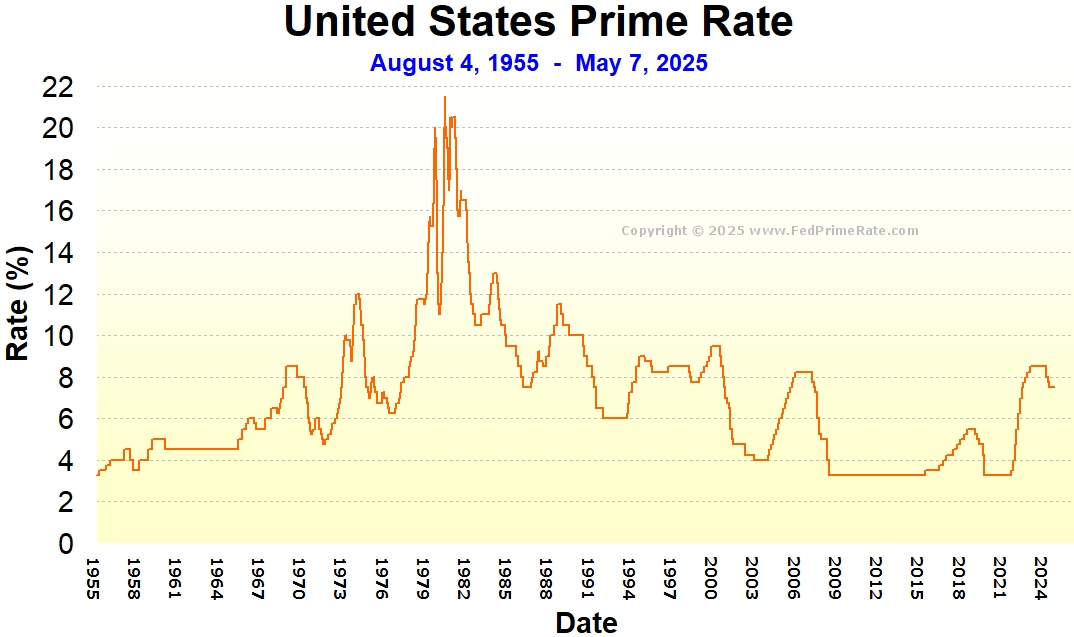
The Prime Rate as a Pillar of Financial Stability
The prime interest rate is a fundamental element of the modern financial system. It serves as a bridge between the high-level policy decisions of the Federal Reserve and the practical, everyday financial lives of millions of people. By understanding how the prime rate is determined and how it influences various financial products, you can make more informed decisions about when to borrow, when to save, and how to manage your debt.
Monitoring the prime rate allows you to anticipate changes in your monthly budget and adjust your long-term financial goals accordingly. While you cannot control the movements of the Federal Reserve or the decisions of the nation’s largest banks, you can control how you respond to those changes. Whether you are a first-time homebuyer, a seasoned investor, or a small business owner, keeping a close eye on the prime rate is an essential practice for maintaining financial health and achieving lasting economic security. As the economic landscape continues to evolve, the prime rate will remain a critical signal, guiding the flow of capital and shaping the opportunities available in the marketplace.
aViewFromTheCave is a participant in the Amazon Services LLC Associates Program, an affiliate advertising program designed to provide a means for sites to earn advertising fees by advertising and linking to Amazon.com. Amazon, the Amazon logo, AmazonSupply, and the AmazonSupply logo are trademarks of Amazon.com, Inc. or its affiliates. As an Amazon Associate we earn affiliate commissions from qualifying purchases.