
The Nasdaq Composite is more than just a stock market index; it is a global barometer for innovation, technological advancement, and the shifting landscape of the modern economy. For investors, the question of the “all-time high” is not merely a matter of trivia—it is a critical metric used to assess market sentiment, valuation levels, and the potential for future growth. As of mid-2024, the Nasdaq Composite reached a historic milestone, breaching the 18,600 mark for the first time, while the Nasdaq-100—an index of the 100 largest non-financial companies on the exchange—surpassed the 20,000 level.
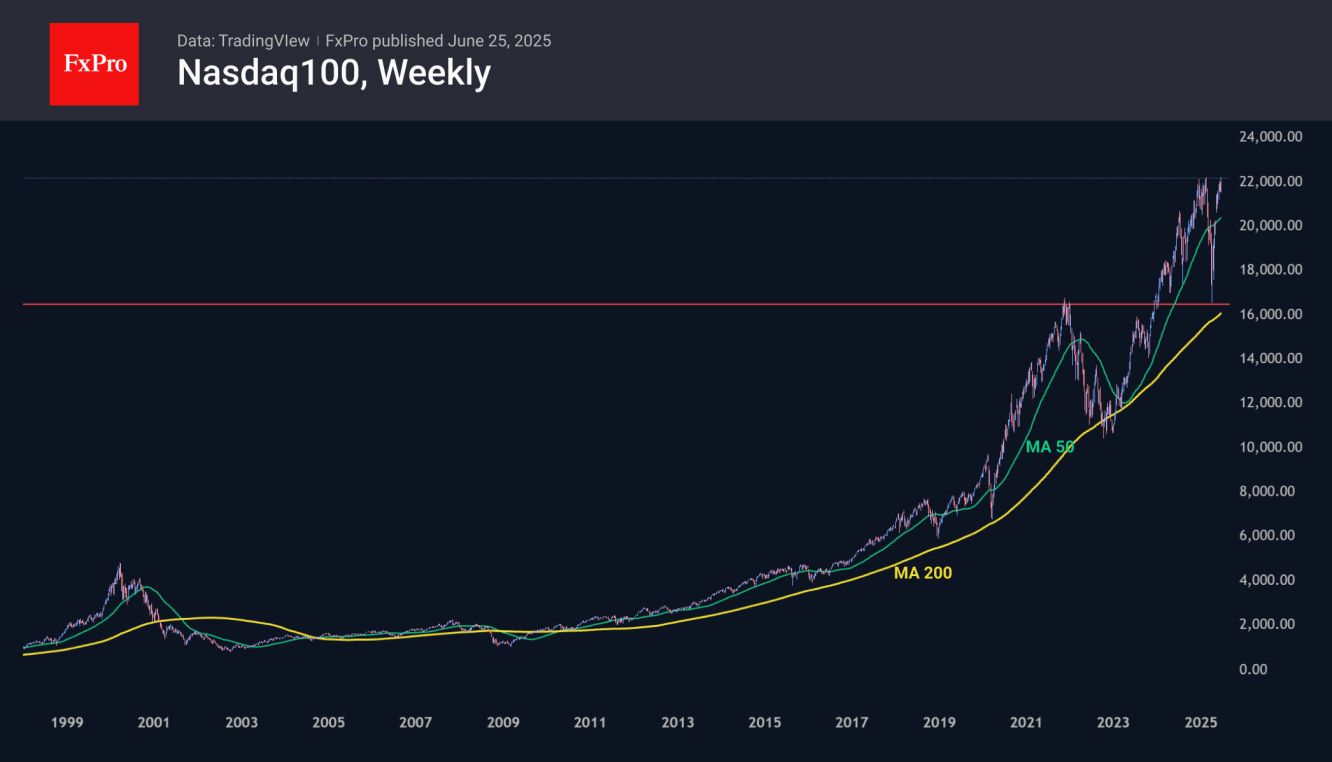
Understanding these peaks requires looking beyond the raw numbers. The journey to these record-breaking highs tells a story of economic resilience, the transformative power of artificial intelligence, and the evolving strategies of retail and institutional investors alike. Whether you are a seasoned trader or a newcomer to personal finance, analyzing the Nasdaq’s peak provides essential insights into where the global economy is headed.
Defining the Record: The Mechanics of the Nasdaq’s Peak
To understand the all-time high, one must first distinguish between the two primary indices associated with the exchange: the Nasdaq Composite and the Nasdaq-100. While they are often used interchangeably in casual conversation, they represent different segments of the market and have reached their respective peaks at different times and values.
The Nasdaq Composite vs. The Nasdaq-100
The Nasdaq Composite Index includes almost all stocks listed on the Nasdaq stock exchange, totaling more than 3,000 companies. Because it is heavily weighted toward the technology sector, it is often viewed as the primary indicator of the “tech economy.” The all-time high for the Composite is a reflection of the broad health of technology, biotechnology, and growth-oriented firms.
In contrast, the Nasdaq-100 is a modified capitalization-weighted index that includes 100 of the largest non-financial organizations listed on the exchange. This index is the basis for the popular Invesco QQQ Trust (QQQ). Because the Nasdaq-100 is more concentrated, it often experiences higher volatility but has historically led the charge during bull markets, frequently hitting its all-time highs before the broader Composite index does.
The Significance of All-Time Highs in Investing
In the world of finance, an all-time high represents the highest price at which an index or asset has ever traded. To some investors, a record high is a warning sign of an overbought market or a “bubble.” However, historical data suggests that all-time highs are often catalysts for further growth. When an index breaks through a previous ceiling, it enters a phase of “price discovery,” where there is no historical resistance to hold it back. For the Nasdaq, hitting new highs in 2024 signaled a definitive shift away from the bearish sentiment of 2022, confirming that the market has fully embraced the next cycle of growth.
A Historical Perspective: From the Dot-Com Crash to the AI Era
The Nasdaq’s path to its current all-time high has been anything but linear. The index is famous for its dramatic surges and equally dramatic corrections, serving as a reminder that high rewards often come with high risks.
The Dot-Com Boom and the Fifteen-Year Recovery
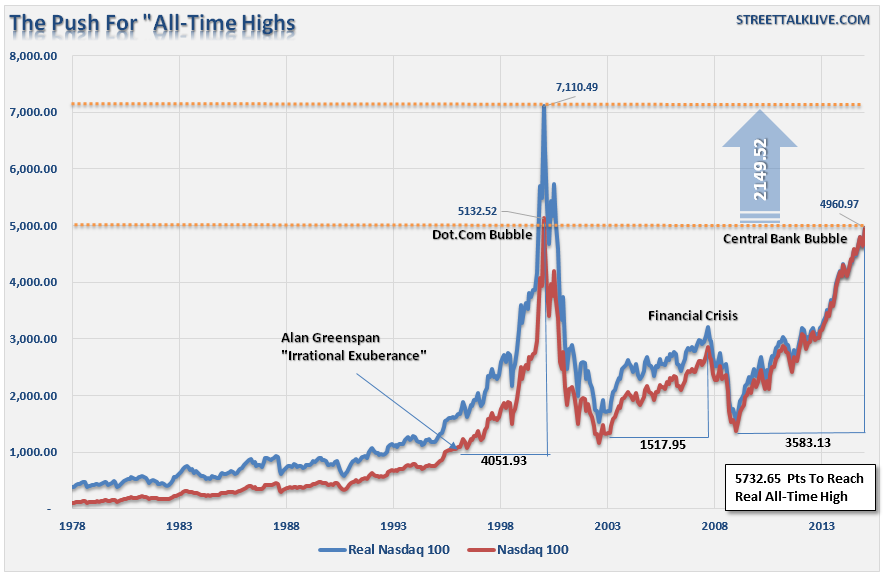
The most infamous period in Nasdaq history is the Dot-Com bubble of the late 1990s. Fueled by the commercialization of the internet, the Nasdaq Composite soared to what was then an unthinkable high of 5,048.62 in March 2000. When the bubble burst, the index plummeted, losing nearly 80% of its value over the next two years.
What makes the Nasdaq’s current all-time high so impressive is the context of that recovery. It took the index 15 years to return to its 2000 peak. This period taught investors a valuable lesson about valuation: price is what you pay, but value is what you get. The companies driving today’s highs, such as Microsoft and Apple, are fundamentally different from the speculative “dot-coms” of 1999; they possess massive cash reserves, diversified revenue streams, and dominant market positions.
The Post-2008 Renaissance and the Pandemic Pivot
Following the 2008 Financial Crisis, the Nasdaq entered its longest bull market in history. This era was defined by the transition to cloud computing, the ubiquity of smartphones, and the rise of software-as-a-service (SaaS) business models.
The COVID-19 pandemic served as a paradoxical accelerant. While the global economy stalled, the digital economy moved into overdrive. The Nasdaq reached new all-time highs in 2021 as work-from-home trends, e-commerce dominance, and low-interest rates created a perfect storm for tech growth. Although 2022 saw a significant pullback due to rising inflation and interest rate hikes, the index’s ability to rebound and set new records in 2024 demonstrates the structural importance of technology in the modern world.
The Drivers of Growth: Why the Nasdaq Defies Gravity
Reaching an all-time high does not happen in a vacuum. The recent surge in the Nasdaq has been propelled by a specific set of economic and technological drivers that have fundamentally changed the way investors value growth stocks.
The Influence of the “Magnificent Seven”
A primary driver of the Nasdaq’s record-breaking performance is the concentration of power within a handful of mega-cap stocks, often referred to as the “Magnificent Seven”: Apple, Microsoft, Alphabet, Amazon, NVIDIA, Meta, and Tesla. These companies carry an immense weight in the index. When NVIDIA experiences a breakout year due to the demand for high-performance chips, or when Microsoft integrates generative AI into its software suite, the entire Nasdaq moves upward. This concentration has led to a “winner-take-most” dynamic, where the strongest companies drive the majority of the index’s gains.
Artificial Intelligence: The Next Industrial Revolution
If the 1990s were about the internet and the 2010s were about the cloud, the 2020s are undeniably the era of Artificial Intelligence (AI). The Nasdaq’s current all-time high is largely built on the promise of AI-driven productivity. Investors are betting that AI will not only create new industries but also drastically improve the profit margins of existing ones. Unlike the speculative fervor of the late 90s, the current AI boom is backed by massive capital expenditures from the world’s largest corporations, signaling a long-term commitment to this technological shift.
Monetary Policy and the “Soft Landing” Narrative
Beyond technology, the Nasdaq’s performance is closely tied to the Federal Reserve’s monetary policy. Tech stocks are particularly sensitive to interest rates because their valuations are based on the present value of future earnings. When interest rates rise, those future earnings are discounted more heavily. The recent climb to all-time highs was supported by the market’s belief that inflation is cooling and that the Federal Reserve may successfully orchestrate a “soft landing”—taming inflation without triggering a severe recession.
Navigating the All-Time High: Investment Strategies for the Modern Trader
For many individuals focused on personal finance and investing, the prospect of buying into a market at its all-time high feels counterintuitive. However, successful investing requires a strategic approach rather than emotional reacting.
The Psychology of Record Highs
The “fear of heights” is a common psychological barrier in investing. Many retail investors wait for a “dip” that may never come, missing out on significant gains as the market continues to climb. Historically, the Nasdaq has spent a significant portion of its existence within 5% of its all-time highs. In a growth-oriented economy, the “normal” state of the market is to trend upward over time.
Diversification and Risk Management
While the Nasdaq offers unparalleled growth potential, its tech-heavy nature means it lacks the sector diversity found in the S&P 500 or the Dow Jones Industrial Average. To manage the risk associated with investing at a peak, investors often employ several strategies:
-
Dollar-Cost Averaging (DCA): Instead of investing a lump sum at the all-time high, investors contribute a fixed amount at regular intervals. This reduces the impact of a potential short-term correction.
-
Rebalancing: As tech stocks surge, they may become an oversized portion of a portfolio. Periodic rebalancing ensures that an investor’s risk profile remains aligned with their long-term goals.
-
Utilizing Low-Cost ETFs: For most individuals, buying an index-tracking fund like QQQ or QQQM is a more efficient way to capture the Nasdaq’s growth than trying to pick individual winners and losers.
Long-term Growth vs. Short-term Speculation
The Nasdaq is a long-term play. While it is prone to sharp pullbacks—sometimes losing 10% to 20% in a matter of weeks—its long-term trajectory has been overwhelmingly positive. Investors who focus on the “all-time high” as a destination often miss the bigger picture: the index is a reflection of human innovation, which has no foreseeable ceiling.
The Road Ahead: Can the Momentum Be Sustained?
As the Nasdaq sits at or near its all-time high, the focus inevitably shifts to the future. Market participants are constantly weighing the potential for continued growth against the risks of overvaluation and economic shifts.
Earnings Growth vs. Valuation Multiples
The sustainability of the Nasdaq’s record levels depends on earnings. A high Price-to-Earnings (P/E) ratio is acceptable to the market as long as companies continue to deliver robust growth. If the “Magnificent Seven” and other tech leaders can translate AI investments into tangible profits, the current all-time high may eventually look like a bargain. However, if earnings growth slows while valuations remain stretched, the index may enter a period of consolidation or correction.
Global Economic and Geopolitical Factors
The Nasdaq does not operate in a vacuum. Supply chain stability, geopolitical tensions, and global regulatory shifts regarding AI and data privacy will all play a role in the index’s future. Furthermore, as other sectors of the economy—such as energy, manufacturing, and healthcare—integrate technology, the line between “tech” and “non-tech” will continue to blur, potentially providing the Nasdaq with new avenues for expansion.
In conclusion, the all-time high for the Nasdaq is more than just a number on a screen; it is a testament to the enduring power of innovation and the resilience of the global financial system. While the records of today will eventually be eclipsed by the records of tomorrow, understanding the drivers behind these peaks is essential for anyone looking to build wealth and navigate the complexities of the modern market.
aViewFromTheCave is a participant in the Amazon Services LLC Associates Program, an affiliate advertising program designed to provide a means for sites to earn advertising fees by advertising and linking to Amazon.com. Amazon, the Amazon logo, AmazonSupply, and the AmazonSupply logo are trademarks of Amazon.com, Inc. or its affiliates. As an Amazon Associate we earn affiliate commissions from qualifying purchases.