
When investors ask, “What’s the price of Amazon stock?” they are often looking for more than just a real-time ticker symbol or a numerical value on a digital dashboard. In the world of high-stakes investing, the price of a stock is merely a snapshot in time—a reflection of the market’s collective psychology, institutional sentiment, and the underlying fundamental health of one of the world’s most dominant corporations.
Amazon.com, Inc. (AMZN) has evolved from a niche online bookseller into a sprawling conglomerate with tentacles in cloud computing, artificial intelligence, digital advertising, and global logistics. Understanding its stock price requires a deep dive into financial metrics, market cycles, and the strategic pivots that keep the company at the forefront of the Nasdaq 100.
Understanding Amazon’s Market Valuation: Beyond the Daily Ticker
The price of Amazon stock is dictated by the principles of supply and demand, yet it is anchored by the company’s massive market capitalization. To understand where the price sits today, one must look at how the company presents itself to the public markets and how the structure of its shares has changed over time.
The Mechanics of Stock Price Fluctuations
Amazon’s stock price is highly sensitive to quarterly earnings reports, specifically guidance provided by the executive team. Investors pay close attention to revenue growth across its diverse segments. A slight miss in retail growth might be offset by an acceleration in cloud services, causing the stock price to react with significant volatility. Furthermore, as a “heavyweight” in the S&P 500 and Nasdaq, Amazon’s price is often influenced by broader market trends, such as shifts in Treasury yields or macroeconomic data like the Consumer Price Index (CPI).
Historical Context and the Impact of Stock Splits
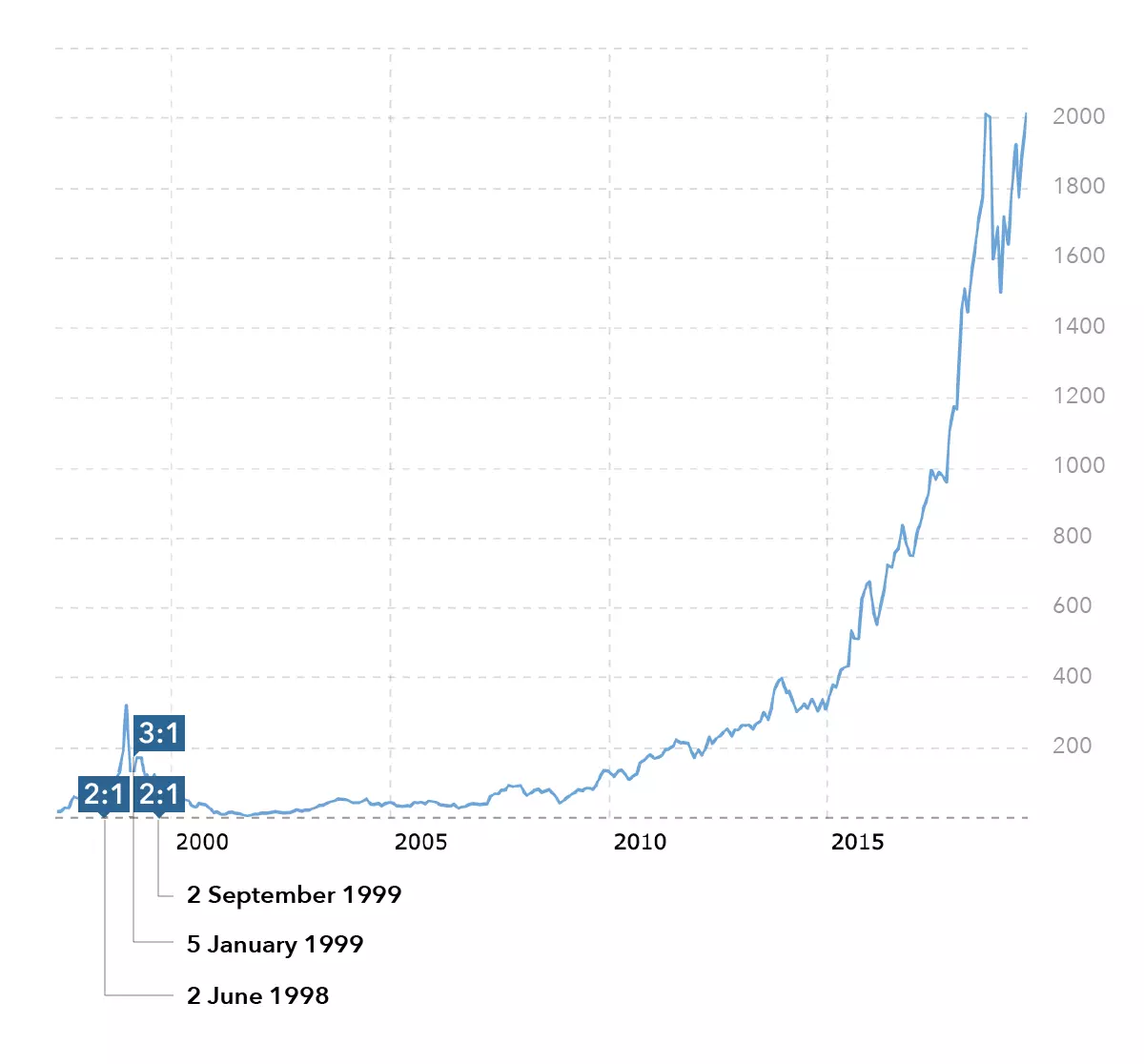
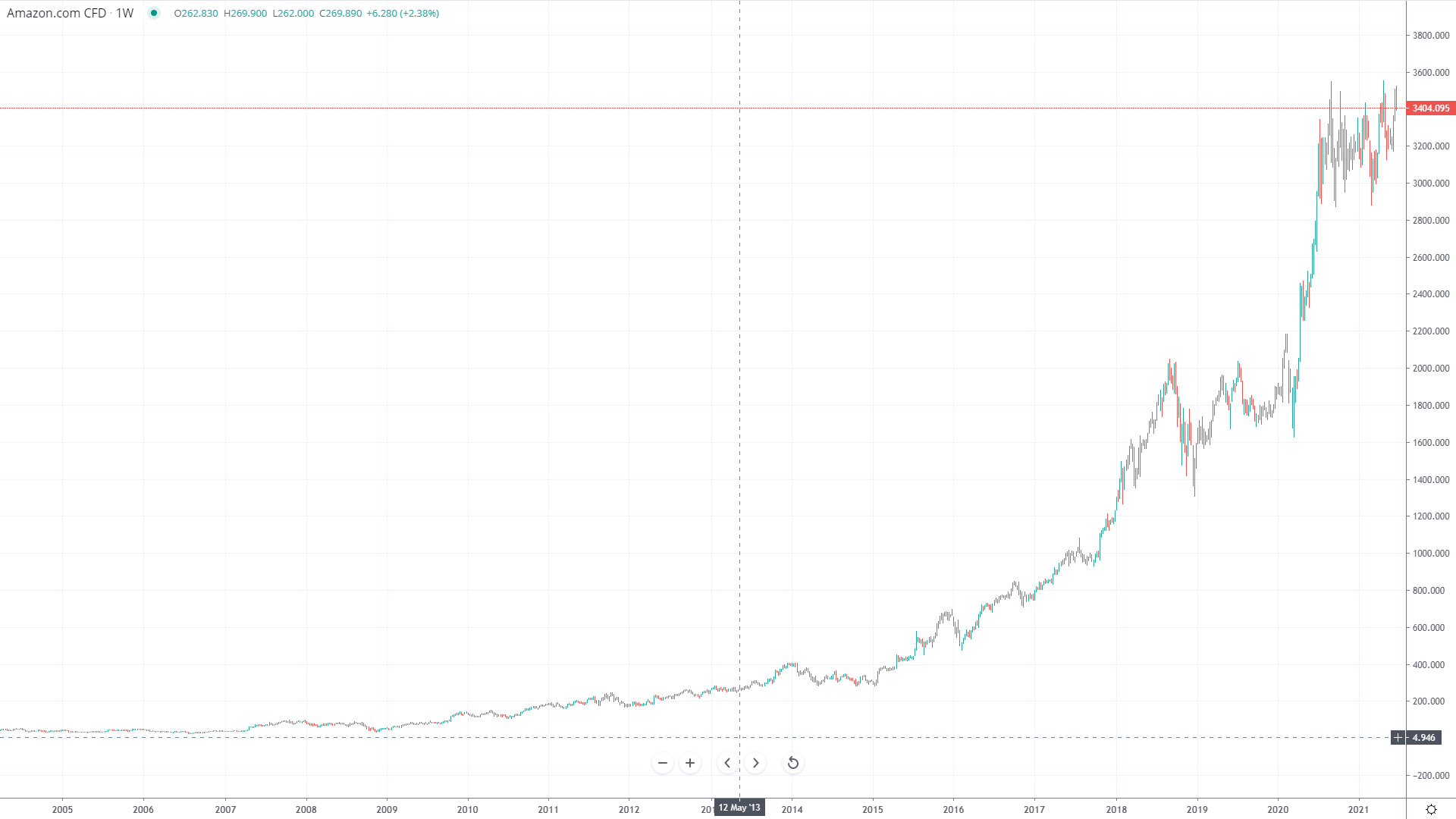
For years, Amazon was known for having a “high-priced” stock, often trading well above $3,000 per share. This made it difficult for retail investors with limited capital to purchase whole shares. However, in mid-2022, Amazon executed a 20-for-1 stock split. While a split does not change the fundamental value of the company—it simply divides the same “pizza” into more slices—it made the share price more accessible and increased liquidity. When analyzing the current price, long-term investors must adjust their historical charts to account for this split to understand the true growth trajectory of the company.
Fundamental Drivers of Amazon’s Financial Health
To evaluate whether the current price of Amazon stock represents a “bargain” or an “overvaluation,” one must dissect the three primary engines that drive its cash flow: E-commerce, Amazon Web Services (AWS), and its burgeoning advertising business.
E-commerce Dominance and Operating Margins
While the “Amazon” brand is synonymous with online shopping, the retail side of the business is notoriously capital-intensive with thin profit margins. The price of the stock is often a reflection of how efficiently Amazon can manage its fulfillment and shipping costs. In recent years, the company has pivoted from a national hub-and-spoke delivery model to a regionalized model, significantly reducing the “cost to serve.” When margins in the retail sector improve, the stock price typically sees a positive rerating as investors gain confidence in the core business’s profitability.
AWS: The Profit Engine of the Cloud
Amazon Web Services (AWS) is arguably the most critical factor in determining the stock’s long-term valuation. As the global leader in cloud infrastructure, AWS provides the high-margin revenue that allows Amazon to experiment in other sectors. Investors track AWS growth rates with eagle eyes; any deceleration in cloud spending can lead to a sharp decline in stock price, whereas breakthroughs in AI-integrated cloud tools often send the price upward. AWS isn’t just a subsidiary; it is the financial backbone that justifies Amazon’s premium valuation.
Advertising and Subscription Services
A newer, yet incredibly potent, driver of Amazon’s stock price is its digital advertising segment. By leveraging its vast amounts of consumer data, Amazon has become the third-largest digital ad platform in the world, trailing only Google and Meta. Because advertising has significantly higher margins than physical retail, this segment provides a massive boost to the company’s bottom line. Coupled with recurring revenue from over 200 million Prime members, these “sticky” revenue streams provide a floor for the stock price during economic downturns.
Key Financial Metrics Every Investor Should Monitor

Professional investors don’t just look at the price; they look at the ratios. To determine if the current price of Amazon stock is justified, several key financial metrics must be scrutinized.
Price-to-Earnings (P/E) Ratio and Forward Growth
Amazon has historically traded at a very high P/E ratio compared to the broader market. This is because the company prioritizes reinvesting its profits back into the business rather than showing a high net income. However, looking at the “Forward P/E”—which estimates earnings over the next 12 months—gives a clearer picture of whether the stock is priced for future growth. If the Forward P/E is significantly lower than the historical average, it may indicate that the stock is undervalued relative to its expected earnings power.
Free Cash Flow (FCF) and Reinvestment Strategy
For Amazon, Free Cash Flow is often considered a more accurate metric than net income. FCF represents the cash a company generates after accounting for cash outflows to support operations and maintain its capital assets. Amazon’s stock price has historically followed its FCF per share. When the company enters a “heavy investment” cycle (e.g., building out its delivery fleet or satellite internet via Project Kuiper), FCF may dip, causing the stock price to stagnate. Conversely, when the investment cycle matures and cash begins to flow back in, the stock price typically rallies.
Operating Income Trends
Operating income provides a window into the health of Amazon’s day-to-day business activities, excluding taxes and interest. By comparing operating income across different segments, investors can see which parts of the company are truly “carrying” the valuation. A surge in operating income from AWS can mask temporary losses in international retail, maintaining the stock’s overall price stability.
The Macroeconomic Landscape and Its Impact on AMZN
The price of Amazon stock does not exist in a vacuum. It is heavily influenced by external economic factors that affect both the company’s operations and the way investors value future earnings.
Interest Rates and the Discounted Cash Flow (DCF) Model
Growth stocks like Amazon are particularly sensitive to interest rate changes. When the Federal Reserve raises interest rates, the “discount rate” used in financial models increases. This reduces the “present value” of future cash flows, which can lead to a compression in the stock’s price-to-earnings multiple. Simply put, when rates are high, investors are less willing to pay a premium for growth that will happen years in the future, often leading to a pullback in the share price.
Inflation and Consumer Spending Power
As a retail giant, Amazon is a bellwether for the American consumer. Inflationary pressures can be a double-edged sword. On one hand, rising costs for fuel and labor increase Amazon’s operational expenses. On the other hand, Amazon’s reputation for low prices often attracts “value-conscious” shoppers during inflationary periods, potentially increasing its market share. The stock price often fluctuates based on the market’s perception of which of these two forces is winning.
Strategic Considerations for Long-Term Investors
Deciding to buy Amazon stock based on its current price requires a strategic approach to portfolio management. Because of its volatility and growth profile, AMZN requires a specific mindset.
Dollar-Cost Averaging into Big Tech
Given that the price of Amazon can swing significantly based on tech-sector sentiment, many financial advisors suggest “Dollar-Cost Averaging” (DCA). Instead of trying to “time the bottom” or waiting for a specific price, investors buy a set dollar amount of the stock at regular intervals. This strategy mitigates the risk of buying at a temporary peak and allows the investor to benefit from the stock’s long-term upward trajectory.
Diversification and Portfolio Weighting
While Amazon is a powerhouse, it is not without risks—including regulatory scrutiny and antitrust lawsuits. Therefore, the “price” one pays for the stock should also be considered in the context of portfolio weighting. Over-concentration in a single tech giant can expose an investor to “idiosyncratic risk.” Balancing an Amazon position with other sectors—such as energy, healthcare, or consumer staples—ensures that a sudden drop in the AMZN share price doesn’t derail an entire financial plan.
In conclusion, the price of Amazon stock is a complex metric influenced by cloud computing margins, retail efficiency, and global economic health. For the disciplined investor, the current price is less of a final answer and more of a starting point for a deeper investigation into one of the most successful business models in modern history. Understanding the interplay between these financial drivers is the key to determining whether Amazon deserves a place in a high-performance investment portfolio.
aViewFromTheCave is a participant in the Amazon Services LLC Associates Program, an affiliate advertising program designed to provide a means for sites to earn advertising fees by advertising and linking to Amazon.com. Amazon, the Amazon logo, AmazonSupply, and the AmazonSupply logo are trademarks of Amazon.com, Inc. or its affiliates. As an Amazon Associate we earn affiliate commissions from qualifying purchases.