
Understanding the concept of equivalent fractions is a foundational skill in mathematics, particularly when dealing with proportions, ratios, and later, calculus. While the initial question “what is a fraction equivalent to 1/3?” might seem straightforward, its implications extend far beyond simple arithmetic. In the realm of finance, particularly when analyzing investments, understanding how values can be represented in different, yet equivalent, forms is crucial for accurate assessment and effective decision-making. This exploration delves into the mathematical underpinnings of equivalent fractions and illuminates their practical applications within personal finance and investment strategies.
The Mathematical Foundation: Understanding Equivalence
At its core, a fraction represents a part of a whole. The fraction 1/3 signifies that a whole is divided into three equal parts, and we are considering one of those parts. However, the way we express this relationship can vary. Equivalent fractions are different fractions that represent the same numerical value. This principle is rooted in the fundamental property of multiplication: multiplying a number by 1 does not change its value.

The Multiplication Property of Equality
The key to generating equivalent fractions lies in the multiplication property of equality. This property states that if you multiply both the numerator (the top number) and the denominator (the bottom number) of a fraction by the same non-zero number, the value of the fraction remains unchanged.
For example, to find a fraction equivalent to 1/3, we can choose any non-zero number, say 2.
- Multiply the numerator by 2: 1 * 2 = 2
- Multiply the denominator by 2: 3 * 2 = 6
This gives us the fraction 2/6. Mathematically, 2/6 is equivalent to 1/3 because the ratio of the parts to the whole remains the same. If you divide a pizza into six equal slices and take two of them, you have consumed the same amount of pizza as if you had divided it into three equal slices and taken one.
Simplifying Fractions: The Inverse Operation
The inverse operation of finding equivalent fractions is simplifying fractions. This involves dividing both the numerator and the denominator by a common factor. When a fraction is in its simplest form, it means that the numerator and denominator have no common factors other than 1.
For instance, if we start with 2/6 and want to find its simplest form, we look for a common factor of 2 and 6. The greatest common factor is 2.
- Divide the numerator by 2: 2 / 2 = 1
- Divide the denominator by 2: 6 / 2 = 3
This brings us back to 1/3, confirming their equivalence. Understanding this simplification process is crucial when comparing different financial figures or investment performance metrics that might be presented in various fractional forms.
Visualizing Equivalence
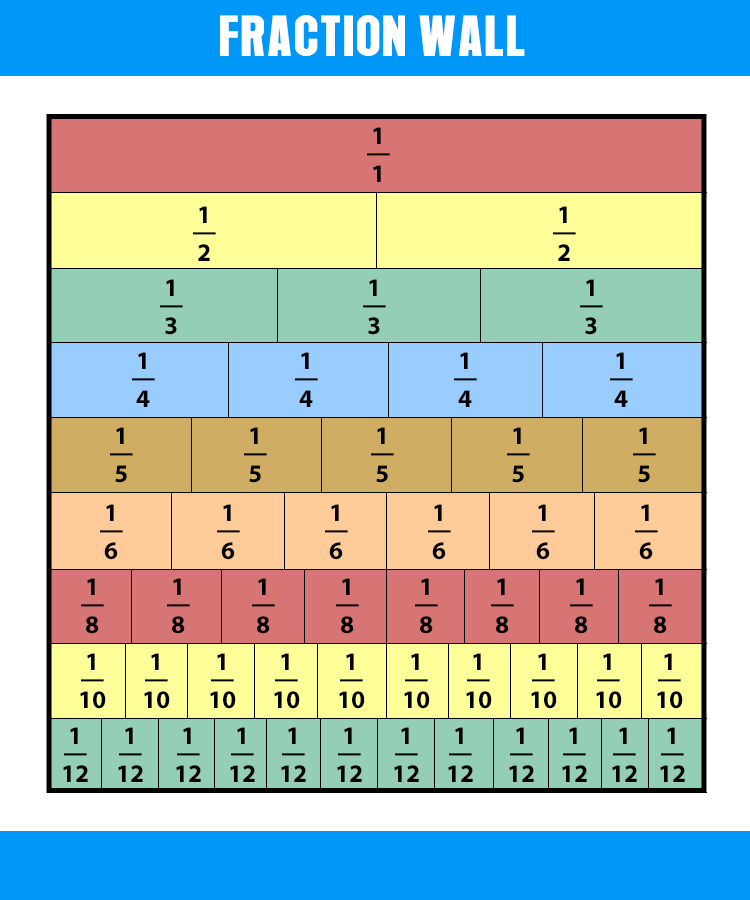
Visual aids can significantly enhance the understanding of equivalent fractions. Imagine a rectangle.
- Divide it into three equal vertical strips. Shading one strip represents 1/3.
- Now, divide each of those three strips in half horizontally. You now have six equal smaller rectangles. The original shaded strip now comprises two of these smaller rectangles, representing 2/6.
- Continue this process. If you divide each of the six smaller rectangles in half again, you will have twelve equal rectangles, and the original shaded portion will now comprise four of them, representing 4/12.
This visual progression clearly demonstrates that 1/3, 2/6, 4/12, and so on, all represent the same proportion of the whole. This concept of proportional representation is fundamental in financial analysis.
Applications in Personal Finance: Understanding Value Representation
In personal finance, the ability to understand and manipulate fractions is not merely an academic exercise; it directly impacts how we perceive and manage our money. Whether it’s understanding interest rates, calculating investment returns, or deciphering loan terms, equivalent fractions allow for a clearer and more flexible interpretation of financial data.
Interest Rates and Yields
Interest rates are often expressed as percentages, which are inherently fractions. For example, an annual interest rate of 5% can be written as 5/100. However, depending on the compounding period, this rate might be expressed differently. A monthly interest rate equivalent to 5% annual interest would be approximately 5%/12, which is about 0.4167%. This is an equivalent representation of the same underlying rate of return, just broken down into smaller, more frequent intervals.
Furthermore, investment yields are frequently discussed in fractional terms. If an investment has grown by 1/4 of its initial value, this is equivalent to a 25% increase. For someone looking at a complex investment portfolio, understanding that a reported gain of 3/12 is identical to a gain of 1/4 simplifies performance analysis.
Budgeting and Allocation
Budgeting often involves dividing income or expenses into portions. If a household allocates 1/3 of its income to housing, this is equivalent to allocating 4/12 or 2/6, depending on how the remaining budget is itemized. Recognizing these equivalences allows for greater flexibility when adjusting budget categories without altering the overall financial plan. For instance, if a family decides to reduce their entertainment spending from 1/6 to 1/12 of their income, they understand that this frees up an equivalent portion of their budget that can be reallocated elsewhere.
Loan Repayments and Amortization
Loan terms are rife with fractional representations of principal and interest. When calculating loan payments, understanding how fractions relate to the total repayment amount is crucial. A mortgage might have a principal repayment that is a certain fraction of the total outstanding loan. Over time, this fraction changes as interest is paid down. Recognizing that a loan paid down by 1/10 is equivalent to 2/20 or 3/30, though less practical in direct calculation, reinforces the understanding that different payment milestones represent the same proportion of debt reduction.
Investment Analysis: Deconstructing Performance and Risk
In the investment world, precision and clarity in understanding value are paramount. Equivalent fractions offer a nuanced way to analyze investment performance, compare different assets, and assess risk.
Comparing Investment Returns
When comparing investment opportunities, returns are often presented in different formats. One investment might report a quarterly return of 1/4, while another reports an annual return of 1/2. To make a fair comparison, these need to be brought to a common denominator. While simple time-scaling is needed for direct comparison, understanding the fractional representation itself is the first step. If one fund manager states their fund returned 2/8 of its value in a given period, and another states their fund returned 1/4, an investor must recognize these are identical performance figures. This allows for a more direct and accurate assessment of which investment is performing better.
Risk Assessment and Diversification
Risk in investment is often quantified as volatility or the potential for loss, which can be expressed as fractions of total capital. Diversification, a strategy to mitigate risk, involves allocating different fractions of an investment portfolio to various asset classes. If an investor decides to allocate 1/3 of their portfolio to stocks, this is equivalent to allocating 2/6 or 4/12. Understanding that these different fractional representations can lead to the same risk exposure and return profile is key. For instance, if a portfolio is designed to have 1/2 of its assets in bonds and 1/2 in stocks, and due to market fluctuations, the bond allocation temporarily shifts to 6/12, the investor immediately recognizes that the risk profile of the portfolio remains unchanged in terms of asset allocation.
Valuing Assets and Derivatives
Complex financial instruments, such as derivatives, often involve payoffs that are proportional to underlying assets. The value of an option, for example, can be expressed as a fraction of the underlying stock’s price. Understanding these fractional relationships is critical for pricing and hedging strategies. If a derivative’s payout is tied to 1/10 of a stock’s movement, and this is equivalent to 2/20, it highlights how different mathematical representations can lead to the same outcome in terms of financial exposure.
The Broader Implications: Financial Literacy and Decision-Making
The ability to grasp and utilize the concept of equivalent fractions contributes significantly to overall financial literacy. This, in turn, empowers individuals to make more informed and effective financial decisions throughout their lives.
Empowering Informed Choices
When faced with various financial products, from savings accounts with different interest calculation methods to investment funds with diverse reporting structures, a solid understanding of fractions allows individuals to cut through jargon and complexity. Recognizing that 3/4 of a potential bonus is the same as 6/8, or that a 5% annual yield is mathematically identical to a slightly different, but equivalent, periodic yield, enables a clearer comparison of options and reduces the likelihood of making a decision based on superficial presentation rather than true value.
Navigating Financial Information
In an era of abundant financial information, distinguishing between meaningful data and potential obfuscation is vital. Equivalent fractions are a tool that helps demystify financial statements, investment reports, and loan documents. By being able to mentally (or practically) convert fractions to a common form, individuals can more readily compare the performance of different investments over time, assess the true cost of borrowing, and understand the potential gains from saving and investing. This analytical capability fosters a sense of control and confidence in managing one’s financial future.

The Foundation for Advanced Financial Concepts
The concept of equivalent fractions serves as a stepping stone to more advanced mathematical principles that underpin sophisticated financial modeling. Understanding ratios, proportions, and how to manipulate them is fundamental to areas like discounted cash flow analysis, option pricing models, and portfolio optimization techniques. Without a firm grasp of basic equivalence, these more complex financial concepts would remain inaccessible. Therefore, mastering “what is a fraction equivalent to 1/3” is not just about elementary arithmetic; it’s about building a robust foundation for financial acumen and long-term financial well-being.
aViewFromTheCave is a participant in the Amazon Services LLC Associates Program, an affiliate advertising program designed to provide a means for sites to earn advertising fees by advertising and linking to Amazon.com. Amazon, the Amazon logo, AmazonSupply, and the AmazonSupply logo are trademarks of Amazon.com, Inc. or its affiliates. As an Amazon Associate we earn affiliate commissions from qualifying purchases.