
In the world of business finance, a business plan is often described as a roadmap. However, for the serious entrepreneur or the individual looking to scale a side hustle into a primary income stream, it is much more than a simple set of directions. A business plan is a comprehensive financial and operational manifesto. It is a formal document that outlines a company’s goals, the strategies for achieving those goals, and the specific financial timeframes required to reach profitability.
At its core, the business plan serves two primary masters: the internal management team and the external investor. Internally, it provides a disciplined framework for decision-making, ensuring that capital is allocated efficiently and that the company’s burn rate remains sustainable. Externally, it is the fundamental tool used to secure funding, whether through traditional bank loans, venture capital, or private equity. Without a structured plan, a business is merely a collection of ideas; with one, it becomes a bankable asset.

The Core Architecture of a Business Plan: Establishing the Financial Foundation
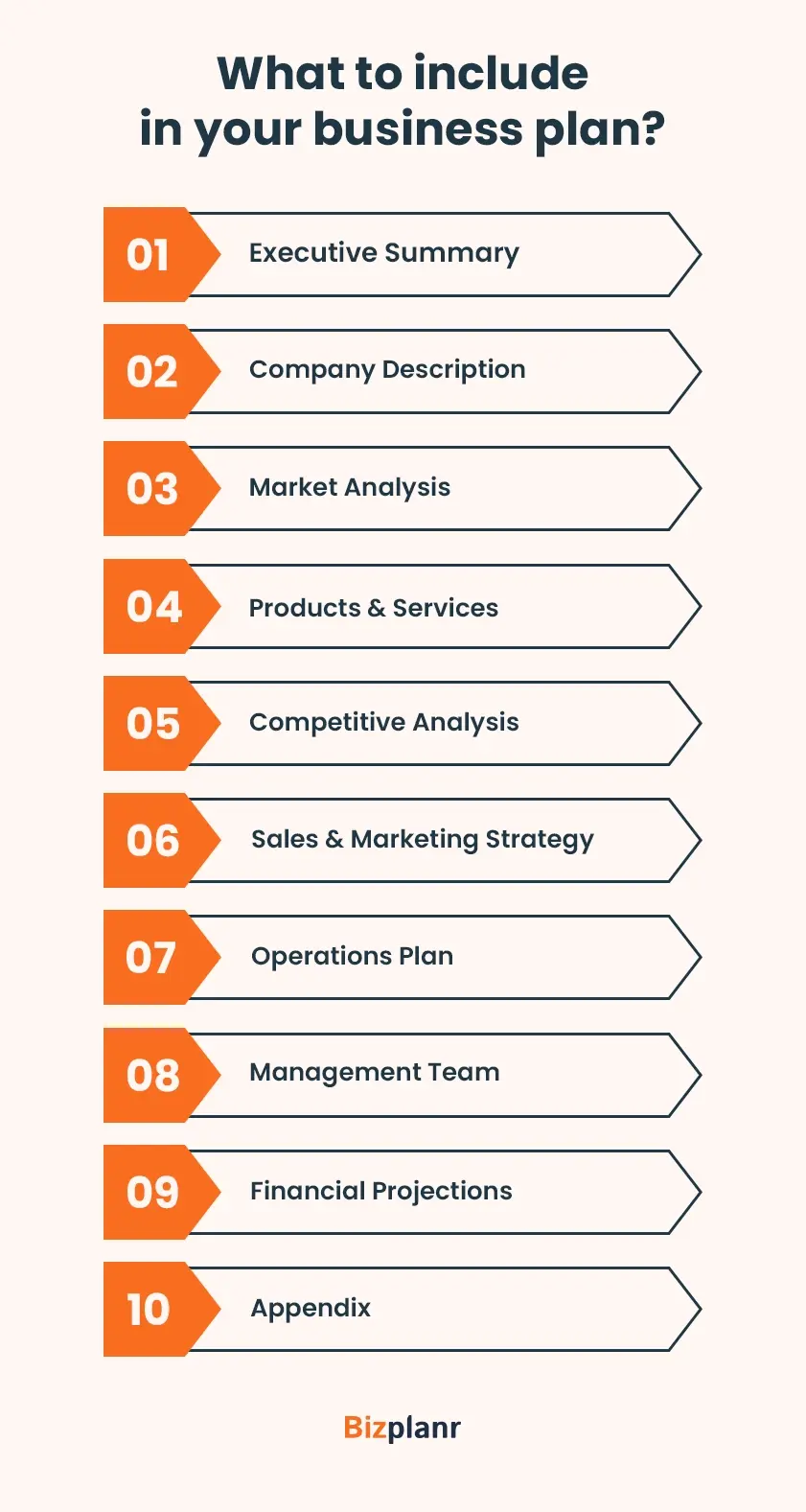
The structure of a business plan is designed to move from the conceptual to the concrete. While every industry has its nuances, the financial backbone of a successful plan remains consistent. The process begins with the Executive Summary, which, while appearing first, is often written last. In the context of business finance, this section must concisely articulate the value proposition and the financial “ask.” It summarizes why the business exists and, crucially, how it will generate a return on investment (ROI).
Market Analysis and Revenue Modeling
Before a business can project earnings, it must demonstrate a deep understanding of its market. This involves an analysis of the Total Addressable Market (TAM), Serviceable Addressable Market (SAM), and Serviceable Obtainable Market (SOM). From a financial perspective, this data justifies the revenue assumptions found later in the plan.
Investors look for a realistic revenue model. Whether the business relies on a subscription-based model (SaaS), transactional retail sales, or high-margin service contracts, the plan must detail the unit economics. Understanding the Customer Acquisition Cost (CAC) in relation to the Lifetime Value (LTV) of a customer is essential. If the LTV-to-CAC ratio is not favorable, the business model is fundamentally flawed from a financial standpoint, regardless of how innovative the product may be.
Operational Strategy and Capital Allocation
This section bridges the gap between the idea and the execution. It outlines the logistics of the business—supply chain management, manufacturing costs, and labor requirements. In a business plan focused on financial health, this section details the “Use of Funds.” If a company is seeking $500,000 in seed capital, the operational strategy must explain exactly how that money will be spent to hit specific milestones. This might include hiring key personnel, purchasing equipment, or funding initial marketing blitzes aimed at achieving a critical mass of users.
The Financial Projections: The Heart of the Plan
For any serious investor or financial institution, the financial projections section is the most scrutinized portion of the business plan. This is where the narrative meets reality. A robust plan typically includes three to five years of projected financial statements. These are not mere guesses; they are calculated forecasts based on market research and historical data.
Income Statements (Profit and Loss)
The Income Statement provides a snapshot of the business’s profitability over time. It details expected revenues, the Cost of Goods Sold (COGS), and operating expenses. For those starting online businesses or side hustles, the focus is often on achieving a “lean” operation. The business plan must show at what point the company will move from a net loss—common in the early stages—to a net profit. This “path to profitability” is the single most important narrative for anyone looking to invest their own personal finance into a new venture.
Cash Flow Statements
It is a common adage in business finance that “revenue is vanity, profit is sanity, but cash is king.” A business can be profitable on paper but still fail if it runs out of cash. The Cash Flow Statement tracks the actual movement of money in and out of the business. It accounts for the timing of payments, which is critical for businesses with high inventory costs or long payment cycles. A well-constructed business plan identifies potential “cash crunches” and proposes strategies to manage them, such as securing a line of credit or negotiating better terms with suppliers.
Balance Sheets and Break-Even Analysis
The Balance Sheet provides a view of the company’s net worth at a specific point in time, listing assets, liabilities, and equity. This helps in assessing the financial leverage of the company. Alongside the balance sheet, a Break-Even Analysis is vital. This calculation determines the exact volume of sales required to cover all costs. For an entrepreneur, knowing the break-even point is psychological and financial armor; it provides a clear target for the minimum viable performance of the business.
Attracting Capital: How Investors and Lenders Read Your Plan
When a business plan is used as a tool for seeking external funding, it must be tailored to the audience. Personal finance and business finance intersect here, as the entrepreneur often risks their own credit and capital. However, to scale, one must look toward institutional money.
The Investor’s Perspective on Risk and ROI
Venture capitalists and angel investors are primarily interested in the scalability of the business and the potential “exit.” Their reading of a business plan is focused on the “Hockey Stick” growth curve—the point where revenue begins to grow exponentially while costs remain relatively flat. The business plan must clearly outline the exit strategy: Is the goal an Initial Public Offering (IPO)? Or is the company being positioned for acquisition by a larger corporate entity?
Investors also look for risk mitigation. Every business plan must include a “Risk Factors” section that honestly addresses market volatility, competitive threats, and regulatory changes. In financial terms, this demonstrates that the management team is not just optimistic, but also pragmatic.
Debt Financing and Bank Requirements
For those seeking a traditional bank loan, the focus of the business plan shifts toward stability and collateral. Banks are less interested in exponential growth and more interested in the borrower’s ability to service debt. They look for a strong Debt-to-Equity ratio and a solid history of financial responsibility. Here, the business plan serves as a document of reliability. It must prove that the business generates enough consistent cash flow to cover interest payments and principal repayments without straining the daily operations.
The Dynamic Nature of Business Plans in a Digital Economy
The traditional, 50-page leather-bound business plan is increasingly being replaced by more agile versions, such as the Lean Startup Canvas or the One-Page Business Plan. In the modern digital economy, where online income and side hustles can scale overnight, the ability to iterate is crucial.
Iterative Planning for Side Hustles and Online Income
For individuals looking to create additional income streams through digital security tools, affiliate marketing, or e-commerce, a business plan acts as a guardrail. It prevents “shiny object syndrome” by keeping the focus on the primary financial goals. These plans are often more focused on short-term milestones. For instance, a plan for a digital product business might focus on a 12-month window, with heavy emphasis on conversion rates and recurring revenue metrics.
Scaling and Financial Tools
Modern business planning is often integrated with financial software. Tools like QuickBooks, Xero, or specialized business planning software allow for “live” plans. This means the business plan is no longer a static document sitting in a drawer; it is a dynamic dashboard. By comparing actual financial performance against the projections in the business plan, owners can make real-time adjustments. If the Cost of Goods Sold is higher than planned, the owner can immediately identify the leak and adjust the pricing or supply chain, preserving the financial health of the enterprise.

Maximizing Wealth through Structured Financial Roadmaps
Ultimately, the answer to “what’s a business plan” is that it is a tool for wealth creation. Whether you are building a multi-national corporation or a streamlined online business, the plan is the mechanism that converts a vision into a quantifiable, manageable, and fundable reality.
In the realm of personal and business finance, the plan serves as a discipline. It forces the entrepreneur to confront the hard numbers before they commit significant capital. It demands an answer to the most difficult questions: Is there a real market? Can this be done profitably? How long will it take to see a return? By answering these questions in a structured format, the business plan reduces the inherent risks of entrepreneurship and provides a clear path toward financial independence and long-term business success. Success in business is rarely an accident; it is the result of a well-executed plan that treats money as a tool for growth and a metric for excellence.
aViewFromTheCave is a participant in the Amazon Services LLC Associates Program, an affiliate advertising program designed to provide a means for sites to earn advertising fees by advertising and linking to Amazon.com. Amazon, the Amazon logo, AmazonSupply, and the AmazonSupply logo are trademarks of Amazon.com, Inc. or its affiliates. As an Amazon Associate we earn affiliate commissions from qualifying purchases.