
The automotive world has been in a state of suspended animation since late 2017, when Elon Musk surprised the industry by driving a prototype of the second-generation Tesla Roadster out of the back of a Semi truck. Billed as the quickest car in the world, the Roadster was intended to deliver a “hardcore smackdown” to gasoline-powered supercars. However, years of delays have transformed the Roadster from an imminent product launch into a symbol of the immense technical challenges inherent in pushing the boundaries of electric vehicle (EV) hardware and software.
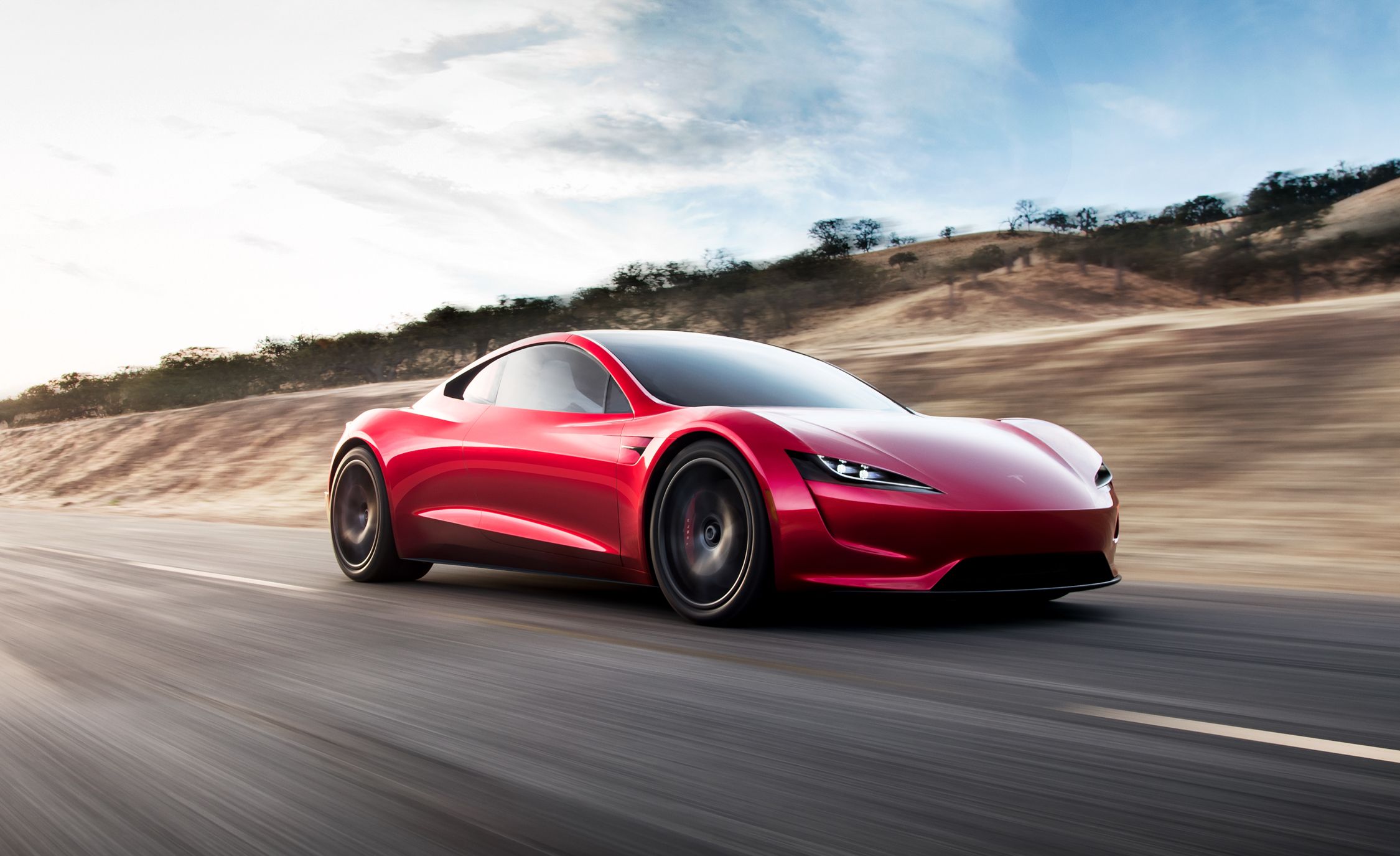
To understand when the Tesla Roadster is coming out, one must look beyond simple manufacturing schedules and examine the complex web of engineering breakthroughs, supply chain evolutions, and strategic pivots that define Tesla’s development cycle.
The Engineering Evolution of the Next-Generation Roadster
The delay in the Roadster’s release is not merely a byproduct of logistics; it is rooted in a fundamental shift in what the vehicle is intended to represent. When first unveiled, the Roadster’s specs were industry-leading: a 0-60 mph time of 1.9 seconds, a 620-mile range, and a top speed exceeding 250 mph. In the intervening years, however, Tesla’s own Model S Plaid has begun to approach those performance metrics, forcing the engineering team to move the goalposts even further.
Tri-Motor Architecture and Carbon-Sleeve Rotors
Central to the Roadster’s performance is its tri-motor drivetrain. While the Model S Plaid successfully implemented this layout, the Roadster is expected to use a more refined version of the carbon-overwrapped rotors. These rotors allow the electric motors to spin at incredibly high RPMs without disintegrating under centrifugal force. By wrapping the rotor in carbon fiber, Tesla can maintain a tighter gap between the rotor and the stator, significantly increasing efficiency and power density. For the Roadster to surpass the Plaid, the tech team is likely optimizing the thermal management systems to ensure these motors can sustain peak output without derating.
The 200kWh Structural Battery Pack
The most significant technical hurdle for the Roadster is the battery. Achieving a 620-mile range in a compact 2+2 seater requires a 200kWh battery pack—double the capacity of the current Model S. Integrating such a massive energy reserve without adding prohibitive weight is a masterclass in energy density. The Roadster is expected to utilize the 4680 cell format, which offers a structural advantage. By making the battery pack a stressed member of the vehicle’s chassis, Tesla reduces the overall weight of the car, offseting the mass of the cells themselves. The delay in the Roadster is closely tied to the scaling and refinement of these 4680 cells, which have seen a slower production ramp-up than initially projected.
The Role of the SpaceX Package: Cold Gas Thrusters and Aerospace Tech
Perhaps the most disruptive technological aspect of the new Roadster is the “SpaceX Package.” This is not a mere branding exercise but a legitimate integration of aerospace engineering into consumer automotive hardware. The plan involves installing approximately ten small rocket thrusters around the car, powered by a composite overwrapped pressure vessel (COPV) filled with ultra-high-pressure air.
Cold Gas Thruster Mechanics
These thrusters, derived from the Falcon 9’s cold gas thruster systems used for attitude control in space, will be utilized to improve acceleration, top speed, braking, and even cornering. By venting high-pressure air, the vehicle can generate downward force instantaneously, independent of aerodynamic speed. This solves one of the primary limitations of high-performance EVs: tire traction. At a certain point, electric motors produce more torque than the tires can translate to the pavement. The thrusters provide the literal “push” needed to overcome the friction limits of rubber.
Software Integration and Active Aero
The software requirements for such a system are immense. Tesla’s engineers must develop a real-time control system that integrates thruster bursts with the vehicle’s stability control and torque vectoring systems. This requires a level of computational speed and sensor fusion that goes far beyond standard automotive ESC (Electronic Stability Control). Every millisecond, the car must calculate the optimal balance of motor torque and thruster pressure to keep the vehicle stable while accelerating at rates that could exceed 2 Gs.

Manufacturing Realities and the Silicon Valley Production Cycle
The question of “when” is also a question of “where” and “how.” Tesla’s production strategy has shifted significantly since 2017. The company has moved from being a niche luxury manufacturer to a mass-market powerhouse, prioritizing the Model 3 and Model Y. This shift relegated low-volume, high-complexity projects like the Roadster to the back burner.
The Cybertruck Precedent
The recent launch of the Cybertruck provides a roadmap for the Roadster’s eventual production. The Cybertruck served as a testbed for 48-volt architecture and steer-by-wire technology—innovations that are almost certain to be included in the final Roadster design. By moving from a 12V to a 48V system, Tesla can reduce the weight of the wiring harness and provide more power to high-draw components like the active suspension and the SpaceX package’s air compressors.
Gigafactory Texas and Pilot Lines
Current industry intelligence suggests that the Roadster will likely be produced at Gigafactory Texas, albeit on a dedicated, highly automated low-volume line. Unlike the high-speed lines for the Model Y, the Roadster requires hand-finished elements and complex assembly for its removable glass roof and specialized interior. Recent statements from Tesla’s leadership indicate that the design is being finalized in 2024, with the goal of shipping the first units in 2025. This timeline aligns with the stabilization of 4680 cell production and the maturation of the 48V architecture.
The Impact on the Global EV Landscape
The Roadster is more than just a car; it is a technology demonstrator. Its release will signal a new era for EV performance, challenging the dominance of traditional European hypercar manufacturers like Rimac, Pininfarina, and Bugatti.
Redefining Efficiency and Performance
The Roadster’s ability to offer hypercar performance with a 600+ mile range challenges the notion that EVs must choose between power and utility. The technological “trickle-down” effect will be significant. The ultra-high-efficiency inverters and advanced thermal scavenge systems developed for the Roadster will eventually find their way into more affordable models, improving the range and charging speeds of the entire Tesla fleet.
The Software-Defined Supercar
The Roadster will also push the boundaries of the “software-defined vehicle.” With Tesla’s full self-driving (FSD) hardware as standard, the Roadster will be capable of autonomous track modes—allowing the car to teach the driver the optimal racing line or demonstrating the vehicle’s limits through AI-controlled maneuvers. This fusion of high-performance hardware and sophisticated AI is a tech trend that will define the next decade of automotive luxury.

Anticipating the 2025 Launch
As of late 2024, the most reliable indicators point toward a 2025 release date. Elon Musk has recently hinted that the final design of the Roadster has been significantly updated from the 2017 prototype, describing the new version as “even more mind-blowing.” This suggests that the tech being packed into the production version is a generation ahead of what was originally promised.
The delay, while frustrating for reservation holders, has allowed for several key technologies to mature:
-
Steer-by-Wire: Eliminating the mechanical link between the steering wheel and the tires, allowing for variable ratios and better packaging.
-
Advanced Heat Pump Systems: Ensuring that the 200kWh battery remains at the optimal temperature during extreme performance runs.
-
High-Power Silicon Carbide Inverters: Improving the conversion of DC power from the battery to AC power for the motors with minimal energy loss.
When the Tesla Roadster finally exits the assembly line, it won’t just be a fast car; it will be a mobile laboratory for the most advanced consumer-facing technology on the planet. For those tracking the intersection of technology and transportation, the Roadster represents the ultimate benchmark for what is possible when aerospace logic is applied to the asphalt. The wait, though extensive, is a reflection of the sheer audacity of the vehicle’s technical requirements. In the world of high-tech hardware, the transition from “impossible” to “shippable” is rarely a straight line, but for the Tesla Roadster, the finish line is finally coming into view.
aViewFromTheCave is a participant in the Amazon Services LLC Associates Program, an affiliate advertising program designed to provide a means for sites to earn advertising fees by advertising and linking to Amazon.com. Amazon, the Amazon logo, AmazonSupply, and the AmazonSupply logo are trademarks of Amazon.com, Inc. or its affiliates. As an Amazon Associate we earn affiliate commissions from qualifying purchases.