
World of Warcraft, often abbreviated as WoW, officially launched in North America on November 23, 2004. This date marks a pivotal moment in the history of massively multiplayer online role-playing games (MMORPGs) and indeed, the broader technology and software industries. Developed by Blizzard Entertainment, WoW wasn’t just another game; it was a technological marvel for its time, building upon the foundations of earlier online worlds while simultaneously pushing the boundaries of what was thought possible in terms of scale, accessibility, and persistent digital environments. Its release wasn’t merely a product launch; it was the genesis of a digital ecosystem that would captivate millions, evolve continuously, and leave an indelible mark on game development, server architecture, and user engagement for decades to come.
To truly appreciate the significance of WoW’s debut, one must consider the technological landscape it emerged from, the innovations it brought to the forefront, and its enduring influence on how we design, maintain, and experience large-scale interactive software.
The Dawn of an Epoch: World of Warcraft’s Genesis
Before World of Warcraft captivated the world, the MMORPG genre was a niche, often characterized by steep learning curves, demanding hardware, and sometimes clunky interfaces. Titles like EverQuest, Ultima Online, and Dark Age of Camelot had cultivated dedicated communities and demonstrated the potential of persistent online worlds. However, these games often served a hardcore audience, leaving a vast untapped market yearning for a more accessible yet equally immersive experience. Blizzard Entertainment, already a titan in the gaming industry with critically acclaimed real-time strategy games like Warcraft and StarCraft, and the immensely popular action RPG Diablo, recognized this opportunity. They sought to blend their rich lore and polished gameplay design with the persistent world format, aiming for a broader appeal without sacrificing depth.
Setting the Stage: Blizzard’s Legacy and the MMO Landscape Pre-WoW
Blizzard’s journey towards WoW was paved with prior successes that instilled a deep understanding of game design, narrative crafting, and community building. Their Warcraft universe, with its compelling story of factions, heroes, and villains, provided an ideal backdrop for an expansive MMORPG. Unlike many early MMORPGs that often started with blank slate narratives, WoW leveraged an already beloved and established fictional world. This allowed players to step into a familiar yet grander version of Azeroth, instantly connecting with its history and characters.
Technologically, the MMORPGs preceding WoW faced significant hurdles. Server stability, network latency, graphical fidelity, and ease of use were constant challenges. Many games struggled to scale their infrastructure to accommodate growing player bases, leading to frequent disconnects, lag, and frustrating downtimes. The interfaces were often complex, requiring players to memorize numerous hotkeys and navigate dense menus. Blizzard observed these issues and set out to create a game that, while technically ambitious, would prioritize a smooth, intuitive, and stable user experience.
The Official Launch: A Date Etched in Digital History (November 23, 2004)
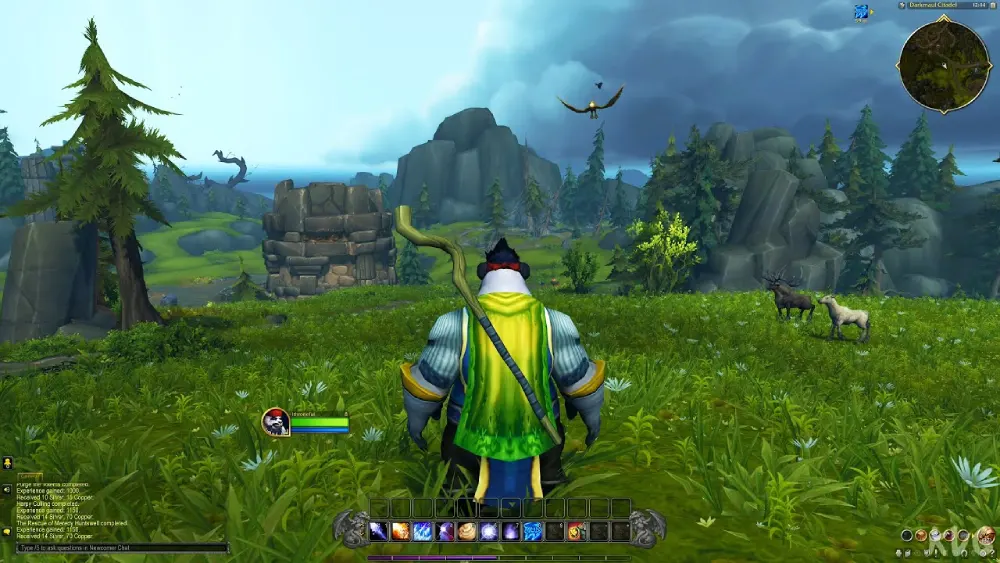
When World of Warcraft officially launched in North America on November 23, 2004, it was met with immediate, overwhelming enthusiasm. The initial release included two factions (Alliance and Horde), eight playable races, and nine classes, set across the vast continents of Kalimdor and the Eastern Kingdoms. The game offered a rich tapestry of quests, dungeons, and player-versus-player (PvP) combat, all within a beautifully rendered 3D world.
The launch was not without its technological growing pains, a common rite of passage for large online games. Server queues stretched for hours as millions attempted to log in simultaneously, pushing Blizzard’s infrastructure to its limits. Yet, these issues, while frustrating, were a testament to the sheer demand for the game. Blizzard responded rapidly, deploying more servers, optimizing network code, and issuing patches, demonstrating a commitment to supporting their burgeoning player base that would become a hallmark of their operation. The North American launch was soon followed by releases in Australia and New Zealand, Europe, South Korea, China, and Taiwan throughout 2005, expanding its global footprint at an unprecedented pace.
Initial Technological Challenges and Triumphs
The initial triumph of WoW lay not just in its engaging gameplay but in its ability to manage a massive influx of concurrent users. Prior MMORPGs often struggled to maintain stability with hundreds of thousands of players; WoW was built from the ground up to handle millions. This required innovative approaches to server architecture, load balancing, and network optimization. The development team had to design a world that felt vast and seamless, yet could be partitioned effectively to distribute server load and manage data efficiently.
The game’s 3D engine, while not on the bleeding edge of graphical realism compared to some single-player titles of the era, was optimized for performance across a wide range of hardware configurations. This accessibility was a deliberate technical decision, ensuring that a broader audience could play the game without needing top-tier gaming PCs, a critical factor in its mass market adoption. Furthermore, the streaming technology used to load zones dynamically minimized loading screens, contributing to a fluid and immersive experience.
Technological Underpinnings and Early Innovations
World of Warcraft’s success was deeply rooted in its clever technological design and a commitment to user experience that set new benchmarks for the genre. Beneath its vibrant art style and engaging gameplay lay a sophisticated software system designed for scalability, persistence, and continuous evolution.
The Engine That Built Azeroth: Custom Development and Adaptations
WoW did not license an off-the-shelf game engine; instead, Blizzard utilized a heavily modified version of the Warcraft III engine. This provided a familiar development environment for their team and allowed for tailored optimizations specific to the needs of an MMORPG. Key modifications included enhancing its capabilities for rendering vast outdoor environments, supporting complex AI for thousands of creatures and NPCs, and facilitating dynamic lighting and weather effects. The engine was designed to be robust yet flexible, allowing artists and designers to rapidly iterate on content without constant engineering bottlenecks. Its ability to render a distinct, stylized aesthetic, rather than aiming for hyper-realism, meant it aged gracefully and remained performant on a wide array of systems, a crucial technical consideration for a game intended to run for many years.
Server Architecture and Persistent Worlds: Scaling for Millions
Perhaps the most significant technological challenge and achievement of WoW was its server architecture. Creating a single, persistent world that millions of players could inhabit simultaneously required groundbreaking solutions. Blizzard employed a distributed server model, where different regions of Azeroth were managed by dedicated server clusters. This allowed for horizontal scaling, meaning they could add more hardware to accommodate a growing player base without rewriting core parts of the game.
The concept of “sharding” (though not fully implemented as it is in modern WoW until much later, initial load balancing achieved similar results) was implicitly managed by directing players to specific “realms” or servers. Each realm was a self-contained instance of the world, fostering its own community while benefiting from shared core game logic and infrastructure. This approach was critical for maintaining performance and stability across a truly global player base. Data persistence was also paramount; every item, character stat, and world state had to be reliably stored and retrieved, requiring robust database management systems capable of handling an immense volume of transactions every second.
User Interface and Accessibility: Redefining MMO Interaction
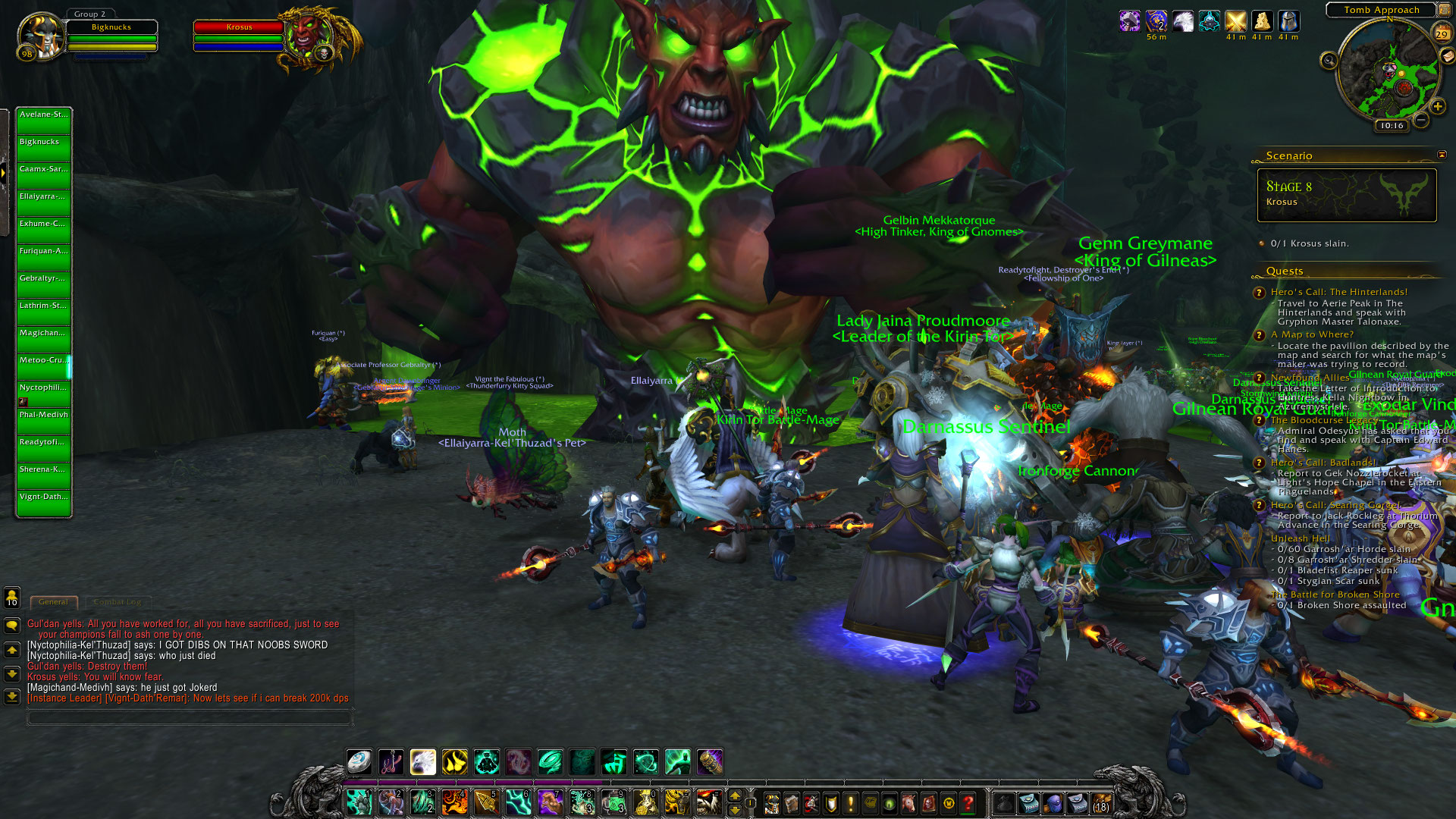
One of WoW’s most lauded early innovations, from a software design perspective, was its user interface (UI). Unlike many contemporary MMORPGs that presented cluttered screens and required extensive keybindings, WoW offered a clean, intuitive interface that was easy to learn for newcomers yet offered depth for veterans. The default UI was highly functional, but crucially, Blizzard provided extensive support for UI modding through an official API. This decision was a technological triumph that empowered the community to customize their experience, creating thousands of add-ons that enhanced everything from raid management to quest tracking. This open-ended approach to UI design fostered a vibrant ecosystem of third-party tools, effectively crowdsourcing interface improvements and allowing the game to adapt to player needs without constant official updates. This demonstrated a sophisticated understanding of developer-community interaction and significantly extended the game’s functional lifespan.
Evolution Through Iteration: Expansions as Technological Milestones
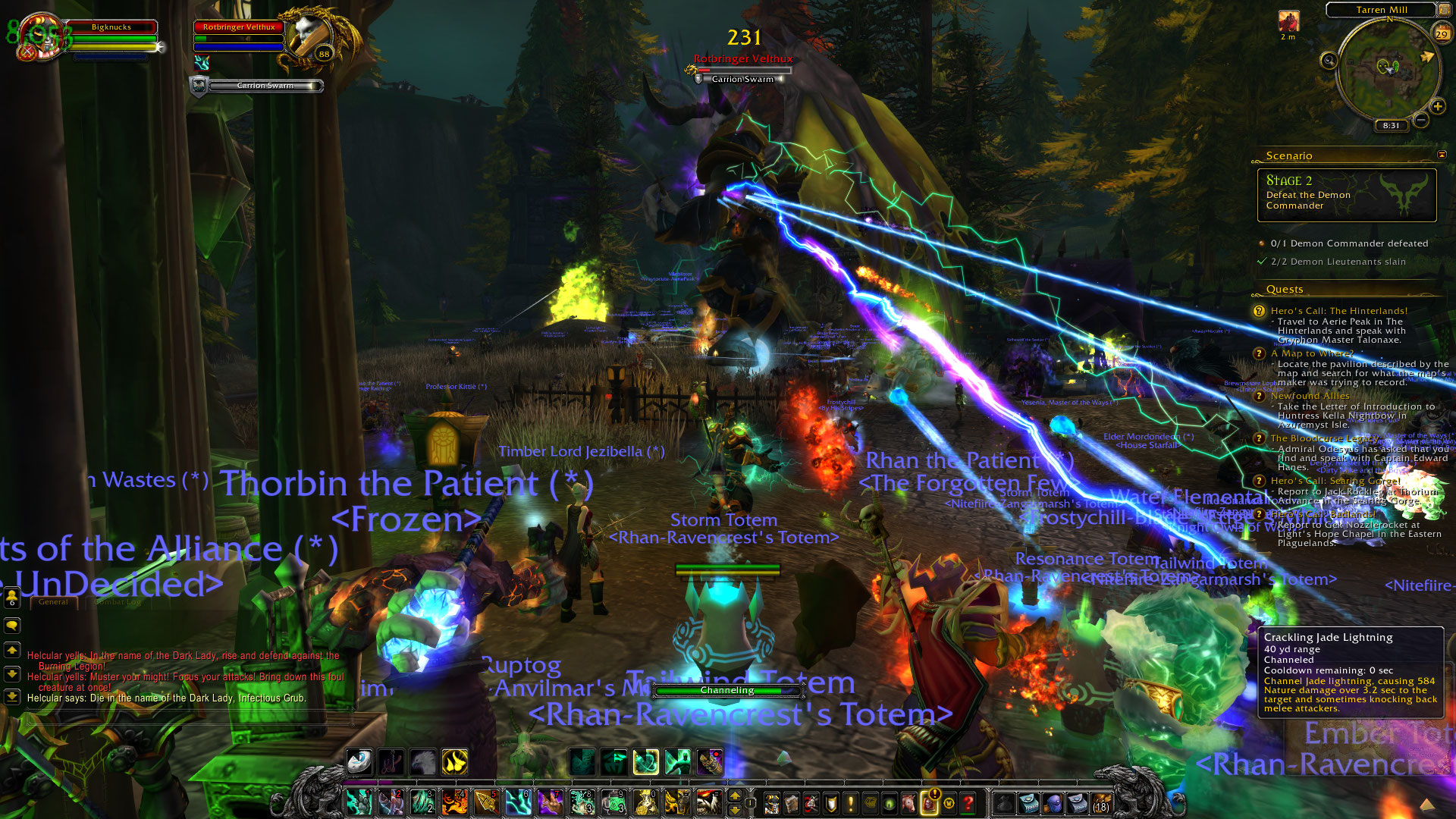
World of Warcraft’s longevity is a testament to Blizzard’s commitment to continuous development and technological iteration. Each major expansion pack, released roughly every two years, wasn’t just a content dump; it represented a significant technological upgrade, refining existing systems and introducing entirely new paradigms.
The Burning Crusade & Wrath of the Lich King: Expanding Horizons and Performance
The Burning Crusade (2007) introduced the Outland, an entirely new continent, and two new races. Technologically, it demanded further optimization of the game engine to render more diverse environments and handle larger player numbers in new zones. Wrath of the Lich King (2008) brought players to Northrend and introduced the Death Knight hero class. These expansions focused heavily on improving server stability under load, enhancing graphical fidelity without alienating players with older hardware, and refining the game’s networking code for smoother global play. They also saw significant advancements in instanced content, like raids and dungeons, pushing the boundaries of synchronized multiplayer encounters within a persistent world.
Cataclysm and Mists of Pandaria: World Revamps and Engine Refinements
Cataclysm (2010) was arguably the most ambitious technological undertaking after the initial launch. It dramatically reshaped the original continents of Kalimdor and the Eastern Kingdoms, requiring a complete overhaul of vast swathes of the game’s world data. This meant not just new textures and models, but a fundamental redesign of quest flows and environmental geometry, all while keeping the game playable for millions. This demonstrated the engine’s incredible flexibility and Blizzard’s capability for large-scale data migration and content integration. Mists of Pandaria (2012) further refined the graphics engine, introduced new spell effects, and continued to optimize client-side performance, proving that a nearly decade-old game could still look fresh and run smoothly.
Modern WoW: Graphics, Network Code, and Accessibility Updates
Subsequent expansions like Warlords of Draenor, Legion, Battle for Azeroth, Shadowlands, and Dragonflight have continued this trend of technological refinement. Modern WoW boasts significantly improved character models, higher-resolution textures, dynamic environmental effects, and advanced lighting. The underlying network code has been continually optimized to reduce latency and improve responsiveness, critical for high-end competitive play. Furthermore, Blizzard has invested heavily in accessibility features, incorporating options for colorblind players, customizable UI elements beyond just mods, and various control scheme enhancements, underscoring a commitment to making the software usable by the broadest possible audience. The continuous implementation of modern graphics APIs and performance tweaks has allowed the game to keep pace with contemporary expectations while maintaining its core appeal.
World of Warcraft’s Enduring Technical Legacy
World of Warcraft’s impact on the technology and software industries extends far beyond its own success. It has served as a blueprint and an inspiration for countless online games and digital services, proving the viability of large-scale, persistent virtual worlds and the continuous “live service” model.
Influencing Game Development and Server Technologies
WoW set a new standard for scalability and reliability in online gaming. Its robust server architecture and the strategies employed to manage millions of concurrent users influenced the design of subsequent MMORPGs and online games across various genres. Concepts like instancing (creating private copies of areas for groups) and sharding (dynamically splitting zones across multiple servers to distribute load) became fundamental tools in online game development. The sheer volume of player data WoW managed also pushed the boundaries of database technology, requiring innovative solutions for real-time transaction processing and data warehousing. Its success demonstrated that investing heavily in backend infrastructure and continuous operational improvements was paramount for long-term engagement in the digital realm.
The Pioneer of Live Service Games and Continuous Updates
Before WoW, online games often had a lifecycle defined by an initial launch and perhaps one or two major expansions. WoW popularized the “live service” model, where the game is continuously updated with new content, features, and technical improvements for years, even decades. This model required sophisticated development pipelines, robust patching systems, and a dedicated team for ongoing maintenance and support. Blizzard’s ability to consistently deliver substantial updates, respond to community feedback, and rapidly deploy hotfixes established a precedent for how modern online software applications are developed and sustained. This continuous deployment philosophy is now standard across not just games, but many SaaS products and digital platforms.
Maintaining a Vintage Game in a Modern Era: The Challenge of WoW Classic
A remarkable testament to WoW’s technical legacy is the existence of WoW Classic, launched in 2019. This initiative involved meticulously recreating the game as it existed in its 2006 “vanilla” state, requiring significant reverse-engineering and adapting the original game data to run on modern server infrastructure and client technology. This was not a simple task; it involved bridging nearly two decades of software evolution, ensuring authentic gameplay while leveraging contemporary security and performance enhancements. The success of WoW Classic highlighted the enduring appeal of the original game’s technical design and demonstrated Blizzard’s ability to not only evolve its flagship product but also meticulously preserve its historical iterations. It showcased the complex technical challenge of maintaining fidelity to legacy software while operating it within a contemporary ecosystem.
Beyond the Game: Social Tech and Community Engineering
WoW wasn’t just a technical achievement in game engine and server architecture; it also pioneered several aspects of social technology and community interaction within a digital environment, impacting how online communities are formed and sustained.
In-Game Communication Tools and Guild Systems
From its inception, WoW provided robust in-game communication tools, including public chat channels, private whispers, and dedicated guild chat. The guild system, in particular, was a groundbreaking piece of social software. It allowed players to form persistent social groups, complete with administrative tools, shared banks, and custom chat channels. These guilds fostered strong bonds and facilitated complex cooperative activities like raiding, effectively turning the game into a social platform. The technical design of these systems had to be scalable and resilient, supporting millions of players interacting simultaneously across numerous small and large groups, a precursor to many modern social networking features found in other platforms.
Battle.net and Integrated Gaming Services
WoW was an integral part of Blizzard’s Battle.net platform, which evolved from a simple matchmaking service into a comprehensive launcher and social hub. Battle.net integrated friends lists, cross-game chat, and later, voice communication, creating a unified ecosystem for Blizzard’s titles. This approach to a centralized gaming service was ahead of its time, providing a seamless user experience across multiple software products and foreshadowing platforms like Steam, Epic Games Store, and console online services. The technical challenge lay in creating a scalable, secure, and interoperable platform that could support diverse games while offering a consistent social experience.
Community Modding and API Innovations
As mentioned earlier, Blizzard’s decision to expose an official UI API (Application Programming Interface) for WoW was a stroke of genius. This allowed players to develop their own “add-ons” to customize their game interface, track in-game data, and even automate certain complex tasks. This was a radical concept for a major commercial game at the time. Technically, it required careful design of the API to be powerful enough for customization yet secure enough to prevent cheating or game-breaking exploits. This open approach not only extended the game’s functionality but also fostered an enormous, creative community of developers, showcasing the power of leveraging community innovation through well-designed software interfaces.
In summary, World of Warcraft’s release on November 23, 2004, was far more than just a game launch. It was a monumental achievement in software engineering, a testament to scalable server architecture, and a pioneering effort in persistent online world design. Its continuous evolution over nearly two decades has cemented its place not just as a cultural phenomenon, but as a critical case study in the development and maintenance of large-scale, live service software, influencing generations of digital products and services.
aViewFromTheCave is a participant in the Amazon Services LLC Associates Program, an affiliate advertising program designed to provide a means for sites to earn advertising fees by advertising and linking to Amazon.com. Amazon, the Amazon logo, AmazonSupply, and the AmazonSupply logo are trademarks of Amazon.com, Inc. or its affiliates. As an Amazon Associate we earn affiliate commissions from qualifying purchases.