
On May 15, 1997, a small, Seattle-based online bookstore achieved a milestone that would eventually rewrite the rules of global commerce and investment. While many recognize Amazon as the “everything store” today, its journey as a publicly traded entity began with a humble offering that few could have predicted would lead to a trillion-dollar valuation. Understanding the timing, the financial climate, and the subsequent growth of Amazon’s Initial Public Offering (IPO) is essential for any investor looking to understand the mechanics of long-term wealth creation.
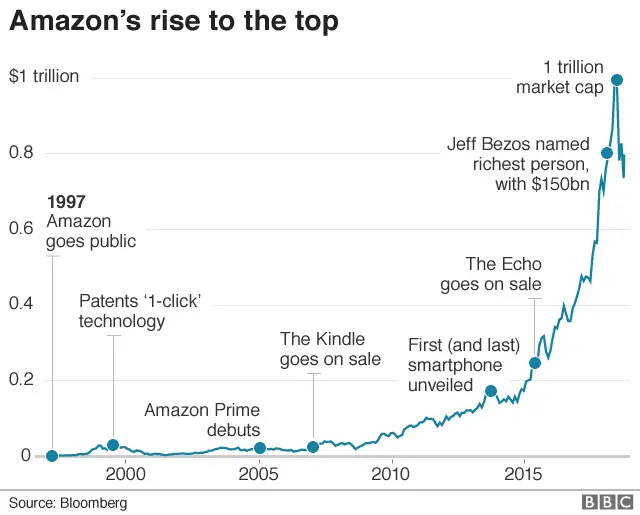
The year 1997 was a pivotal moment for the burgeoning internet economy. It was a period characterized by the transition from dial-up curiosity to commercial infrastructure. When Amazon listed its shares on the NASDAQ under the ticker symbol AMZN, it wasn’t just seeking capital; it was signaling the arrival of e-commerce as a legitimate sector for institutional and retail investment.
The 1997 Launch: From Online Bookseller to Market Disruptor
Amazon went public at a price of $18 per share. To put the scale of the company at that time into perspective, its initial market capitalization was approximately $438 million. Led by founder Jeff Bezos, the company’s pitch to investors was centered on a philosophy that has since become legendary in financial circles: “It’s all about the long term.”
The IPO Mechanics and Initial Capitalization
The offering was spearheaded by underwriters including Deutsche Morgan Grenfell and Alex. Brown & Sons. Amazon sought to raise approximately $54 million through the sale of 3 million shares. At the time, the company was not profitable. In fact, its S-1 filing revealed significant losses as it prioritized aggressive expansion and customer acquisition over immediate net income. For the value investors of the late 90s, this was a controversial proposition. However, for growth-oriented investors, the $15.7 million in revenue generated in 1996—a massive jump from the $511,000 generated in 1995—indicated a trajectory that was too significant to ignore.
The Market Context of the Late Nineties
The 1997 IPO occurred just as the “dot-com bubble” was beginning to inflate. While Amazon is often grouped with the casualties of that era, its financial structure was inherently different. While other startups were burning cash on marketing with no clear path to revenue, Amazon was building physical infrastructure—distribution centers and a proprietary logistics framework—that created a tangible competitive moat. This distinction would eventually determine which companies survived the turn of the millennium and which disappeared into bankruptcy.
Navigating the Numbers: Stock Splits and Exponential Growth
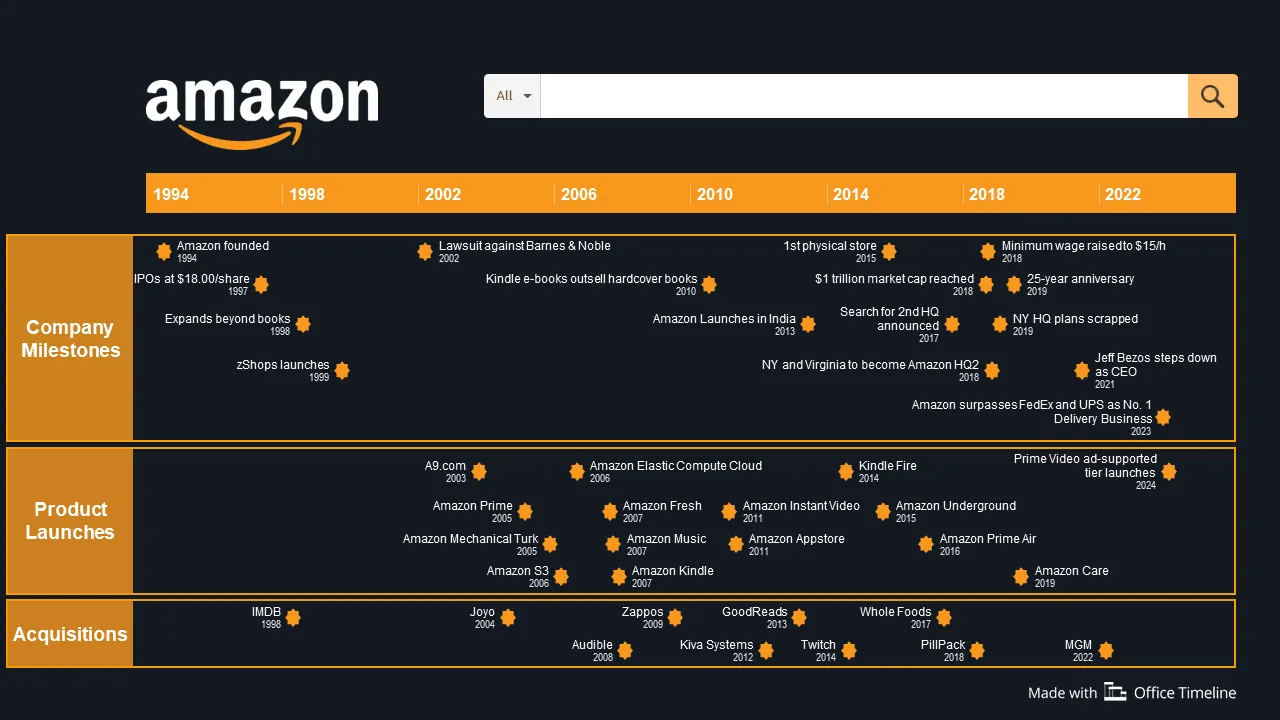
For an investor who participated in the 1997 IPO, the nominal share price of $18 is a distant memory. To understand the actual return on investment, one must account for the numerous stock splits that have occurred over the last quarter-century. Amazon has executed several splits to keep its share price accessible to a broader range of investors, effectively multiplying the number of shares held by early backers.
The History of Amazon Stock Splits
Following its debut, Amazon moved quickly to adjust its share structure during the height of the tech boom:
-
June 1998: A 2-for-1 split.
-
January 1999: A 3-for-1 split.
-
September 1999: A 2-for-1 split.
-
June 2022: A 20-for-1 split.
These splits mean that a single share purchased at the IPO price of $18 in 1997 would have morphed into 240 shares by the end of 2022. When calculating the “split-adjusted” IPO price, the cost basis for an original investor drops to pennies. This mathematical reality is the foundation of the massive wealth generated by the company for its long-term shareholders.
The Significance of the 2022 Split
The most recent 20-for-1 split in 2022 was a strategic financial move aimed at increasing liquidity. By bringing the per-share price down from the thousands to a more manageable three-digit figure, Amazon opened the door for more retail investors and allowed for more flexible employee compensation packages. From a corporate finance perspective, this move reflected Amazon’s maturity as a “Blue Chip” tech stock, balancing high valuation with market accessibility.
Surviving the Crash: A Lesson in Financial Resilience
The year 1997 may have been the beginning, but the year 2000 was nearly the end. The dot-com crash saw Amazon’s stock price plummet from over $100 per share to less than $10. For many companies, this 90% loss in market value would have triggered a total collapse. Amazon’s survival during this period is one of the most studied case studies in business finance.
The “Cash Cushion” Strategy
Shortly before the credit markets froze in 2000, Amazon executed a crucial convertible bond offering in Europe, raising over $600 million. This capital injection provided the “oxygen” the company needed to survive the years when equity markets were closed to tech companies. It serves as a reminder to investors that liquidity and timing in debt markets are just as important as equity valuations.
From Net Loss to Free Cash Flow
During the post-crash recovery, Amazon shifted its financial narrative. Bezos began emphasizing “Free Cash Flow per share” as the primary metric for success, rather than GAAP net income. This was a radical departure for many Wall Street analysts. By focusing on cash flow, Amazon was able to reinvest in massive projects like Amazon Web Services (AWS) and Prime, which required heavy upfront capital expenditure but promised high-margin recurring revenue in the future. This focus on the “Flywheel Effect”—where each part of the business fuels the growth of the others—turned the company into a cash-generating machine.
The Wealth Creation Machine: Analyzing Returns for Early Investors
To understand the impact of Amazon going public in 1997, one must look at the hypothetical returns. If an investor had the foresight—and the “diamond hands”—to invest $1,000 at the IPO price and hold it through the present day, the results would be nothing short of transformative.
Compounding vs. Market Averages
While the S&P 500 has historically returned about 10% annually, Amazon’s annualized return since its IPO has significantly outpaced every major index. The $1,000 investment in 1997 would have grown into a sum worth millions of dollars today, accounting for all splits and price appreciation. This illustrates the power of “asymmetric upside” in venture-scale public equities. While an investor can only lose 100% of their capital, the potential gains in a generational company like Amazon are theoretically uncapped.
The Role of Institutional Ownership
Today, Amazon is a staple in almost every major mutual fund and ETF, including those that track the S&P 500 and the NASDAQ-100. This transition from a risky, speculative IPO in 1997 to a foundational “must-own” asset for pension funds and institutional portfolios represents the ultimate success story in corporate finance. The company’s ability to maintain high growth rates even as its market cap crossed the trillion-dollar mark has challenged traditional economic theories regarding the “law of large numbers.”
Modern Investment Lessons from Amazon’s Public History
Reflecting on the year Amazon went public provides more than just a history lesson; it offers a blueprint for modern investing. The financial journey of AMZN highlights several core principles that remain relevant in today’s volatile market.
Identifying the “Next Amazon”
Many investors spend their careers searching for the next company that will replicate Amazon’s 1997 debut. However, the lesson of Amazon is not necessarily to find a bookstore, but to find a company with a high “reinvestment moat.” Amazon’s willingness to forego short-term profits in exchange for market dominance and the development of new business lines (like cloud computing) is a rare trait. Financial analysts now look for “optionality”—the ability of a company to pivot into entirely new industries using its existing infrastructure.
The Importance of AWS in the Valuation Model
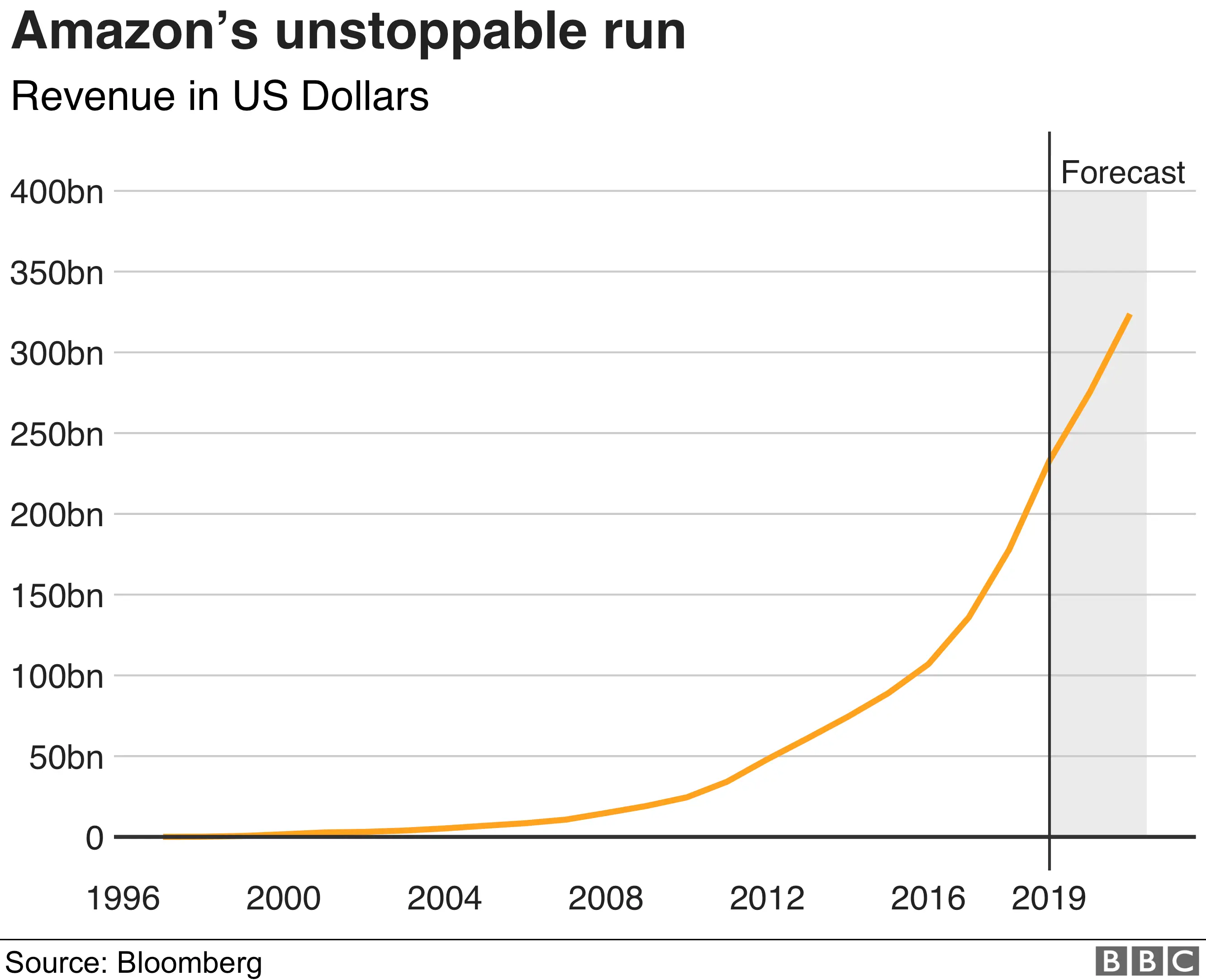
It is impossible to discuss Amazon’s financial standing today without mentioning Amazon Web Services. Launched years after the IPO, AWS eventually became the company’s primary profit driver. For investors, this highlights the importance of looking beyond a company’s initial core product. The Amazon of 1997 was a retail play; the Amazon of today is a data and infrastructure play. This evolution is what allowed the stock to continue its upward trajectory long after the e-commerce market had matured.
Final Thoughts on the 1997 IPO
The year 1997 stands as a landmark in the history of the financial markets. Amazon’s IPO wasn’t just the birth of a company; it was the birth of a new philosophy of capital allocation. By prioritizing long-term cash flow over quarterly earnings and relentlessly reinvesting in innovation, Amazon proved that a public company could maintain a “startup” growth mentality for decades. For the modern investor, the story of Amazon’s public debut serves as a powerful reminder that the greatest rewards often come to those who can see past market volatility and focus on the enduring power of a disruptive business model.
aViewFromTheCave is a participant in the Amazon Services LLC Associates Program, an affiliate advertising program designed to provide a means for sites to earn advertising fees by advertising and linking to Amazon.com. Amazon, the Amazon logo, AmazonSupply, and the AmazonSupply logo are trademarks of Amazon.com, Inc. or its affiliates. As an Amazon Associate we earn affiliate commissions from qualifying purchases.