
The question of “what time is Food Lion open” might seem like a simple logistical inquiry for a shopper planning a grocery run, but from a business finance and retail economics perspective, the answer represents a complex calculation of overhead, labor efficiency, and market positioning. For a major regional player like Food Lion—a subsidiary of Ahold Delhaize—operating hours are not arbitrary. They are a strategic financial decision that balances the cost of keeping the lights on against the potential for revenue generation and brand loyalty in a highly competitive grocery landscape.

The Financial Blueprint of Grocery Operations
In the world of business finance, every hour a retail location remains open is a line item on a profit and loss statement. For a grocery giant like Food Lion, which operates over 1,000 stores across the Southeastern and Mid-Atlantic United States, the decision to open at 6:00 AM or 7:00 AM and close at 10:00 PM or 11:00 PM is driven by rigorous data analysis.
Labor Costs and the Midnight Shift
The single largest controllable expense in retail is labor. Managing the payroll budget requires a delicate balance between having enough staff to provide customer service and maintaining a lean operation to preserve thin profit margins. Grocery stores traditionally operate on net profit margins of 1% to 3%, meaning there is very little room for error.
When analyzing operating hours, financial controllers look at the “sales-per-labor-hour” metric. During peak times, such as Sunday afternoons, this metric is high. However, during the early morning or late night hours, the cost of staffing registers, delis, and meat counters can sometimes exceed the gross profit generated by the few customers shopping at that time. Food Lion’s strategy often involves a “skeleton crew” during off-peak hours to minimize these costs while still providing the convenience that keeps customers from switching to a competitor like Walmart or Harris Teeter.
Supply Chain Synchronization and Efficiency
The hours of operation are also inextricably linked to the supply chain and inventory management. Food Lion’s financial success relies on “just-in-time” inventory. Trucks arrive throughout the night and early morning to restock perishable goods. If a store is open 24 hours, the presence of customers can actually slow down the restocking process, as employees must navigate around shoppers and prioritize service over efficiency.
By closing for a few hours at night, or opening slightly later, stores can execute “power stocking.” This is a more cost-effective method where pallets are broken down and shelves are filled without interruption. From a business finance standpoint, this reduces the total man-hours required to replenish the store, directly impacting the bottom line and ensuring that when the “open” sign lit up, the highest-margin items (like fresh produce and meat) are fully stocked and visually appealing.
The Impact of Operating Hours on Revenue and Consumer Behavior
While costs are a major factor, the primary goal of any business is revenue. The “opportunity cost” of being closed is the loss of a sale to a competitor. In the retail sector, this is not just about a single transaction; it is about the long-term financial value of a customer.
Maximizing the Customer Lifetime Value
In the context of personal finance and consumer behavior, convenience is a commodity that people are willing to pay for. If a consumer knows that Food Lion is consistently open until 11:00 PM, they are more likely to make it their primary grocery destination. This builds “Customer Lifetime Value” (CLV).
From a marketing and financial strategy perspective, being open during the “bridge hours”—those times when people are either going to work or coming home late—captures a specific demographic of high-spending professionals and busy parents. Even if the store is not highly profitable during those specific minutes, the accessibility reinforces the brand’s place in the consumer’s financial ecosystem. If the store were to cut hours too aggressively, they risk losing the “weekly shop” revenue, as customers might migrate to a more accessible competitor.
The Competitive Edge in Local Markets
Food Lion often operates in suburban and rural markets where they may be the only full-service grocery store within a ten-mile radius. In these scenarios, their operating hours define the local economy’s rhythm. By staying open later than local specialty shops but perhaps closing earlier than a 24-hour supercenter, Food Lion finds a “financial sweet spot.”
They minimize the utility and security costs associated with 24/7 operations—which skyrocketed following the shift in labor markets post-2020—while still dominating the local market share during 95% of active shopping hours. This strategic window allows them to maintain a competitive price point, as they aren’t passing the massive overhead of 24-hour operations onto the consumer.
Personal Finance and the Strategic Shopper
For the savvy consumer, the “what time is Food Lion open” question is a tool for better personal finance management. The timing of a shopping trip can significantly impact a household budget, influencing everything from the availability of “manager’s specials” to the avoidance of impulse buys.
Leveraging Off-Peak Hours for Savings
For those focused on personal finance and budgeting, the hours immediately following the store’s opening are often the most lucrative. This is when “markdowns” typically occur. Perishable items like meat, bread, and produce that are nearing their sell-by date are tagged with “Reduced for Quick Sale” stickers.
A consumer who understands the store’s operational cycle can save 30% to 50% on high-quality proteins by shopping during the first two hours of operation. Financially, this is a more effective strategy than clip-on coupons. Food Lion uses these markdowns to recoup at least the cost of the goods sold (COGS) rather than taking a total loss on “shrink” (spoiled inventory). It is a win-win: the store clears inventory, and the budget-conscious shopper lowers their cost of living.
Gig Economy Integration: Instacart and Shipt Logistics
In the modern economy, “online income” and “side hustles” are deeply tied to retail hours. Thousands of gig workers rely on Food Lion’s operating hours to generate income via platforms like Instacart and Shipt. For these independent contractors, the store’s hours are their “office hours.”
The financial health of the gig economy is dependent on the efficiency of these stores. If Food Lion opens at 7:00 AM, the professional shopper can complete two batches before the average 9-to-5 worker even starts their day. This synergy between the retail giant and the gig economy creates a secondary layer of financial activity. Food Lion benefits from the increased volume of “pro shoppers” who know the aisles and checkout quickly, increasing the store’s “transaction velocity” without increasing the store’s own marketing spend.
Future Trends: Automation and the 24/7 Retail Cycle
As we look at the financial future of grocery retail, the traditional concept of “store hours” is being challenged by technology and new business models. The cost-benefit analysis of keeping a store open with a full staff is shifting toward automated solutions.
Dark Stores and Micro-Fulfillment Centers
One of the most significant shifts in business finance within the grocery sector is the move toward “dark stores.” These are locations that may be closed to the public but remain “open” for fulfillment. In some regions, Food Lion and its parent company are experimenting with how to use store footprints during “closed” hours to fulfill online orders.
By utilizing the hours when the store is closed to the public (e.g., 11:00 PM to 6:00 AM) as a micro-fulfillment center, the company can sweat its assets more effectively. The building is already being taxed, insured, and climate-controlled; using those “closed” hours to pick and pack delivery orders maximizes the return on investment (ROI) for the physical real estate.

The Cost-Benefit Analysis of Reduced Hours
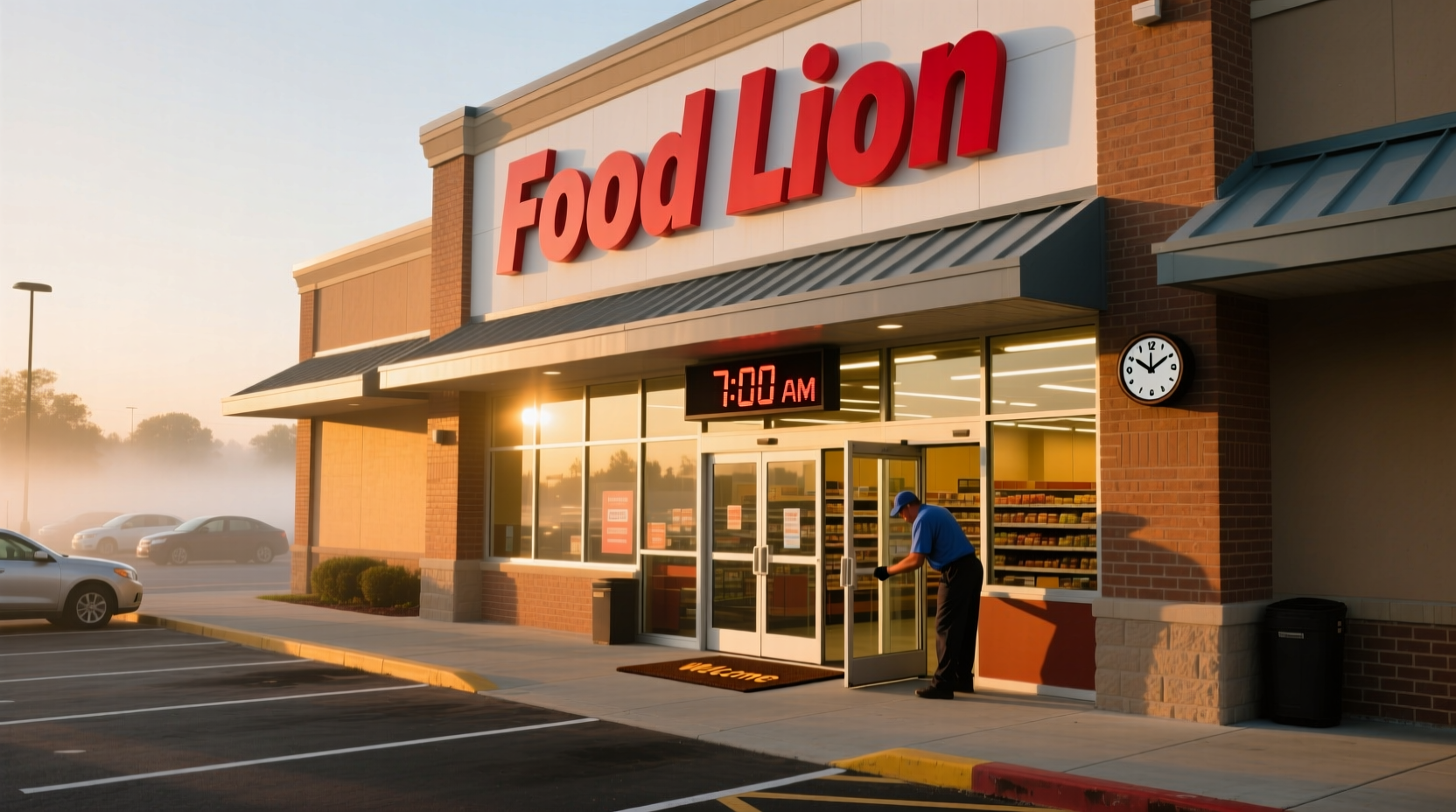
Post-pandemic, many retail chains, including Food Lion, re-evaluated the necessity of 24-hour operations. The financial data revealed that the security risks and high utility costs of staying open at 3:00 AM were not justified by the meager sales volume. Most Food Lion locations now settle into a 7:00 AM to 10:00 PM or 11:00 PM rhythm.
This contraction of hours is a savvy move in business finance. It concentrates consumer demand into a smaller window, which allows for better labor scheduling and reduces “unproductive labor.” Furthermore, it addresses the labor shortage by allowing the company to offer more desirable shifts to employees, which reduces turnover costs—a significant hidden expense in the retail industry.
In conclusion, “what time is Food Lion open” is a question that sits at the intersection of corporate strategy, retail economics, and personal finance. For the company, it is a calculated decision to maximize margins and operational efficiency. For the consumer and the gig worker, it is a logistical framework that dictates when and how they can save or earn money. As the retail landscape continues to evolve through automation and changing consumer habits, the hours on the front door will remain one of the most important indicators of a brand’s financial health and market priorities.
aViewFromTheCave is a participant in the Amazon Services LLC Associates Program, an affiliate advertising program designed to provide a means for sites to earn advertising fees by advertising and linking to Amazon.com. Amazon, the Amazon logo, AmazonSupply, and the AmazonSupply logo are trademarks of Amazon.com, Inc. or its affiliates. As an Amazon Associate we earn affiliate commissions from qualifying purchases.