
As tax season approaches, the annual ritual of navigating the complex landscape of the Internal Revenue Service (IRS) begins. For millions of taxpayers, TurboTax remains the gold standard of tax preparation software due to its user-friendly interface and robust interview-style format. However, one of the most common points of friction occurs before a single dollar of income is even entered: selecting the correct version of the software.
Choosing the right version is a critical financial decision. Select a version too basic, and you may find yourself forced to upgrade mid-process when the software realizes your financial situation is more complex than anticipated. Select a version that is too advanced, and you are essentially leaving money on the table by paying for features, forms, and schedules you do not need. This guide breaks down the TurboTax ecosystem through the lens of personal finance to ensure you maximize your refund while minimizing your software costs.
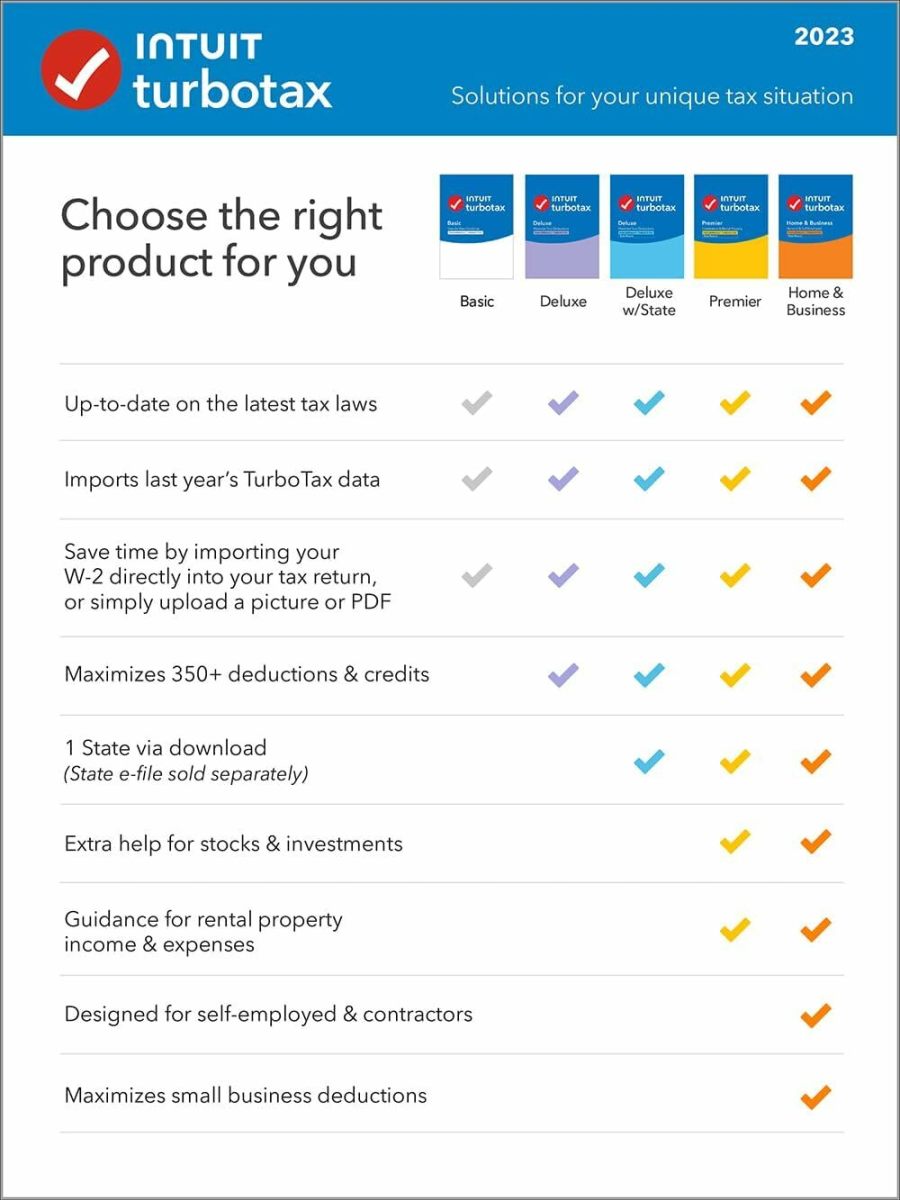
The TurboTax Hierarchy: Mapping Software to Your Financial Life
The TurboTax lineup is categorized primarily by the complexity of your income sources and the types of deductions you intend to claim. To choose correctly, you must first audit your previous year’s financial activities. Did you buy or sell a home? Did you dip your toes into the cryptocurrency market? Did you move from a traditional W-2 job to freelance work?
TurboTax Free Edition (The Simple Return)
The Free Edition is designed strictly for “simple” tax returns. In the eyes of the IRS and Intuit (the maker of TurboTax), a simple return is one that can be filed using Form 1040 only. This version is most appropriate for students or early-career professionals who do not own a home and have no significant investments.
To qualify for this tier, you generally must meet the following criteria:
-
Your income consists solely of W-2 wages.
-
Your interest and dividend income are below the reporting threshold (1099-INT or 1099-DIV).
-
You are claiming the standard deduction rather than itemizing.
-
You are claiming simple tax credits like the Earned Income Tax Credit (EITC) or the Child Tax Credit.
It is important to note that the “Free Edition” is different from the “IRS Free File Program.” If your Adjusted Gross Income (AGI) falls below a certain threshold, you may be eligible for the latter, which includes more forms for free.
TurboTax Deluxe: The Homeowner’s Choice
TurboTax Deluxe is widely considered the “sweet spot” for the average American taxpayer. This version is built for individuals who have more than just a W-2 to report or those who want to maximize their deductions to lower their taxable income.
The primary driver for moving to Deluxe is the ability to itemize deductions. If your total deductible expenses—such as mortgage interest, property taxes, significant medical expenses, or charitable donations—exceed the standard deduction, Deluxe is necessary. It includes “ItsDeductible,” a tool designed to help you accurately value donated items, which can significantly impact your bottom line.
TurboTax Premier: For Investors and Landlords
Once your financial portfolio moves beyond a savings account and a 401(k), you likely need TurboTax Premier. This version is tailored for individuals with diversified income streams, specifically those involving investments and rental properties.
Premier is essential if you sold stocks, bonds, or mutual funds during the year. It automates the reporting of capital gains and losses by importing information directly from hundreds of financial institutions. Furthermore, if you are an active participant in the digital economy, Premier is the version designed to handle the complexities of cryptocurrency transactions. It also provides the specific forms required for reporting rental income and expenses (Schedule E), making it the default choice for small-scale real estate investors.
TurboTax Self-Employed: The Business Owner’s Essential
The highest tier of the consumer software is TurboTax Self-Employed. As the gig economy continues to expand, this version has become increasingly popular. It is designed for freelancers, independent contractors, and small business owners who file a Schedule C.
The value proposition of the Self-Employed version lies in its ability to identify industry-specific business expenses. Whether you are an Uber driver looking to deduct mileage and maintenance or a graphic designer deducting home office expenses and software subscriptions, this version provides the necessary framework. It also includes features to help you calculate your self-employment tax, which is often a significant financial hurdle for the newly self-employed.
Analyzing Your Income Sources and Deductions
To make an informed choice, you must look beyond the marketing labels and understand how specific financial instruments trigger the need for higher software tiers.
The Impact of Investment Income
From a financial management perspective, investment income is one of the most complex areas of a tax return. If you received a 1099-B (Proceeds from Broker and Barter Exchange Transactions), you have moved into Premier territory. While you could technically enter these details manually in lower versions, the risk of error is high. TurboTax Premier’s ability to calculate your cost basis—even for complex wash sales or dividend reinvestment plans—is a safeguard against IRS audits and overpayment of taxes.

For those involved in cryptocurrency, the Premier version offers specialized tools to track “basis” across different exchanges. Given the IRS’s increased scrutiny on digital assets, using a version that specifically supports these forms is a prudent investment in digital security and financial compliance.
Itemized vs. Standard Deduction
The Tax Cuts and Jobs Act significantly increased the standard deduction, leading many taxpayers who previously itemized to switch to the standard deduction. If you do not have a mortgage and your charitable giving is modest, you might find that the Deluxe version provides more power than you actually need.
However, if you live in a high-tax state and can take advantage of the SALT (State and Local Tax) deduction, or if you had significant out-of-pocket medical expenses that exceeded 7.5% of your AGI, the Deluxe version’s ability to search over 350 potential deductions is invaluable. It serves as a financial audit tool, ensuring you aren’t ignoring legal ways to reduce your tax liability.
Retirement and Education
Both the Deluxe and Premier versions handle retirement income (1099-R) and education credits (1098-T). If your only “complexity” is a 401(k) distribution or a student loan interest deduction, you can typically stay within the Deluxe tier. The software will guide you through the Lifetime Learning Credit or the American Opportunity Tax Credit, which can provide a dollar-for-dollar reduction of your tax bill.
Choosing the Service Level: DIY vs. Expert Help
Beyond the software version, TurboTax offers different levels of service: Basic, Live Assisted, and Full Service. This decision is less about your financial data and more about your personal financial confidence and the value of your time.
The Standard DIY Approach
The standard online or download versions are purely self-guided. You answer questions, the software fills in the forms. This is the most cost-effective method for those who have a solid grasp of their finances and feel comfortable navigating the software’s prompts.
TurboTax Live Assisted
TurboTax Live adds a layer of human expertise. You can connect with a CPA or Enrolled Agent via one-way video to ask questions as you go. For individuals transitioning through major life events—such as marriage, divorce, or the birth of a child—the “Live” option offers peace of mind. From a financial planning perspective, this service can be cheaper than hiring a private accountant while still providing the benefit of professional review before you file.
TurboTax Full Service
In the Full Service model, you upload your documents and a tax professional does the work for you. While this is the most expensive option, it is a strategic choice for high-net-worth individuals or busy entrepreneurs whose time is better spent generating income than managing tax forms. It bridges the gap between software and traditional accounting firms.
Strategic Cost Management: Getting the Best Value
Choosing the right version of TurboTax is also about timing and procurement strategy. Because tax software is a seasonal commodity, prices fluctuate.
Online vs. Desktop Versions
One of the most overlooked aspects of choosing a version is the medium. The “Online” version is billed per return (one federal, one state). The “Desktop” version (CD/Download) often allows you to file up to five federal returns. For families with multiple taxpayers or for those who manage the finances of elderly parents, the Desktop version is almost always the more financially sound investment. Additionally, the Desktop version typically allows you to view the actual tax forms at any time, whereas the Online version hides them behind the user interface until you are ready to pay.
Timing Your Purchase
Early-season discounts are common in December and January. Furthermore, many financial institutions and credit card companies offer “partner discounts” for TurboTax. Before clicking “pay,” check your bank portal or credit card rewards center. Often, you can find a link that provides a 10% to 20% discount on the software or service level you have chosen.
Avoiding “Feature Creep”
TurboTax is designed with a series of “upsells.” You may be prompted to add “Audit Defense” or “Refund Selection” fees. From a strict personal finance perspective, many of these add-ons are unnecessary for the average taxpayer. If your documentation is organized and you have been honest in your reporting, the standard software protections are often sufficient. Be wary of paying for the “Max” bundle unless you have a specific reason to believe your return will be flagged for an audit.

Conclusion: Matching Complexity with Capability
The question of “which version of TurboTax do I need” is ultimately a question about your financial identity over the past twelve months.
-
The Minimalist: W-2 income and standard deduction? Free Edition.
-
The Homeowner/Philanthropist: Mortgage interest and high deductions? Deluxe.
-
The Investor: Stocks, crypto, or rental income? Premier.
-
The Entrepreneur: Freelance, 1099-NEC, or business owner? Self-Employed.
By accurately identifying where you fall on this spectrum, you ensure that you are using a tool that is powerful enough to protect your wealth and capture every legal deduction, without overpaying for functionality that doesn’t apply to your life. In the world of personal finance, efficiency is key—and choosing the right tax software is the first step toward a more efficient financial year.
aViewFromTheCave is a participant in the Amazon Services LLC Associates Program, an affiliate advertising program designed to provide a means for sites to earn advertising fees by advertising and linking to Amazon.com. Amazon, the Amazon logo, AmazonSupply, and the AmazonSupply logo are trademarks of Amazon.com, Inc. or its affiliates. As an Amazon Associate we earn affiliate commissions from qualifying purchases.