
Understanding how much interest you can earn on your savings account is a fundamental aspect of personal finance, yet it’s often overlooked. In an era where financial stability is paramount, optimizing every dollar in your savings can significantly impact your long-term financial health. A savings account isn’t just a safe place to store your money; it’s a tool that, when used effectively, can help your money grow over time through the power of interest. This growth, however, isn’t uniform across all accounts or financial institutions. The amount you earn is a dynamic figure influenced by a multitude of factors, ranging from the specific annual percentage yield (APY) offered by your bank to broader economic conditions set by central banks.
For many, a savings account primarily serves as a repository for an emergency fund, a down payment for a major purchase, or short-term financial goals. While the primary goal is often safety and liquidity, the secondary—and increasingly important—goal should be to ensure these funds are working as hard as possible for you. Ignoring the interest-earning potential is akin to leaving money on the table. This comprehensive guide will demystify the mechanics of savings account interest, explore the variables that dictate your earnings, provide actionable strategies to maximize your returns, and even touch upon how to calculate your potential gains, empowering you to make more informed decisions about where to stash your hard-earned cash.
Understanding Savings Account Interest: The Basics
At its core, interest on a savings account is the money paid to you by a financial institution for the privilege of holding and using your deposited funds. It’s a reward for lending your money to the bank, which then uses it for various lending activities. For you, the saver, it’s a passive way to grow your wealth, albeit often slowly with traditional savings accounts.
What is Interest and How Does It Work?
Interest is essentially a rental fee for money. When you deposit money into a savings account, the bank pays you a percentage of your balance over a specific period. This percentage is typically expressed as an Annual Percentage Yield (APY) or an interest rate. The interest earned is then added to your principal balance, increasing the base amount on which future interest is calculated. This continuous cycle is what makes compounding so powerful.
Annual Percentage Yield (APY) vs. Interest Rate
While often used interchangeably, there’s a crucial distinction between the interest rate and the Annual Percentage Yield (APY). The interest rate is the basic percentage rate at which your money earns interest, without taking compounding into account. The APY, on the other hand, provides a more accurate representation of your actual earnings because it does account for the effect of compounding over an entire year. For example, an account with a 1% interest rate compounded monthly will have an APY slightly higher than 1% because you’re earning interest on your previously earned interest each month. Always compare APYs when choosing a savings account, as it gives you the truest picture of your potential annual earnings.
The Power of Compounding: Earning Interest on Interest
Compounding is the secret sauce behind long-term wealth growth, even in a savings account. It refers to the process where the interest you earn is added to your original principal, and then the next interest calculation is based on this new, larger sum. Over time, this “interest on interest” effect can lead to significant growth, especially if you leave your money untouched for extended periods. The more frequently interest is compounded (daily, monthly, quarterly), the faster your money grows, assuming the same interest rate.
Why Your Savings Account Needs to Earn Interest
While the returns on a traditional savings account might seem modest compared to investments, earning interest is crucial for two main reasons. Firstly, it helps your money keep pace with, or at least mitigate the effects of, inflation. If your money isn’t growing, its purchasing power diminishes over time. Secondly, it contributes to your overall financial goals, whether it’s building an emergency fund that can grow independently or passively adding to a down payment fund. Even small consistent earnings can add up over years, making your savings work harder for you.
Factors Influencing Your Savings Account Interest Earnings
The interest rate, and consequently the APY, on a savings account is not a fixed, universal number. It’s a dynamic figure influenced by a complex interplay of internal bank policies and broader economic forces. Understanding these factors is key to predicting and maximizing your earnings.
The Account’s Annual Percentage Yield (APY)
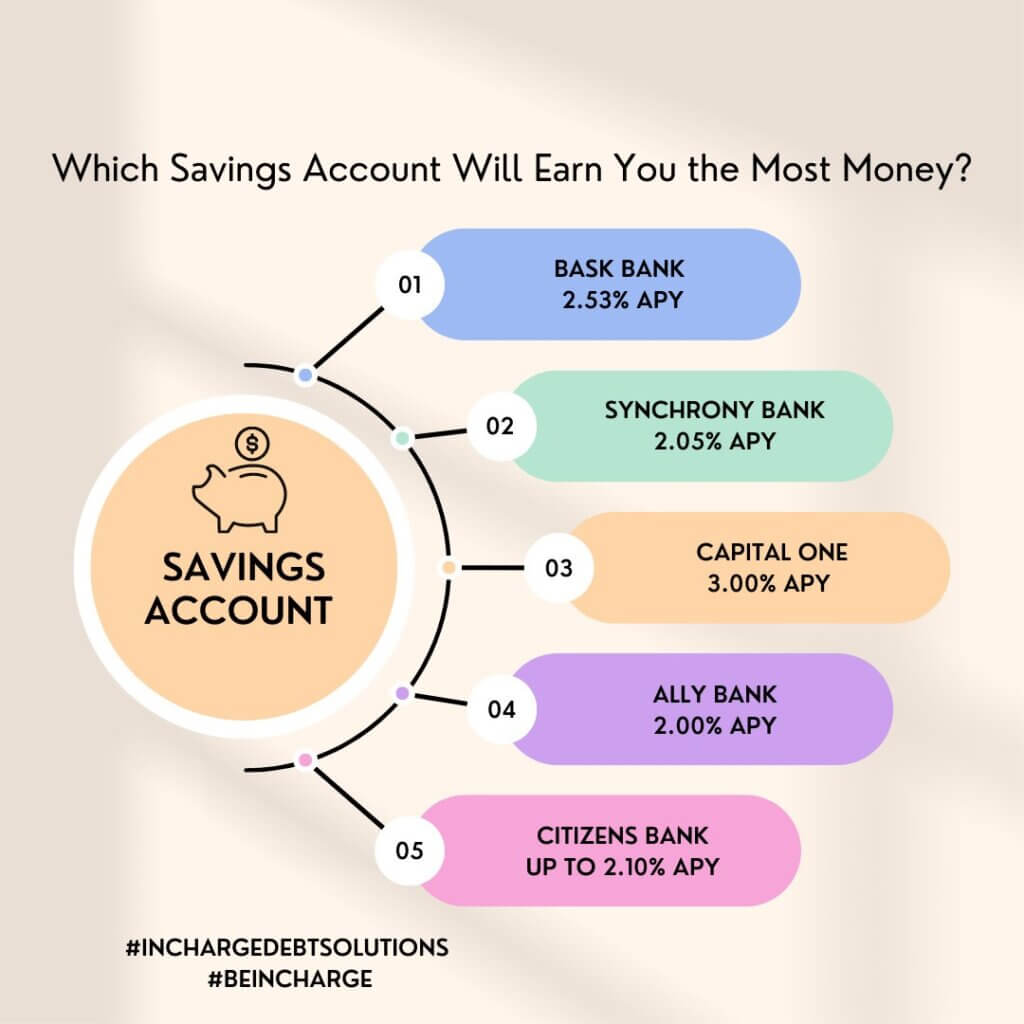
This is the most direct and impactful factor. The APY advertised by a bank directly tells you how much interest you will earn on an annualized basis, assuming interest is compounded. A higher APY means more money in your pocket. APYs can range significantly, from a paltry 0.01% at some traditional brick-and-mortar banks to 4-5% or even higher at top-tier online savings accounts. Always prioritize accounts with competitive APYs.
Economic Climate and Federal Reserve Policies
Interest rates are heavily influenced by the prevailing economic environment and the monetary policy set by central banks, particularly the Federal Reserve in the United States. When the Fed raises its benchmark interest rate (the federal funds rate), it generally leads to higher interest rates across the banking system, including those offered on savings accounts. Conversely, during periods of economic slowdown, the Fed might lower rates to stimulate borrowing, which typically results in lower savings account yields. This is why savings account APYs fluctuate over time.
Bank Type: Online vs. Traditional Brick-and-Mortar
Generally, online banks tend to offer significantly higher APYs on their savings accounts compared to traditional brick-and-mortar banks. This is primarily due to their lower operating costs. Online banks don’t have the overhead associated with maintaining numerous physical branches, allowing them to pass on those savings to customers in the form of more attractive interest rates. If maximizing interest is your priority, an online savings account is often the superior choice.
Account Balance and Minimum Requirements
Some banks, especially for higher-tier savings products or promotional rates, might require a minimum balance to earn the advertised APY or even to avoid monthly fees. While rare for basic savings accounts, some premium offerings might reward larger balances with slightly higher rates. Conversely, if your balance falls below a certain threshold, you might not earn any interest or even incur a fee. Always check these terms carefully.
Promotional Rates and Introductory Offers
It’s common for banks, particularly online ones, to offer introductory promotional APYs for new customers or for a limited period. While these can be attractive, it’s crucial to understand what the rate will revert to after the promotional period ends. Ensure the standard rate is still competitive, as you don’t want to move your money only to find your earnings plummet after a few months.
Maximizing Your Interest Earnings: Strategies and Tips
Earning a respectable return on your savings doesn’t happen by accident. It requires a proactive approach and a willingness to compare options. By implementing a few key strategies, you can significantly boost the amount of interest your money generates.
Prioritize High-Yield Savings Accounts (HYSAs)
This is arguably the most impactful step you can take. High-Yield Savings Accounts (HYSAs), typically offered by online banks, consistently offer APYs that are many times higher than those of traditional banks. While a 0.01% APY might earn you pennies annually, a 4.5% APY on a $10,000 balance could generate hundreds of dollars in passive income each year. The difference is substantial over time.
Automate Your Savings Contributions
Regular, automated contributions not only build your principal faster but also allow you to take greater advantage of compounding. By setting up automatic transfers from your checking account to your savings account each payday, you ensure consistent growth without having to remember to manually move funds. The more money you have in the account, the more interest you will earn.
Distinguish Between Emergency Funds and Investment Capital
While savings accounts are excellent for emergency funds and short-term goals due to their safety and liquidity, they are generally not suitable for long-term growth (beyond 3-5 years) compared to investment vehicles. Understand the role of your savings account: it’s for readily accessible cash. For money you won’t need for many years, consider investing in the stock market or other assets that offer potentially higher, albeit riskier, returns.
Regularly Review and Compare Account Options

The financial landscape is always changing. APYs can go up or down, and new banks might emerge with even better offers. Make it a habit to review your savings account’s APY at least once a year. If you find that your bank’s rate has become uncompetitive, don’t hesitate to shop around and switch to an account offering a better return. The process of transferring funds between FDIC-insured accounts is usually straightforward.
Avoid Fees That Can Erase Your Earnings
Many savings accounts are fee-free, but some might charge maintenance fees if you don’t meet certain criteria, such as maintaining a minimum balance or having direct deposit. These fees can quickly erode any interest you’ve earned, effectively negating the benefit of having an interest-bearing account. Always read the fine print and choose accounts with transparent, minimal, or no fees.
Calculating Your Potential Interest Earnings
Understanding the formulas behind interest calculation can empower you to estimate your earnings and appreciate the impact of different APYs and compounding frequencies. While online calculators simplify this, knowing the basics is valuable.
Simple Interest Calculation: A Basic Formula
Simple interest is the easiest to calculate, though it’s less common for savings accounts due to the prevalence of compounding. The formula is:
Interest = Principal × Rate × Time
-
Principal (P): The initial amount of money deposited.
-
Rate (R): The annual interest rate (expressed as a decimal, e.g., 4% becomes 0.04).
-
Time (T): The time period in years (or fraction of a year).
For example, if you have $10,000 at a 3% simple interest rate for one year, you’d earn $10,000 * 0.03 * 1 = $300.
Understanding Compound Interest Formulas
Savings accounts typically use compound interest, which is more complex because it involves adding previously earned interest to the principal. The most common formula for interest compounded n times per year is:
A = P (1 + r/n)^(nt)
Where:
-
A: The future value of the investment/loan, including interest.
-
P: The principal investment amount (the initial deposit or loan amount).
-
r: The annual interest rate (as a decimal).
-
n: The number of times that interest is compounded per year.
-
t: The number of years the money is invested or borrowed for.
If you want to find just the interest earned, you would subtract the principal from A (A – P).
For an annual percentage yield (APY) calculation, which already accounts for compounding, the calculation for your annual earnings is simpler:
Annual Interest Earned = Current Balance × APY
Utilizing Online Interest Calculators
Given the complexity of compound interest, especially with varying deposit schedules, the easiest and most accurate way to project your earnings is by using online savings interest calculators. Most financial institutions and personal finance websites offer these tools. You simply input your initial deposit, regular contributions, the APY, and the time horizon, and the calculator will provide an estimate of your future balance and total interest earned. This is particularly useful for visualizing the long-term impact of consistent saving and compounding.
Real-World Examples of Interest Growth
Let’s illustrate with an example using a common online savings account APY:
Scenario: You have an initial deposit of $5,000 and contribute an additional $200 per month. The account has a 4.50% APY, compounded monthly.
-
After 1 year:
-
Total deposits: $5,000 (initial) + ($200 * 12) = $7,400
-
Estimated balance: Approximately $7,635 (including roughly $235 in interest)
-
-
After 5 years:
-
Total deposits: $5,000 + ($200 * 60) = $17,000
-
Estimated balance: Approximately $19,550 (including roughly $2,550 in interest)
-
-
After 10 years:
-
Total deposits: $5,000 + ($200 * 120) = $29,000
-
Estimated balance: Approximately $35,900 (including roughly $6,900 in interest)
-
This example clearly demonstrates how consistent contributions combined with a competitive APY and the power of compounding can lead to substantial interest earnings over time.
Beyond Traditional Savings: Other Interest-Bearing Options
While the focus has been on savings accounts, it’s worth noting that other financial products also offer interest and might be suitable for different financial goals and risk tolerances. These can often complement a high-yield savings strategy.
Certificates of Deposit (CDs): Locking in Higher Rates
Certificates of Deposit (CDs) are a type of savings account that holds a fixed amount of money for a fixed period of time (the “term”), at a fixed interest rate. In exchange for agreeing to leave your money untouched for the duration of the term (e.g., 6 months, 1 year, 5 years), banks typically offer higher interest rates than standard savings accounts. CDs are ideal for money you know you won’t need until a specific future date, providing predictable, guaranteed returns. However, withdrawing money early usually incurs a penalty.
Money Market Accounts: A Hybrid Approach
Money Market Accounts (MMAs) share characteristics with both savings and checking accounts. They typically offer higher interest rates than traditional savings accounts and often come with limited check-writing privileges or a debit card, making funds more accessible than CDs. However, MMAs usually require a higher minimum balance to open or to avoid fees, and their interest rates can fluctuate with market conditions, similar to savings accounts.
Online Savings Accounts: The High-Yield Frontier
As discussed, online savings accounts are leading the charge in offering competitive interest rates. Their lower overhead allows them to pass greater earnings onto consumers. They are FDIC-insured, just like brick-and-mortar banks, meaning your deposits are safe up to $250,000 per depositor, per institution, in the event of bank failure. For most people, an online high-yield savings account offers the best balance of interest earnings, liquidity, and safety.
Considerations for Risk and Liquidity
When exploring different interest-bearing options, always weigh the trade-offs between interest rate, liquidity (how easily you can access your money), and risk. Savings accounts, CDs, and Money Market Accounts at FDIC-insured institutions are considered very low-risk and highly secure. Investments like stocks or bonds, while offering potentially higher returns, also carry greater risk and are not suitable for funds you cannot afford to lose or need in the short term. Always align your choice with your specific financial goals and risk tolerance.
In conclusion, the amount of interest you will earn on a savings account is not predetermined but is rather a reflection of your choices and the prevailing economic environment. By understanding the fundamentals of interest, paying close attention to APYs, proactively seeking out high-yield options, and leveraging the power of compounding, you can ensure your savings are not just sitting idle, but actively contributing to your financial growth. Making informed decisions about your savings account is a critical step towards achieving greater financial security and reaching your long-term monetary objectives.
aViewFromTheCave is a participant in the Amazon Services LLC Associates Program, an affiliate advertising program designed to provide a means for sites to earn advertising fees by advertising and linking to Amazon.com. Amazon, the Amazon logo, AmazonSupply, and the AmazonSupply logo are trademarks of Amazon.com, Inc. or its affiliates. As an Amazon Associate we earn affiliate commissions from qualifying purchases.