
The question “what universe is Earth in?” transcends simple geography; it is a profound inquiry into our cosmic address, a quest for self-location within the vast, intricate tapestry of existence. For millennia, this question remained largely in the realm of philosophy and myth. Today, however, humanity stands on the precipice of unprecedented understanding, thanks to an relentless surge of technological innovation. From gargantuan ground-based observatories to sophisticated space probes and cutting-edge artificial intelligence, technology is the singular, indispensable tool that allows us to peer deeper into the cosmos, mapping our home and defining our place within an ever-expanding, ever-more-complex universe. Our journey to answer this fundamental question is, at its heart, a triumph of technological ingenuity.

The Dawn of Cosmic Cartography: Telescopic Innovations
The quest to locate Earth within the universe began not with philosophy, but with the practical application of optical technology. The telescope, in its various forms, remains the primary instrument for cosmic exploration, constantly evolving to push the boundaries of our vision.
From Galileo’s Lens to Modern Observatories
The humble refracting telescope, famously employed by Galileo Galilei in the early 17th century, marked the first significant technological leap. It revealed the phases of Venus, the moons of Jupiter, and the true nature of the Milky Way, shattering geocentric notions and setting the stage for heliocentrism. For centuries, optical telescopes evolved, primarily in size, but their utility was inherently limited by Earth’s turbulent atmosphere, which blurs and absorbs cosmic light.
Modern ground-based optical telescopes represent a monumental technological leap. Facilities like the W. M. Keck Observatory in Hawaii, the Very Large Telescope (VLT) in Chile, and the Subaru Telescope each boast mirrors many meters in diameter, designed to collect faint light from the most distant galaxies. More critically, these observatories incorporate advanced technologies such as adaptive optics (AO). AO systems use deformable mirrors and high-speed computers to compensate for atmospheric distortions in real-time. By rapidly analyzing the light from a nearby “guide star” (either natural or artificially created with lasers), these systems adjust the mirror shape thousands of times per second, effectively removing the atmospheric “twinkle” and allowing for near-space-telescope resolution from the ground. This precision engineering and computational power are crucial for resolving fine details of distant galaxies and probing the environments of exoplanets.
Beyond Visible Light: A Multiverse of Sensors
Our understanding of the universe would be woefully incomplete if we relied solely on visible light. Much of the cosmos emits radiation across the entire electromagnetic spectrum, invisible to the human eye but teeming with information. Technological advancements have equipped us with an array of specialized “eyes” to see this hidden universe.
Radio telescopes like the Atacama Large Millimeter/submillimeter Array (ALMA) in Chile or the Very Large Array (VLA) in New Mexico detect radio waves, which can penetrate cosmic dust and reveal phenomena like star-forming regions, molecular clouds, and pulsars. The upcoming Square Kilometre Array (SKA) project, spanning continents, promises to be the largest radio telescope ever built, generating unprecedented amounts of data and offering insights into the early universe, dark energy, and the origins of cosmic magnetism.
At the other end of the spectrum, X-ray and gamma-ray telescopes, such as NASA’s Chandra X-ray Observatory and the Fermi Gamma-ray Space Telescope, are designed to capture high-energy radiation from extreme cosmic events. These instruments, requiring specialized detectors and shielding, allow us to study black holes, supernovae, active galactic nuclei, and neutron stars – phenomena that are key to understanding the energetic processes that shape galaxies and distribute heavy elements.
Infrared telescopes occupy a crucial middle ground. Missions like the defunct Spitzer Space Telescope and the operational James Webb Space Telescope (JWST) are vital for peering through thick clouds of dust and gas, which block visible light but are transparent to infrared. This capability allows us to observe the birth of stars and planetary systems, and, critically, to detect the faint, redshifted light from the very first galaxies in the universe, providing a window into cosmic dawn. The JWST, in particular, represents a pinnacle of cryogenic and optical engineering, operating at just a few degrees above absolute zero to detect the feeblest infrared signals from billions of light-years away.
A truly revolutionary technological leap has been the advent of gravitational wave observatories like LIGO (Laser Interferometer Gravitational-Wave Observatory) and Virgo. These detectors use exquisitely sensitive interferometers, stretching for kilometers, to measure minuscule ripples in spacetime caused by cataclysmic events like colliding black holes and neutron stars. Gravitational wave astronomy offers a completely new window into the universe, distinct from electromagnetic radiation, allowing us to “hear” the cosmos and probe phenomena that are otherwise invisible.
Space-Based Platforms: Escaping Earth’s Veil
While ground-based telescopes have made incredible strides with adaptive optics, the ultimate clarity comes from escaping Earth’s atmosphere entirely. Space-based platforms offer an unobstructed view of the universe across the entire electromagnetic spectrum, transforming our understanding of our cosmic address.
Hubble’s Legacy and Deep Field Discoveries
The Hubble Space Telescope, launched in 1990, revolutionized astronomy by providing unprecedentedly clear images of distant galaxies, nebulae, and stellar nurseries, free from atmospheric distortion. Its “Deep Field” observations, which stared at seemingly empty patches of sky for days, revealed thousands of galaxies in various stages of evolution, some dating back billions of years. These images dramatically illustrated the vastness and complexity of the universe, offering visual proof of cosmic evolution and pushing Earth’s place further into the context of an unimaginably large galactic population. Hubble’s longevity and upgradeability through space shuttle missions showcased robust engineering and foresight.
Another pivotal space mission, the European Space Agency’s Gaia satellite, employs astrometric technology to create the most precise 3D map of the Milky Way galaxy. By measuring the positions, distances, and motions of nearly two billion stars with unparalleled accuracy, Gaia is not only charting our immediate galactic neighborhood but also providing critical data for understanding the dynamics of our galaxy, identifying stellar streams, and revealing the Milky Way’s past interactions with satellite galaxies. This comprehensive catalog is foundational for pinpointing Earth’s precise location and trajectory within our home galaxy.
The James Webb Space Telescope: A New Era of Cosmic Revelation
The James Webb Space Telescope (JWST) is the spiritual successor to Hubble, but with an infrared-optimized design that places it at the technological forefront of cosmic exploration. Orbiting far beyond the Moon at the Sun-Earth L2 Lagrange point, JWST’s massive gold-coated beryllium mirror (6.5 meters in diameter) and its highly sensitive instruments (NIRCam, NIRSpec, MIRI, FGS/NIRISS) are designed to peer back to the very first moments after the Big Bang.
Its primary goals include observing the first stars and galaxies that formed, studying the formation of planetary systems, and characterizing the atmospheres of exoplanets in search of biosignatures. The technological challenges overcome to deploy JWST, including its intricate origami-like unfolding in space and the precise chilling of its instruments to near absolute zero, are a testament to human ingenuity. Its early results have already pushed back the boundaries of observable galaxies, confirming the existence of structures much older and more distant than previously imagined, further refining our understanding of the universe’s evolution and, by extension, our place within it.
Probes and Rovers: Our Robotic Emissaries
Beyond telescopes, robotic probes and rovers serve as our tangible extensions into the solar system and beyond, providing direct data from celestial bodies. Missions like the Voyager and Pioneer probes have traveled to the outer reaches of our solar system and beyond, sending back data from interstellar space, providing a physical boundary to our immediate solar neighborhood. The New Horizons mission provided the first detailed look at Pluto and the Kuiper Belt, expanding our understanding of the solar system’s distant icy frontier.
Closer to home, the sophisticated Mars rovers (e.g., Perseverance, Curiosity) are miniature mobile laboratories, equipped with an array of cameras, spectrometers, drills, and environmental sensors. They analyze Martian geology, search for signs of past microbial life, and scout for resources, directly informing our understanding of planetary habitability and the potential for life beyond Earth. Future missions, such as the Europa Clipper and Dragonfly, promise to explore ocean worlds like Jupiter’s moon Europa and Saturn’s moon Titan, equipped with advanced instruments to search for the building blocks of life. These robotic explorers are not just tools for discovery; they are technological marvels that embody humanity’s relentless drive to explore and comprehend our cosmic surroundings.
Data Science and AI: Unlocking the Universe’s Secrets
The sheer volume and complexity of data generated by modern telescopes and probes necessitate sophisticated computational approaches. Data science, machine learning, and artificial intelligence are now as critical to cosmic exploration as the telescopes themselves.
Big Data in Astrophysics
Modern astronomical surveys, such as the Sloan Digital Sky Survey (SDSS) and the upcoming Vera C. Rubin Observatory’s Legacy Survey of Space and Time (LSST), generate petabytes of data annually. These surveys map billions of galaxies and stars, track transient phenomena, and build detailed 3D maps of the universe. Managing, storing, processing, and analyzing this “big data” requires distributed computing architectures, advanced database management systems, and specialized algorithms. Without these technological backbones, the raw observational data would remain an uninterpretable deluge, and the grand cosmic structures and subtle phenomena it contains would remain undiscovered.
Machine Learning and Pattern Recognition
Artificial intelligence, particularly machine learning (ML), is revolutionizing how astronomers extract meaning from this vast dataset. ML algorithms are employed for:
-
Automated Classification: Identifying and classifying galaxies by morphology, stars by spectral type, and exoplanets by their transit signatures, a task impossible for human researchers given the scale.
-
Anomaly Detection: Quickly identifying unusual cosmic events (like supernovae, fast radio bursts, or gravitational lensing events) that might indicate new physics or require immediate follow-up observations.
-
Data Processing and Enhancement: AI helps in noise reduction from raw telescope images, filling in gaps, and even reconstructing missing data, enhancing the clarity and usability of observations. For instance, deep learning models can be trained to distinguish faint astrophysical signals from instrumental noise or atmospheric interference.
-
Exoplanet Detection: Machine learning is increasingly used to sift through vast amounts of stellar light curve data, identifying the subtle dips caused by transiting exoplanets with greater accuracy and speed than traditional methods.
Simulating the Cosmos: Virtual Universes
Computational astrophysics uses powerful supercomputers to simulate the evolution of the universe from the Big Bang to the present day. These simulations incorporate known physics (gravity, fluid dynamics, dark matter, dark energy) to model phenomena such as:
-
Galaxy Formation and Evolution: Tracing how initial density fluctuations grew into the complex spiral and elliptical galaxies we observe today.
-
Cosmic Web Formation: Understanding the large-scale distribution of matter into filaments, voids, and clusters, which defines the universe’s “skeleton.”
-
Dark Matter and Dark Energy Distribution: Visualizing how these enigmatic components influence cosmic structure.
These virtual universes, like the IllustrisTNG or EAGLE simulations, are crucial technological tools. They allow scientists to test theoretical models, predict observable phenomena, and interpret actual observational data, providing a framework for understanding the intricate processes that have shaped our universe and, by extension, our galactic home. Without these sophisticated simulations, our interpretation of observational data would be far less robust.
Beyond Our Local Group: The Quest for Cosmic Address
With these powerful technological tools, humanity has progressively narrowed down Earth’s cosmic address, moving from merely a planet in a solar system to a precise location within a galaxy, a cluster, and ultimately, the cosmic web.
Pinpointing Earth’s Place in the Milky Way
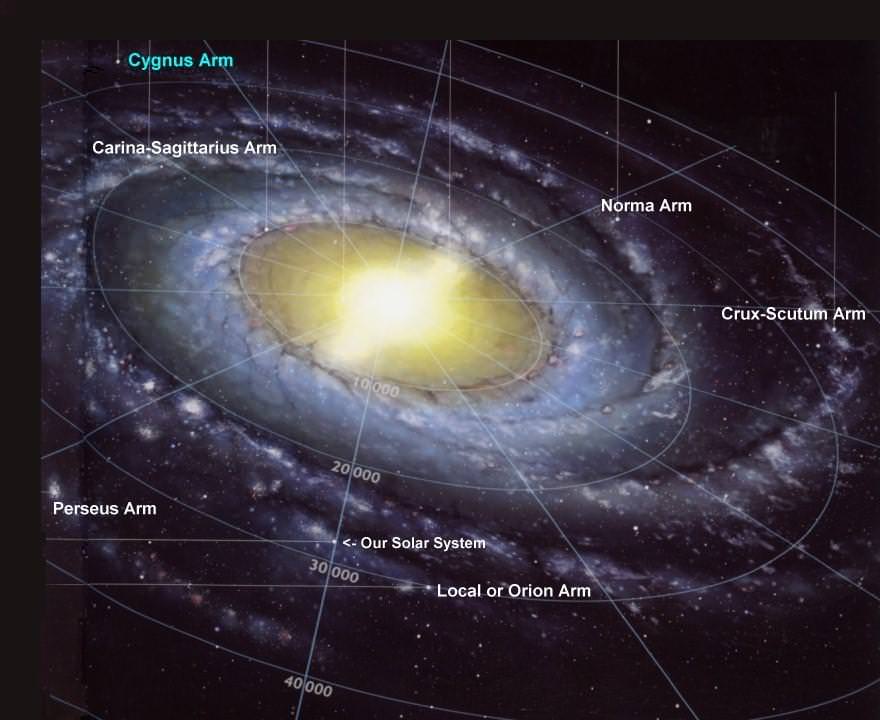
Technologies like precise astrometry (as performed by the Gaia mission) allow us to map the Milky Way with unprecedented detail. We know Earth resides within the Orion Arm, one of the galaxy’s spiral arms, about two-thirds of the way out from the galactic center. By measuring the parallax of nearby stars, the velocities of distant objects, and the distribution of globular clusters, astronomers have constructed a dynamic 3D map of our home galaxy. We now understand the Milky Way is a barred spiral galaxy, slowly rotating, and that our solar system is not stationary but orbits the galactic center every 230 million years. This granular understanding of our galactic position is a direct result of advanced sensor technology and sophisticated data analysis.
Our Galactic Neighborhood: The Local Group
Zooming out, technology allows us to map our immediate galactic neighbors. The Local Group is a collection of over 50 galaxies gravitationally bound together, including our Milky Way, the Andromeda Galaxy (M31), and the Triangulum Galaxy (M33), along with numerous dwarf galaxies. Measurements of their distances (using standard candles like Cepheid variables and supernovae, which rely on precise photometry) and their radial velocities (via spectrography) reveal that the Milky Way and Andromeda are on a collision course, destined to merge in billions of years. Mapping the Local Group provides the next layer of our cosmic address, placing Earth within a specific galactic cluster.
From Superclusters to the Cosmic Web
Further technological advancements, particularly in large-scale redshift surveys (like those enabled by the SDSS), allow us to map the universe on its grandest scales. By measuring the redshift of light from billions of galaxies, astronomers can determine their distances and velocities, creating gigantic 3D maps of the universe. These maps reveal that galaxies are not randomly distributed but clustered into enormous structures called superclusters, separated by vast, empty “voids.” Our Local Group is part of an even larger structure, the Laniakea Supercluster, an immense collection of hundreds of thousands of galaxies spanning hundreds of millions of light-years, all gravitationally flowing towards a central region known as the Great Attractor.
Beyond superclusters, the universe exhibits a “cosmic web” structure—a vast network of galaxy filaments and clusters separated by immense voids. The technological ability to map this web is paramount to understanding the largest-scale distribution of matter and the fundamental forces that govern the universe. This truly defines “what universe Earth is in”—not just a galaxy, but a node within an intricate, universe-spanning network.
The Future of Cosmic Exploration: Next-Gen Technologies
The journey to understand our cosmic address is far from over. The next generation of technologies promises even more profound insights.
Adaptive Optics and ELTs (Extremely Large Telescopes)
The future of ground-based astronomy lies in Extremely Large Telescopes (ELTs), such as the European Extremely Large Telescope (E-ELT), the Thirty Meter Telescope (TMT), and the Giant Magellan Telescope (GMT). These telescopes will boast primary mirrors tens of meters in diameter, collecting vastly more light and offering unprecedented resolution. Combined with advanced multi-conjugate adaptive optics systems (which can correct for atmospheric turbulence over a wider field of view), these giants will be able to directly image exoplanets, study the atmospheres of Earth-like worlds, and resolve individual stars in distant galaxies, providing finer detail to our cosmic maps.
AI-Driven Autonomous Observatories and Swarms
Future observatories are envisioned to be increasingly autonomous, driven by AI. Robotic telescopes will be able to react to transient events (like supernovae or gamma-ray bursts) instantly, optimize their observation schedules, and even conduct basic data analysis on the fly. The concept of “observatory swarms”—multiple smaller, interconnected telescopes or satellites working in concert—could offer synthetic apertures much larger than any single instrument, achieving groundbreaking resolution and sensitivity. Think of CubeSats collaborating to form a virtual telescope array, managed and coordinated by AI.
Quantum Sensing and Computing in Space Exploration
Emerging quantum technologies hold immense promise. Quantum entangled sensors could provide unprecedented precision for detecting gravitational waves, mapping minute variations in gravitational fields (useful for identifying subsurface structures on planets), or even searching for exotic dark matter particles. Quantum computing, still in its nascent stages, could eventually tackle the mind-boggling computational challenges of simulating entire universes with higher fidelity, processing petabytes of astronomical data exponentially faster, and breaking cryptographic barriers in deep-space communication.
The Search for Technosignatures: SETI Reimagined
The question “what universe is Earth in?” also implicitly asks if we are alone. The search for extraterrestrial intelligence (SETI) is being revitalized with advanced technological approaches. Leveraging powerful supercomputers, advanced signal processing algorithms, and machine learning, modern SETI efforts can analyze vast swathes of radio and optical data for technosignatures – signs of technology from other civilizations. New AI algorithms can sift through cosmic noise for non-random patterns, potentially identifying artificial signals amidst the natural cacophony of the universe, pushing our understanding of Earth’s cosmic uniqueness or commonality.

Conclusion
The question “what universe is Earth in?” is no longer confined to the realms of speculation. It is a scientific inquiry increasingly answered through the relentless march of technological progress. From the development of sophisticated multi-wavelength telescopes that extend our sensory reach, to the deployment of space-based observatories that provide an unfiltered view of the cosmos, and the application of cutting-edge data science and artificial intelligence that unlocks meaning from vast cosmic datasets, technology is the engine of discovery. Our cosmic address, once a vague notion, is now being meticulously charted: a blue planet in the Orion Arm of the Milky Way galaxy, itself a member of the Local Group, embedded within the Laniakea Supercluster, all part of the grand, interconnected cosmic web. This ongoing journey, fueled by human ingenuity and technological prowess, continues to refine our place in the universe, profoundly shaping our understanding of existence itself.
aViewFromTheCave is a participant in the Amazon Services LLC Associates Program, an affiliate advertising program designed to provide a means for sites to earn advertising fees by advertising and linking to Amazon.com. Amazon, the Amazon logo, AmazonSupply, and the AmazonSupply logo are trademarks of Amazon.com, Inc. or its affiliates. As an Amazon Associate we earn affiliate commissions from qualifying purchases.