
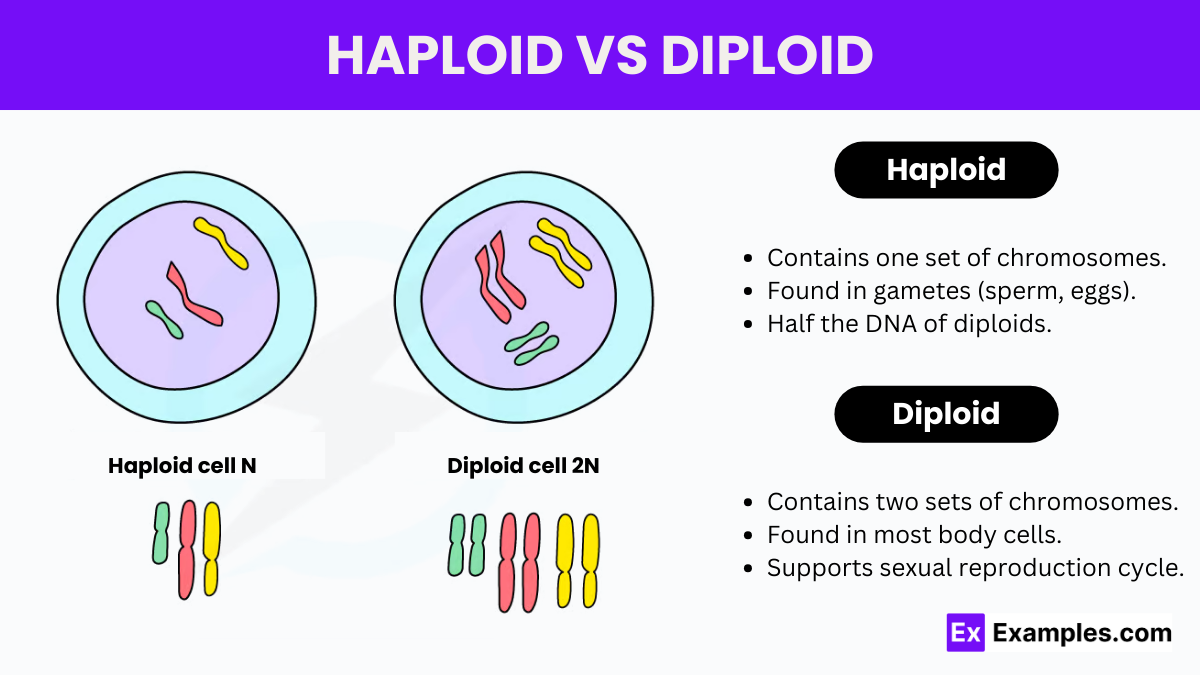
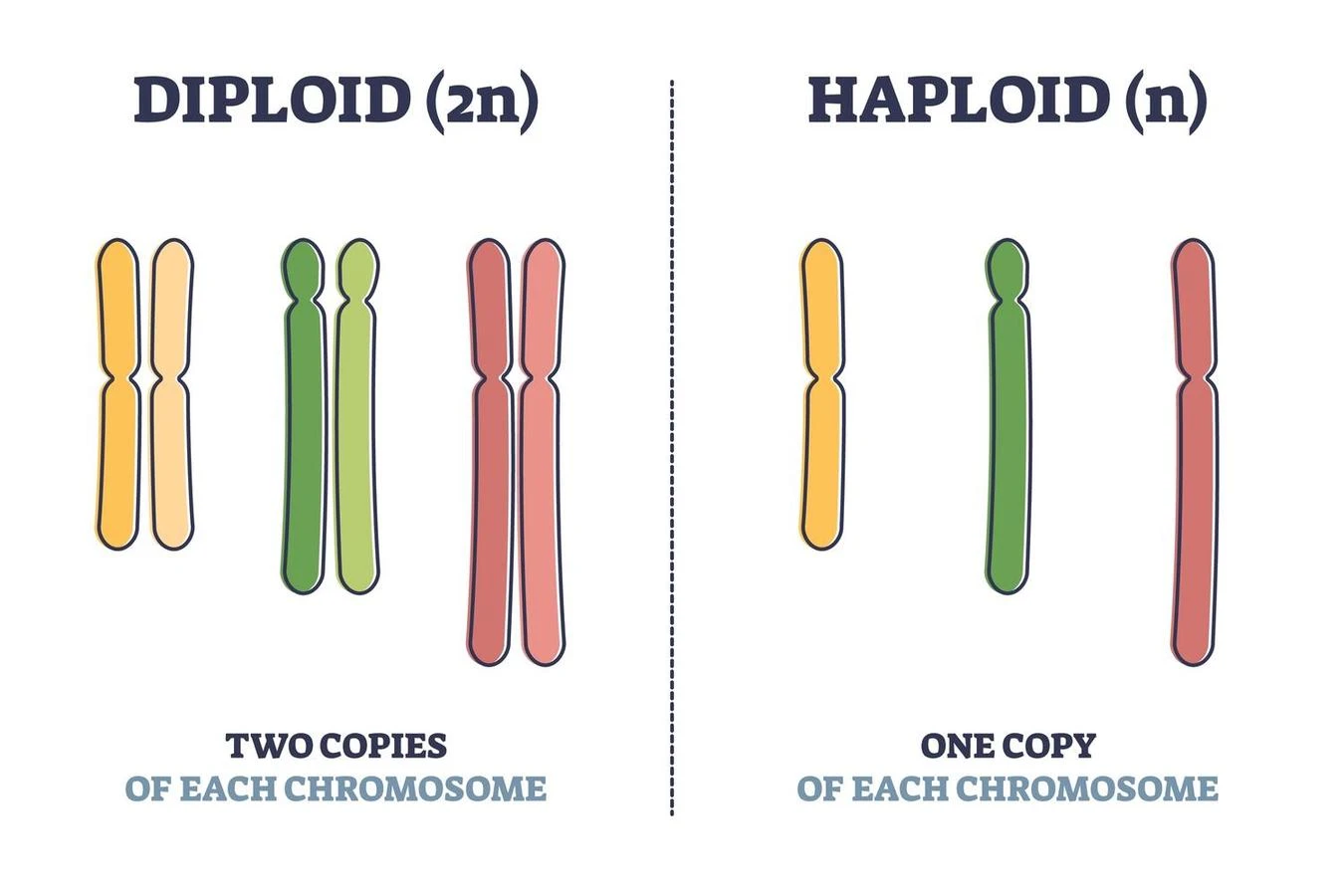
In the biological world, the distinction between haploid and diploid cells is fundamental to the survival, reproduction, and evolution of species. A haploid cell contains a single set of chromosomes, while a diploid cell contains two. While these terms are rooted in genetics, the underlying principles of single-set versus double-set information have become increasingly relevant in the realm of technology. As we move toward more complex system architectures, the “haploid vs. diploid” framework provides a sophisticated lens through which we can evaluate data redundancy, algorithmic efficiency, and hardware resilience.

In a digital context, a haploid architecture represents a streamlined, singular flow of data or execution—efficient but vulnerable. A diploid architecture, conversely, represents redundancy, error correction, and high availability. Understanding the difference between these two approaches is essential for software architects, data scientists, and systems engineers who are tasked with building the next generation of resilient digital infrastructure.
The Core Definitions: Translating Biological Concepts into Digital Frameworks
To understand how these biological terms apply to technology, we must first translate their core functions. In biology, the haploid state is often associated with speed and simplicity (as seen in gametes), whereas the diploid state is associated with stability and the ability to mask deleterious mutations.
Haploid Systems: The Efficiency of the Single Set
In tech, a “haploid” system is one that operates without inherent redundancy in its primary execution path. This is the hallmark of high-performance, low-latency computing where every microsecond counts. In a haploid data structure, there is a one-to-one mapping between the input and the stored value. There is no “backup” chromosome to consult if a bit flips or a sector fails.
The primary advantage of a haploid approach is resource optimization. By utilizing a single set of instructions or a single data stream, the system minimizes overhead. This is particularly critical in edge computing and IoT (Internet of Things) devices, where memory and processing power are at a premium. However, the “haploid” risk is clear: without a second set of data to verify against, a single error can lead to total system failure or corrupted outputs.
Diploid Systems: The Resilience of Redundancy
A “diploid” technological system incorporates dual sets of information or redundant processing paths to ensure integrity. This is the foundation of high-availability clusters and error-correcting code (ECC) memory. Just as a diploid organism can carry a recessive “bad” gene without expressing it because it has a dominant “good” gene on the second chromosome, a diploid tech system uses redundancy to mask faults.
In a diploid architecture, data is often mirrored or parity-checked. If one “chromosome” (node or drive) fails, the system consults the second set to maintain operation. This adds complexity and cost, but it provides a level of robustness that haploid systems cannot match. In the world of mission-critical enterprise tech, the diploid model is the gold standard for long-term stability.
Haploid vs. Diploid in Software Development and Data Storage
The choice between a haploid (singular) or diploid (redundant) approach is most visible in how we design software and store the massive amounts of data generated by modern applications. These two philosophies dictate the trade-offs between speed and safety.
Microservices and Haploid Architecture
The move toward microservices can be viewed as an evolution toward haploid modularity. Each service is designed to do one thing and do it well, often operating as a single point of logic within a larger ecosystem. This allows for rapid deployment and “mutation”—in tech terms, agile updates and continuous integration.
When a microservice is designed with a haploid mindset, it remains lightweight. Developers can iterate quickly because they aren’t bogged down by the overhead of managing complex internal redundancies within every single service. Instead, they rely on the broader network to handle failures. This “haploid” efficiency is what allows tech giants to deploy code thousands of times a day. However, it requires a robust orchestration layer to ensure that if one “haploid” service fails, the entire organism doesn’t die.
RAID and Diploid Data Redundancy
In data storage, the diploid model is best exemplified by RAID (Redundant Array of Independent Disks) configurations. RAID 1, for instance, is a purely diploid setup where data is mirrored across two disks. If one disk fails, the other contains an identical “set of chromosomes,” allowing the system to continue without data loss.
More advanced configurations, like RAID 6, could be seen as “polyploid,” providing even more sets of data protection. The transition from haploid storage (a single hard drive with no backup) to diploid storage (mirrored arrays) represents a shift from a “performance-first” mentality to a “durability-first” mentality. For businesses managing sensitive financial records or user data, the diploid approach is non-negotiable, acting as a biological safeguard against the inevitable “mutations” of hardware decay.
Genetic Algorithms and AI: Simulating Heredity for Optimization
Perhaps the most direct application of haploid and diploid concepts is found in the field of Artificial Intelligence, specifically within Evolutionary Algorithms (EAs). These algorithms mimic the process of natural selection to find solutions to complex optimization problems.
Encoding Information in Evolutionary Computing
In a standard genetic algorithm, “individuals” in a population represent potential solutions to a problem. Most basic EAs use a haploid representation, where each individual is defined by a single string of binary or numerical data. This is computationally efficient and allows the algorithm to explore the search space quickly.
Haploid genetic algorithms are excellent for static problems where the environment doesn’t change. They converge quickly on an optimal solution. However, they often suffer from “premature convergence,” where the population loses genetic diversity too early and gets stuck in a local optimum—the digital equivalent of an evolutionary dead end.
The Role of Diploidy in Preventing Premature Convergence
To combat the limitations of haploid algorithms, researchers often implement diploid genetic algorithms. In these systems, each individual carries two sets of chromosomes and a “dominance” scheme that determines which trait is expressed.
The beauty of the diploid model in AI is its ability to maintain “memory” within the population. If the environment of a problem changes—for example, a shift in market conditions in a financial trading bot—the diploid algorithm can “activate” traits that were previously recessive. This latent diversity allows the AI to adapt to new challenges without having to start the evolutionary process from scratch. It provides a level of digital adaptability that mirrors the survival strategies of complex life forms.
Choosing the Right Model: Scalability, Latency, and Cost
Deciding whether to implement a haploid or diploid strategy is a core challenge in technical strategy. It is rarely a binary choice but rather a spectrum of redundancy that must be balanced against the project’s goals.
When to Lean Toward Haploid Simplicity
Haploid architectures are the correct choice when latency is the primary concern and the cost of failure is low or managed elsewhere.
-
Real-time Processing: In high-frequency trading or live video streaming, the overhead of “diploid” verification can introduce unacceptable lag.
-
Prototyping: During the early stages of software development, haploid structures allow for faster pivots and lower development costs.
-
Edge Devices: For sensors and IoT devices with limited battery life, the energy cost of maintaining redundant data sets is often prohibitive.
In these scenarios, the “haploid” model’s agility outweighs the risk. The system is designed to be “disposable” or easily rebooted, much like how biological systems produce vast quantities of haploid cells knowing only a few need to succeed.
Implementing Diploid Robustness in Critical Infrastructure
Diploid architectures should be the default for systems where downtime or data loss has catastrophic consequences.
-
Database Management: Any system of record (banking, medical, legal) must utilize diploid or multi-set redundancy to ensure data integrity.
-
Cybersecurity: A diploid approach to security involves multi-factor authentication (two sets of credentials) and redundant firewalls. If one “set” is compromised, the second provides a fail-safe.
-
Cloud Infrastructure: Modern cloud providers use “Availability Zones,” which are essentially diploid geographic structures. By running applications in two distinct locations, they ensure that a physical disaster in one area doesn’t wipe out the digital service.
The Future of Biologically-Inspired Tech Systems
As we look toward the future of technology, the line between biology and silicon continues to blur. We are seeing the rise of “Self-Healing” systems that use diploid-style redundancy to automatically repair corrupted code. We are seeing AI models that use complex dominance-recessive logic to navigate uncertain environments.
The difference between haploid and diploid in tech is ultimately a question of philosophy: Do we prioritize the lean efficiency of the individual unit, or the resilient complexity of the redundant system? As our world becomes increasingly dependent on digital infrastructure, the shift toward “diploid” thinking is becoming more pronounced. We are learning that for a system to truly survive the “evolutionary” pressures of the digital age—be it cyberattacks, hardware failures, or shifting user demands—it needs more than just a single set of instructions. It needs the depth, diversity, and redundancy of a diploid design.
By embracing these biological metaphors, tech leaders can build systems that are not just functional, but truly robust, capable of withstanding the test of time and the unpredictability of the digital frontier.
aViewFromTheCave is a participant in the Amazon Services LLC Associates Program, an affiliate advertising program designed to provide a means for sites to earn advertising fees by advertising and linking to Amazon.com. Amazon, the Amazon logo, AmazonSupply, and the AmazonSupply logo are trademarks of Amazon.com, Inc. or its affiliates. As an Amazon Associate we earn affiliate commissions from qualifying purchases.